
A GC calls the supplier on a Thursday and needs four beams on site by Tuesday. The architect drew a custom V-groove beam that no catalog has ever stocked. The project is a spec home, the budget is fixed, and the schedule is not flexible. These are the moments that define a contractor-supplier relationship — when the supplier can answer the question fast and correctly, and when they cannot.
This article is about what a contractor needs to know before the call.
Stock size ranges: what actually ships from inventory
Most polyurethane faux beam manufacturers stock a range of the most common sizes. These are the profiles that can ship within days rather than weeks.
Standard stock profiles typically cover:
- Widths from 4 to 12 inches
- Depths from 4 to 12 inches
- Lengths up to 16 feet in most profiles, up to 20 feet in selected profiles
- Hollow and solid core variations in the most common sizes
The most consistently stocked profile in North American distribution is the 6-by-8 oak grain. It sits in the sweet spot between visual presence and shipping practicality. Most suppliers can ship this profile within three to five business days for quantities under 50 linear feet.
The second tier of stock profiles includes:
- 4-by-6 oak grain
- 6-by-6 oak grain
- 8-by-8 oak grain
- 4-by-6 walnut grain
- 6-by-8 walnut grain
Anything outside these profiles typically goes to a production queue, even for suppliers with large warehouses.
The difference between stock and standard
The distinction matters. "Stock" means the product is physically in the warehouse. "Standard" means the product is in the catalog and can be produced quickly from an existing mold. A custom finish on a standard profile is a production run, not a stock item. A custom profile is a mold run.
For most contractor supply scenarios:
- Stock + standard finish = ships in days
- Standard profile + custom finish = ships in 2 to 3 weeks
- Custom profile = ships in 4 to 8 weeks depending on complexity
When a GC needs beams fast, the conversation starts with what is in the warehouse. It does not start with the architect's vision. That conversation happens at the specification stage, before the project starts.
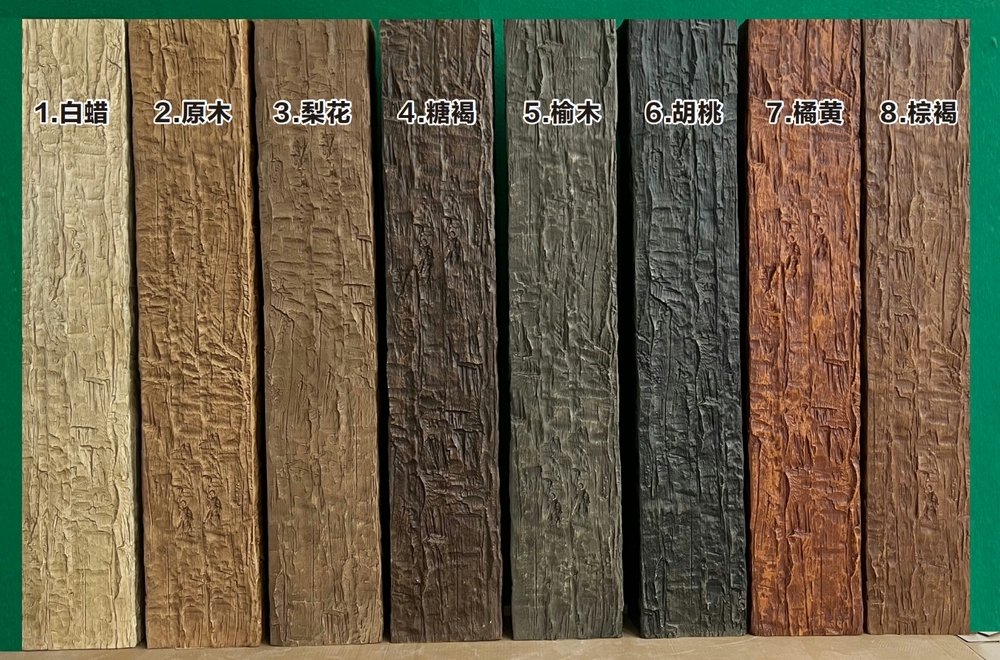
Custom molded specialty profiles
There are three categories of custom work a factory can do.
Custom finish on a standard profile
The most common customization. The architect wants a V-groove down the center of a 6-by-8 beam, or a different stain color, or a higher-gloss topcoat. This is a finishing operation, not a molding operation. Most factories handle this in two to three weeks.
Profile modification
The architect's beam has a slightly different shape — a bullnose corner, a V-groove, a slightly wider reveal. This is a modification of an existing mold. The mold shop cuts new inserts or modifies the existing tool. Lead time is typically four to six weeks.
New mold creation
The architect's beam is a new profile entirely. A new mold must be machined. Tooling costs apply, and the lead time is typically six to eight weeks plus the first production run. For a large project — more than 500 linear feet of the new profile — the tooling cost can be justified. For a small project, it usually cannot.

What a contractor should ask before specifying
Five questions that, answered before the order is placed, prevent a schedule disaster.
What is in stock today? Call the supplier and ask specifically. "Do you have 6-by-8 oak grain in 12-foot lengths?" is a better question than "what do you have?"
What is the lead time on the profile I need? Even for standard profiles, confirm the production queue. Some factories run batches; others run to order. The lead time difference is days versus two weeks.
Does the finish I want require a custom run? A color-matched stain to an existing swatch almost always requires a custom run. The factory has to mix and test before production.
Are the sections I need from the same production batch? Sections from different batches can have subtle color variation. For a visible run with multiple joints, order all sections from the same batch.
What is the blocking plan? The contractor needs to know the weight and the fastener schedule before the beam arrives. A 10-by-10 solid-core faux beam weighs more than a 10-by-10 hollow-core. The mounting hardware is different.
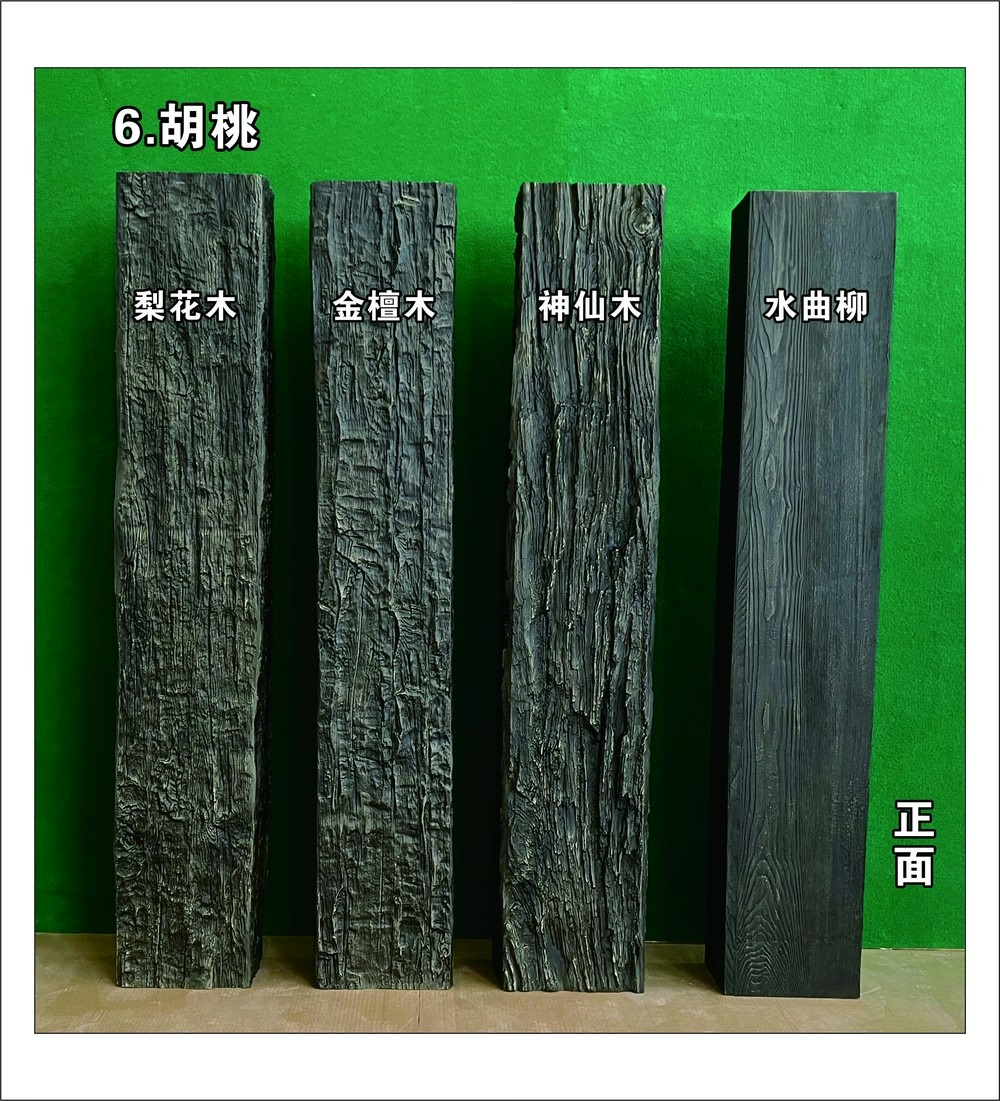
Common specialty profile requests
These come up often enough that most factories have existing capability or can quote them quickly.
V-groove ceiling plank profile
A flat panel with a V-groove cut into one face, designed to look like individual planks but ship and install as a single beam. Popular in coastal and modern rustic interiors.
Chamfered box beam
A square hollow beam with a slight chamfer at the outer corners. The chamfer gives a softer edge without losing the contemporary box-beam look. Common in modernist residential and boutique hospitality.
T-beam or I-beam cross section
A structural-looking profile with a web and flanges. This is a specialty profile that is rarely stocked but relatively straightforward to mold. Common in commercial lofts and converted warehouse projects.
Stepped reveal beam
A box beam with a recessed panel on the bottom face, creating a stepped shadow line. This adds architectural detail without adding carved texture. Common in updated traditional interiors.
Radius or curved beam
A beam with a curved profile for vaulted or domed ceilings. This requires a flexible mold or segmented molds. Lead time is longer and cost is higher, but the finished look in a radius ceiling is significantly better than a straight beam forced around a curve.
Pricing tiers for contractors
Contractor supply pricing typically follows a tiered structure:
| Quantity | Typical discount from list |
|---|---|
| 1-50 LF | List price |
| 50-200 LF | 5-10% |
| 200-500 LF | 10-15% |
| 500-1,000 LF | 15-20% |
| 1,000+ LF | 20-25% + volume rebate |
For a contractor running two to three residential projects per year, the tiered structure matters less than having a reliable supplier who can answer the phone and ship fast. For a developer running twelve units per year, the volume discount matters a great deal.
Most suppliers also offer net-30 terms for established contractor accounts. This is worth asking about.
The sample workflow
Before any contractor order, get a sample. Not a photo, not a spec sheet — an actual physical sample of the profile and finish that will ship.
A sample costs money — typically $50 to $150 depending on size — but it prevents the wrong product from arriving on site. The sample also lets the architect or designer confirm the color match against the wall sample, the floor sample, and the lighting.
A common sequence:
- Architect specifies profile and finish
- Contractor requests sample from supplier
- Sample arrives in 3 to 5 business days
- Architect approves or requests modification
- Order placed with confirmed lead time
The sequence takes two to three weeks before production begins. Build that time into the schedule.
Stock as a business model
For contractors working in a predictable market segment — tract home upgrades, spec homes, commercial TI (tenant improvement) projects — having a relationship with a supplier who stocks the right profiles is a genuine competitive advantage. A competitor who has to quote custom lead times cannot match the speed.
Ask the supplier what they stock. Ask what they could stock for you. The supplier who carries your profile is the supplier worth staying with.
Technical References
ASTM standards cited in every specification
Test Data
Lab results from internal testing program
Updated 2026
Reviewed against current product specs


