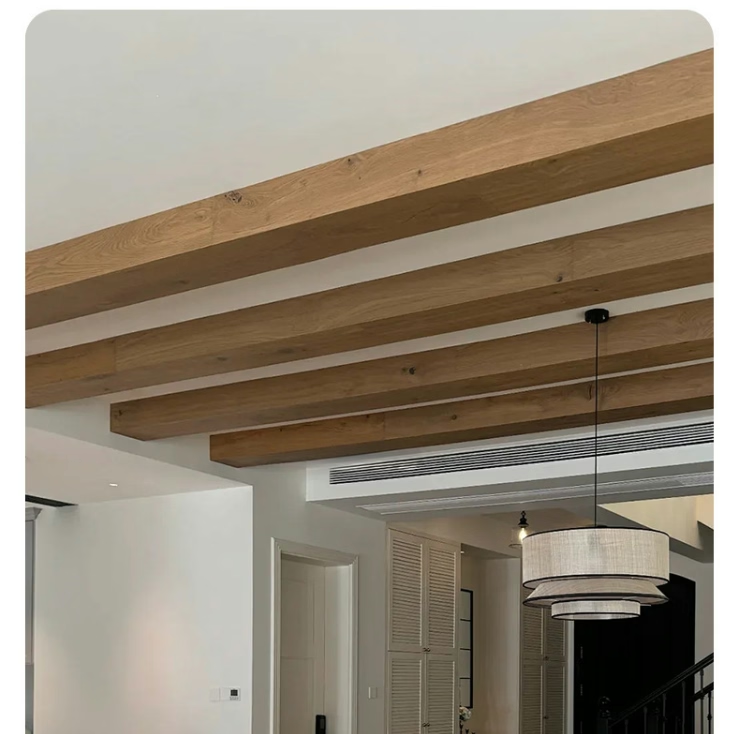
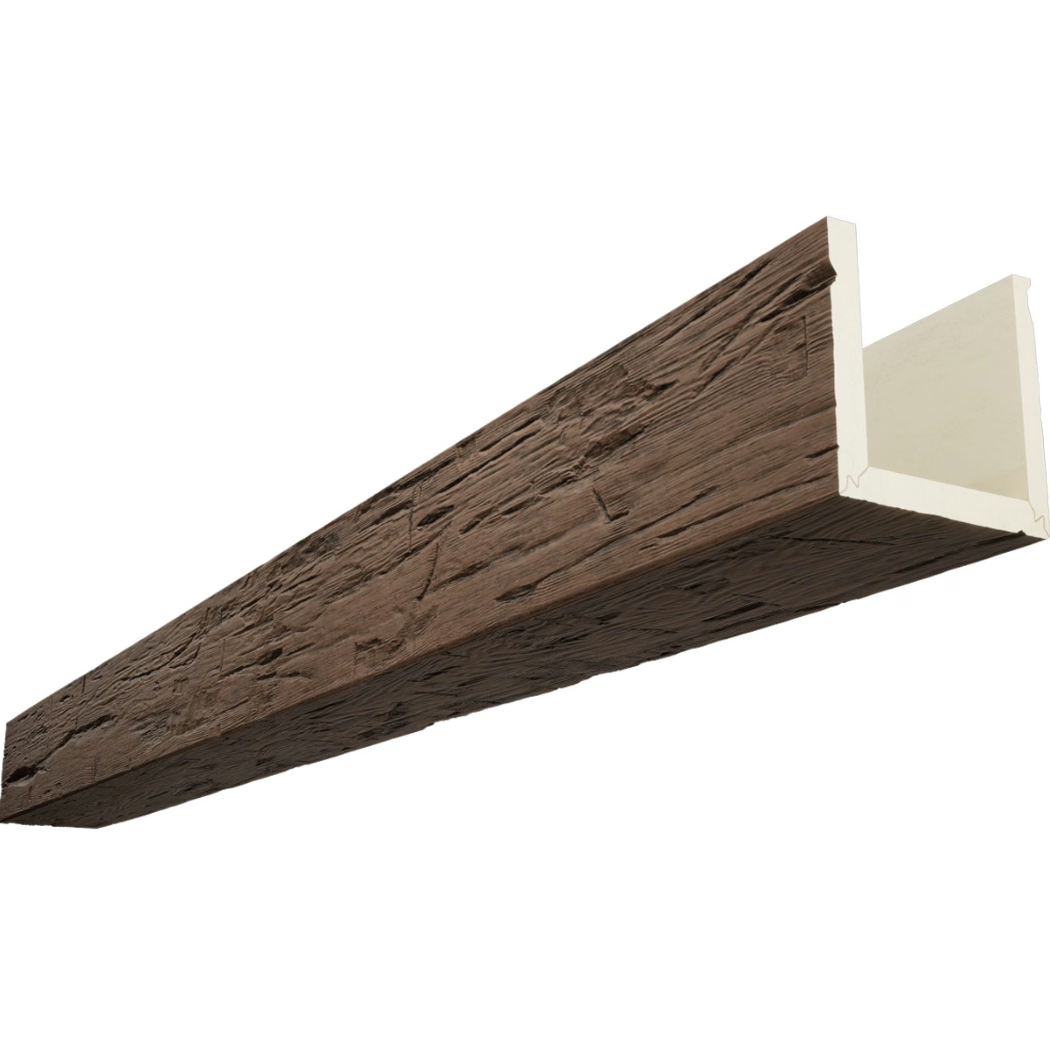
Online sales channels and wholesale programs have reshaped how PU faux ceiling beams reach the market. A decade ago, buying faux beams meant visiting a specialty building-products distributor or placing a custom order through a regional dealer. Today, importers, contractors, and even small renovation buyers can order directly from manufacturers' websites, B2B marketplaces, and wholesale portals with price tiers that scale to project size. This guide walks through how the online and wholesale landscape works for budget PU faux beams and what buyers should look for when comparing suppliers.
The shift to online and wholesale-first sales
Several forces pushed faux beams into online and wholesale distribution models. The product itself is light enough to ship via standard parcel and LTL carriers, which makes direct-to-consumer and direct-to-contractor fulfillment practical. Buyers have grown comfortable ordering building products online after the pandemic-era acceleration of e-commerce in construction supply. And manufacturers benefit from shorter sales cycles and lower per-order costs when they move volume through digital channels rather than maintaining showroom networks.
For wholesale buyers, the result is a more competitive pricing environment with shorter lead times on standard SKUs and more transparent MOQ structures. For smaller buyers, online retail channels now offer the same products at modest premiums over wholesale, often with no minimum order at all.
How budget PU beam pricing tiers typically work
Most manufacturers and wholesalers structure PU beam pricing around volume tiers. A common structure looks something like:
- Single-piece or small-order (1-10 linear meters): retail pricing, often 20-40% above wholesale
- Mid-tier (10-50 linear meters): project pricing, typically 10-20% below retail
- Wholesale tier (50-200 linear meters): wholesale pricing, often 30-40% below retail
- Container or bulk tier (200+ linear meters): distributor pricing, negotiated case by case
The exact thresholds vary by supplier, but the pattern is consistent. Buyers who can forecast their annual or quarterly volume and consolidate orders across projects usually land in a better tier than those placing frequent small orders.
Online retail channels often display retail pricing prominently while making wholesale tiers available through account registration. B2B marketplaces such as Alibaba, Made-in-China, and Global Sources show multiple supplier price points for similar products, making it easier to compare but also requiring more diligence on quality verification.
Minimum order quantities that matter
MOQ expectations differ sharply between retail online sales and wholesale. A single-piece online order is common on retail-focused platforms, with the buyer paying a per-piece premium and absorbing higher shipping costs. Wholesale orders typically require either a minimum linear meter total or a minimum dollar value, often $500-$1,500 for domestic wholesalers and $1,500-$5,000 for international container shipments.
For PU beams specifically, MOQ is often expressed in linear meters rather than piece count, which makes it easier for buyers to compare options. A wholesale MOQ of 100 linear meters, for example, could mean 17 pieces at 6-meter lengths or 25 pieces at 4-meter lengths depending on the project mix.
Buyers planning smaller projects can often meet wholesale MOQs by pooling orders with neighboring contractors or buying slightly ahead of project needs to bank surplus stock for future jobs. Some wholesalers also offer mixed-SKU orders where the MOQ is calculated across multiple beam profiles and finishes, giving smaller buyers more flexibility.
What to look for in an online PU beam supplier
Choosing a budget PU beam supplier is not just about the lowest price. Several quality and service factors separate reliable suppliers from risky ones, especially in the online space where buyers cannot inspect product in person before ordering.
Sample programs
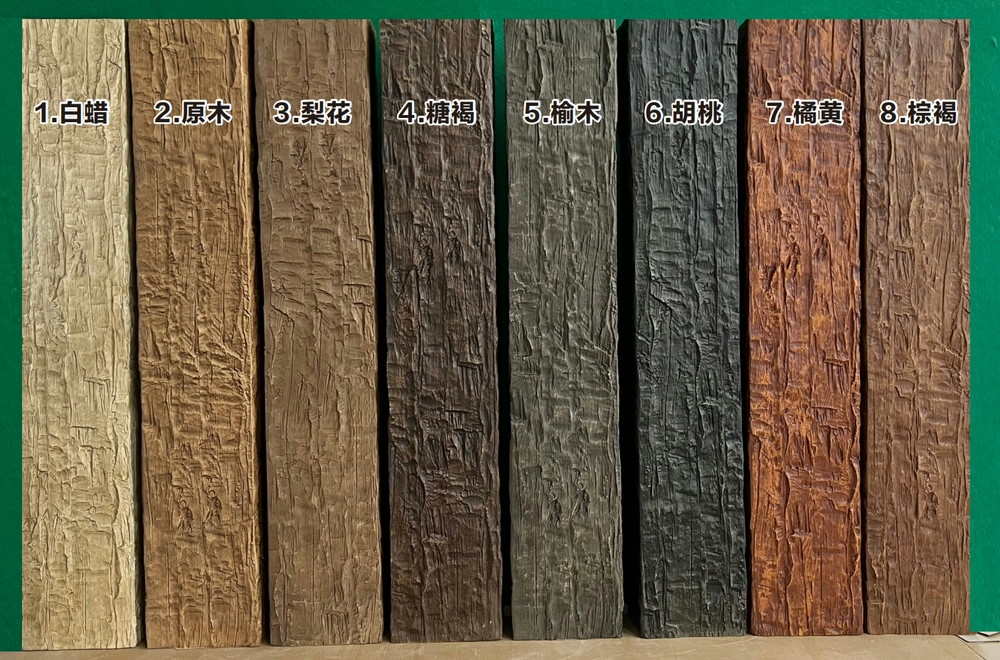
Any reputable PU beam supplier offers a sample program. Samples let buyers evaluate texture, finish quality, color accuracy, and structural rigidity before committing to a full order. Most suppliers charge a small fee for samples (often refundable against a future order) and ship via expedited parcel services. A supplier that resists providing samples or makes sampling difficult is a red flag.
Factory certifications
Request documentation of the manufacturer's quality system. ISO 9001 certification is the most common baseline, with some manufacturers also carrying ISO 14001 for environmental management. For projects requiring fire-rated beams, ASTM E84 or EN 13501 test reports should be available on request. Importers handling CE-marked product for European markets need documentation of the relevant Declaration of Performance.
Lead time transparency
Reliable suppliers publish clear lead times for stock items versus custom orders and stick to those commitments. A typical domestic wholesale order ships within 1-2 weeks; international container orders run 4-6 weeks production plus ocean transit. Suppliers that quote unrealistically short lead times or change timelines mid-order often signal underlying capacity issues.
Return and damage policies
Even with careful packaging, shipping damage occurs in a small percentage of beam orders. Look for suppliers that document damage rates and offer clear replacement or credit processes. A damage rate above 2-3% on a full container typically points to inadequate packaging rather than bad luck.
Packaging that protects budget beams
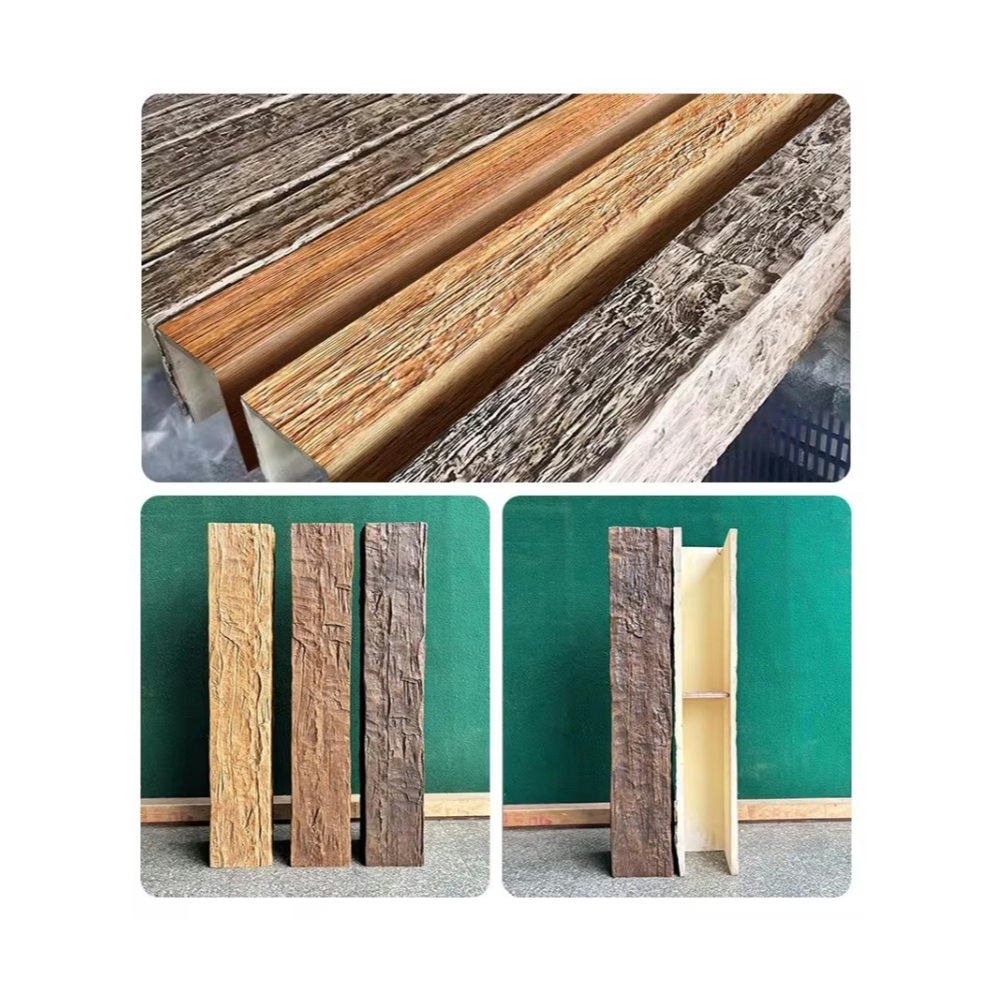
Packaging matters more for online and wholesale shipments than for local pickup orders. PU beams ship in corrugated cartons with internal bracing, and longer lengths often require wooden crating to prevent bending or crushing during transit. Reputable suppliers use foam end caps, corner protectors, and stretch wrapping on bundles.
For international container shipments, the packaging standard should include desiccant packs to manage humidity during ocean transit. Buyers receiving containers in humid climates should inspect packaging condition on arrival and document any moisture damage before signing the delivery receipt.
Wholesale buyers placing repeat orders should track damage rates by shipment and share feedback with the supplier. Strong suppliers adjust packaging based on this feedback and reduce damage rates over time.
Common pricing traps to avoid
Several patterns show up repeatedly in the online and wholesale PU beam market. Recognizing them helps buyers avoid wasted budget.
Prices well below market range often signal lower-density foam, thinner wall sections, or shortcuts in the finishing process. A beam that feels flimsy or shows visible mold lines is usually built to a price, not to a standard. Another trap is quoted pricing that excludes critical accessories: mounting brackets, touch-up kits, end caps, and shipping crates are sometimes itemized separately, inflating the real landed cost by 15-25%.
Buyers should also watch for hidden MOQ escalators. Some suppliers quote attractive pricing on a basic MOQ but require a 50% premium on any sub-MOQ orders, which can erode the savings on smaller follow-up purchases.
Building a long-term wholesale relationship
For contractors, designers, and importers who specify PU beams regularly, building a relationship with one or two preferred suppliers pays off over time. Repeat buyers typically gain access to better pricing tiers, faster sample turnaround, priority production scheduling, and first-look access to new finishes and profiles.
Practical steps to build that relationship include forecasting volume annually so the supplier can plan capacity, providing structured feedback on every shipment, and paying on agreed terms consistently. Suppliers value predictability, and they reward it with better service when supply tightens.
For importers handling distribution across multiple markets, formalizing the relationship through a distribution agreement clarifies pricing tiers, exclusive territories (if applicable), marketing support, and warranty handling. These agreements often include co-op marketing funds that offset the cost of local trade show presence or showroom displays.
Where online and wholesale channels work best
Online retail channels work well for individual homeowners, small renovation contractors, and design professionals placing small or one-off orders. Wholesale channels work best for renovation companies, hospitality groups, multi-unit developers, and importers who can commit to volume.
The convergence of these channels, with most major manufacturers running both, means buyers can scale up or down without changing suppliers. A contractor might order three beams online for a kitchen remodel, then place a 200-meter wholesale order for a hotel project six months later, with the same supplier handling both.
For budget PU faux ceiling beams specifically, the online and wholesale ecosystem has matured to a point where most buyers can find competitive pricing, reliable quality, and reasonable lead times without leaving the digital procurement workflow. The work of choosing well comes down to verifying quality, understanding total landed cost, and selecting partners who treat smaller orders with the same care as container shipments.
Technical References
ASTM standards cited in every specification
Test Data
Lab results from internal testing program
Updated 2026
Reviewed against current product specs