
Outdoor covered spaces present a specific set of challenges for any wood-appearing product. Humidity, rain, temperature swings, and UV exposure all work against materials that want to look like timber while behaving like timber. Real wood in exterior applications requires constant maintenance: sealing, staining, and replacing boards that cup, check, or rot over time. Polyurethane faux timber beams sidestep most of those problems, but sourcing and shipping them cost-effectively for outdoor projects requires understanding the specific requirements that exterior applications impose.
Why polyurethane beams work outdoors
Polyurethane's closed-cell structure resists water absorption in a way that solid timber cannot. When a real timber beam gets wet, it swells. When it dries, it shrinks. Over repeated cycles, this movement causes checking, splitting, and eventual structural failure. PU foam does not absorb water in the same way, which means it does not cycle through the wet-dry expansion and contraction that damages real wood.
This resistance makes PU beams particularly well-suited to covered exterior applications: covered patios, porch ceilings, gazebo interiors, pool enclosures, and outdoor bar areas. In these spaces, the beams are sheltered from direct rain but still exposed to humidity, temperature variation, and ambient moisture. That environment is exactly where PU outperforms timber on durability.
For fully exposed outdoor applications where beams are subject to direct rainfall and sunlight, some additional considerations apply. Direct UV exposure can degrade the surface finish over time, and extended water contact at exposed end grains can cause surface swelling in lower-quality foam. High-quality manufacturers address these concerns through UV-stable topcoats and sealed end-grain treatments, but not all products are rated for fully exposed use.
Exterior finish options for outdoor beams
The factory finish on outdoor PU beams needs to handle humidity, temperature cycling, and UV exposure differently from an interior finish. Several finish options are specifically suited to exterior conditions.
UV-stable polyurethane topcoats form the baseline for exterior-rated finishes. These coatings resist yellowing and chalking under sun exposure, which are the primary failure modes for interior-rated finishes used outside. Ask suppliers whether their standard finishes are UV-stable or whether an upgraded coating system is required for exterior applications.
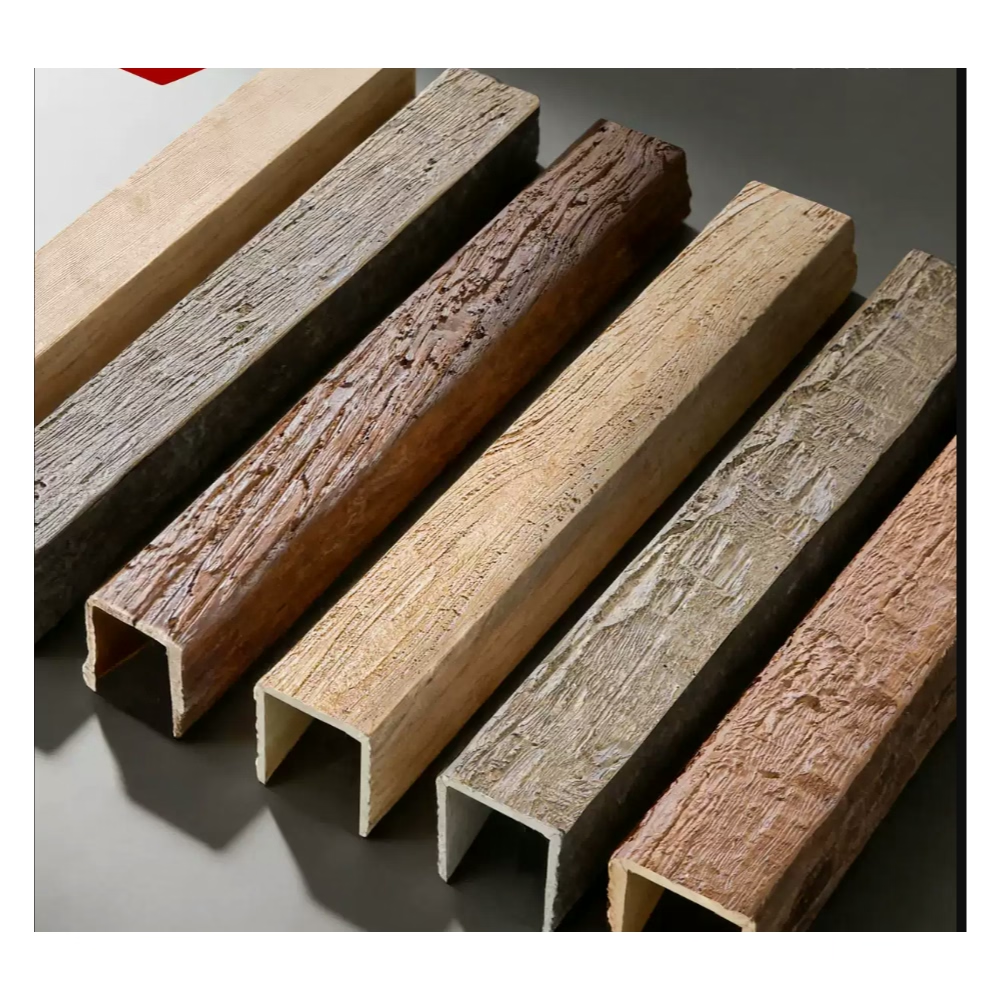
Weathered gray and driftwood finishes are particularly well-suited to exterior use because the natural aging that happens over time in these finishes reads as intentional rather than as degradation. As the finish weathers slightly, it develops more character rather than looking worn out.
Darker finishes like espresso and charcoal absorb more heat in sunny climates, which can cause dimensional stress in the foam beneath the finish if the beams are fully exposed. In covered outdoor applications, this is less of a concern, but in fully exposed installations, lighter finishes are generally more forgiving.
Whitewash and pale finishes reflect heat and resist UV degradation most effectively, but they show dirt and mildew more readily in humid climates. In coastal or tropical outdoor applications, a light gray or weathered white finish often provides the best balance of durability and aesthetics.
LCL shipping logistics for outdoor beam orders
Outdoor beam projects often involve larger volumes than interior residential projects because the covered area being treated is typically larger: a 400-square-foot covered patio requires more linear meters of beam than a 200-square-foot living room. This means outdoor beam orders are more likely to be candidates for LCL consolidation, where multiple buyers' orders share a container.
The key logistics considerations for LCL outdoor beam shipments mirror those for interior orders, with a few specific additions.
Packaging for outdoor beams should include enhanced moisture protection. Marine-grade wrapping, desiccant packs, and humidity indicator cards are standard for international shipments heading to humid climates. The additional packaging cost is modest but significant for beams that will sit in a port or consolidation warehouse before reaching the jobsite.
Seasonal timing matters for outdoor projects in climates with defined construction seasons. Ordering beams to arrive at the start of the outdoor construction window, rather than mid-season, ensures the installation crew is available and the weather allows proper installation and finishing work. Late-season arrivals that encounter rain or cold weather can delay projects significantly.
Cost management for outdoor beam projects
Outdoor beam projects benefit from several cost management strategies specific to exterior applications.
Covered area design that minimizes beam count while maximizing visual impact is the single most effective cost strategy. A covered patio beam run of 20 meters with 5 parallel beams creates strong visual rhythm. Extending the same beam treatment to an adjacent outdoor kitchen or bar area adds linear meters at a lower per-meter cost because the installation crew is already mobilized and the project is already underway.
Matching exterior beam finishes to interior beams in the same property creates design continuity while allowing the interior and exterior orders to be placed together. Combined orders qualify for volume pricing that single-location orders do not, and consolidated shipping reduces the per-meter freight cost.
Seasonal ordering windows often coincide with lower demand periods for manufacturers, which can translate into better pricing for buyers who plan orders during off-peak seasons. Late winter and early fall tend to be lower-demand periods in most markets.
Exterior beam installation specifics
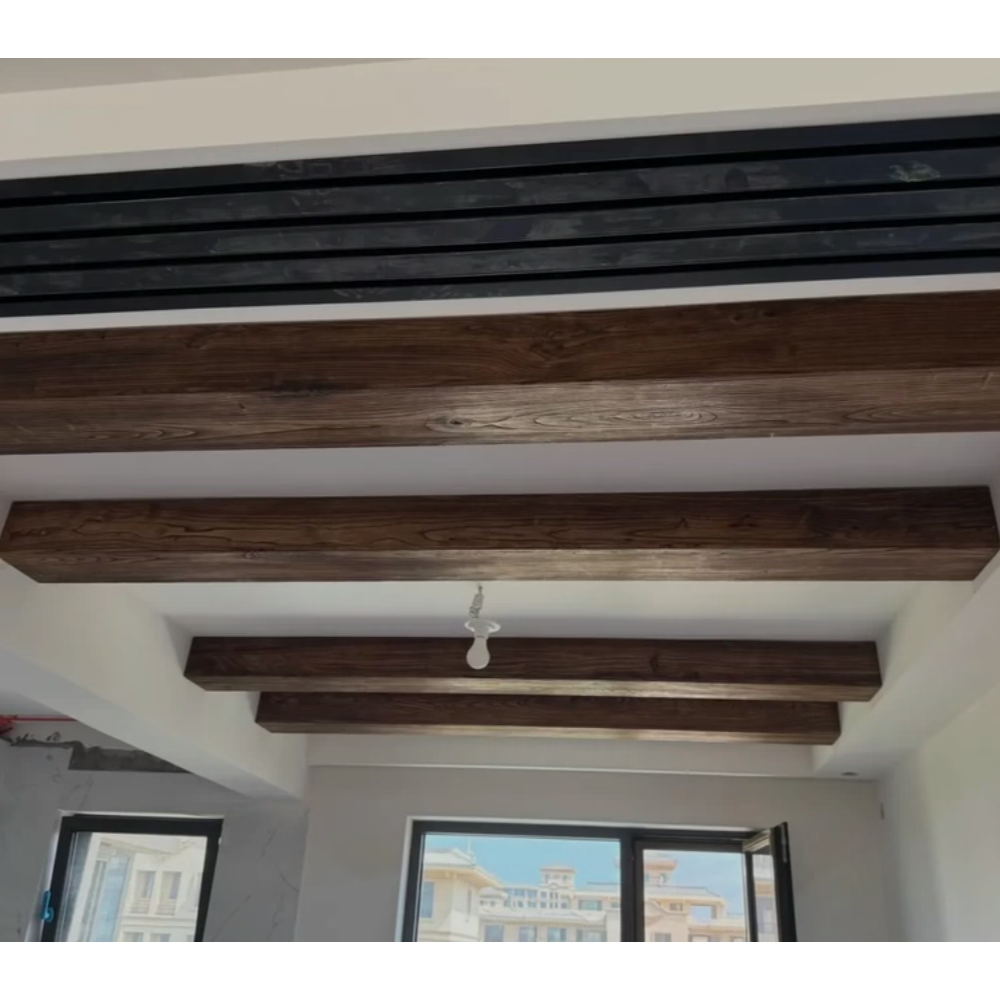
Installing beams in covered outdoor spaces differs from interior installation in several important ways.
Ventilation and airflow matter for exterior installations. Even in covered spaces, humidity levels fluctuate more than in conditioned interiors, which affects how any material performs. Beams should be installed with adequate clearance from adjacent surfaces to allow air circulation, which reduces the risk of localized moisture buildup.
Fastener selection for exterior use differs from interior applications. Stainless steel screws and brackets are standard for exterior installations because they resist the corrosion that standard steel fasteners develop in humid conditions. Some manufacturers supply stainless mounting hardware as standard for exterior-rated products; others offer it as an upgrade.
Sealing penetrations and joints against water entry is more critical outdoors than inside. Any gap where the beam meets the ceiling or wall can admit water that pools in the beam cavity over time. High-quality exterior installations include backer rod and sealant at all joint locations, with periodic inspection and re-sealing as part of routine building maintenance.
Coordinating outdoor beams with other exterior finishes
Outdoor beam projects require coordination with other exterior material selections that interior projects do not face.
Roofing material above the beams determines how much direct weather exposure the beams receive. Solid roof panels or shingles above the beam plane provide complete shelter. Lattice or pergola-style overhead structures allow partial sun and rain through, which requires UV-stable and water-resistant beam finishes. Matching the beam specification to the actual shelter level above is essential for long-term performance.
Gutter and drainage systems near beam installations need to be planned so that water runoff does not cascade onto the beam faces. Downspouts positioned above beam runs will cause finish degradation over time. Relocating downspouts or adding splash blocks to redirect water flow are simple measures that extend the life of the beam finish significantly.
Hanging elements like ceiling fans, pendant lights, and swing chairs attach to outdoor beams and introduce point loads that the beams must support. The beam's internal reinforcement and the fastener specifications need to account for these loads at the design stage, not discovered during installation.
Finding suppliers for exterior-rated faux beams
Not all PU beam manufacturers rate their products for exterior use. Before placing an outdoor beam order, buyers should confirm the manufacturer's exterior rating and request documentation of UV stability and water resistance testing.
Key questions to ask suppliers include: Is the standard finish UV-stable for exterior use? What is the warranty coverage for exterior installations? What preparation is required on site before installation? Are the mounting hardware and fasteners rated for exterior use?
A manufacturer that can answer these questions clearly and provide documentation is more likely to deliver a product that performs in exterior conditions. Suppliers that are vague about exterior performance or unable to provide test documentation should be approached with caution.
For large outdoor projects like hotel pool decks, resort patios, or restaurant outdoor dining areas, requesting a trial installation of a small beam section in an exposed location for 6-12 months before committing to the full order provides the most reliable performance verification. This approach is more common in commercial projects but is worth considering for any large exterior installation where failure would be costly.
Technical References
ASTM standards cited in every specification
Test Data
Lab results from internal testing program
Updated 2026
Reviewed against current product specs


