
The Reading Room Has a Specific Brief
A reading room is one of the few rooms in a house where the user spends long, still hours. The ceiling is above them the whole time, and it shapes the room's mood in a way that is more direct than in any other space. A flat white ceiling reads as too clinical for a retreat. A beamed ceiling reads as enclosed, warm, and quiet.
The challenge is getting the beams to support the room's purpose without overpowering it. Reading rooms are usually smaller than living rooms, and the beam proportion has to match the scale. A 250-millimeter beam that would feel right in a great room would crowd a 3 by 4 meter reading nook. The proportions need to be intimate rather than impressive.
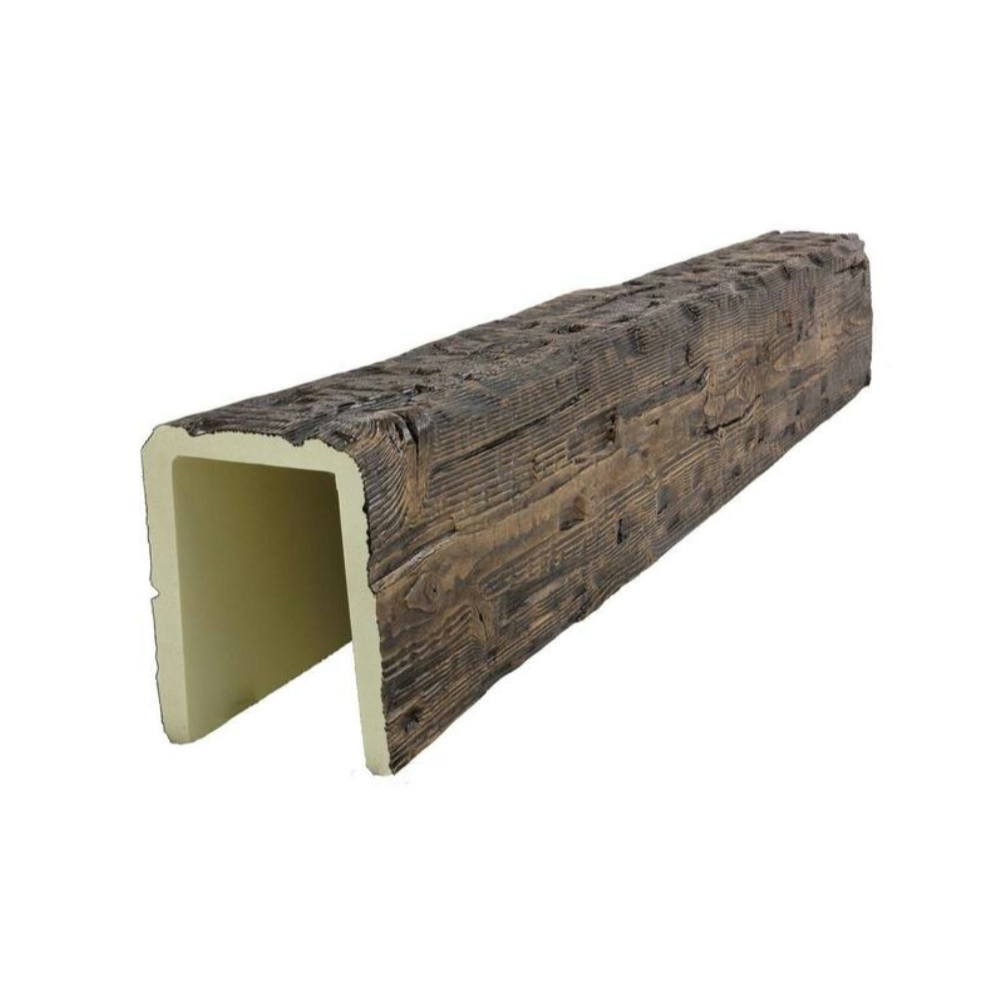
Faux ceiling beams are well-suited to this brief. PU beams deliver the visual warmth of timber at a profile size that suits smaller rooms, and the finish options include the warm mid-tones that reading rooms tend to favor. The result is a ceiling that feels like part of the room's purpose — quiet, settled, and easy to be under for hours.
Sizing for Smaller Ceilings
The standard reading room in a residential project is between 10 and 20 square meters, with ceilings in the 2.4 to 2.7 meter range. At that scale, beams in the 125 to 175 millimeter range work for most projects. The wider 200 millimeter range suits reading rooms with higher ceilings or with more open layouts.
Width should still match height. A 150-millimeter-tall beam should be 150 to 175 millimeters wide. Skinny profiles that are much narrower than they are tall read as cheap and modern rather than warm and settled. The substance of the beam is part of what makes the room feel grounded.
The number of beams in a reading room is usually lower than in a living room. Two or three parallel beams is typical. A single statement beam running perpendicular to the main wall works in narrow reading nooks. For rooms with a window seat, the beam can align with the top of the window frame, which ties the architecture together.
Finishes That Suit the Reading Room
Reading rooms tend to have warm, settled color palettes. The beam finish should fit that palette rather than fight it. A few directions work particularly well:
- Warm walnut and medium oak suit reading rooms with leather chairs, wood shelving, and traditional furniture. The deeper tones support the quiet, library-like mood.
- Honey pine and light oak work in reading rooms with brighter palettes, white built-ins, and Scandinavian-influenced furniture.
- Weathered gray and driftwood suit reading rooms with painted built-ins, neutral upholstery, and a more contemporary reading nook.
- Reclaimed barnwood works in reading rooms with rustic or vintage furniture, exposed brick walls, and antique accessories.
The finish sample should always be viewed in the actual room before locking the spec. Reading rooms rely on task lighting, which tends to be warm and directional, and the beam tone can shift under that lighting in ways that showroom samples do not reveal.
Working With Built-Ins and Bookshelves
Most reading rooms have built-in bookshelves on at least one wall, and the beams need to coordinate with that millwork. The simplest move is to specify the shelves in the same wood family as the beams, which creates a calm, layered effect. A medium oak beam with medium oak shelves reads as a coordinated design. A medium oak beam with dark walnut shelves reads as two different intentions.
For painted built-ins, the beams can be the dominant wood element in the room, which works when the rest of the materials are quiet. A white built-in with a medium oak beam gives the room a clear focal point, and the shelf styling becomes the secondary layer of visual interest.
Where the beam runs perpendicular to a bookshelf wall, the end of the beam should land in a clean position. Landing it between two shelves looks intentional. Landing it directly over a shelf bracket or a fixed shelf can create an awkward intersection. Designers usually draw the beam and the shelving on the same plan to coordinate these intersections before the install.

Lighting for the Reading Room
Reading rooms have specific lighting needs that the beam layout needs to support. Task lighting at the reading chair, ambient light at the center of the room, and a small amount of accent lighting on the bookshelves are the typical combination. Beams can carry some of this lighting directly.
Recessed lights between beams give the room its ambient layer. The lights should be on a dimmer so the room can shift from bright daytime reading to low evening reading without changing fixtures. A statement pendant or chandelier between the beams gives the room a focal point and supports ambient light at a higher level.
Reading lights mounted directly to the beams are a popular detail. The fixture attaches to the side of the beam with a small junction box, and the wire runs through a channel that is hidden by the beam's profile. A swing-arm sconce mounted to a beam above a reading chair is a classic detail that designers use in higher-end projects.
Where a beam runs above a window, it can carry a small recessed light pointed at the window seat. This is a useful detail in reading rooms with window seats, because it gives the seat a dedicated reading light without requiring a floor or table lamp.
Acoustic Considerations
Reading rooms are quiet by design, but a beamed ceiling can change the room's acoustics in a way that is worth understanding. A flat ceiling reflects sound evenly, while a beamed ceiling breaks up the reflection pattern and tends to soften the room's echo. For most reading rooms, this is a benefit. The room feels a little less hard, and the quiet is a little more comfortable.
For reading rooms that are part of a larger open-plan space, the acoustic effect of beams is even more noticeable. The beams help define the reading area acoustically, which makes the space feel more like a room-within-a-room. This is a useful side effect for designers working on open-plan projects where the reading nook needs to feel distinct from the surrounding living and kitchen areas.
For projects that want to push the acoustic benefit further, fabric-wrapped panels or acoustic plaster can be added between the beams. This is a higher-end detail that designers use in dedicated libraries and home offices where quiet is the primary purpose.
The Reading Nook Variation
Not every reading room is a full room. Many residential projects have a reading nook at the end of a hallway, in a corner of a larger room, or under a stair. Beams work in these smaller spaces when specified carefully.
For reading nooks under stairs, a single short beam perpendicular to the stair run can define the nook without overwhelming it. The beam should be the same proportion as the other beams in the house for consistency, even if the size is smaller.
For reading nooks in corners of larger rooms, a beamed tray ceiling is a popular detail. The tray defines the nook, the beams inside the tray add warmth, and the rest of the room stays at the original ceiling height. This works in open-plan projects where the reading nook needs visual separation without walls.
For reading nooks at the end of hallways, a single statement beam or a small parallel run over the seating area defines the nook. The hallway itself stays at the original ceiling height, which keeps the circulation space feeling open.
What Contractors Should Know
Reading room beam installs are usually faster than larger living room installs. Two to four beams in a single small room is a one-day project for an experienced crew. The blocking for reading lights and pendants is straightforward, and the small scale of the room means fewer mitered corners and shorter run lengths.
The detail that comes up most often is the beam-to-shelf intersection. The installer should have the shelf layout in hand before the beams go up so that the beam ends can be positioned to land cleanly between shelves. This is a five-minute coordination step that prevents a frustrating retrofit later.
The other detail is the sconce wiring. Reading lights mounted to beams need to be planned at the electrical rough-in stage, before the ceiling is closed. The wire runs from the panel to the beam location, drops down through a small hole in the top of the beam, and connects to the fixture. If the rough-in is missed, the wire has to be surface-mounted, which removes the clean look that the recessed channel was designed to provide.
The Result
A reading room with the right beams is one of the most satisfying residential spaces to design and to use. The ceiling contributes to the quiet, the warmth supports the long hours, and the proportions make the room feel like a true retreat. Faux ceiling beams deliver this without the maintenance or install cost of real timber, and the result is a room that the homeowner uses regularly rather than one that becomes a forgotten corner.
Technical References
ASTM standards cited in every specification
Test Data
Lab results from internal testing program
Updated 2026
Reviewed against current product specs


