
The B&B Guest Room Has a Different Job
A hotel room is designed to be functional and consistent. A B&B guest room is designed to be memorable. Guests choose a B&B for the experience, and the room's character is the main thing they take with them when they leave. A flat-ceilinged room with a bed and a desk can work in a hotel, but it falls short of the B&B promise.
Faux wood beams change that equation quickly. The ceiling goes from a forgotten surface to the room's defining architectural feature, and the rest of the design elements — the bed, the linens, the lighting, the accessories — start to coordinate with that feature. The room feels collected rather than assembled.
For B&B operators, the math is also favorable. The installed cost of faux wood beams in a single guest room is modest compared to the rate the operator can charge for a memorable stay. A few hundred dollars in beam material, a day of install labor, and the room is repositioned in the market.
Sizing for Guest Room Ceilings
B&B guest rooms come in many sizes, from small 12-square-meter rooms in converted bed-and-breakfasts to larger 25-square-meter rooms in purpose-built guesthouses. The ceiling heights are usually in the 2.4 to 2.7 meter range, with occasional higher ceilings in renovated properties.
For smaller rooms, beams in the 125 to 150 millimeter range work. A 200-millimeter beam in a 12-square-meter room with a 2.4-meter ceiling feels oppressive. For larger rooms or rooms with higher ceilings, beams in the 175 to 200 millimeter range suit the scale. Width should match or slightly exceed height.
The number of beams depends on the room's length. For a 4-meter-long room, three parallel beams work. For a 5-meter-long room, four beams. For shorter rooms, a single statement beam perpendicular to the bed is a popular detail that gives the room a focal point without the cost of a full beam run.
Finishes That Read as Hospitality
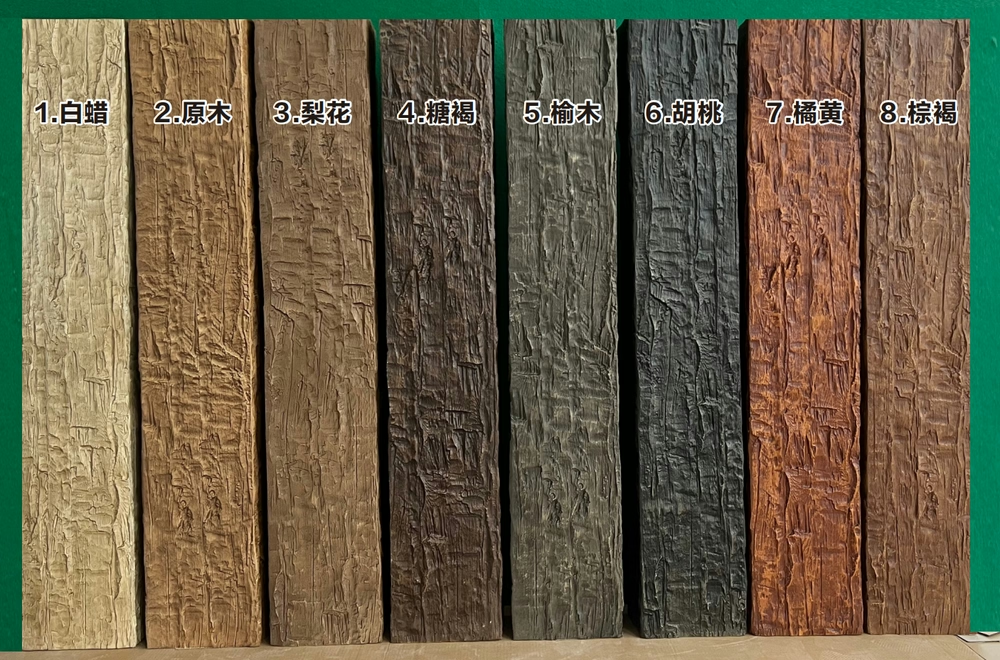
B&B guest room finishes should support the property's brand. A property that markets itself as a country retreat should use warm traditional finishes — honey pine, light oak, soft walnut. A property that markets itself as a modern boutique stay should use cleaner finishes — weathered gray, driftwood, bleached oak. A property that markets itself as a coastal escape should use coastal finishes — whitewashed, driftwood, pale oak.
For multi-property operators, the same finish can be specified across rooms for consistency, with variations in the beam count or the layout to differentiate specific rooms. For single-property operators, the finish should match the rest of the property's design, and the beam sample should be viewed alongside the room's other materials before the spec is locked.
The finish should also be practical. B&B rooms see hard use, with frequent turnovers, varied lighting preferences, and the occasional spill. A sealed topcoat is worth specifying for any B&B beam install, and the wipe-down surface should be a routine part of the room's housekeeping.
Bed-Centric Layouts
Most B&B guest rooms are organized around the bed, and the beam layout should support that. The most common configurations:
- Beams perpendicular to the bed draw the eye across the width of the room, which makes the bed feel anchored to the wall behind it. This works in rooms where the headboard wall is the main feature.
- Beams parallel to the bed emphasize the length of the room and the length of the bed. This works in longer rooms and in rooms where the bed is centered between two side walls.
- A single beam perpendicular to the bed, above the headboard creates a focal point that frames the bed and gives the room a clear architectural axis. This works in smaller rooms and in rooms where a full beam run would be too much.
For rooms with vaulted or sloped ceilings, the beam run follows the slope. The angles should be specified in the beam order so the cuts are right before the beams arrive on site.
Lighting Coordination
B&B guest rooms need flexible lighting that supports reading, sleeping, and relaxing. Beams can carry some of this lighting directly.
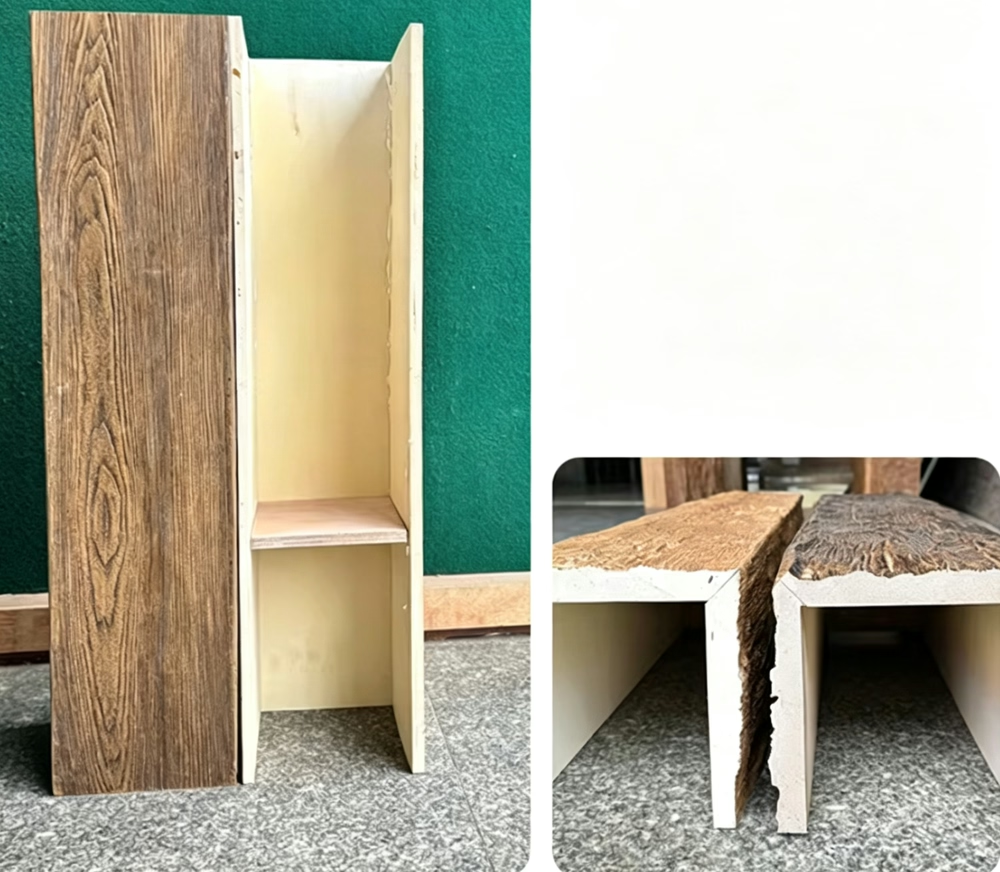
Reading lights mounted to the sides of the beams above the nightstands are a popular detail. The fixtures attach with a small surface-mounted junction box, and the wiring runs through a channel that is hidden by the beam's profile. Guests use the lights for reading, and the room keeps a clean look without bedside table lamps.
A statement pendant or chandelier centered on the ceiling between the beams gives the room a focal point and supports ambient light. The pendant should be on a dimmer so guests can adjust the brightness to their preference.
Recessed lights between the beams provide the room's general illumination. The number depends on the room's size — typically four to six fixtures for a standard guest room. All recessed circuits should be on dimmers for guest comfort.
For rooms with ceiling fans, the fan should be coordinated with the beam layout. The fan mounts to a fan-rated blocking point in the ceiling, and the wiring is hidden in the same way as the pendant. A simple white or wood-blade fan fits most B&B aesthetics.
The Bathroom Consideration
B&B guest bathrooms are often small, and the beam treatment needs to work in a humid environment. A few guidelines:
- Faux beams can be used in bathrooms with proper specification. The PU material handles humidity better than real wood, and the sealed finish protects the surface.
- Avoid direct shower exposure. Beams in the main bathroom area are fine, but beams in a wet-room shower enclosure should be specified with a marine-grade topcoat and verified for direct water exposure.
- Match the bedroom finish. The bathroom beam should be the same profile and finish as the bedroom beam, which gives the suite a coordinated look.
- Plan the ventilation. A bathroom with beams still needs proper exhaust ventilation. The beams do not change the ventilation requirement, but the layout should not block the exhaust fan.
For B&Bs where the guest suite includes a small private bathroom, continuing the beam treatment from the bedroom to the bathroom gives the suite a luxury feel. The bathroom beams are usually smaller in scale to suit the room size, but the finish and the style match.
Durability and Maintenance
B&B guest rooms see more use than owner-occupied bedrooms. The beam material should be specified for this use case.
PU faux wood beams handle B&B use well. The surface is durable, the finish is sealed, and the maintenance is minimal. A wipe-down with a damp cloth during routine housekeeping is usually enough. The beams do not need to be re-stained or re-finished, and they do not check or crack with humidity changes the way real wood does.
For operators running multiple properties, the same beam profile and finish can be specified across rooms, which simplifies the maintenance inventory and the replacement process. A spare beam or two in the storage closet, with the matching touch-up kit, covers the rare cases of damage from luggage, equipment, or heavy use.
For properties in coastal or humid environments, the marine-grade or coastal-grade topcoat is worth the small additional cost. The topcoat extends the finish life and reduces the maintenance cycle, which matters when the property is unoccupied for stretches of time.
The Cost-to-Experience Ratio
For B&B operators, the question is rarely whether faux beams are worth the cost. The question is what the install delivers in guest experience and rate positioning.
A guest room with a beamed ceiling photographs better for the listing, gets more positive reviews referencing the room's character, and supports a higher nightly rate than the same room without beams. The payback period for a typical beam install is short, often under a year for properties that charge premium rates.
For designers and contractors working on B&B projects, the install is fast and predictable. The crew arrives, installs the beams in a day, and the room is back in service the next day. The disruption to the property's operations is minimal, and the result is something the operator can market immediately.
What to Communicate to the Operator
A short conversation about what the beams will do — and what they will not do — saves revisions later. Faux beams are decorative, not structural. They handle the B&B humidity environment well but should not be used as a handhold or as a mounting point for heavy fixtures. They arrive finished and do not need additional painting or staining, which keeps the maintenance simple.
The other conversation is about the property's brand. The finish should support the brand, not work against it. A modern boutique B&B with rustic reclaimed beams sends a mixed message, and guests notice. A country retreat with sleek contemporary beams does the same. The finish is part of the property's positioning, and getting it right matters.
The End Result
A B&B guest room with faux wood beams is a room that guests remember. The ceiling contributes to the experience in a way that most other design elements cannot, and the durability of PU beams means the experience stays consistent across years of guest turnover. For operators, the investment is modest and the return is real. For designers, the design tool is flexible and reliable. For contractors, the install is fast and the result is something the operator is happy with.
Technical References
ASTM standards cited in every specification
Test Data
Lab results from internal testing program
Updated 2026
Reviewed against current product specs


