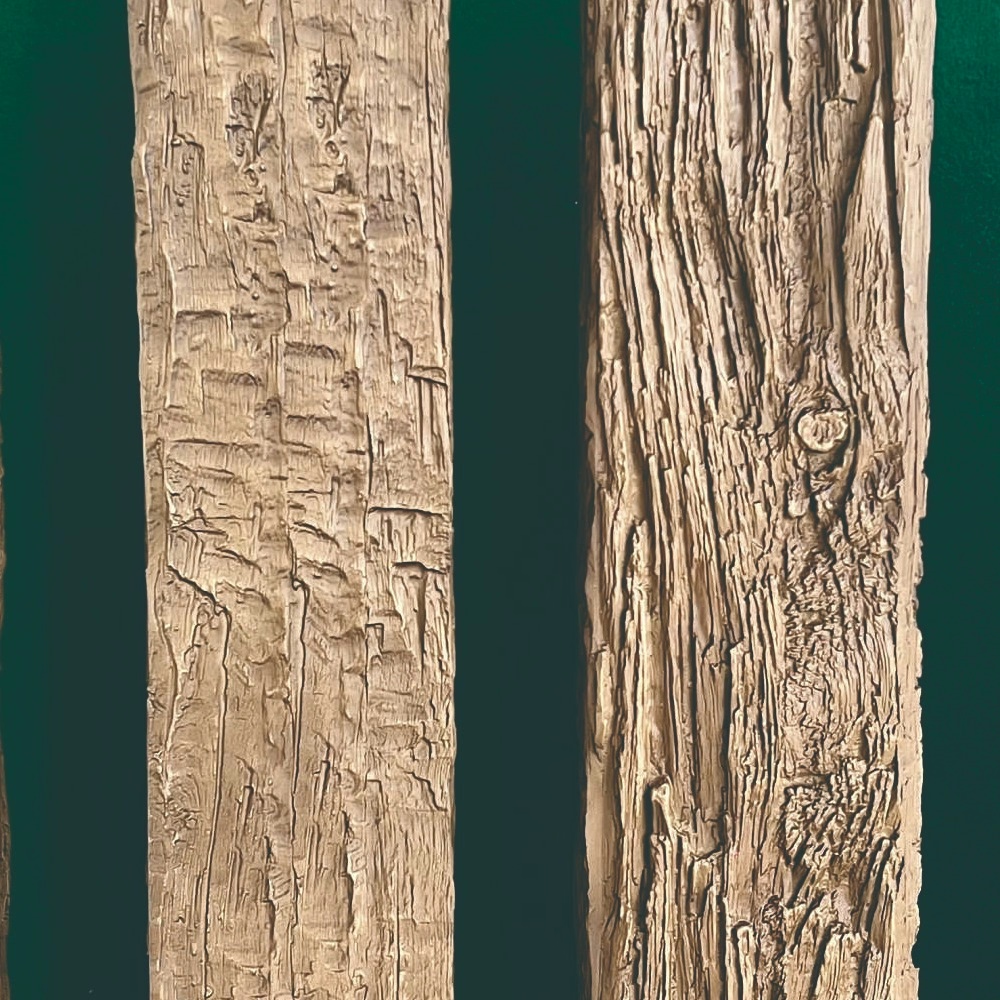
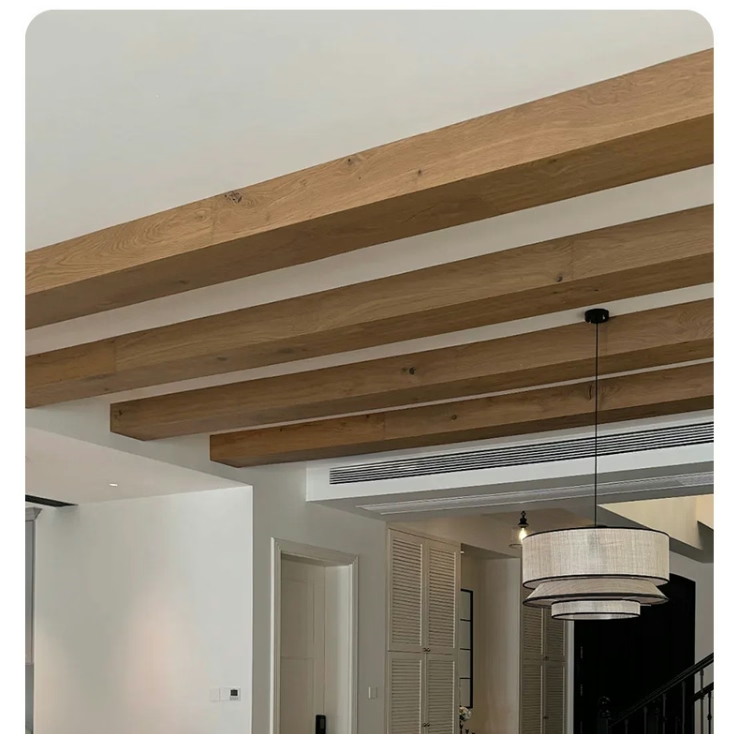
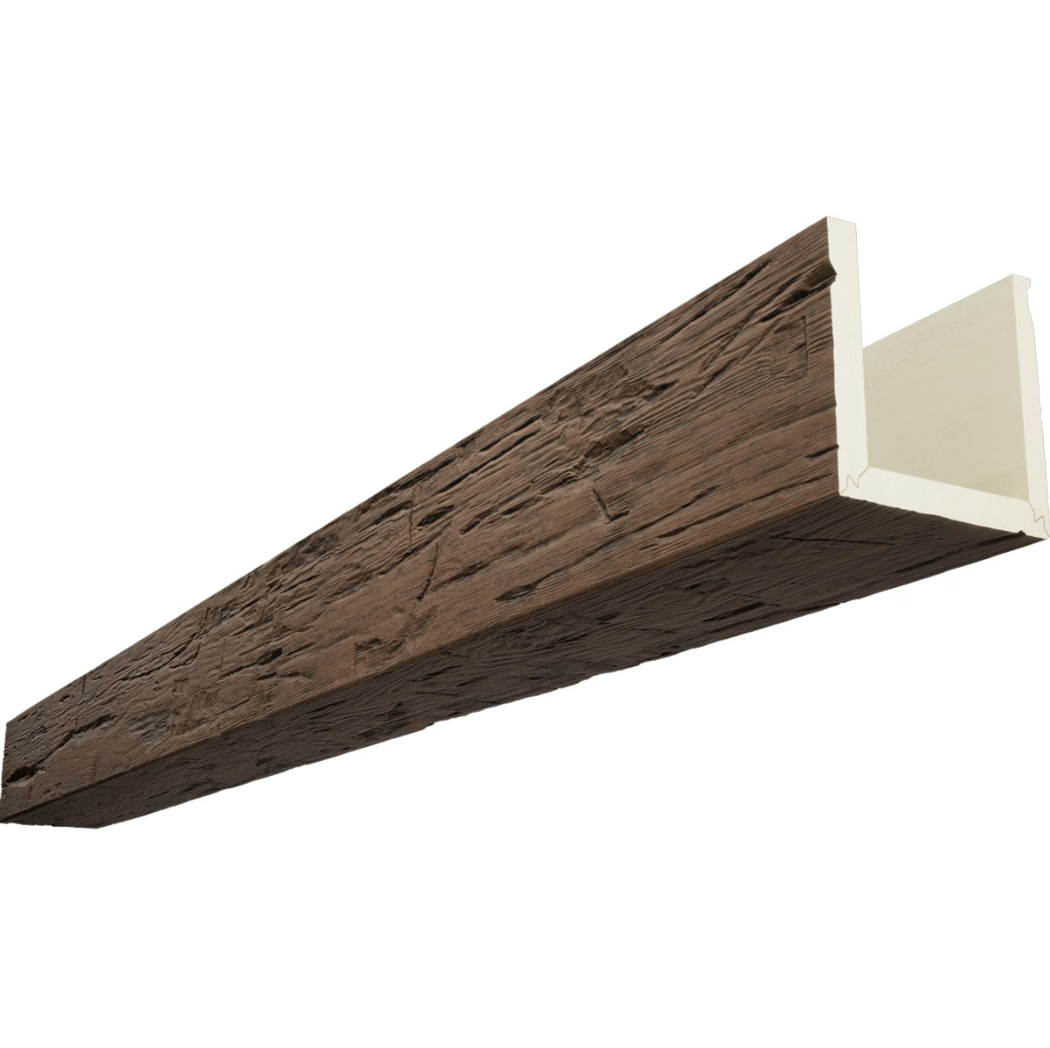
An OEM order for curved polyurethane resin faux beams is a different conversation than a one-off villa purchase. The brand owner is not asking whether a single beam looks good in a room. They are asking whether the factory can produce three hundred identical barrel vault ribs at the same radius, with the same finish, with packaging that bears their logo, and with documentation that satisfies an importer on three continents. That is a manufacturing brief, not a design brief.
What OEM Means in This Category
In the architectural millwork world, OEM production typically falls into three patterns. First, a regional distributor contracts the factory to produce beams under the distributor's brand, with the factory owning the tooling and the distributor owning the customer relationship. Second, a project contractor pre-orders a large quantity of beams for a multi-phase build, with the factory holding the mold for the duration of the project and producing additional units as the build progresses. Third, a chain hospitality or retail brand commissions a custom curved profile that becomes a recurring specification across all their locations.
In every case, the factory is no longer just a supplier. It is a production partner with its own quality standards, lead time commitments, and document trail. The brief that works for a one-off villa order will not work for an OEM run. The brief needs to define the radius, the profile, the finish, the packaging, the labeling, and the documentation up front.
The Profile Spec
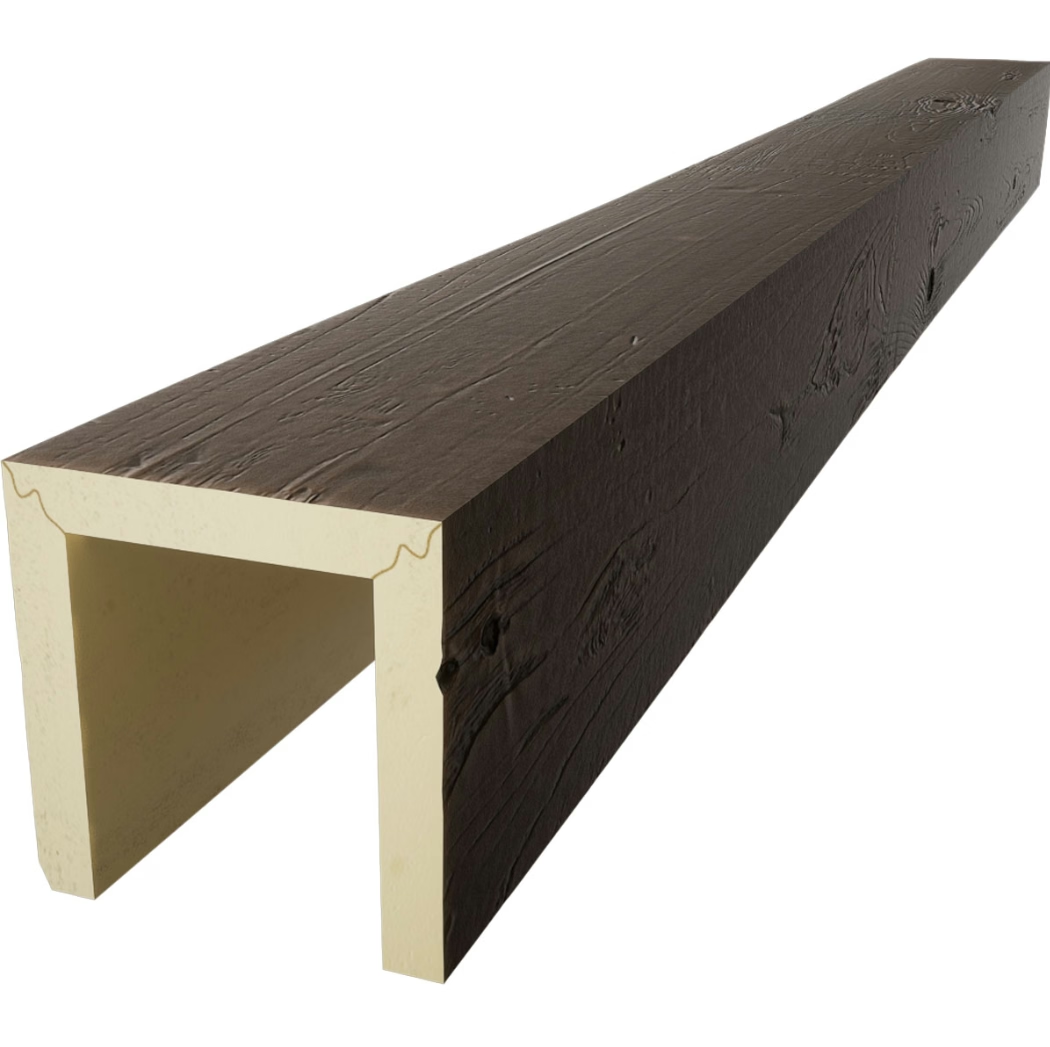
OEM orders almost always start with a drawing. The distributor or brand owner provides either a sketch with dimensions or a reference to a previous order with modifications. From that, the factory produces a CAD drawing that captures the cross-section profile — width, depth, edge details, any decorative coffering or chamfers — along with the radius for any curved runs.
For curved OEM work, the factory's mold-making capacity is the bottleneck. A single curve mold takes three to five days to produce on a CNC router, plus another two to three days for finishing and test pulls. If the OEM order requires three or four different radii — common in resort or hospitality projects where each zone has a different ceiling geometry — the mold schedule needs to start before the first production order is confirmed.
A practical OEM spec sheet looks something like:
- Profile width: 200 mm
- Profile depth: 150 mm
- Inner radius: 2.4 m
- Outer radius: 2.55 m
- Arc length: 5.2 m
- Finish: multi-layer antique oak
- Packaging: cardboard cradle, foam end caps, individual poly wrap
- Label: customer SKU, customer logo, batch number
That last item — the batch number — matters more than most first-time OEM buyers realize. It is how a warranty claim, a finish touch-up, or a reorder years later gets matched to the original production run.
Finish Consistency Across Production Runs
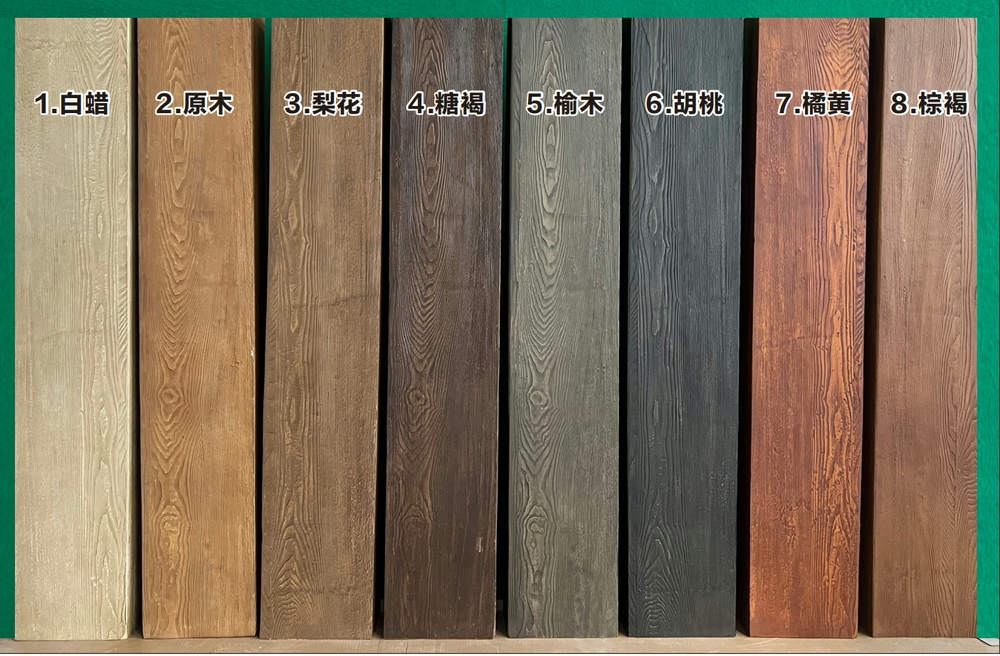
The hardest part of OEM curved beam production is not the molding. It is the finish. A factory pulling three hundred identical ribs over six weeks will see variations in humidity, temperature, stain batch, and finisher technique. Without a controlled process, the third container will not match the first.
Mature OEM factories handle this by:
- Mixing stain in large batches sufficient for an entire production run.
- Using reference samples signed off by the customer, kept under controlled conditions.
- Rotating finishers across the production run so no single person handles a disproportionate share.
- Pulling a finish sample from every tenth piece for a comparison check against the master.
- Photographically documenting the comparison under standardized lighting.
For the OEM customer, this means the approval sample and the production sample are not the same conversation. The approval sample establishes the direction. The production sample — pulled from the first full run — confirms the factory can repeat it at scale. Both gates should be in the purchase order.
Packaging for Container Shipping
Curved beams pack differently than straight ones. The natural arc of the beam means it cannot be stacked flat in a container the way a straight beam can. There are three common approaches, each with trade-offs.
Vertical racking. Beams stand on end in a custom wooden rack, with each beam cradled in foam to protect the curve. This method gives the best protection but uses more container volume per beam.
Nested curves. Beams with the same radius but slightly different lengths can be nested curve-to-curve, like stacking parentheses. This method is space-efficient but requires careful foam interleaving to prevent finish damage.
Flat crating with curve formers. The beam is laid in a cradle shaped to its curve, with the cradle disassembled at the destination. This method is the most common for export because it fits standard container dimensions.
For a thirty-container OEM order, the packaging decision can swing landed cost by 8 to 15 percent. The factory's logistics team should be in the conversation before the first mold is cut, not after.

Documentation That Importers Expect
A serious OEM customer — usually an importer or large distributor — needs documentation that satisfies their downstream compliance requirements. The standard package includes:
- Commercial invoice with HS code and country of origin.
- Packing list with piece count, weight, and volume per crate.
- Material safety data sheet for the resin formulation.
- Fire performance certificate (typically ASTM E84 or EN 13501-1 class).
- Finishing process record with stain and sealer batch numbers.
- Pre-shipment sample photographs under standardized lighting.
- Container loading photographs.
Some OEM customers also require a Certificate of Conformity signed by the factory's quality manager, or a third-party inspection report. These documents add a few days to the pre-shipment process but eliminate most of the disputes that arise when a container arrives at the destination port.
Lead Times and Reorder Cycles
A first OEM order — meaning the first time a specific curved profile is produced for a specific customer — typically runs 10 to 14 weeks from purchase order to ex-factory readiness. That breaks down roughly as:
- Drawing confirmation and sample approval: 2 to 3 weeks
- Mold production: 1 to 2 weeks
- Production run: 3 to 5 weeks
- Finishing and inspection: 1 to 2 weeks
- Crating and documentation: 1 week
A reorder against an existing mold runs much faster — typically 4 to 6 weeks — because the mold is ready and the finish reference is on file. OEM customers who plan their reorder cycles around this rhythm avoid stockouts on the project site.
What Makes an OEM Relationship Work
The OEM factories that retain their customers year over year tend to share a few habits. They assign a single point of contact for the duration of the project. They share production photos weekly. They flag any deviation from the spec before proceeding, not after. They treat the customer's brand as their own — which means no factory markings on the finished product, no mixed batches in a single crate, no shortcuts on packaging.
For OEM customers evaluating a new supplier, the right first conversation is not about price. It is about how the factory handles a deviation. The supplier that admits it caught a finish mismatch on piece 47 of 300 and replaced it before shipment is the supplier worth scaling with.
Pricing Models for OEM Volume
OEM pricing for curved PU beams typically follows one of three models, depending on the customer's volume and the factory's production capacity.
Per-piece pricing with volume breaks. The most common model. The unit price decreases as the order quantity increases, with breaks at 25, 50, 100, and 250 pieces. A first order of 50 beams might carry a higher per-piece cost than the same 50 beams as part of a 200-beam annual commitment.
Annual commitment pricing. The customer commits to a minimum annual volume in exchange for a locked unit price and priority production scheduling. This model works for distributors who carry stock and reorder regularly throughout the year.
Project pricing. For very large projects — say, a 500-beam hotel package — the factory may quote a project price that covers the mold cost, the production run, and the finishing in a single line item. This model simplifies budgeting and removes the per-piece unit cost discussion.
The right model depends on the customer's purchasing patterns. A distributor who buys 30 beams at a time, four times a year, benefits from volume-break pricing. A brand owner who buys 200 beams in a single project benefits from project pricing. A specialty importer who carries a wide range of profiles benefits from an annual commitment that gives them scheduling priority.
Scaling With an OEM Partner
The value of an OEM relationship compounds over time. The first project establishes the profile, the finish, and the communication patterns. The second project refines the process. By the third project, the relationship runs smoothly because both parties know what to expect.
For distributors building a product line around curved PU beams, the OEM relationship also provides a path to customization. A profile that starts as a catalog item can become a private-label exclusive with minimal additional investment. The factory produces it; the distributor sells it under their brand. The customer relationship stays with the distributor.
For project contractors, the OEM relationship provides pricing stability across multi-phase projects. A hotel project that rolls out over three years benefits from a price that was agreed at the beginning, adjusted only for material cost increases. The contractor knows what the millwork will cost before the first foundation is poured.
Common OEM Pitfalls
The most common pitfall in OEM curved beam procurement is under-specifying the first order. A buyer who orders 50 beams with a generic finish, planning to refine the spec later, ends up with 50 beams that do not quite match the second order of 75 beams, because the finish reference was not established.
The solution is simple: the first order should be treated as the establishment of the standard, not as a test run. The approval sample should be signed and retained. The finish batch should be documented. The mold should be stored and maintained for future production.
The second most common pitfall is failing to plan for reorders. A project that needs 150 beams spread across four phases should have the full 150 in the original production plan, even if the phases are invoiced separately. Producing the full run at once ensures consistency and typically costs less than four separate runs of 37 or 38 beams.
The third pitfall is inadequate packaging specification. A buyer who does not specify packaging in detail receives whatever the factory's standard is. For international shipments, standard packaging may not survive ocean freight. Custom crating with extra reinforcement costs more upfront but prevents the damage claims that follow a container that arrives with 30 percent of the beams cracked.
Technical References
ASTM standards cited in every specification
Test Data
Lab results from internal testing program
Updated 2026
Reviewed against current product specs