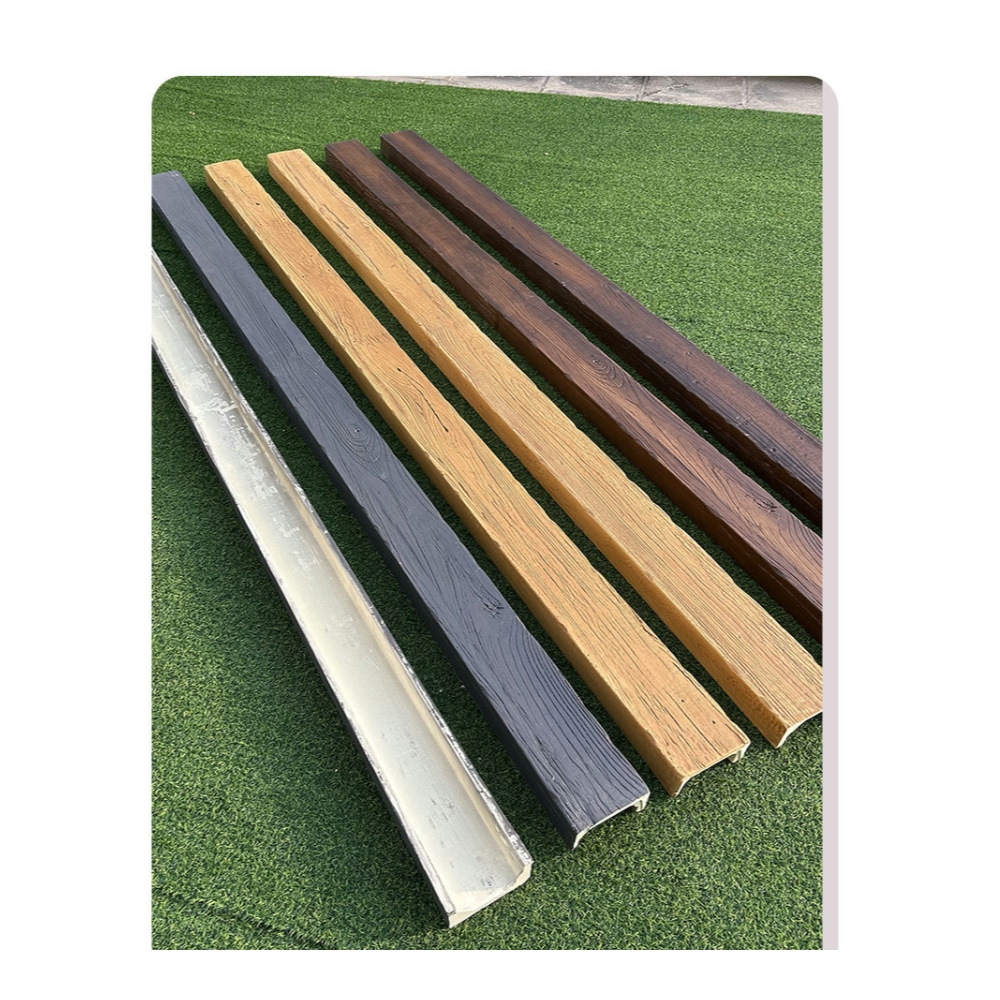
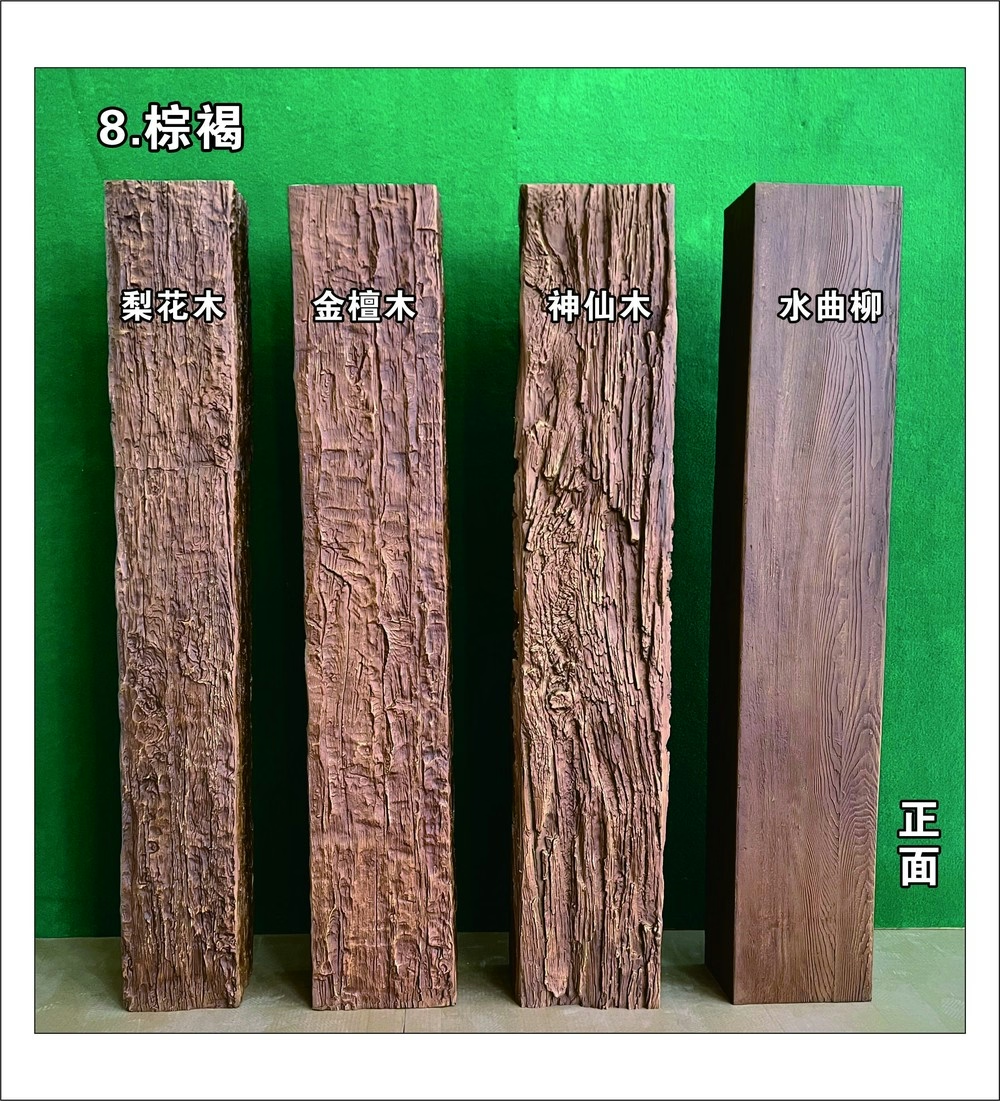
A U-channel beam does two jobs at once. It presents a finished wood face to the room, and it houses whatever the ceiling needs to hide — LED strips, low-voltage wiring, sprinkler lines, even small speakers. Custom cut U-channel hollow faux wood decorative ceiling beams deliver both jobs at the lengths the project requires, with factory precision on the cuts and the finish.
Why Hollow Beats Solid for Some Applications
A solid beam is one thing — a piece of decorative millwork that hangs from the ceiling. A U-channel beam is something else — a piece of decorative millwork that also serves as a raceway for the building systems. For projects where the ceiling is asked to integrate lighting, audio, or mechanical services, the U-channel profile is the cleanest path.
The hollow channel is the key. It runs the full length of the beam, opening at one or both ends to allow wiring or piping to enter and exit. The channel width and depth are sized to the systems they need to house. A standard LED strip fits in a 12 by 8 millimeter channel. A higher-output linear fixture needs a 30 by 15 millimeter channel. A small speaker might need a 100 by 80 millimeter channel. The factory builds the channel dimensions to match the systems specified.
The hollow construction also makes the beam lighter than a solid beam of the same exterior dimensions. For long spans or installations where weight is a concern, this weight reduction is meaningful. A 5-meter U-channel beam at 200 millimeter width might weigh 18 to 25 kilograms, compared to 35 to 45 kilograms for a solid beam of the same size.
Common Channel Uses
U-channel beams serve different functions depending on the project. The most common uses fall into a handful of categories.
Linear LED integration. A continuous LED strip mounted inside the channel, facing down or toward a wall, produces a continuous line of light along the beam's length. The LED driver is located remotely, with low-voltage wiring running through the channel to the strip. For curved beams, the LED strip follows the curve because the channel provides the track.
Cove and accent lighting. The channel faces away from the room, with the LED strip hidden behind the beam's lip. Light reflects off the ceiling above the beam, producing a soft indirect glow. The beam looks like solid wood; the lighting is invisible until it is turned on.
Speaker housing. Small in-ceiling speakers mount to an adapter ring inside the channel. The speaker grille is the only visible element; the rest of the speaker, the wiring, and the mounting hardware are hidden inside the beam.
Conduit and wiring concealment. In commercial applications, the U-channel can house low-voltage wiring, security cables, or even small-diameter conduit. The beam becomes a decorative cover for systems that have to run along the ceiling.
Multi-function channels. Some designs combine two or more of these uses in a single beam — for example, a down-facing LED channel and a side-facing accent channel, or an LED channel and a wiring channel. The factory builds the mold to capture both channels in a single piece.

Custom Length Considerations
Custom cut U-channel beams follow the same specification principles as solid beams, with one important addition: the channel ends need to be detailed alongside the beam ends.
The channel opening at each end of the beam can be:
Open. The channel runs all the way to the end of the beam, with the wiring or piping entering or exiting through the open end. This is the most common configuration, particularly when the beam ends at a wall where the wiring can pass into the wall cavity.
Capped. The channel is closed at one or both ends with a factory-installed end cap. The end cap can be a simple flat plate or a decorative profile that matches the beam's cross-section. Capped ends are used when the beam terminates in the open and the channel should not be visible.
Transitioned. The channel transitions into a junction box, a wall plate, or a continuation of the wiring run outside the beam. This configuration requires the factory to coordinate the channel end with the electrical rough-in, and may require a custom end cap with a knockout for the wiring.
For each end of each beam, the take-off should specify the channel end condition. An open channel end at a wall-to-wall beam, a capped channel end at a freestanding beam, and a transitioned channel end where the beam meets an adjacent structure — each of these needs to be in the take-off.
Factory Cut Quality
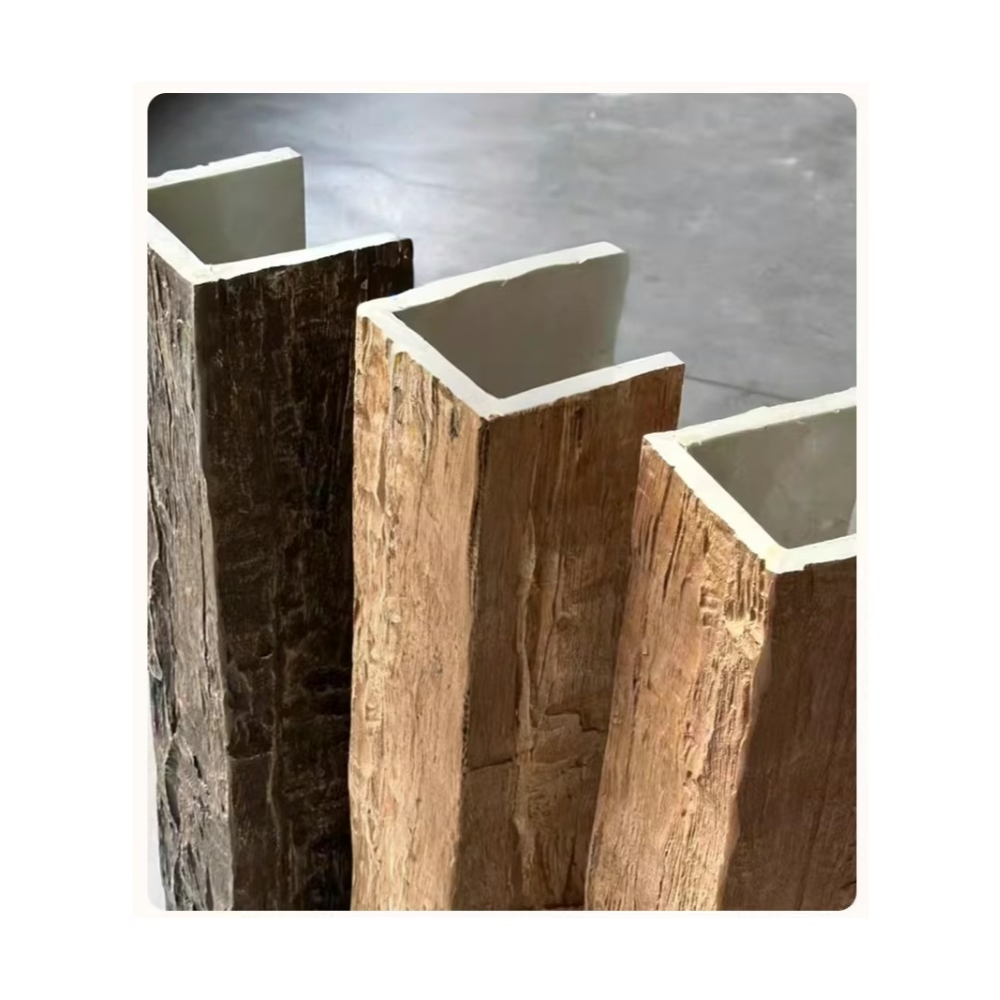
The cut quality on a U-channel beam matters more than on a solid beam, because the cut exposes the interior of the channel. A rough cut leaves visible tool marks on the channel interior, which can be visible from below if the channel faces the room or if the LED light catches the cut edge.
The factory typically cuts U-channel beams on a CNC saw or a CNC router, depending on the profile. The cut is square, clean, and free of tear-out. For channels with finished interiors, the cut edges are then finished by hand to match the surrounding channel surface.
For beams where the channel is not visible from the room — for example, a channel that faces the ceiling for cove lighting — the cut quality on the channel interior is less critical. The factory's standard cut is usually acceptable.
For beams where the channel is visible — for example, a down-facing channel with LED strips — the cut quality on the channel interior is important. The factory may need to apply the same finish to the channel interior as to the beam face, with the cut edge finished to match.
Wiring and Integration on Site
U-channel beam installation typically coordinates with the electrical rough-in. The rough-in electrician runs the low-voltage wiring to the location of each beam, with the wiring entering the channel from one end or through a junction box on the ceiling.
The beam installer then lifts the beam into position, feeds the wiring through the channel, and fastens the beam to the track or blocking. Once the beam is in place, the electrician connects the wiring to the LED strip, the speaker, or the device that the channel houses.
For projects with multiple beams, the wiring layout is planned in advance. The factory typically provides a wiring diagram that shows how each beam's channel connects to the electrical system, with the wire gauge, the driver location, and the circuit assignment specified for each run.
Finishes for U-Channel Beams
The finish on a U-channel beam follows the same principles as a solid beam, with the addition of the channel interior finish.
For LED channels, the interior is usually painted matte black or matte white. A matte black interior absorbs stray light and prevents hot spots or color shifts in the LED output. A matte white interior reflects light back into the channel, which can increase the apparent brightness but also increases the visibility of any dust or debris inside the channel.
For channels housing speakers, the interior finish is usually a neutral tone that does not show through the speaker grille. A black or grey interior is typical.
For channels housing wiring or conduit, the interior finish is often left natural or primed. The wiring or conduit fills most of the channel, so the interior finish is not visible after installation.
The exterior finish of the U-channel beam matches the surrounding millwork. The stain, glaze, and sealer are applied to the visible faces of the beam, with the factory's standard finishing process used.
When to Specify U-Channel Over Solid
The decision between a U-channel beam and a solid beam is straightforward. If the ceiling needs integrated lighting, audio, or wiring concealment, the U-channel is the right choice. If the ceiling does not need these features, a solid beam is simpler, cheaper, and easier to install.
For projects where the ceiling is being asked to do more than just hang a decorative element, the U-channel beam is what turns the ceiling from a passive surface into an active part of the building systems. Custom cut lengths from the factory ensure that the integration is clean, the finish is consistent, and the installation runs on schedule.
Technical References
ASTM standards cited in every specification
Test Data
Lab results from internal testing program
Updated 2026
Reviewed against current product specs