
A decorative beam rarely stands alone. It meets a wall and needs a trim piece at the joint. It spans a fireplace and needs a mantel above it. It terminates in a room corner and needs a corbel to support the visual weight. Custom decorative polyurethane millwork covers all of these elements — the trim, the corbels, the mantels, the medallions, the wall panels, and everything else that makes a ceiling installation look finished.
Why Millwork Belongs With the Beams
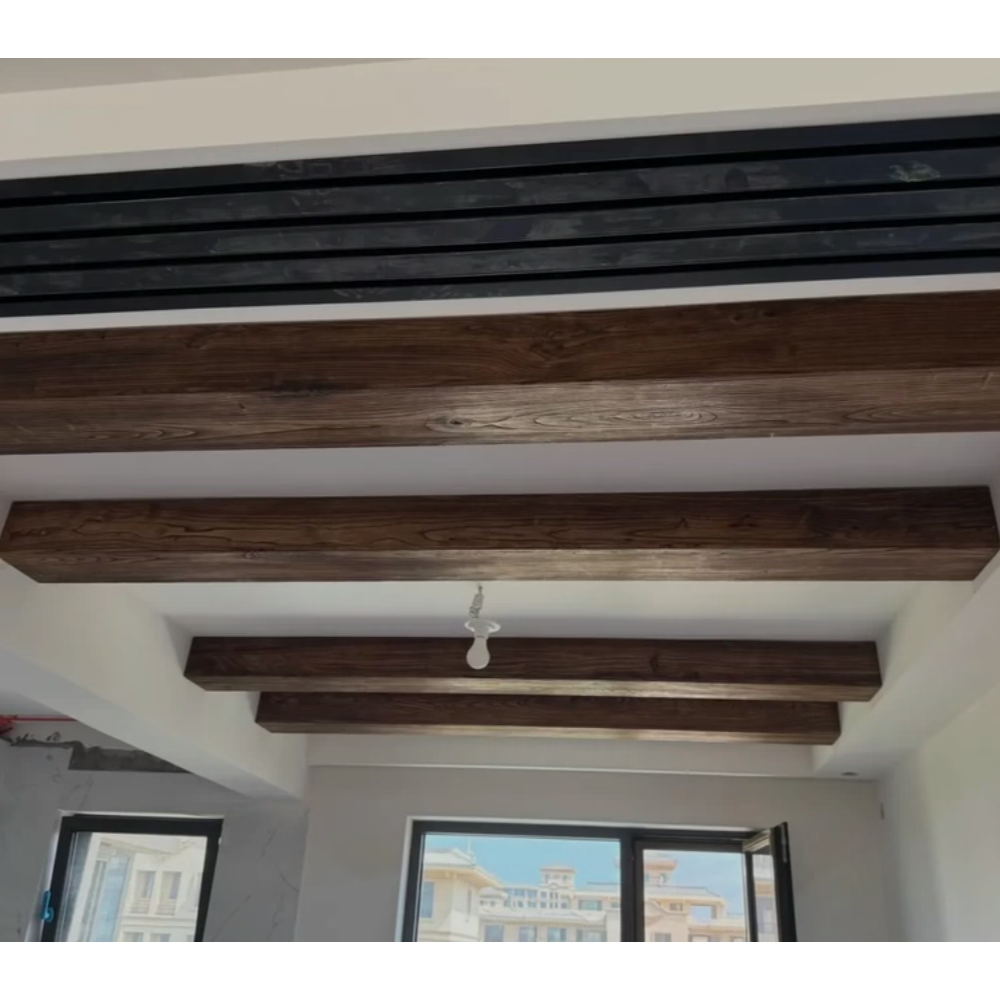
The instinct is to source the beams from one supplier and the trim from another. This works when the beam and the trim are simple — a rectangular beam and a basic trim piece. When the beam has a custom profile or a custom finish, the trim has to match, and matching is easier when one factory produces both.
A corbel that is supposed to match a custom beam profile needs to be carved or molded from the same profile reference. The grain depth, the stain tone, the glaze in the recesses — these all have to be coordinated. A factory that makes the beam can make the corbel, using the same mold reference and the same finishing process.
A mantel that sits above a beam installation needs to match the beam's profile and finish. If the mantel is sourced separately, the finisher has to match two products from different suppliers, which is harder than matching a factory sample to its own production.
For projects with multiple millwork types — beams, corbels, mantels, ceiling medallions, wall panels — the most efficient approach is a single factory order with a coordinated production schedule.
Corbels and Brackets
Corbels and brackets are the most common millwork companion to decorative beams. They appear at the beam ends where the beam meets a wall, at beam-to-beam joints in a coffered ceiling, and anywhere else where the visual weight of the beam needs to be carried.
Polyurethane corbels are produced by molding or CNC machining, depending on the complexity of the profile. A simple bracket — a flat shape with a decorative silhouette — can be produced from a flat sheet of PU with the silhouette cut on a CNC router. A more complex corbel — with a volute, a vine carving, or a detailed architectural profile — requires a mold.
The corbel profile is specified by the architect or the interior designer, typically by reference to a catalog drawing or a custom sketch. The factory produces a sample for approval, then proceeds with the production run.
Corbels are available in several common sizes, but custom sizes are also produced. The size is determined by the visual weight it needs to carry. A small decorative corbel under a lightweight beam might be 150 by 200 millimeters. A large corbel under a substantial beam might be 300 by 400 millimeters. The proportion should match the beam it accompanies.
Mantels and Shelf Pieces
A mantel above a fireplace is both a structural shelf and a decorative element. Polyurethane mantels are hollow, which reduces weight and allows them to be installed without structural support. The hollow construction also provides space for wiring if the mantel includes integrated lighting or a television.
The mantel profile is specified to match the beam profile in the room. A room with rectangular beam profiles typically has a rectangular mantel. A room with chamfered beam profiles typically has a chamfered mantel. The factory can match any beam profile to a mantel profile.
The mantel depth — how far it projects from the wall — is specified by the fireplace dimensions and the desired visual proportion. A deeper mantel reads as more substantial; a shallower mantel reads as more contemporary.
For fireplaces with a TV above, the mantel depth is often increased to provide clearance for the television. The factory can produce a mantel with a recessed channel on the back face to accept a flat-screen television, with the television appearing to float above the fireplace.
Ceiling Medallions and Enrichments
Ceiling medallions are circular or octagonal decorative elements that surround a chandelier or ceiling light fixture. They sit at the center of a ceiling composition and often frame the point where multiple beams converge.
Polyurethane ceiling medallions are molded in one piece, with the diameter ranging from 300 millimeters to over 1,000 millimeters for grand-scale installations. The surface of the medallion is enriched with acanthus leaves, rosettes, egg-and-dart molding, or other classical ornament.
The medallion finish typically matches the beams in the room. A dark antique oak medallion in a room with dark antique oak beams creates a cohesive ceiling composition.
For rooms with a central medallion and radiating beams, the medallion installation is the first step. The beams are then installed radiating outward from the medallion, with the beam ends fitted and finished against the medallion face.
Wall Panels and Wainscoting
Wall panels and wainscoting are millwork elements that coordinate with the ceiling beams to define the upper portion of a room. They are not always part of the same order, but when they are, the coordination is tighter.
A wall panel that matches a beam profile uses the same profile cross-section, the same grain depth, and the same finish as the beams. The panel is attached to the wall with adhesive and finishing nails, with the joints between panels hidden behind the panel's own profile.
Wainscoting — a continuous horizontal band of paneling that runs around the room — is specified with a height, a rail and stile profile, and a panel type. The rail and stile profile matches the beam profile; the panel type is chosen to complement the ceiling design.
For rooms with exposed beam ends, the wall panel or wainscoting often extends to meet the beam. The termination detail — where the panel meets the beam — is coordinated with the factory to ensure a clean joint.
Trim Profiles and Moldings
Trim profiles and moldings are the small-scale millwork that finishes the joints and transitions in a beam installation. They include crown moldings where the beam meets the ceiling, bed moldings where the beam meets the wall, and base moldings where the wall meets the floor.
Polyurethane trim profiles are available in standard catalog shapes, but custom profiles are also produced. A custom crown molding that matches a custom beam profile is specified by the same profile reference drawing.
For beam installations in historic or traditional interiors, the trim profiles are often specified by reference to a period moldings book. The factory sources or produces the correct profile and matches the finish to the beams.
Coordination and Sequencing
The most efficient millwork order is one that includes all the elements for a room or a project in a single purchase order. The factory coordinates the production so that all elements are finished to the same standard and shipped together.
The sequencing on site is typically:
- Ceiling medallion and beam track system.
- Beams radiating from the medallion or running along the ceiling.
- Corbels and brackets at beam ends and joints.
- Mantel above the fireplace.
- Wall panels and wainscoting.
- Trim moldings at joints and transitions.
For a well-coordinated millwork package, the installation crew works from a single layout drawing that shows all the elements in their correct positions. The drawing is produced by the factory from the project drawings, reviewed by the design team, and approved before production begins.
Finishing Coordination
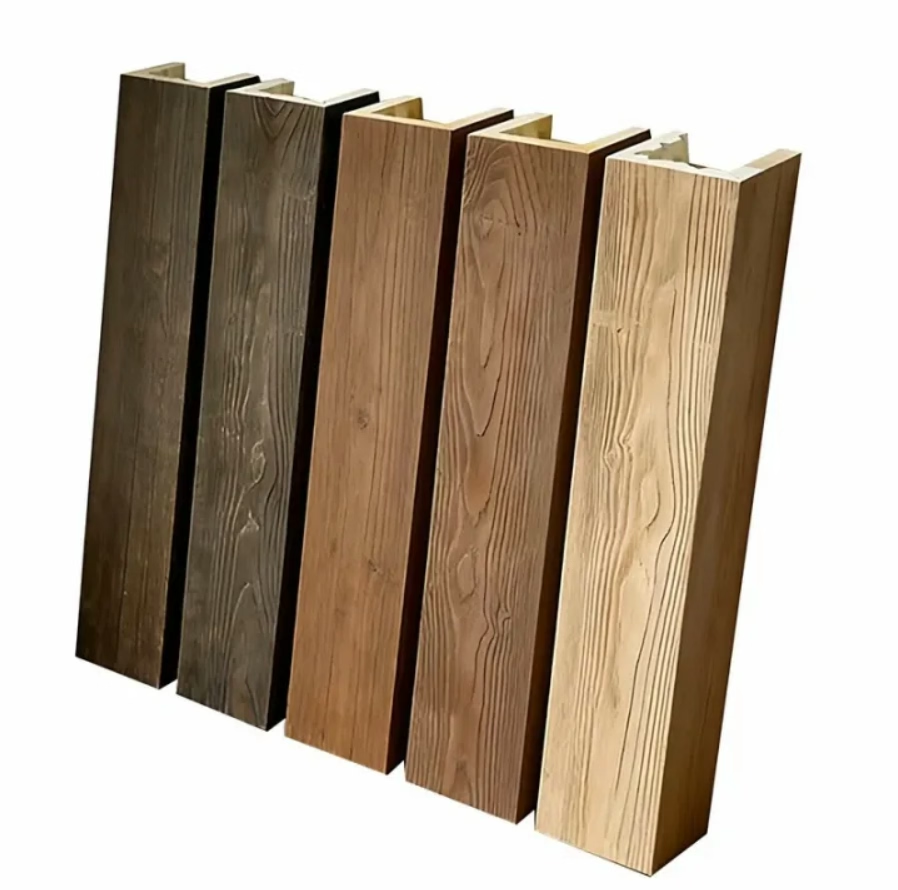
The finish on all millwork elements should match, whether they are produced by the same factory or sourced separately. The factory that produces the beams can also produce finish samples for the corbels, mantels, medallions, and trim.
For multi-element millwork packages, the factory typically produces one sample of each element type — a beam sample, a corbel sample, a mantel sample — for approval. The samples are produced from the same batch of stain and the same sealer, ensuring consistency.
A well-coordinated millwork package from a single factory is the most reliable way to achieve a cohesive finish. Every element matches every other element, and the installation crew has a single supplier to work with.
Technical References
ASTM standards cited in every specification
Test Data
Lab results from internal testing program
Updated 2026
Reviewed against current product specs


