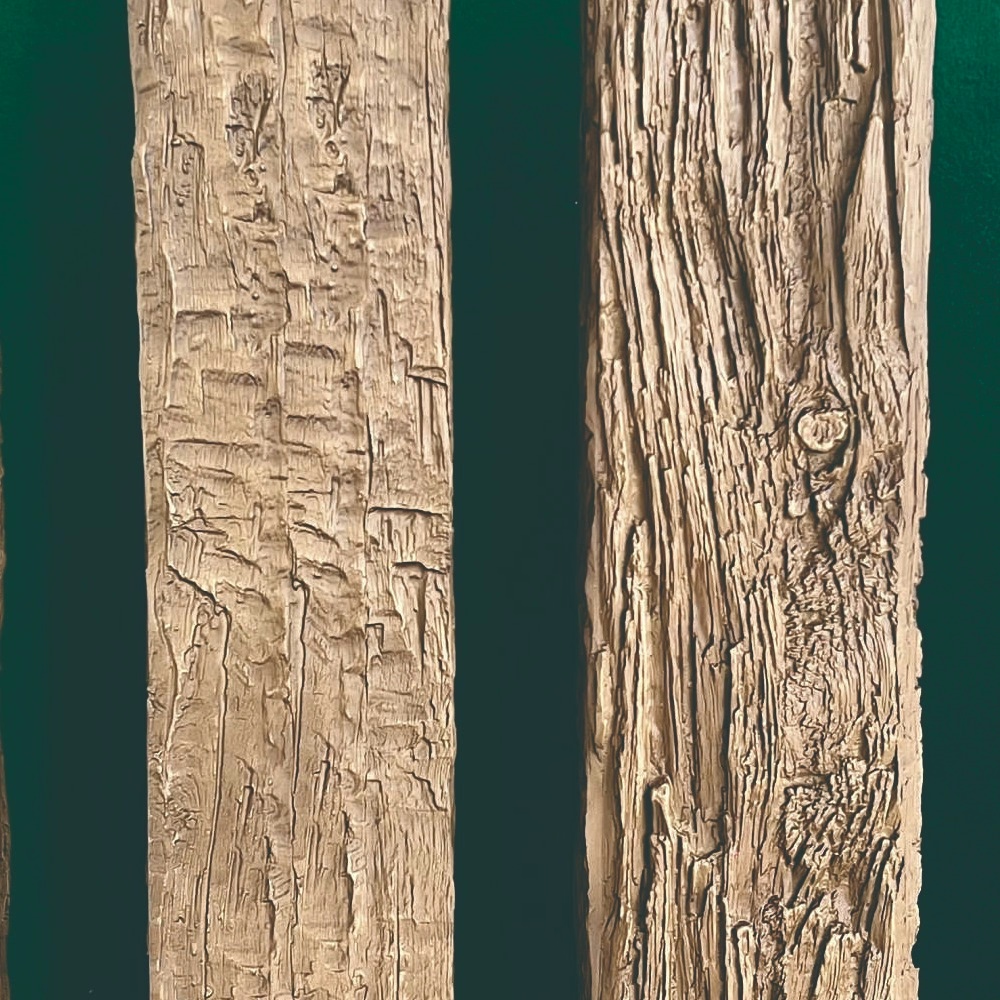
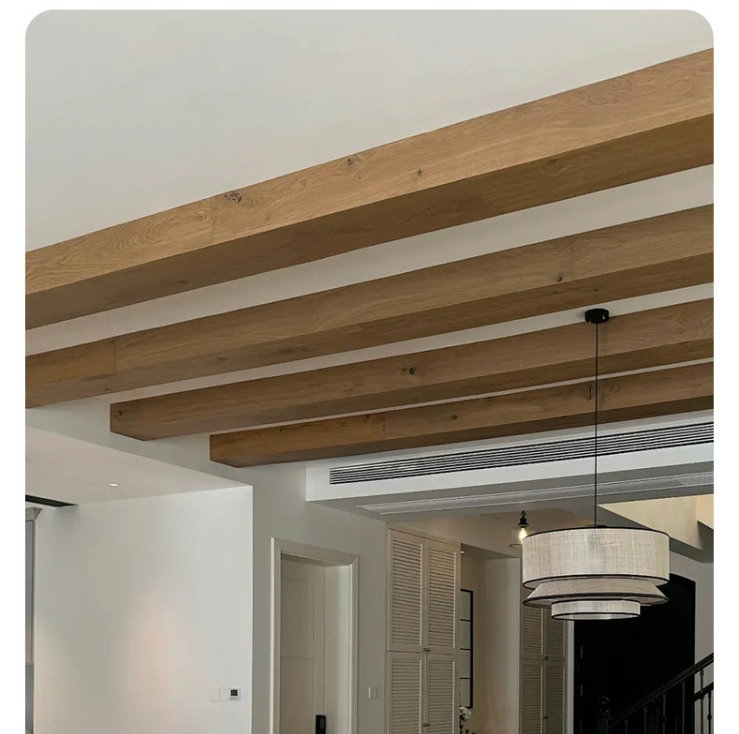
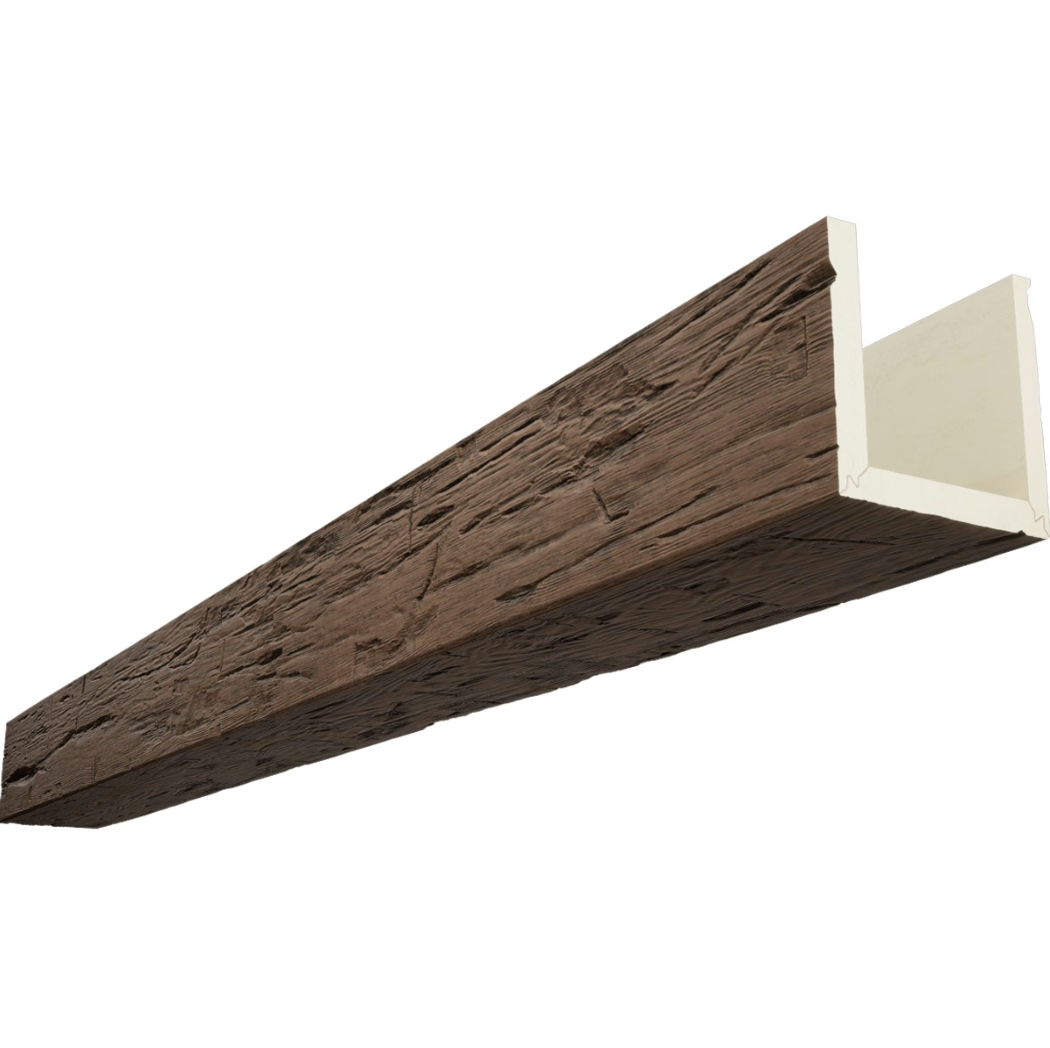
Interior faux wood beams live in controlled conditions. The temperature is stable, the humidity is manageable, and the sun does not reach them directly. Exterior beams are a different challenge. They face UV radiation, rain, temperature cycles, freeze-thaw conditions, and the slow abrasion of windborne dust. Custom outdoor-grade polyurethane resin faux wood beams with deep-molded grain are engineered to survive these conditions while maintaining the appearance of real timber.
What Makes a Beam Exterior-Grade
An exterior-grade PU beam is not the same product as an interior-grade beam with a different finish. The resin formulation, the additive package, and the production process are all different.
The resin in an exterior-grade beam is UV-stabilized. Ultraviolet radiation breaks down the polymer bonds in standard PU, causing the surface to chalk, crack, and fade over time. UV stabilizers — chemical compounds that absorb or reflect the UV radiation — extend the service life of the beam in direct sunlight. The stabilizers are mixed into the resin at the formulation stage, so they are present throughout the beam wall, not just on the surface.
The surface coating on an exterior-grade beam is different from the interior equivalent. Standard interior sealer is designed to resist scuffing and cleaning; it is not designed for UV exposure or moisture. Exterior-grade beams use a different coating system — typically a UV-stable polyurethane or acrylic coating — that maintains its gloss, color, and integrity under solar radiation.
The mold release agent used in production is also different. Interior-grade mold release agents may leave a residue that interferes with exterior coatings. Exterior-grade production uses a different release system that produces a clean surface ready for the UV-stable coating.
For importers specifying exterior beams, the question to ask the factory is simple: what is the expected service life of the beam under direct UV exposure? A factory that cannot answer this question should not be supplying exterior products.
Deep Grain for Exterior Performance
The deep grain on an exterior beam serves a functional purpose as well as an aesthetic one. The deeper the grain — 2 to 3 millimeters or more — the more surface area the finish has to grip. A deep grain finish is more resistant to delamination than a shallow grain finish, because the coating follows the contours of the grain rather than sitting on a flat surface.
For exterior applications, the grain depth is typically specified at the maximum achievable for the profile — usually 2.5 to 3 millimeters. This depth is enough to read clearly on a large-scale exterior element like a pergola beam or a facade trim piece, and it provides the maximum surface area for the coating system.
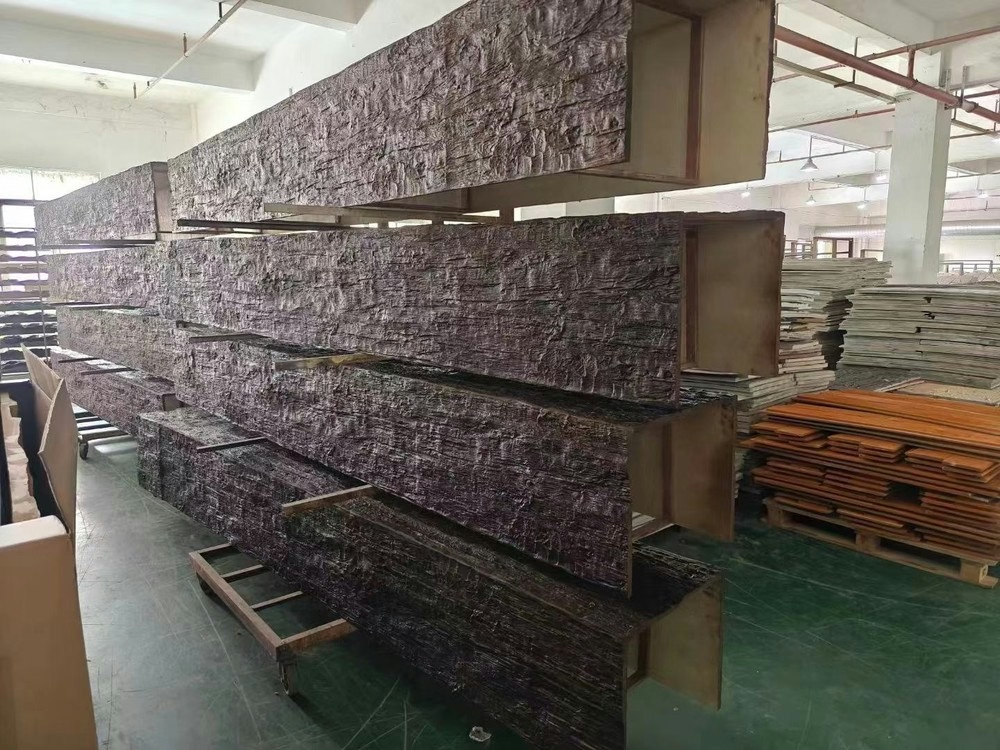
The finish on an exterior beam is typically applied in multiple coats, with each coat cured before the next is applied. The base coat is a primer or adhesion promoter that bonds to the PU substrate. The intermediate coats build the color depth. The top coat is the UV-stable clear that protects the entire system.
For beams that are exposed to direct sun for most of the day, a slightly lighter finish tone is often specified, because the UV exposure will darken the beam slightly over time. A beam that is specified to match an interior finish at the time of installation may look too dark after two or three years of sun exposure.
Common Exterior Applications
Exterior PU beams serve several application types, each with its own requirements.
Pergolas and covered patios. The beams are exposed on three or four sides, with no ceiling above to provide shade. The UV exposure is high, particularly on south and west-facing installations. The beams are typically supported on posts or mounted to a structure, with the grain running along the length.
Eaves and soffits. The beams are sheltered by the roof above but exposed to wind-driven rain and reflected UV from adjacent surfaces. The exposure is lower than a pergola, but the moisture resistance requirement is higher because the beams may be in contact with roof runoff.
Facade trim and accents. Beams used as decorative trim on building facades — above windows, along parapets, at cornice lines — are exposed to sun and rain but are not structural. The aesthetic requirements are high; the structural requirements are minimal.
Loggia and colonnade ceilings. A loggia — a roofed gallery open on one or more sides — has beams that are sheltered from direct rain but exposed to wind and indirect sunlight. The exposure is moderate, and the finish requirements are similar to interior beams.
Pool enclosures and wet areas. Beams near pools, spas, and water features are exposed to high humidity and occasional splash. The resin and the coating must be formulated for moisture resistance, and the installation details must prevent water from pooling on or behind the beams.
Structural Considerations for Exterior Installations
Exterior decorative beams are not structural members in most applications. They are attached to a structure — a pergola frame, a roof soffit, a building facade — that provides the actual support.
The attachment method for exterior beams is more robust than for interior beams. Exterior conditions introduce wind load, thermal movement, and moisture-related forces that do not affect interior installations. The fasteners are typically stainless steel or hot-dipped galvanized, and the attachment spacing is tighter.
For pergola installations, the beam is usually supported on posts or hung from a ledger with steel brackets. The brackets are concealed behind the beam or incorporated into the design. The connection between the bracket and the beam is made with stainless steel screws through the beam web.
For soffit installations, the beam is attached to blocking or to a continuous track, similar to an interior installation. The blocking is pressure-treated or corrosion-resistant, and the attachment uses stainless steel screws.
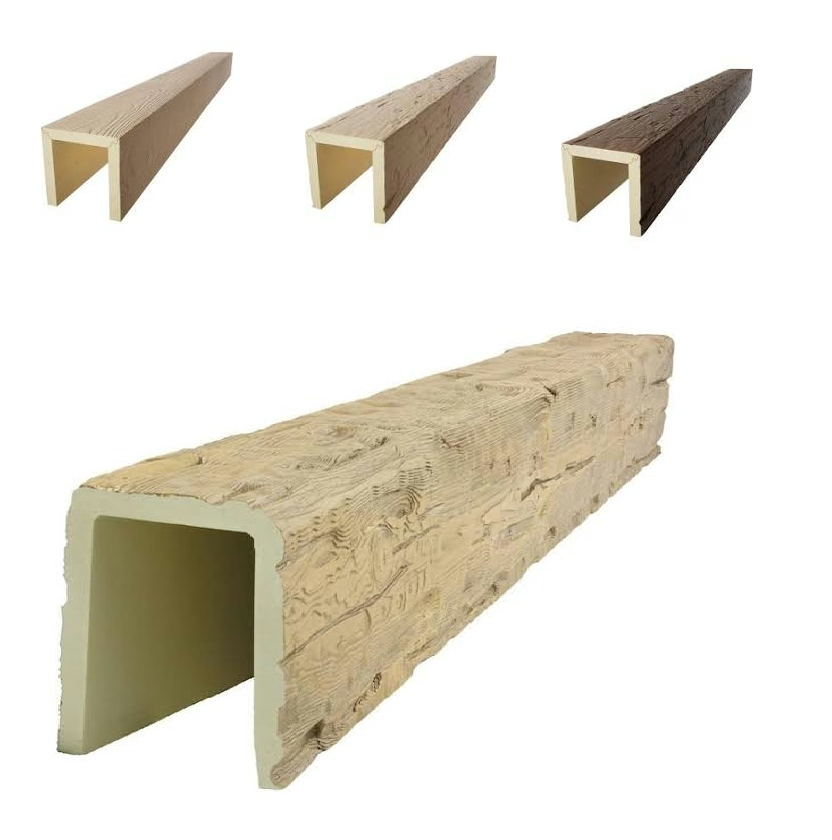
Freeze-Thaw Performance
In climates with freezing winters, exterior materials are subjected to freeze-thaw cycles. Water that has penetrated a material expands when it freezes, creating internal pressure that can crack or delaminate the surface.
Closed-cell PU resin does not absorb water, which gives it an advantage over real timber in freeze-thaw conditions. Real timber absorbs water and can crack, check, or rot over freeze-thaw cycles. Closed-cell PU beam material resists water absorption and maintains its integrity through repeated cycles.
The coating system on an exterior beam also affects freeze-thaw performance. A coating that is too rigid will crack when the substrate contracts in cold temperatures. A coating that is too flexible will not provide adequate protection in warm temperatures. The factory's exterior coating system is formulated for the expected temperature range of the installation.
Maintenance for Exterior Beams
Exterior beams require periodic maintenance to maintain their appearance over time. The maintenance schedule depends on the exposure level.
Beams in sheltered locations — under deep eaves, in covered loggias — may need cleaning every two to three years and recoating every five to seven years. Beams in full sun exposure may need cleaning every year and recoating every three to five years.
Cleaning is done with a soft brush and mild detergent. High-pressure washing should be avoided, as it can damage the coating. A garden hose with a gentle spray attachment is sufficient.
Recoating involves cleaning the beam, allowing it to dry, lightly sanding any areas where the coating has failed, and applying a fresh coat of UV-stable clear. The original finish color should be documented by the factory so that a matching color can be reproduced for recoating.
What Importers Should Know
Importers specifying exterior PU beams should ask the factory several questions before placing an order.
What is the UV stability rating of the resin? This is typically expressed as a predicted service life under standard UV exposure conditions.
What is the coating system, and what is its expected service life? The coating is the part of the beam that the sun actually sees.
What is the moisture absorption rate of the beam material? Closed-cell PU should absorb less than 2 percent by weight after 24 hours of water immersion.
What is the temperature range for the coating system? The coating should remain intact from the coldest expected winter temperature to the hottest expected summer temperature at the installation site.
A factory that can answer these questions with specific data — not marketing language — is a factory that understands exterior applications.
Technical References
ASTM standards cited in every specification
Test Data
Lab results from internal testing program
Updated 2026
Reviewed against current product specs