
The combination of a heavy-looking faux timber beam wrapped in forged metal straps reads as something that took three generations to build — even when the room behind it was sheetrocked last Tuesday. That visual tension between rustic weight and machined precision is exactly why this detail keeps appearing in mood boards from Brooklyn brownstones to Provence-style wineries in California. Designers ask for it because the silhouette photographs beautifully, contractors appreciate that the underlying beam is still a light polyurethane shell, and importers can ship a finished assembly in a crate without sourcing a blacksmith.
Why the strap-and-beam look works as a design statement
A plain polyurethane beam already solves most of the cost and weight headaches that come with solid oak or reclaimed pine. Add a metal strap, and you unlock a layer of visual storytelling that goes beyond simple ceiling decoration. The strap tells the viewer: this room has history. It implies joinery, structural intent, craftsmanship — none of which the underlying material actually requires.
For commercial spaces, the effect is even more useful. Restaurants lean on the aesthetic because it lets them project "established farm-to-table" without commissioning a timber framer. Boutique hotels use strap-and-beam compositions in lobby ceilings to anchor a brand identity that feels heritage-driven, even when the property was built in the last five years. Retailers use the detail in flagship stores where the ceiling becomes a free photo backdrop for product flat-lays and social content.
The psychology is simple: a strap introduces asymmetry and visual rhythm along an otherwise smooth beam run. The eye traces it, then pauses at each bolt head, then continues to the next strap. That rhythm slows down a viewer and makes the ceiling feel curated rather than decorated.
Material options for the metal strap
You have more flexibility here than most spec sheets suggest, because the strap is essentially a finishing component layered over a polyurethane substrate. The faux beam does the heavy lifting; the strap adds detail.
Cold-rolled steel is the most common choice. It comes in 3 mm to 6 mm thicknesses, accepts patina, and machines cleanly. Hot-blackened or hand-rubbed oil finishes look right at home against distressed oak beams. Pairs well with: industrial, modern farmhouse, Tuscan, Mediterranean.
Wrought iron lookalikes are increasingly popular in residential projects where designers want an aged, hand-forged appearance without commissioning a blacksmith. These are typically cast iron or laser-cut steel with hammered textures. Pairs well with: French country, Spanish revival, rustic lodge.
Antique brass or bronze straps show up in luxury hospitality interiors, particularly in bar ceilings where a warm metal complements leather seating and aged mirrors. Pairs well with: Art Deco, library aesthetics, speakeasy bars.
Powder-coated aluminum is the budget choice for large commercial projects where weight matters — a wrap-around aluminum strap adds 0.8 to 1.5 kg per meter of beam length, which keeps freight costs in check when shipping a hotel lobby across an ocean.
When discussing finishes with clients, be careful about one thing: don't specify a "stainless steel strap" if the rest of the room reads warm and rustic. The cool, modern finish will fight every other material in the space. Reserve stainless for contemporary interiors where the beam itself is a clean, smooth-edged profile.
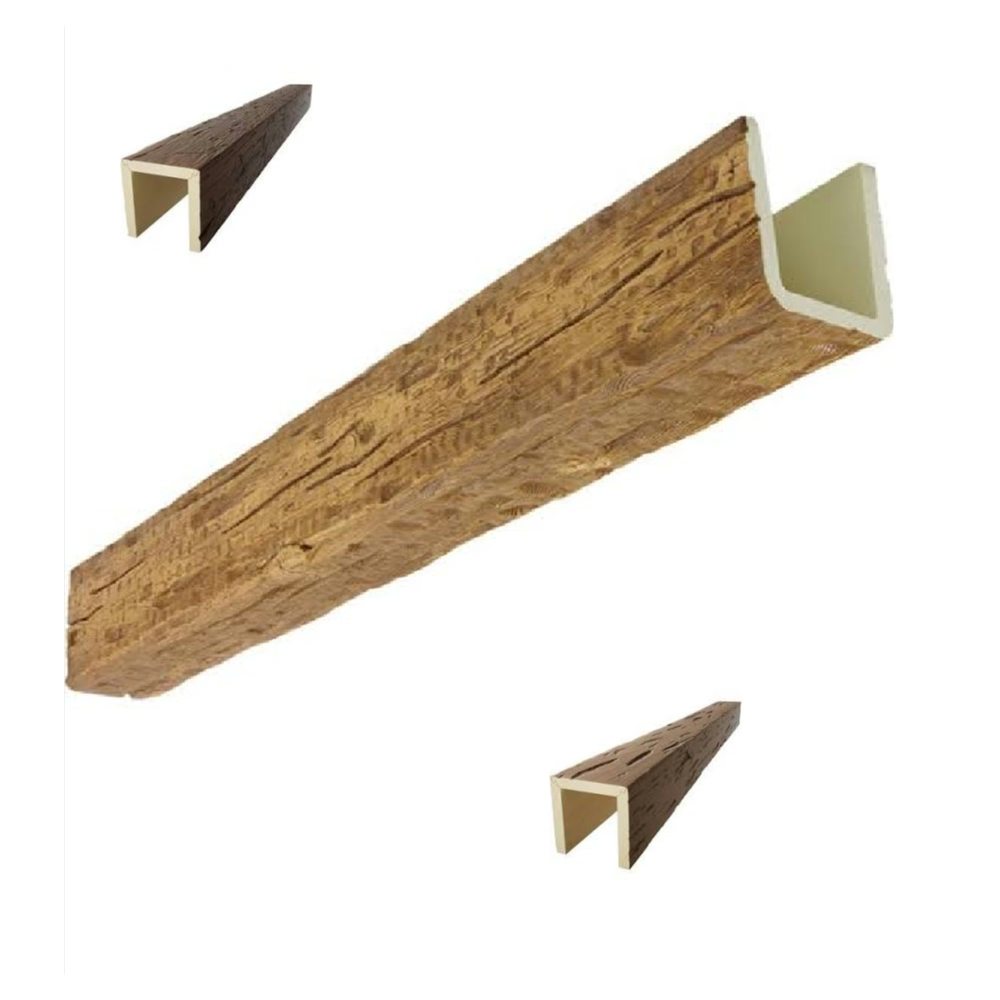
Specifying a faux beam for strap detailing
The strap has to sit on a beam that was designed to receive it. A perfectly smooth rectangular beam profile looks wrong under a heavy strap — the geometry contradicts the detail. Instead, work with beams that have:
- A rough-sawn or hand-hewn texture on the strap-facing surfaces
- Visible grain depth of at least 2 to 3 mm, so the strap reads as compressed against actual timber
- Aged coloration in oak, fir, or cedar tones, so the strap finish has something to relate to
Most polyurethane manufacturers offer rough-hewn textures specifically for strap applications. When you request a quote, mention that the beam will receive metal detailing, because the mold release pattern, base color, and end-cap construction can all be adjusted at the factory to leave a cleaner surface for strap mounting.
Typical dimensions
| Strap width | Beam width | Recommended strap thickness |
|---|---|---|
| 50 mm (2 in) | 150–200 mm (6–8 in) | 3 mm |
| 75 mm (3 in) | 200–250 mm (8–10 in) | 4–5 mm |
| 100 mm (4 in) | 250–300 mm (10–12 in) | 5–6 mm |
| 150 mm (6 in) | 300 mm+ (12 in+) | 6 mm |
A strap wider than 150 mm starts to dominate the beam rather than detail it. If you want a wider band, consider two parallel straps instead — it's a stronger composition and easier to fabricate.
Mounting the strap to a polyurethane beam
Here's where most projects either succeed or fall apart. The strap has to be removable for shipping, and it has to align with bolt heads at predictable positions, and it has to read as a structural element from floor level without actually carrying any load.
The standard approach uses threaded inserts embedded in the polyurethane beam during casting. The factory installs these inserts at specified positions, typically in pairs every 300 to 400 mm along the strap length. The strap arrives with pre-drilled holes that mate with the inserts. On site, the strap slides over the beam and bolts into place using decorative carriage bolts or hammered button-head screws.
A second method uses surface-applied brackets hidden under the strap. The strap wraps the beam and tension-fixes at the back with a hidden steel plate. This approach is faster on site but doesn't allow for visible bolt heads, so it's reserved for strap designs where the fastening is implied rather than shown.
A third option, popular in DIY residential work, is construction adhesive plus finish nails through pre-drilled bolt head positions. The strap never bears structural load; it's a decorative layer that the eye reads as hardware. This is the most affordable option and ships entirely as a flat-pack kit.
What to specify to the factory
When you send a strap-and-beam order to a polyurethane manufacturer, include:
- Beam profile drawing with strap locations clearly marked
- Strap width, material, and finish specifications
- Bolt head style (carriage, button, hammered pyramid, flush)
- Bolt spacing and edge distance from the strap edges
- Whether straps should ship assembled or in a separate crate
- Finish color reference (Pantone, RAL, or physical sample)
- Quantity of beams and any matching pieces (corbels, end caps, knee braces)
If the project includes corner beams, specify which direction the strap should face at each transition. A 90-degree corner is rarely a clean strap transition — most fabricators prefer a clean miter on the beam and a single continuous strap that wraps the outside corner.
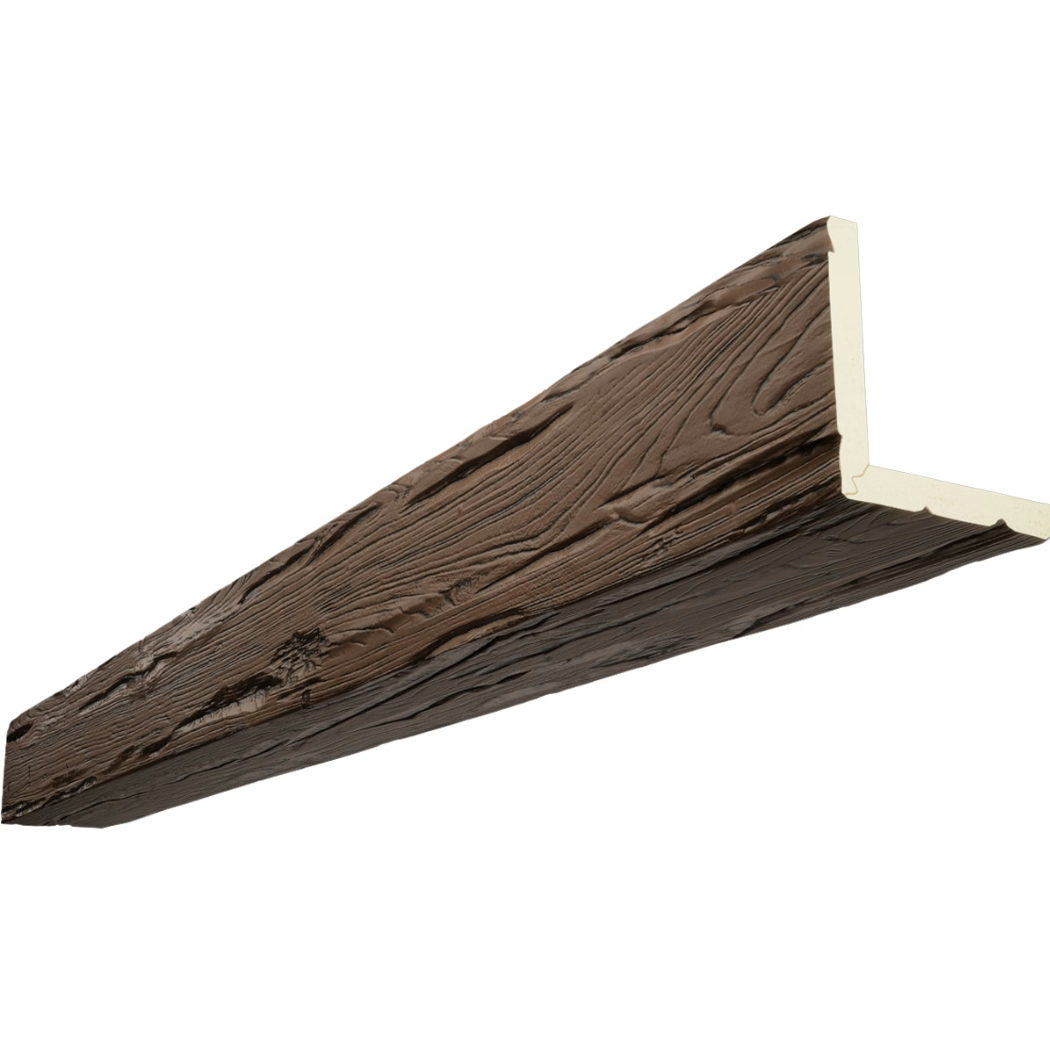
Finishes that age gracefully together
The most common failure mode on strap-and-beam projects is mismatched aging. The strap looks fresh out of a powder-coater while the beam looks like it was rescued from a 1780s barn. Or vice versa — the strap has a deep oil-rubbed patina but the beam looks like new lumber.
Three finish combinations hold up reliably:
Matched aged patina. Both the beam and the strap receive compatible darkening agents so they read as having aged together. The strap may be slightly darker because metal holds patina more readily, but the undertones should match. This is the easiest combination to specify because both elements come from the same vendor or finish house.
Intentional contrast. A matte black strap against a warm honey-oak beam. The contrast reads as modern industrial and works in contemporary settings. The strap should be cleanly finished — no faux aging — so the contrast stays graphic rather than muddied.
Verdigris or weathered zinc strap against silvered oak. A coastal or Provençal palette where both elements show age but in different registers. This pairing needs careful sampling because the green-gray of verdigris can fight the warm gray of silvered oak.
Always request a finished sample board from your supplier showing at least 200 mm of beam with a strap applied. Photographs don't convey finish depth accurately. Hold the sample next to your lighting plan, your furniture swatches, and your flooring before signing off.
Coordinating with lighting and ceiling layout
Strap-and-beam compositions are usually paired with pendant lighting, recessed downlights, or track systems. The strap introduces a complication: any lighting mounted to the beam has to either clear the strap or be designed to look like it integrates with the strap.
For residential projects, designers typically mount linear suspension lights or track lighting between beams — the straps don't interfere because they're positioned on the beam face, not below it. For commercial projects where lights hang directly from the beam, the strap can wrap around the fixture base as a decorative cover, with the fixture plate positioned just behind the strap edge.
If you're using recessed downlights between beam runs, leave at least 100 mm between the strap edge and any ceiling cutout. The strap casts a slight shadow on the ceiling, and that shadow can interfere with the light distribution if the strap is too close to the cutout.
Working with importers and project timelines
For overseas sourcing — which is where most polyurethane beam orders go — the strap is typically fabricated in a separate workshop and consolidated with the beam shipment at the export warehouse. This adds roughly 7 to 14 days to the lead time, depending on whether the strap supplier is in the same industrial cluster as the beam manufacturer.
Order the strap finish samples at the same time as the beam samples. Finish approval usually takes the longest part of the timeline because the samples have to be shipped, reviewed on the actual project ceiling (or a mockup), and signed off before production begins.
A typical lead time from strap order approval to crate-on-ship is 35 to 50 days. A typical lead time from strap sample request to approval is 14 to 21 days. Build those numbers into your project schedule before committing to a contractor timeline, because strap samples almost always take one round of revision.
Where this detail performs best
After several years of specifying these compositions, the projects where strap-and-beam details land cleanly tend to share three traits: a ceiling height of at least 2.7 m so the strap registers visually, a single dominant material direction (either all warm/aged or all cool/modern), and a clear focal point that the strap detail anchors rather than competes with.
Restaurants use strap detail above the bar because the strap visually anchors the service zone. Hotels use it in lobby ceilings because guests look up at check-in. Retailers use it in flagship entryways because the first 10 seconds of customer attention go to the ceiling. Residences use it in great rooms and primary bedrooms where the owner wants the room to feel established.
If you're specifying a strap-and-beam composition for the first time, start with a single beam run in a clearly defined room. The detail is strong enough that a 6-meter run with two straps reads as a deliberate design choice rather than a budget compromise. Once you see how it photographs, how it ages, and how it complements your lighting plan, scaling it to a full ceiling composition becomes a confident next step.
Technical References
ASTM standards cited in every specification
Test Data
Lab results from internal testing program
Updated 2026
Reviewed against current product specs


