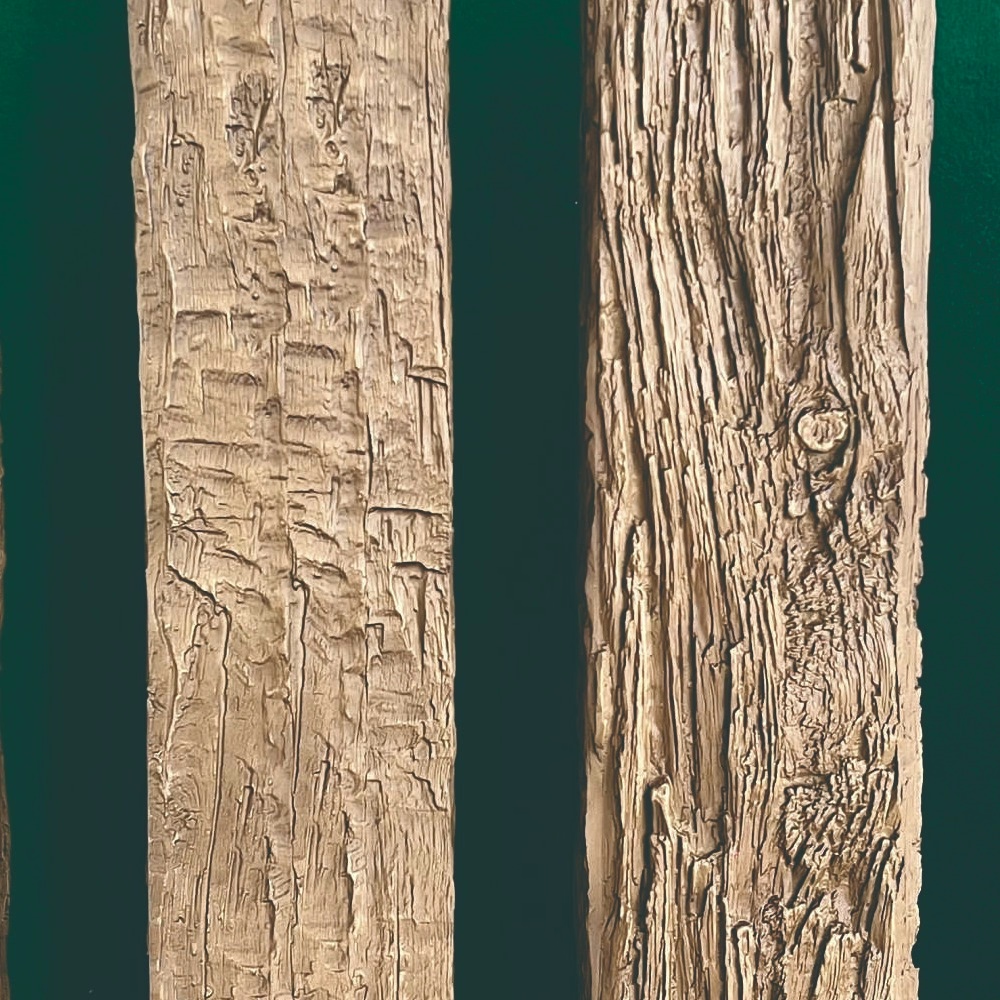
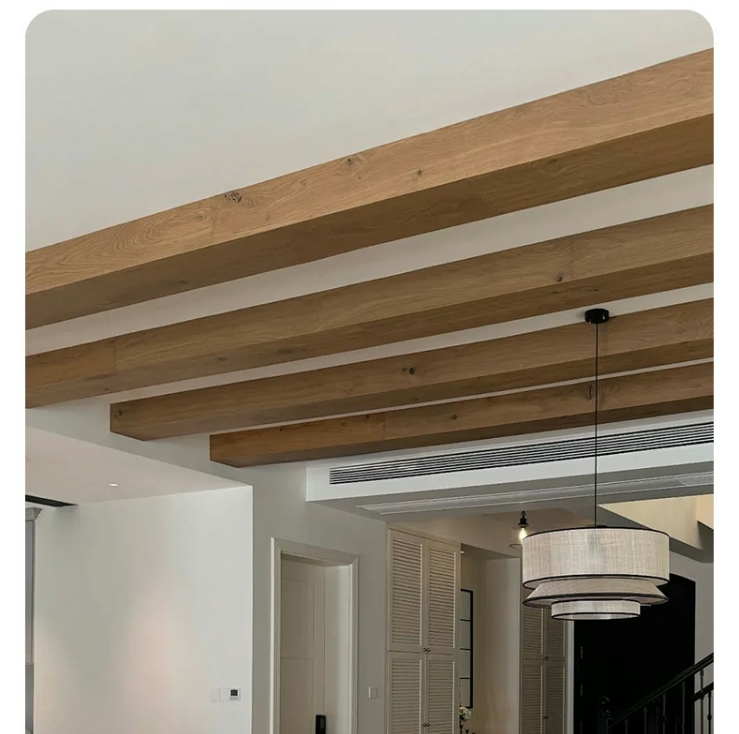
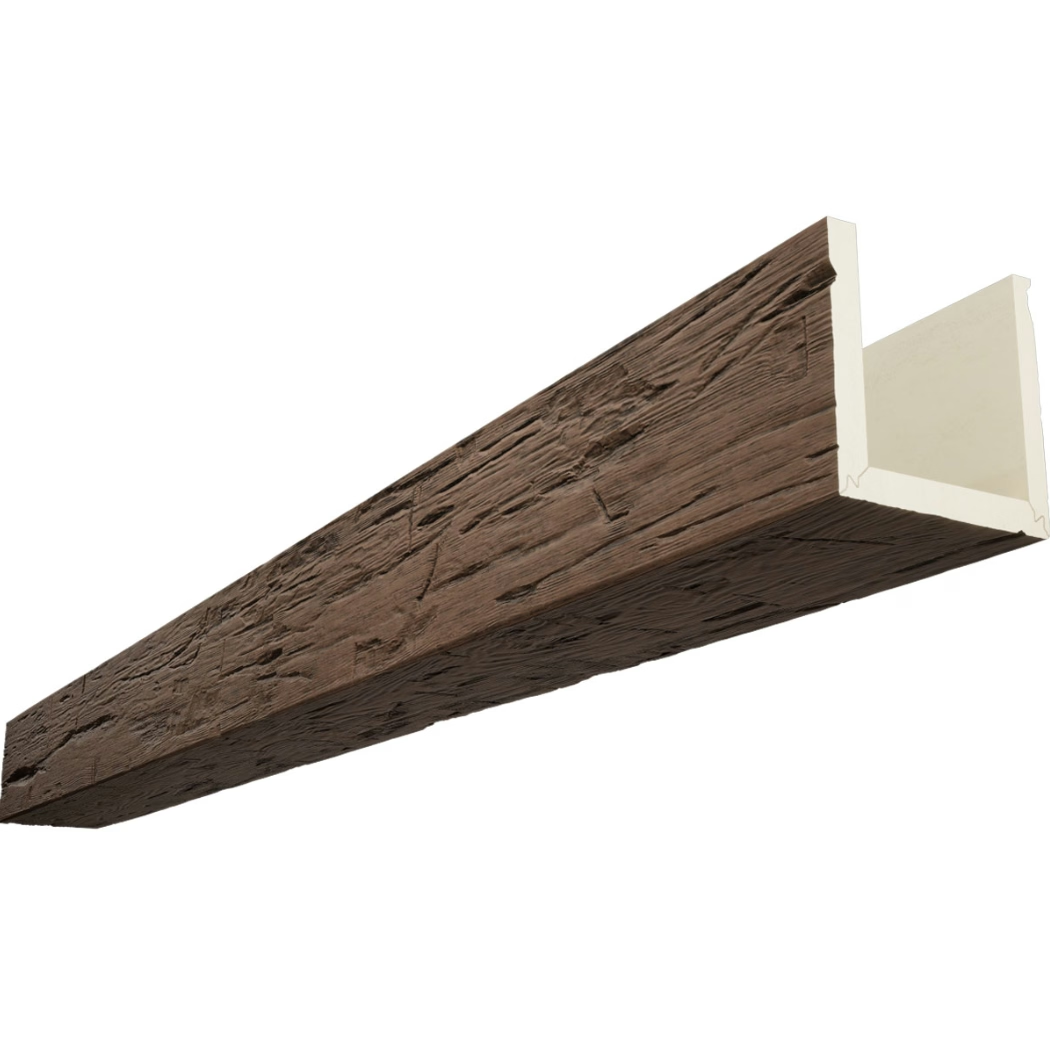
A hotel interior fit-out rarely behaves like a residential remodel. There are dozens of rooms that must look related to one another without looking identical, brand standards that must be respected, opening deadlines that cannot move, and a procurement chain that often runs through several countries. When faux wood beams are part of the design language, the manufacturer you choose effectively becomes part of your project team rather than a simple vendor. This article walks through how hospitality fit-out teams typically approach that relationship, from the first sample request through final punch list.

What "Full Fit-Out" Actually Includes
When a hospitality client specifies faux beams across an entire property, the conversation almost always starts with a single sample board and quickly expands. A typical mid-scale hotel fit-out might include beams in the porte cochère, the lobby ceiling, the breakfast restaurant, the bar, the back-of-house corridors, the spa reception, and every guestroom. Each space has different design requirements, different ceiling heights, different lighting conditions, and different exposure to humidity.
The first question a custom beam manufacturer needs answered is which of those spaces will use the same profile, texture, and stain, and which require a different aesthetic. Many designers prefer a unified beam family across public areas with subtle variation in guest rooms to give each floor a slightly different mood. Others want every guestroom to be visually identical, with variation only in the executive lounge and penthouse suites. That decision drives the mold count, the stain library, and the production schedule.
A clear room-by-room schedule is the document that ties everything together. It should list the room number or function, the beam profile reference, the cross-section dimensions, the linear footage required, the stain code, and any special conditions such as curved runs, intersections with HVAC grilles, or locations where beams must accommodate recessed lighting. Most fit-out teams build this schedule in the same spreadsheet they use for furniture, fixtures, and equipment, which makes it easier to keep the beam package aligned with the rest of the FF&E schedule.
Coordinating with the Brand Standard
Hotel brands have grown more sophisticated about the materials that appear in their properties. Soft brands and collection brands typically allow the property to choose many finishes independently, while hard brands maintain strict standards for visible millwork elements. Faux wood beams sit somewhere in between, because they read as architectural but are technically FF&E in many brand classification systems.
For properties operating under a brand standard, the beam manufacturer needs to receive the relevant design guidelines before samples are produced. These guidelines often specify approved species appearances, allowed finish ranges, minimum cross-section sizes for primary lobby installations, and rules about whether beams may be installed against fire-rated ceilings. Submitting the standard reference and any approved finish samples at the start of the project prevents the costly back-and-forth that happens when a beam package is approved internally and then rejected by the brand review team.
Independent boutique hotels and resort conversions have more latitude, but they still benefit from treating the beam package as a unified design element. Choosing two or three stain tones from the same manufacturer and applying them deliberately across the property produces a calmer result than sourcing beams from multiple vendors whose color interpretation inevitably drifts.
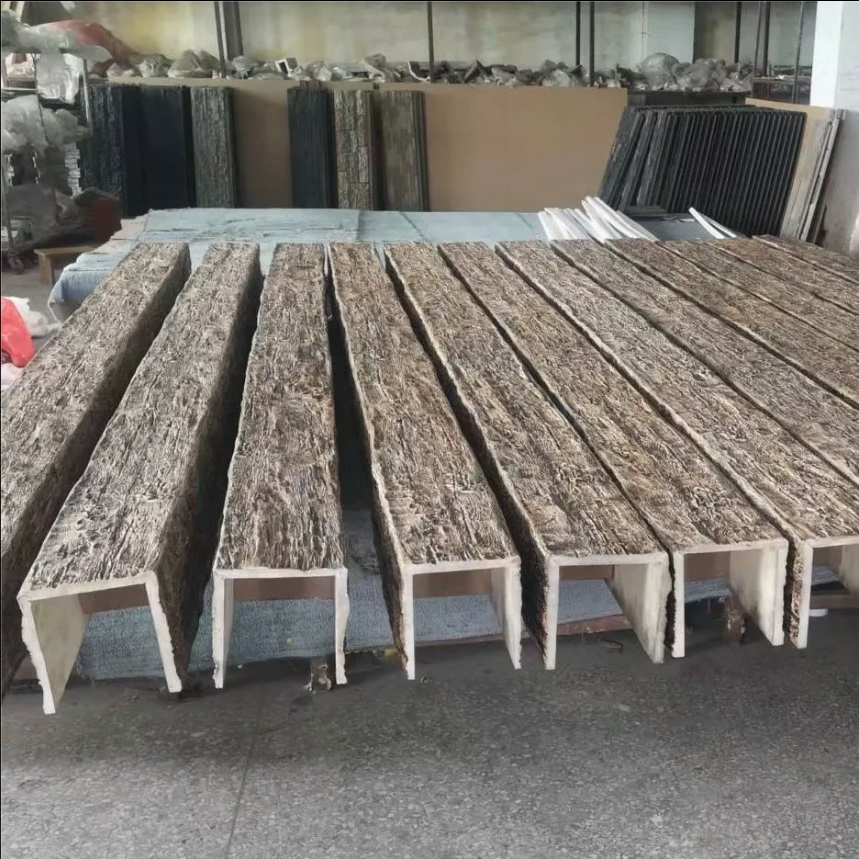
Production Lead Times and Phased Deliveries
A hotel fit-out usually follows a phased construction schedule. Demolition and rough-in happen first, then ceilings close, finishes go in, and FF&E arrives near the end of the construction sequence. Beam delivery needs to be timed to that sequence. Delivering beams too early creates storage problems on a busy site and increases the risk of damage. Delivering them too late can hold up the final stretch of work when the project team is most pressed for time.
The standard production lead time for custom PU faux wood beams sits between four and six weeks from approved shop drawings, depending on profile complexity and order volume. Lead times extend when stain matching requires multiple rounds of physical samples or when a project includes unusual profiles that need new molds. Fit-out teams that build a buffer of two to three weeks into their procurement schedule almost never experience beam-related delays.
For large properties, it usually makes sense to split the order into two or three shipments. The first shipment covers high-visibility areas like the lobby, restaurant, and bar, where early installation helps the design team evaluate the result and make adjustments. The second shipment covers guestroom floors, which install quickly once the prototype room is approved. The third shipment handles any remaining back-of-house areas or specialty spaces. Phased deliveries also reduce the financial exposure of carrying a large beam order through currency fluctuation or shipping disruptions.
Sample Approval and Color Matching
Sample approval is the step that most often determines whether a hotel beam project goes smoothly or runs into trouble. The risk is not that the manufacturer cannot produce an attractive beam. The risk is that what looks correct under the manufacturer's warehouse lighting reads differently under the hotel's specified lighting design.
The most reliable approach is to produce physical stain samples on the actual beam profile the project will use, then view those samples under the same lighting specification that will be installed in the space. Many designers ask for three stain variations in addition to the primary choice, evaluated against the lobby flooring, the wall finish, and the upholstery of any adjacent seating. Photographic review of samples is useful for early conversations, but final approval should always happen on physical pieces.
A second consideration is batch-to-batch consistency. Hotel projects often place beam orders months before installation, and a second order for a phase-two area may arrive a year later. The manufacturer should commit in writing that stain formulations will be archived so future orders can match the original color. The alternative is the all-too-common problem of guestroom floors installed eighteen months apart that look like two different products.
Installation Considerations in Operating Hotels
Hotel fit-outs happen in two very different contexts. New-build properties are straightforward because the contractor has full access to the ceiling and can coordinate beam installation with other trades. Conversion projects, where an existing building is being adapted into a hotel, are more challenging. Existing ceiling conditions may be uneven, the structural deck above may be constrained, and the contractor is often working around the schedule of other trades who are simultaneously renovating guestroom floors.
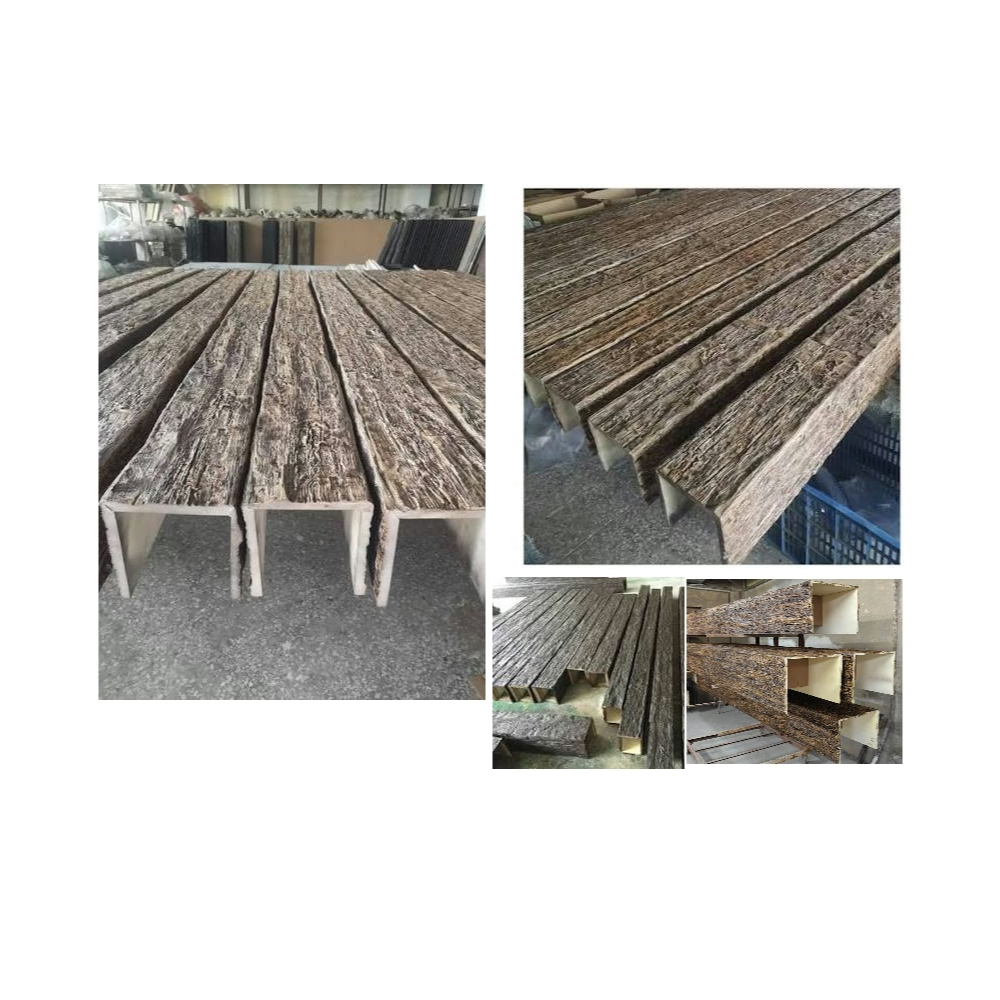
PU faux wood beams are well suited to both situations because they are lightweight, can be trimmed on site with standard woodworking tools, and mount with mechanical fasteners plus adhesive rather than requiring heavy structural connections. For conversion projects, this often means that beam installation can happen after most other trades have finished their work, reducing the risk of damage to the finished beams.
In occupied renovation work, where a hotel is being renovated floor by floor while the rest of the property remains operational, the noise and dust from beam installation is minimal compared to many other trades. PU beams can be cut with hand tools for short adjustments, and the off-cuts are small and easy to contain. Most importantly, the finishes are factory-applied and do not require on-site staining, which means there is no solvent odor to disturb adjacent floors of paying guests.
Selecting the Right Manufacturing Partner
For a full-property hotel fit-out, the manufacturer is more than a supplier. They become part of the design and procurement team for the duration of the project. The right partner will offer sample production before contract, detailed shop drawings that account for every beam location, transparent production schedules, batch-consistent stain archiving, and a willingness to ship in phases aligned with the construction sequence.
Before placing an order, ask the manufacturer for references from comparable hotel projects, ideally ones that involved phased delivery and brand-standard compliance. Visit their production facility if possible, or request a video walkthrough. Review their quality control procedures for color matching, dimensional accuracy, and packaging for export. A manufacturer who handles these details confidently will almost always handle the project confidently.
Hotel fit-outs are demanding, but they reward careful planning. With the right beam partner and a clear room-by-room schedule, custom faux wood beams become one of the smoother packages on the project rather than a source of friction.
Technical References
ASTM standards cited in every specification
Test Data
Lab results from internal testing program
Updated 2026
Reviewed against current product specs