Walk into any of the specialty coffee shops that have opened in the last few years and you will notice something architectural happening overhead. The ceiling is no longer a forgotten surface. It is part of the brand, and faux wood beams are doing a lot of the work. For independent café owners, design-build firms, and franchise development teams, the beam package is one of the highest-leverage decisions in the entire interior styling budget, because it is visible from every seat and it sets the tone the moment a customer walks in.

The Aesthetic That Beams Create
Modern coffee shops live somewhere between Scandinavian restraint and rustic warmth. The trend has moved away from the heavy distressed timber look of a decade ago and toward cleaner lines, lighter finishes, and more honest geometry. Beams in this context are not theatrical. They are quietly structural in feel, suggesting that the building has been there a while and has been thoughtfully restored.
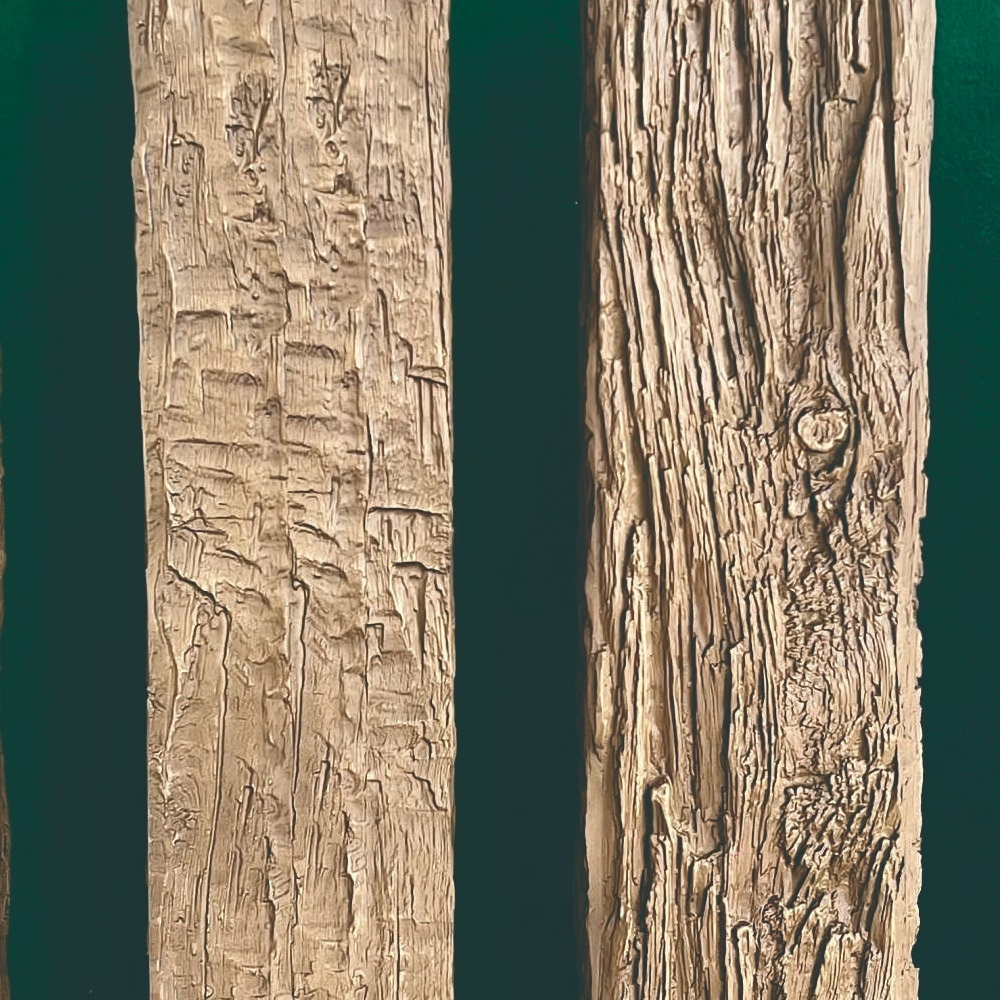
This is exactly where custom polyurethane faux beams shine. They can replicate the appearance of reclaimed oak, Douglas fir, or weathered pine without the cost, weight, and inconsistency of actual reclaimed timber. The manufacturer can tune the texture depth, the grain pattern, the saw marks, and the stain tone to match a very specific design intent. A minimalist Nordic café can choose smooth planed beams in a pale whitewash, while a third-wave roaster in a converted warehouse can use rough-sawn beams with a deeper walnut stain to amplify the industrial feel.
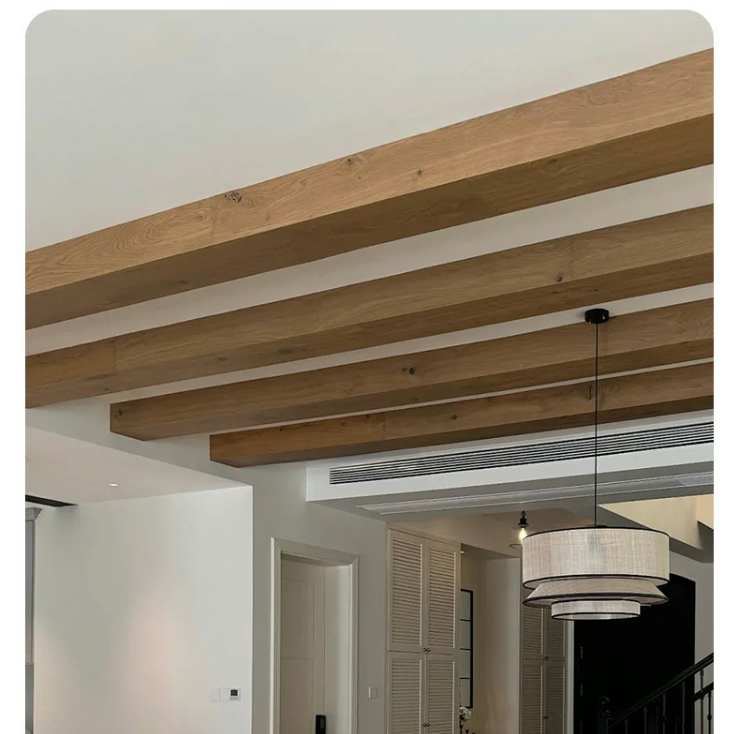
The most common ceiling configuration in modern coffee shops is a simple grid of beams running perpendicular to the longest dimension of the room, typically spaced four to six feet apart. This creates a calm rhythm that frames the barista bar, the seating clusters, and the menu boards without competing with them. Some cafés add a single heavier perpendicular beam directly over the bar to anchor the service zone, which has the effect of drawing the eye exactly where the staff wants it.
Choosing Profiles for the Café Context
Beam profile selection matters more in a coffee shop than in many other commercial spaces because customers sit close to the ceiling and view the beams at a more intimate angle. Deeply textured, hand-hewn profiles that look dramatic in a tall lobby can read as busy and uncomfortable in a café with an eight or nine foot ceiling.
The most versatile profile for modern cafés is a lightly textured, rectangular beam in the 4 inch by 6 inch or 6 inch by 8 inch range. The cross-section is large enough to feel substantial but not so deep that it visually lowers the ceiling. The light texture adds character without creating shadow patterns that make the room feel cave-like.
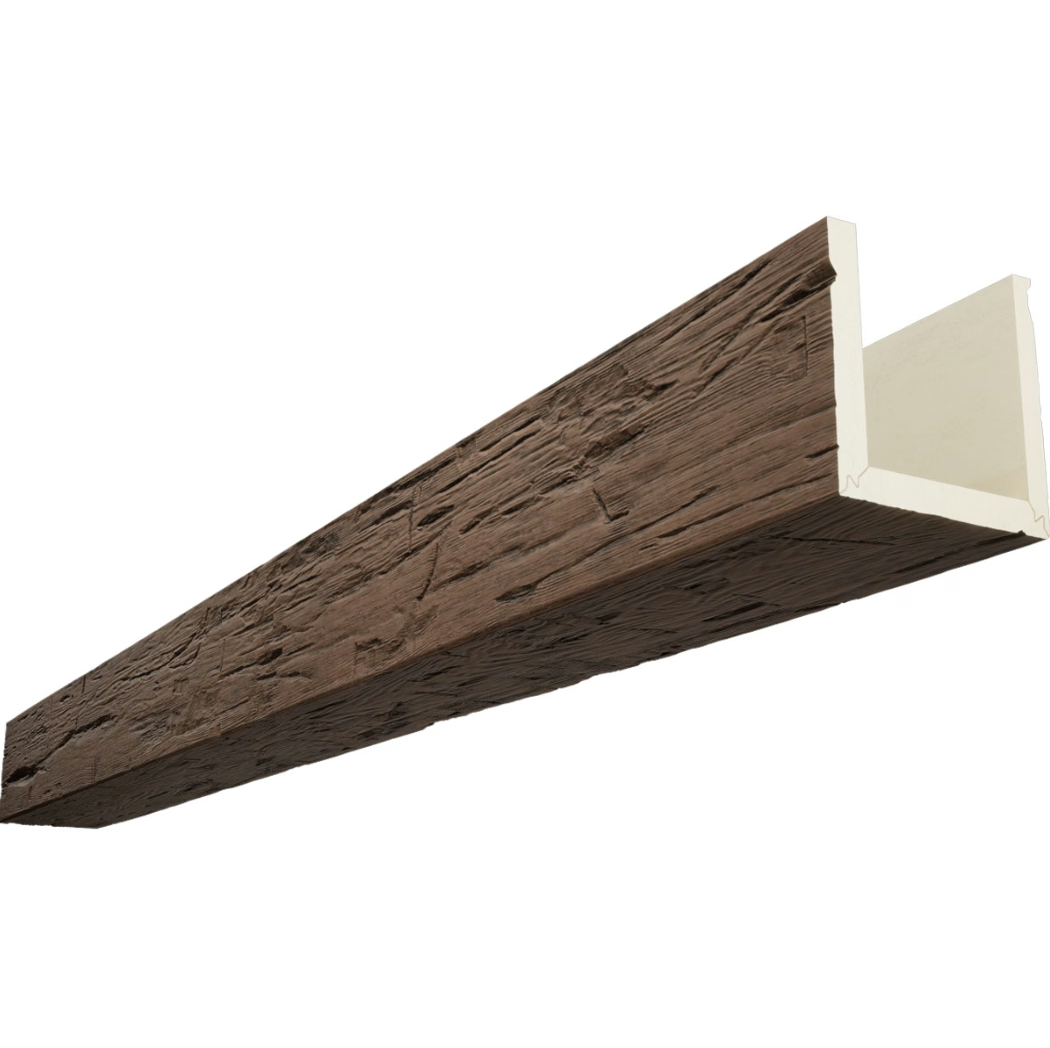
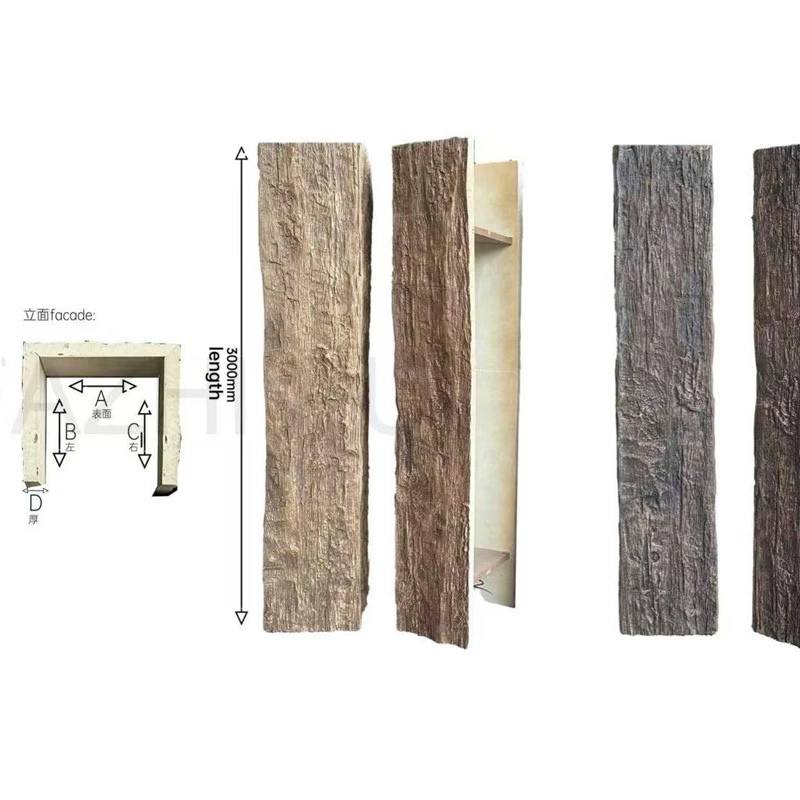
Some designs call for boxed beams built up around existing structural members. In coffee shops located in buildings with exposed steel or concrete structure, this approach is common because it allows the designer to maintain the industrial honesty of the space while still adding the warmth that wood provides. A custom U-shell or three-sided wrap from a PU beam manufacturer can slide over an exposed structural beam, transforming it visually into a piece of timber without any structural modification.
For café chains that want a recognizable ceiling signature, designers sometimes specify a slightly arched or chamfered edge on the beam profile. That small detail is hard for a customer to articulate but easy to recognize across multiple locations. It is the kind of subtle design feature that custom manufacturing makes affordable at scale.
Stain Palettes for the Coffee Shop Atmosphere
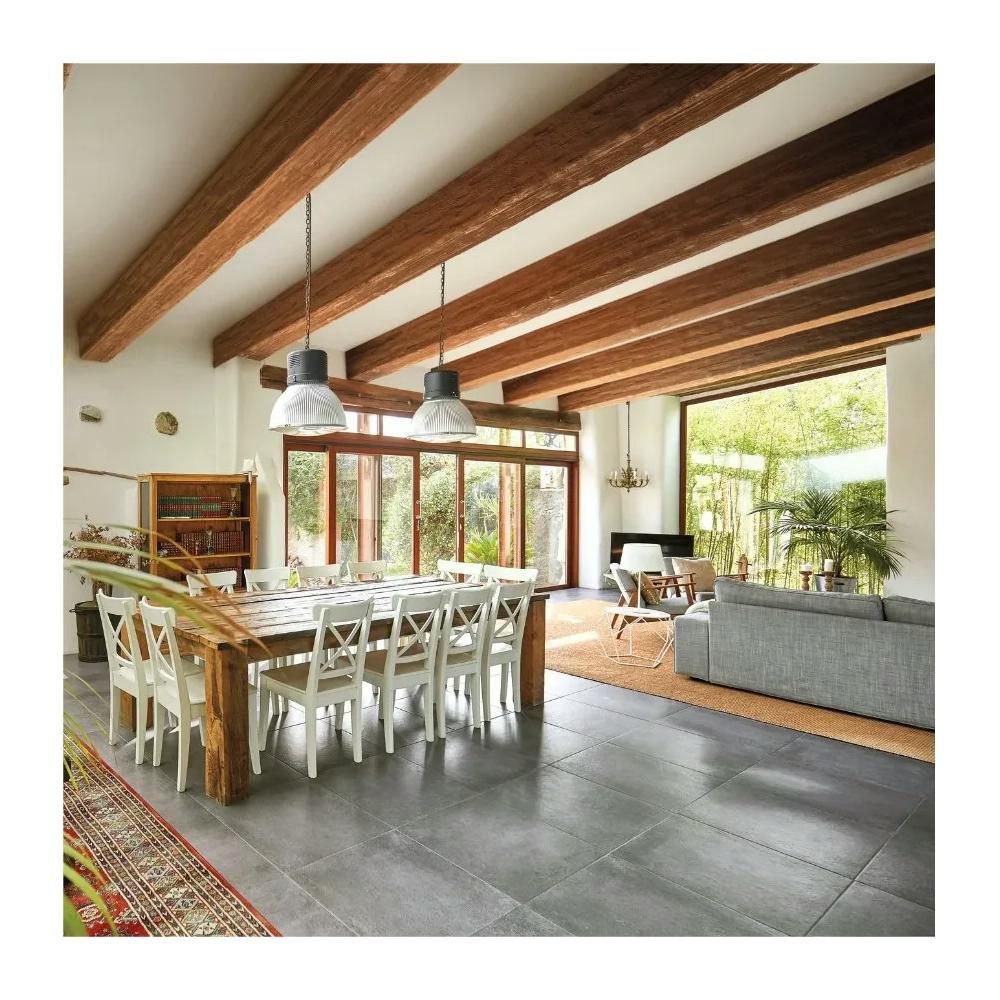
Stain selection is where the personality of a coffee shop beam package really lives. Most modern cafés settle into one of three palette families, and the choice should be coordinated with the brand colors, the flooring, and the barista bar material.
Pale neutrals include whitewash, driftwood, and natural pine tones. These work well in cafés with bright daylight, white walls, and pastel upholstery. They make small spaces feel larger and pair naturally with light oak tables and chrome accents.
Mid-tone warms include honey oak, light walnut, and weathered barnwood. This is the most common palette in third-wave coffee shops because it bridges the gap between modern and rustic. The stain tone reads warm without being yellow, and it pairs with virtually any upholstery and flooring choice.
Deep tones include dark walnut, espresso, and ebony. These are less common in modern coffee shops but appear in evening-oriented cafés, whiskey bars that also serve coffee during the day, and locations in buildings with historic architecture where the beam color needs to echo the building's character.
The practical advice is to produce three stain samples on the actual profile and view them under the lighting that will be installed in the space. Coffee shops often have a combination of warm pendant lighting over the bar and cooler ambient lighting in the seating area, and a stain that looks good in one zone may look flat in the other.
Acoustic and Lighting Coordination
Coffee shops live or die by their acoustic comfort. A room with hard floors, glass windows, and a hard ceiling quickly becomes uncomfortably loud during the morning rush. Acoustic ceiling panels are sometimes installed between the beams, and the beams themselves can be specified with an acoustic backing if needed. Most polyurethane faux beam manufacturers offer optional acoustic inserts that absorb sound without changing the beam's exterior appearance.
Lighting is the other major coordination point. The most common modern café lighting scheme combines recessed downlights, linear pendants over the bar, and decorative pendant fixtures over specific tables. Beams can be specified with pre-cut pockets for recessed linear fixtures, or they can be drilled on site for surface-mounted fixtures. Either way, the beam shop drawings should include all lighting penetrations so the manufacturer can pre-finish the openings and ensure that no stain touch-up is needed on site.
Some cafés are now using the beams themselves as the primary mounting point for pendant lighting. Linear LEDs integrated into the bottom edge of the beam create an indirect glow that bounces off the bar and the floor. This works especially well with smooth-planed PU beams that have a flat lower surface, and it produces the warm, even illumination that café customers consistently rate as more comfortable than harsh downlighting.
Rollouts for Multi-Location Concepts
Franchise and multi-location café concepts benefit enormously from a standardized beam specification. Once the prototype location has been approved, every future location uses the same profile, the same stain code, and the same beam layout pattern. This is where partnering with a manufacturer who can archive the mold and the stain formulation pays off.
A typical multi-location rollout ships beams in phases matched to the construction schedule of each store. The manufacturer maintains the same tooling for the entire chain, so store number twenty looks identical to store number one. The only adjustments needed between locations are length variations to match different ceiling sizes, and those are handled as routine cut-to-length items rather than new products.
For franchise brands with international expansion, the manufacturer should also be experienced with export documentation, freight consolidation, and customs clearance for fragile decorative items. PU faux beams are light enough to ship economically by air when timelines are tight, and durable enough to survive container shipping for less time-sensitive locations.
Technical References
ASTM standards cited in every specification
Test Data
Lab results from internal testing program
Updated 2026
Reviewed against current product specs