The weight of solid timber is a constraint that designers learn to work around rather than fight. A genuine rough-sawn beam that measures ten inches by twelve inches by twelve feet weighs somewhere between sixty and eighty pounds, depending on the species. That mass requires solid blocking in the wall, robust mechanical fastening, and at least two people to install. For wall applications, temporary installations, rental property upgrades, and mounting surfaces like hollow-core drywall or pressed wood, solid timber is simply not practical.
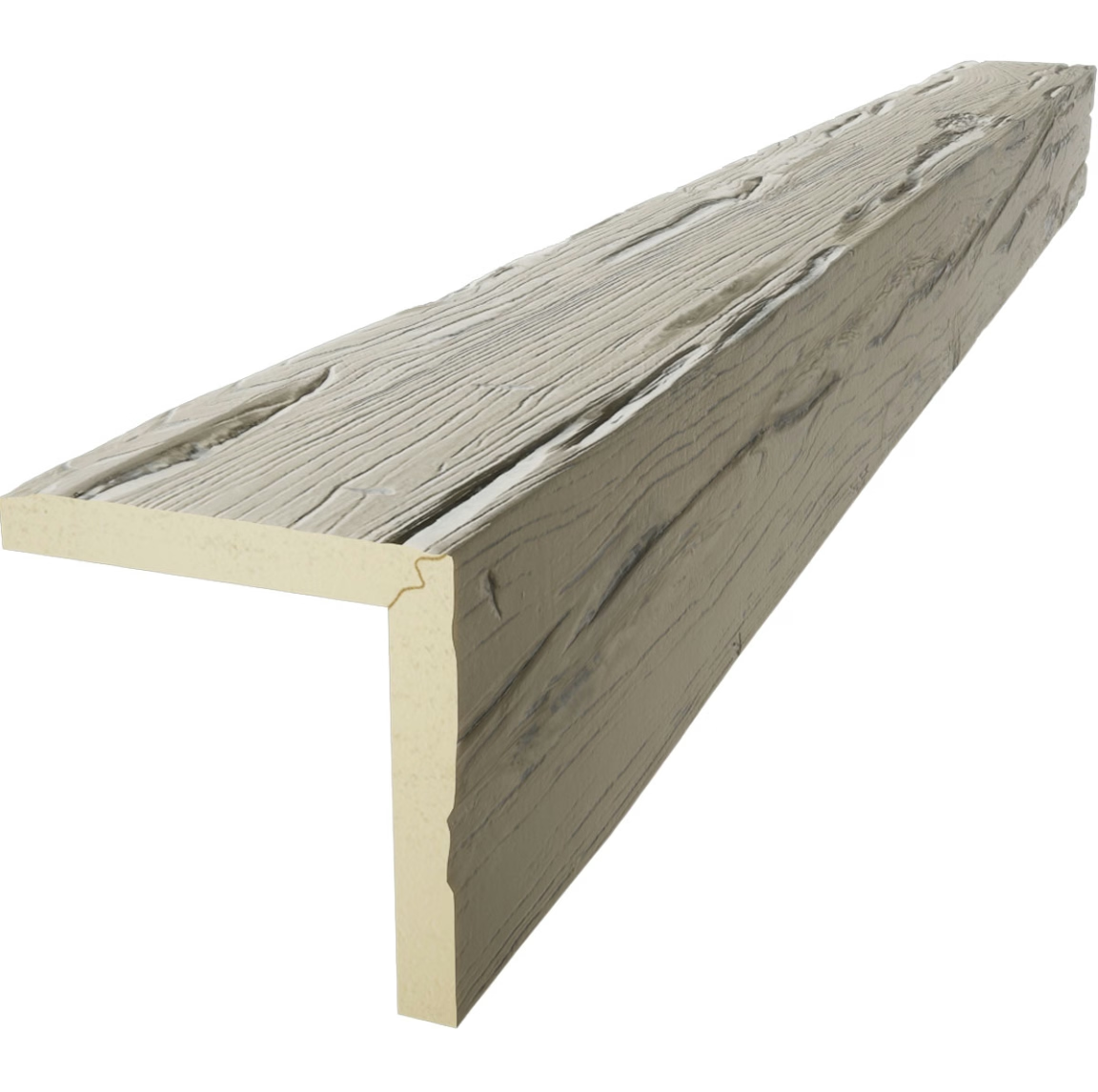
Lightweight foam polyurethane faux beams solve this problem by reducing the weight by roughly eighty percent compared to solid timber of equivalent size. A PU beam of the same dimensions weighs between ten and fifteen pounds. A single person can lift and position it, and the mounting system is proportionately lighter. This weight reduction expands the design possibilities significantly.
Where Weight Matters Most
The wall application is the clearest case where lightweight foam beams outperform every alternative. Interior designers frequently use faux beams as a wall accent above a fireplace mantel, behind a headboard, across a dining room accent wall, or as a room divider element mounted to a partial-height partition. In all of these applications, the mounting surface is typically drywall over studs, which cannot support the weight of solid timber without substantial reinforcement.
A lightweight PU beam can be mounted directly to the drywall using adhesive and finish screws, provided the screws engage the studs. The adhesive provides the primary bond, and the screws prevent the beam from sliding before the adhesive cures. This mounting method is invisible once the beam is in place and does not require any special preparation of the wall surface.
Temporary installations are another growing application. Trade show booths, pop-up retail spaces, hotel event installations, and photography set builds all need to look finished in a short time frame and often need to be removed without damaging the venue. Lightweight PU beams are ideal for these applications because they install and remove quickly, pack flat for transport, and can be reused across multiple events.
Rental properties present a persistent challenge for tenants who want to upgrade the space without making permanent modifications. Lightweight beams mounted with removable adhesive systems allow renters to add the warmth of wood without violating lease terms. The beams come down cleanly when the tenant moves out, and they can be reinstalled in the new space.
Profile Options for Wall Applications
Wall applications have different proportions than ceiling applications, and the profile selection should reflect that. A beam mounted on a wall is typically viewed from slightly above or at eye level, which means that the texture, the end treatment, and the shadow line created by the beam's projection from the wall are all more visible than they would be on the ceiling.
For wall applications, designers typically prefer a slightly shallower depth relative to the width, which gives the beam a more substantial horizontal presence on the wall. A 6-inch by 8-inch beam reads as a strong horizontal accent, while a 6-inch by 6-inch beam reads as more of a structural element. The choice depends on the wall's proportions and the overall design intent.
Texture also matters more on wall beams. A smooth-planed texture that disappears on a distant ceiling becomes a tactile feature on a wall. Some designers choose a deeply sculpted texture to maximize the handcrafted feel, while others prefer a light wire-brushed texture that adds interest without dominating the wall.
End treatment is the detail that most affects the finished look of a wall-mounted beam. A square-cut end is the most common and works in most contemporary design contexts. A corbel-cut or angled end creates a more traditional feel. A scribe-cut end that follows the wall surface contour is used when the beam terminates against a curved wall or an irregular surface.

Customization for Decorative Projects
Custom foam PU beams support a wide range of decorative customization beyond standard profiles and stains. Manufacturers can produce beams with embedded lighting channels, routed patterns, custom corbel profiles, and integrated mounting systems designed for specific applications.
Embedded LED channels are one of the most popular custom features for wall applications. A channel routed into the back face of the beam holds a flexible LED strip that creates a warm glow against the wall surface. The LED strip is invisible from normal viewing angles, and the light spill creates a halo effect that makes the beam appear to float slightly off the wall. This effect is particularly striking above a fireplace mantel or along a dining room accent wall.
Custom corbel profiles can be added to beam ends or integrated into the beam body at intervals. These decorative elements add architectural character and are often specified to match other millwork in the room, such as the fireplace surround or the kitchen island hood detail.
For event and trade show applications, manufacturers can produce beams with quick-connect mounting hardware pre-installed. This hardware allows the beam to be attached and removed from a mounting track in seconds, which is essential when installation and breakdown windows are short and the crew is small.
Finishing Options for Foam Beams
Foam PU beams can be finished with the same stain and coating systems used on solid timber, which means the range of visual outcomes is essentially unlimited. The finish system affects not just the color but also the durability and maintenance requirements of the beam.
Standard interior stain is the most common finish and provides the natural wood appearance. For most residential and commercial interior applications, this finish is adequate and provides a realistic wood appearance from every viewing distance.
Exterior-grade stain and clear coat are available for covered outdoor applications. The additional UV and moisture protection extends the beam's useful life in environments with significant sun exposure or humidity variation.
For projects that require a painted finish, foam PU beams accept standard interior latex or acrylic paint without additional priming. The paint adheres well to the factory-applied base coat, and the result is a smooth, consistent painted surface that does not require on-site finishing.
Metallic and specialty finishes are also possible. Some manufacturers offer copper, bronze, or antiqued finish options that create a distinctive look for hospitality and retail applications. These finishes are applied at the factory and are more consistent than on-site application.
Working with a Custom Manufacturer
The process of specifying custom foam PU beams begins with a clear description of the application, the dimensions, and the desired finish. Manufacturers typically ask for a sketch or a photograph of the space, the approximate dimensions of the installation area, and any specific profile or texture requirements.
For wall applications, the manufacturer will want to know the mounting surface and whether there is access from behind. This information affects the mounting system design and the fastener specification. A beam that will be mounted on drywall with no rear access requires a different fastener approach than a beam that will be mounted on a timber frame with rear access.
Lead times for custom foam beam orders are typically four to six weeks from approval of shop drawings, similar to standard PU beams. The lightweight nature of the product reduces shipping costs and simplifies handling on site, which makes custom foam beams cost-competitive with solid timber in many applications.
Technical References
ASTM standards cited in every specification
Test Data
Lab results from internal testing program
Updated 2026
Reviewed against current product specs


