
The layered interior is one of the dominant design modes of the past decade. It's the look of a room that has been accumulated rather than decorated — a mix of textures, periods, and tones that somehow cohere. The layered look isn't accidental. It's engineered, carefully, by designers who understand how tones relate to each other.
PU faux wood beams fit naturally into layered interiors because they offer more color flexibility than real timber. A custom multi-tone finish can be tuned to the exact color relationships a project requires, rather than being constrained by what a wood species naturally offers. This article is about how designers and importers can use that flexibility.
What layered aesthetics actually means
Layered aesthetics is a term that gets used loosely, but it has a specific design meaning. A layered interior is one where visual depth is created by stacking related elements — tones, textures, and forms that share a family resemblance without being identical.
The opposite of layered is flat. A flat interior uses a small number of tones with high contrast between them — white walls, dark floor, single accent color. A layered interior uses a larger number of tones with smaller differences between them. The result feels more complex and more lived-in.
In practice, layered interiors typically involve:
- 3 to 5 tones from the same color family (warm neutrals, cool greys, earthy browns) rather than 2 contrasting tones
- Multiple textures at similar scales — a linen, a boucle, a rough linen, a smooth linen
- Objects and furnishings at different heights and depths that catch light differently
- Finish variation within similar materials — not one wood, but two or three woods in the same family
A multi-tone PU beam is a ready-made layered element. The finish itself — base tone, grain highlight, edge highlight, low-point shadow — creates depth without requiring the room to work hard for it.
Color relationships in layered interiors
The color in a layered interior follows relationships, not formulas. Three relationships are most useful for beam specification.
Monochromatic layering
The tones are all from one hue — different values (lightness) and different saturations (chroma) of the same color. A monochromatic warm-neutral palette might run from a pale greige wall to a medium warm grey sofa to a walnut-toned beam to a dark espresso side table.
Monochromatic layering is the safest approach for beginners. It guarantees coherence because everything is in the same color conversation. The risk is that monochromatic layering can feel flat if the values are too similar — you need enough contrast between layers to create separation.
For monochromatic layering, specify a beam finish with base, highlight, and shadow tones all in the same color family. A walnut beam with umber grain and a dark espresso shadow reads as monochromatic with a greige wall and a warm grey sofa.
Analogous layering
The tones are from adjacent positions on the color wheel — warm neutrals adjacent to each other (honey, amber, terracotta), or cool neutrals adjacent to each other (warm grey, neutral grey, cool greige).
Analogous layering adds a bit more complexity than monochromatic. The palette feels richer because there's more color variety, but it still coheres because the tones are neighbors.
For analogous layering, the beam finish can introduce a new tone that bridges two existing tones. A room with honey walls and terracotta upholstery might use a beam with an amber base and a russet shadow — the amber bridges the honey and the terracotta, and the russet shadow grounds the finish.
Complementary layering with restraint
Complementary colors sit opposite each other on the color wheel (warm and cool). Full complementary palettes — lots of blue and orange, for example — are high contrast and high drama. Layered interiors use complementary relationships with more restraint: a warm wall tone and a cool beam tone, or a warm wood and a cool metal accent.
For complementary layering, the beam is the cool or warm counterpoint to the room's dominant tone. A warm honey oak beam in a room with cool greige walls is a complementary relationship. The contrast is subtle but perceptible, and it adds interest without disruption.
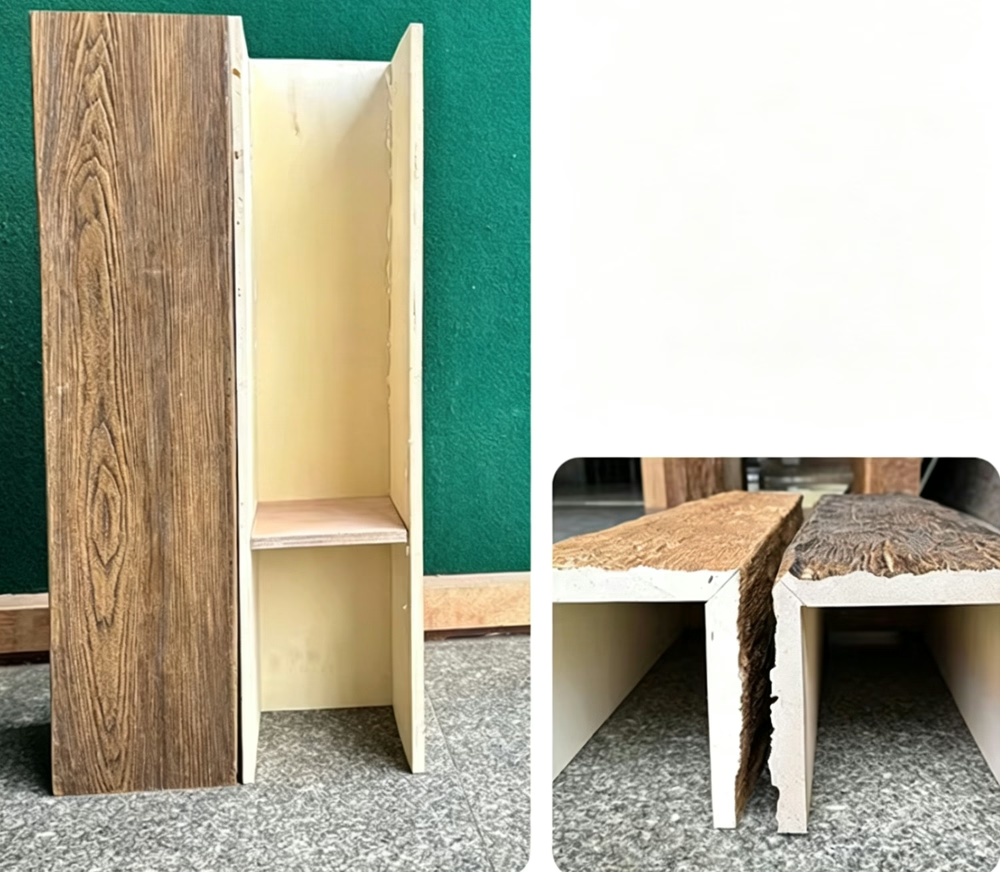
Coordinating beam finish with room palette
The process of specifying a multi-tone beam for a layered interior starts with the room palette, not the beam.
Step 1: Identify the dominant tones
In a layered interior, there are typically 3 to 5 dominant tones. Look at the largest surfaces: the walls, the floor, the largest piece of upholstered furniture. These establish the palette.
Step 2: Identify the accent tones
The smaller elements — throw pillows, artwork, a rug — introduce secondary tones. These should relate to the dominant tones, not contradict them.
Step 3: Choose the beam's role
The beam can be a dominant element (same value as the largest surfaces), a bridging element (a tone that connects two dominant tones), or an accent element (a tone that picks up a secondary tone from the room's accessories).
In most layered interiors, the beam should be a dominant or bridging element — the beam is usually large enough to function as a room-scale element, not a detail.
Step 4: Specify the finish
With the beam's role established, specify a multi-tone finish that delivers the right color relationship.
Dominant beam: The beam base tone matches the floor or wall tone (or is one step darker). Grain enhancement and shadow add depth without changing the dominant hue. The beam reads as part of the room's foundation.
Bridging beam: The beam base tone falls between two dominant tones. The highlight picks up one dominant tone; the shadow picks up the other dominant tone. The beam connects the room's elements visually.
Accent beam: The beam uses a tone from the accent palette rather than the dominant palette. This is a bolder move that works best when the room has other elements carrying the dominant palette. An ebony beam over a greige floor and white walls is an accent beam — the room is the background and the beam is the statement.
Contrasting multi-tone beams in the same room
Some projects use multiple beam profiles or beam groups, each with a different multi-tone finish. This is a sophisticated move that requires careful planning.
Keep one constant
When using multiple beam finishes, keep one element constant across all beams — usually the base tone or the shadow tone. The variation lives in the other layers. Two beams with different grain highlights but the same base tone and shadow tone read as a family, not as random.
Vary the contrast
Different multi-tone finishes can have different contrast levels. A rustic beam with high-contrast layers and a refined beam with low-contrast layers can coexist in the same room if their base tones are related. The high-contrast beam reads as a textural element; the low-contrast beam reads as a tonal element.
Use the same grain texture
When multiple beam profiles share the same room, using the same wood grain texture across all profiles creates coherence even if the finishes differ. The eye groups the beams by texture before it groups them by color.
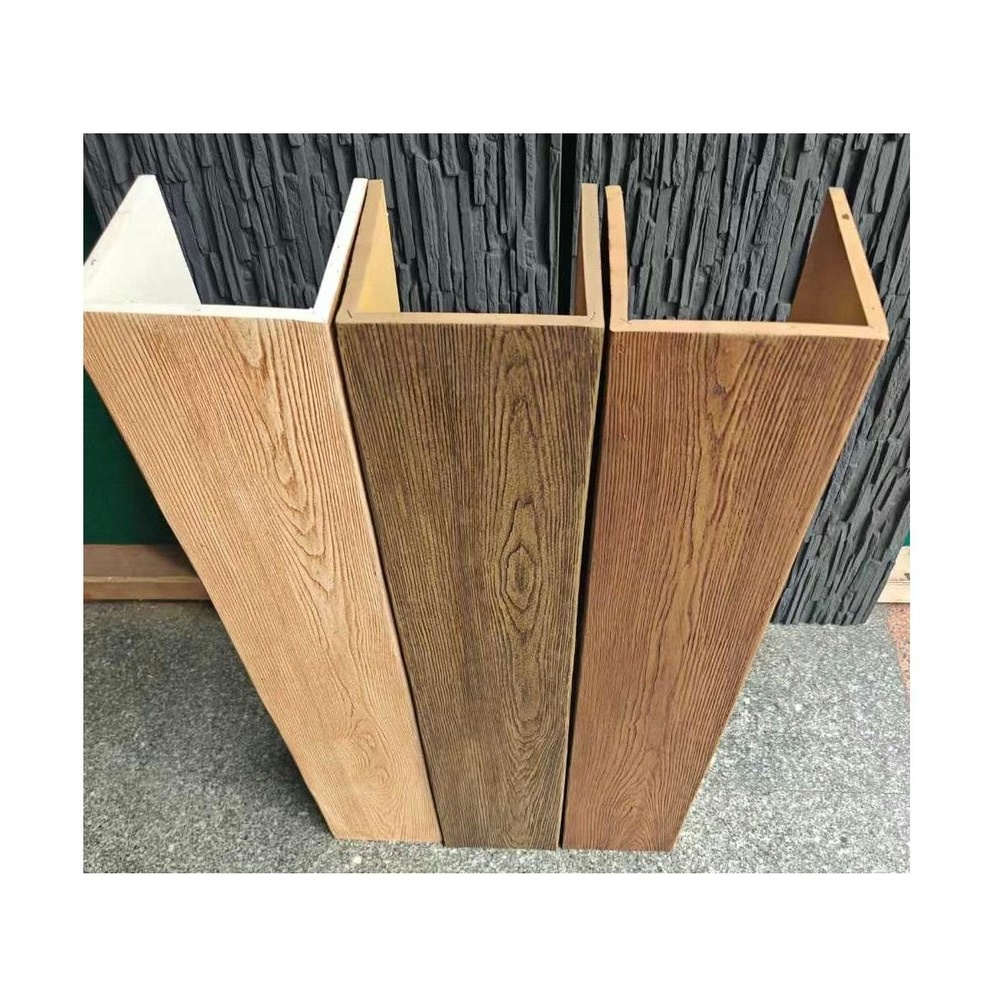
The finish specification conversation
When you approach a supplier with a multi-tone beam specification for a layered interior, bring:
- Photos of the room or mood board showing the palette and the intended layered effect
- Specific color references for the dominant tones (paint swatches, fabric chips, wood samples)
- The beam's role in the room (dominant, bridging, or accent)
- The contrast level you want (low, medium, high)
- The grain texture you want — this affects how the multi-tone layers read
A supplier who asks about the room palette before quoting a multi-tone finish is a supplier who understands layered aesthetics. A supplier who quotes a finish from a color swatch alone isn't thinking about the room the beam will live in.
Multi-tone colored PU beams are one of the most versatile finishing options available for faux wood beams. When specified correctly, they do what all the best interior design elements do: they make the room look like it was always meant to be this way.
Technical References
ASTM standards cited in every specification
Test Data
Lab results from internal testing program
Updated 2026
Reviewed against current product specs


