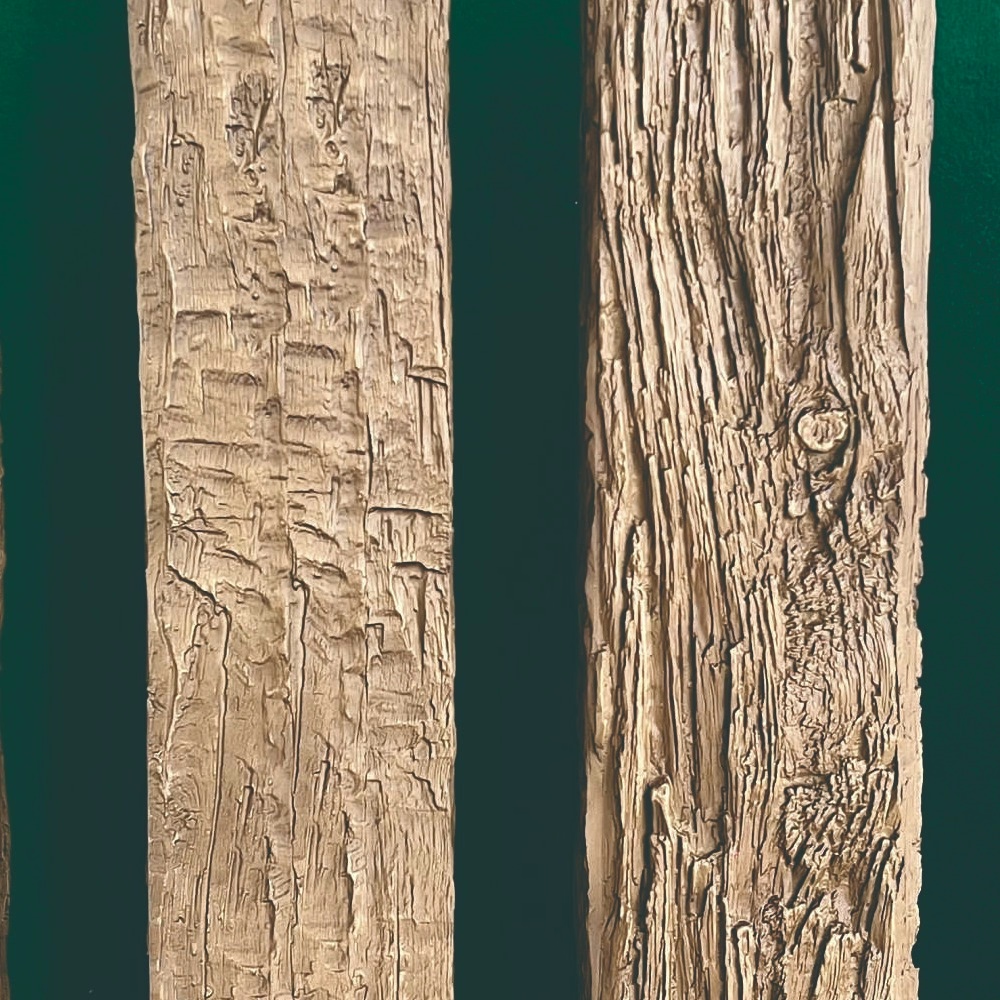
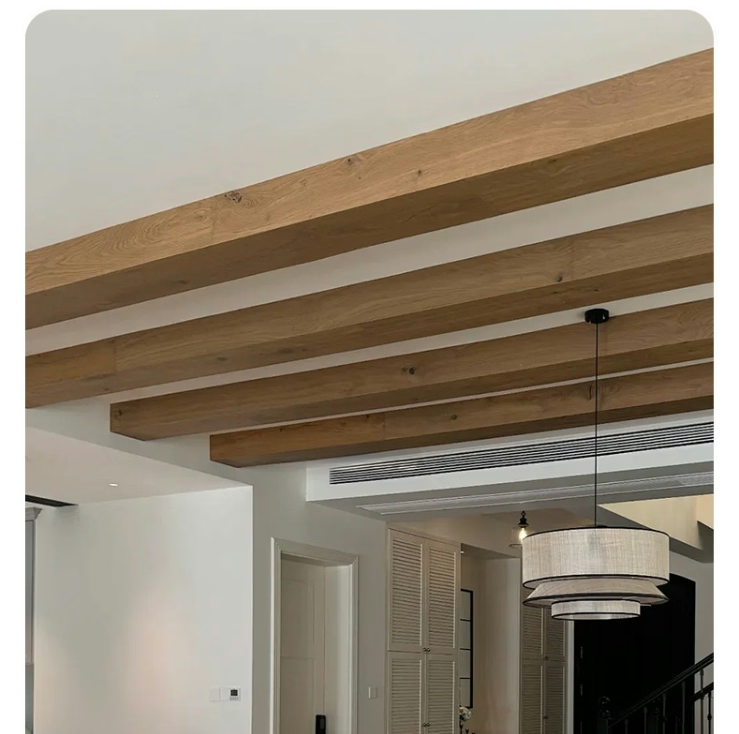
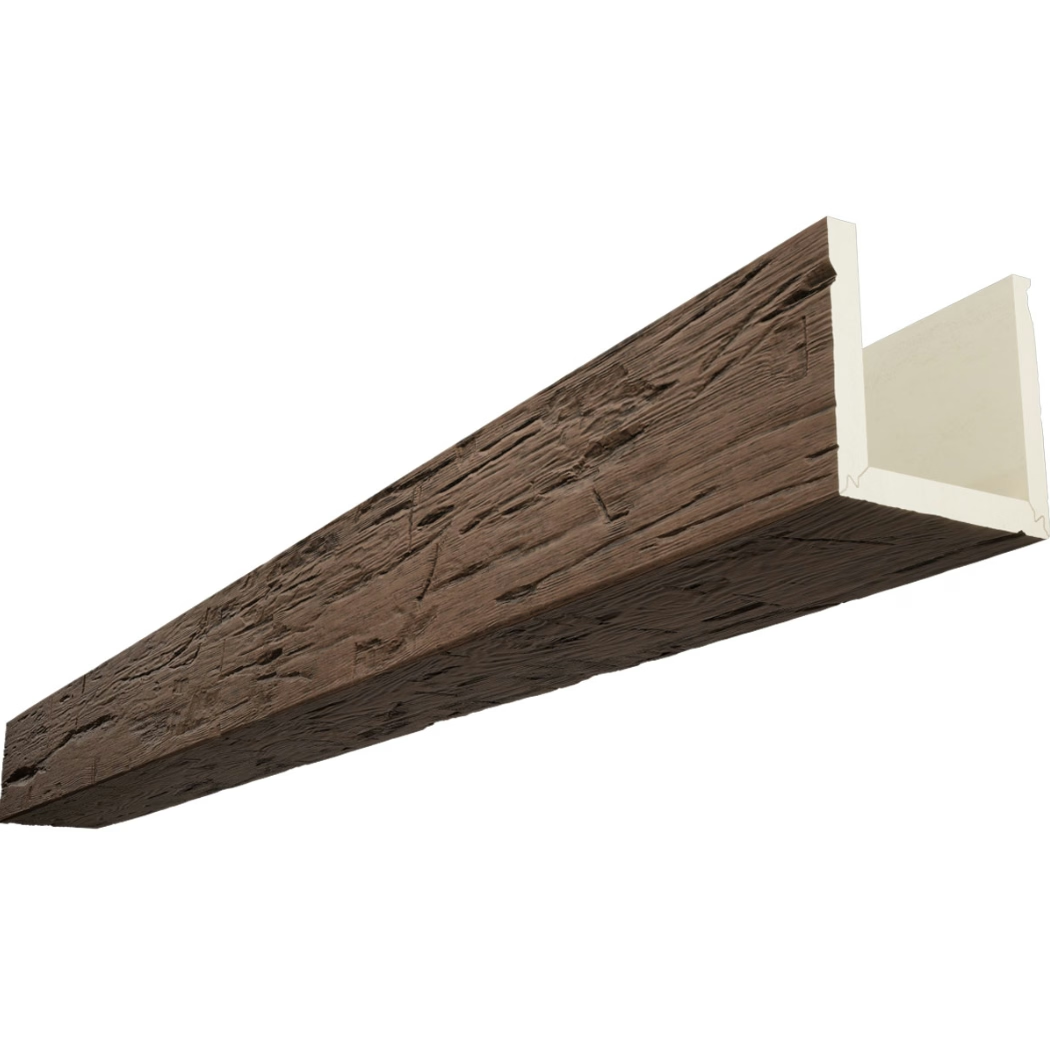
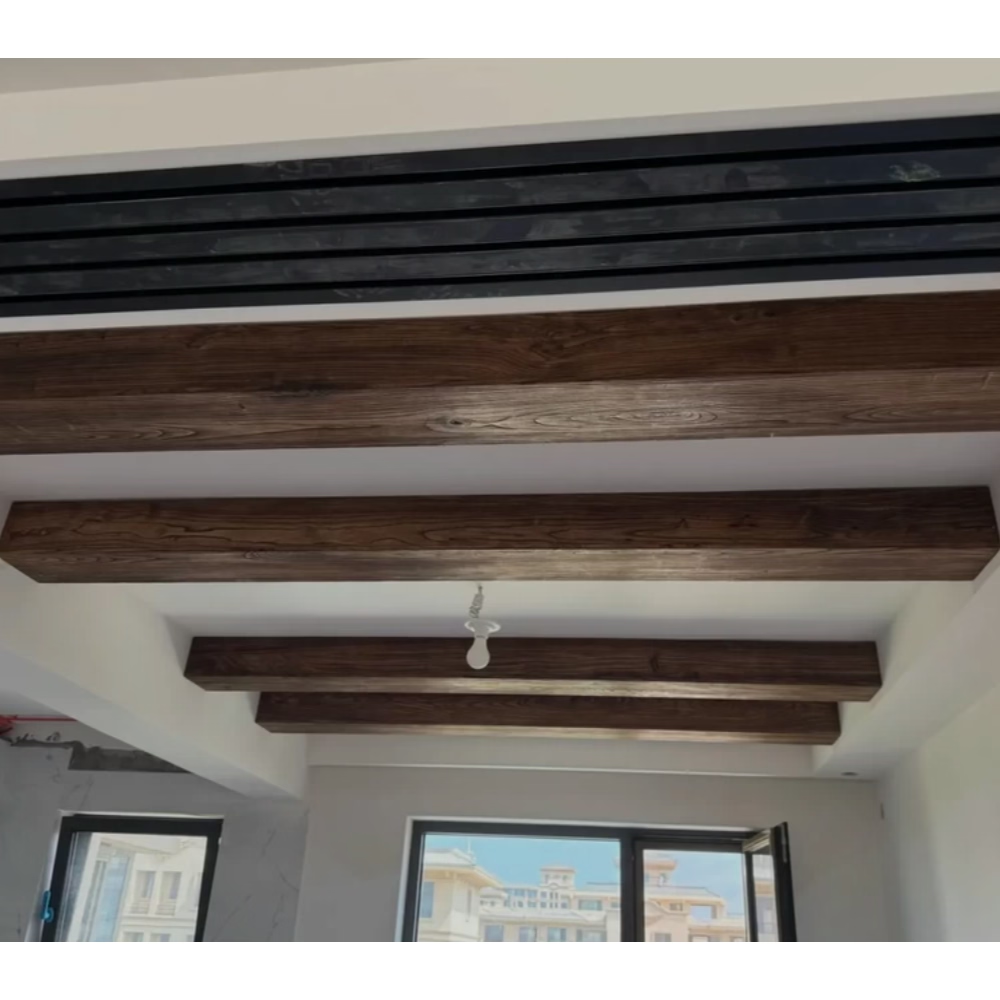
Sourcing faux wood ceiling beams directly from a Chinese factory on an OEM basis is the route most large importers and many medium-sized distributors have taken over the past decade. The reasons are straightforward: lower unit cost, access to custom profiles and finishes, and the ability to build a private-label product line that no competitor can match.
This article is for importers, distributors, and project buyers who are considering or actively engaged in OEM sourcing of faux wood ceiling beams from China. It covers the practical mechanics, the trade-offs, the common pitfalls, and the decisions that matter.
What OEM means in the beam industry
OEM (Original Equipment Manufacturing) in the faux beam context means a factory produces beams to the importer's specification — the profile dimensions, the wood grain texture, the finish, and any custom features. The importer's brand goes on the product, not the factory's.
In some OEM arrangements, the importer provides a complete specification and the factory produces to that specification. In others, the importer provides a concept and the factory contributes engineering input. The boundary between OEM and ODM can be blurry in practice.
The defining feature of OEM is that the importer owns the design and the brand. The factory is a contract manufacturer.
Why source directly from China
The case for direct sourcing from China has changed over the past decade. In the early 2010s, the cost advantage was dramatic — 50 to 70 percent below comparable quality from other regions. Today, the cost advantage is more modest — 20 to 40 percent — but other factors have grown in importance.
Production capability
Chinese factories have developed deep expertise in PU faux beam production over 20+ years. The tooling, the resin chemistry, the finishing techniques, and the production scale are mature. Few factories outside China can match this combination of capability and capacity.
Profile variety
A typical mid-sized Chinese beam factory maintains 50 to 200 standard profiles in active production. The depth of the catalog means that most projects can be served with stock profiles plus a custom finish, with no custom tooling required. This dramatically reduces lead time and tooling cost for many projects.
Custom development capability
Beyond the catalog, Chinese factories are willing and able to develop custom profiles, custom finishes, and custom grain textures. The engineering teams at the larger factories have developed thousands of custom projects and can navigate the technical challenges that come with unusual specifications.
Logistics
China has well-developed export logistics for faux beam products. Major ports (Shanghai, Ningbo, Shenzhen, Qingdao) have established freight forwarding networks for LCL (less than container load) and FCL (full container load) shipments. Lead times from Chinese factory to U.S. or European port are typically 25 to 40 days by sea.
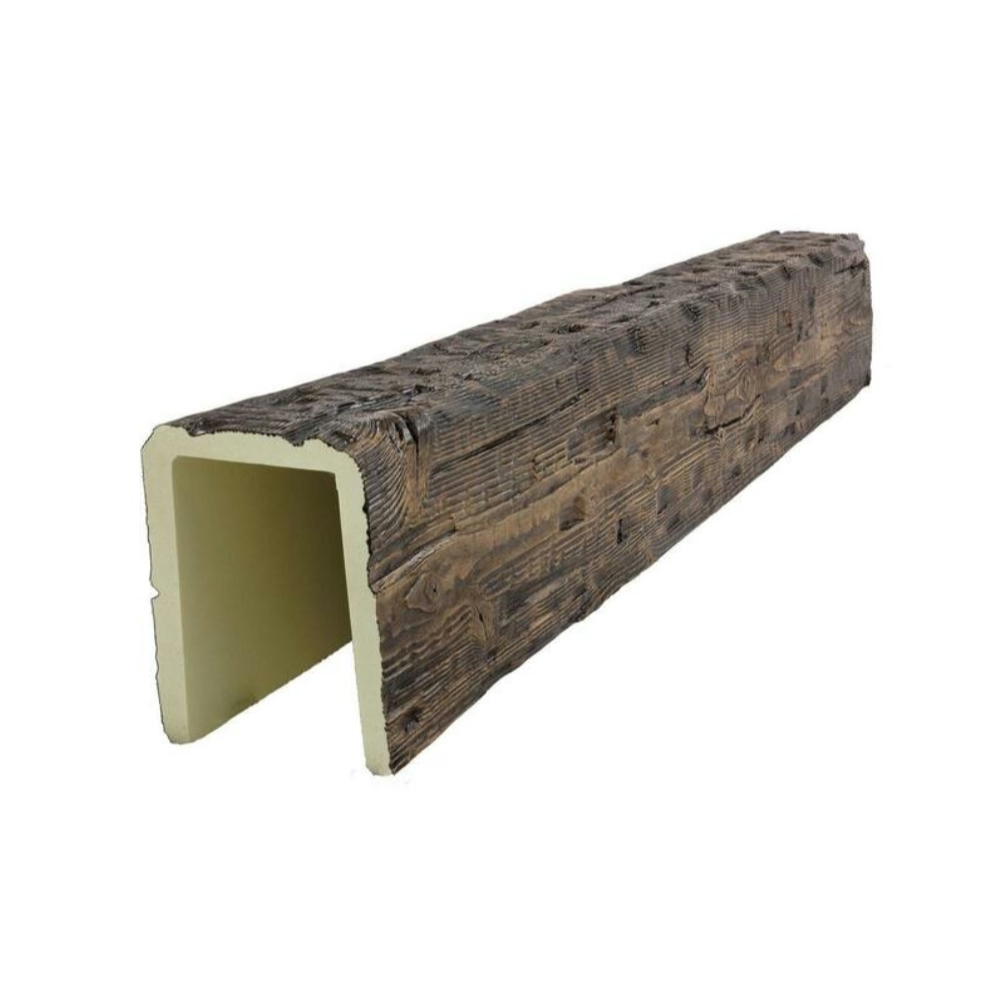
The OEM sourcing process
A typical OEM sourcing project for faux wood ceiling beams follows this sequence:
Step 1: Factory identification and qualification
The first challenge is identifying the right factory. There are thousands of PU foam molding factories in China, but the subset that has the capability, quality, and reliability to produce faux wood beams for export is much smaller.
The qualification process typically includes:
- Initial contact: Inquiry through Alibaba, Made-in-China, trade shows (Canton Fair, others), or industry referrals
- Capability assessment: Review of the factory's existing catalog, production equipment, and past export projects
- Sample request: Request for a small sample of representative beams to evaluate finish quality, dimensional accuracy, and overall production quality
- Reference check: Contact with existing customers in the importer's market to verify performance claims
- On-site visit (if possible): A factory tour to assess the production line, the quality systems, and the personnel
This phase typically takes 2 to 4 weeks.
Step 2: Specification development
The importer and the factory agree on the specifications for the beams. The specifications cover:
- Profile dimensions and shape
- Wood grain texture selection (standard or custom)
- Color and finish specification
- Quality standards and tolerances
- Packaging requirements
- Documentation requirements (test reports, certifications, etc.)
The specification should be detailed enough that both parties have the same understanding of what will be produced. Inadequate specifications are the most common cause of disputes later in the process.
Step 3: Sample production and approval
The factory produces a pre-production sample — typically 1 to 3 pieces — based on the agreed specification. The importer evaluates the samples and either approves them or requests modifications.
Sample approval is the moment when the importer commits to the production run. Any further changes to the specification after sample approval are treated as change orders and may carry additional cost.
This phase typically takes 2 to 4 weeks, including sample shipping if the factory is in China.
Step 4: Production run
The factory produces the agreed quantity. Production is monitored through periodic updates, photographs or videos of the production line, and — for larger orders — on-site visits by the importer's quality control team.
Production time depends on the order quantity, the complexity of the profile, and the factory's current capacity utilization. A 500-piece run of a standard profile typically takes 2 to 4 weeks. A 5,000-piece run takes 4 to 8 weeks.
Step 5: Pre-shipment inspection
Before the goods ship, a pre-shipment inspection (PSI) is conducted. The PSI checks the production against the specification, verifies the quantity, and identifies any quality issues that need correction before shipment.
PSIs are typically conducted by third-party inspection companies (SGS, Bureau Veritas, Asia Inspection, and others) or by the importer's own quality control team. The cost of a PSI is typically $200 to $500 per inspection day, with most PSIs taking one to two days.
Step 6: Shipping and logistics
The finished beams are packaged, loaded, and shipped. For smaller orders, LCL shipping (where the goods share a container with other products) is typical. For larger orders, FCL (full container load) is more efficient.
Shipping options include:
- Sea freight (LCL): 25 to 40 days transit time, $3 to $8 per cubic meter
- Sea freight (FCL): 25 to 40 days transit time, $2,000 to $6,000 per 20-foot container
- Air freight: 5 to 10 days transit time, $5 to $15 per kilogram
- Express courier: 3 to 7 days transit time, $8 to $20 per kilogram
For beam products, sea freight is almost always the most cost-effective option because the products are bulky but relatively light.
Step 7: Customs clearance and delivery
On arrival at the destination port, the goods clear customs and are transported to the final destination. The importer is responsible for customs clearance, duties, and inland transportation.
Common pitfalls in OEM sourcing
Pitfall 1: Factory misrepresentation
Some factories present capabilities they don't actually have. A factory may show catalog images of curved beams but actually produce only straight beams. A factory may claim custom mold capability but use sub-contracted workshops for the custom work, with inconsistent quality.
Mitigation: Verify claims through sample production before committing. A factory that won't produce a sample is a factory that probably can't produce what it's offering.
Pitfall 2: Specification drift
Even with a written specification, production can drift from the spec through small decisions made during production. A batch of stain that comes out slightly different, a mold that's worn and producing slightly different dimensions, a finish that's applied slightly heavier.
Mitigation: Detailed specifications with measurable tolerances. Pre-shipment inspections. Comparison samples from each production batch.
Pitfall 3: Quality inconsistency between samples and production
Samples are often produced with extra care — the factory's best operators, the freshest materials, the most attention to detail. Production runs may not match the sample quality if the factory doesn't have consistent processes.
Mitigation: Random sampling during production, not just at the end. Inspect early production pieces against the approved sample, not against each other.
Pitfall 4: Communication delays
Time zone differences, weekend schedules, and translation issues all slow communication. A question that takes 4 hours to answer via email can stall a production decision for 2 days.
Mitigation: Establish clear communication channels, identify key contacts on both sides, and agree on response time expectations.
Pitfall 5: Logistics surprises
Sea freight schedules shift. Containers are delayed at port. Customs holds shipments. Inland transportation is slower than expected.
Mitigation: Build buffer time into your schedule. Don't promise installation dates that assume perfect logistics performance.
Quality control strategy
The importer's quality control strategy should cover three checkpoints:
Incoming material inspection
Inspect the first few pieces of each production batch against the approved sample. If the batch differs significantly from the sample, address it before the batch is complete.
In-process inspection
For larger orders, conduct a mid-production inspection. Check that the finish quality is being maintained, that the dimensions are stable, and that no production issues have emerged.
Pre-shipment inspection
The final check before the goods leave the factory. Verify the quantity, inspect a random sample of pieces against the specification, and confirm that the packaging is appropriate for the shipping method.
When OEM sourcing isn't right
Direct OEM sourcing from China isn't right for every importer or every project. Consider alternatives if:
- The order quantity is very small (under 100 pieces): The logistics overhead may exceed the savings
- The required lead time is very short (under 6 weeks): Sea freight from China takes 4 to 6 weeks minimum
- The product requires no customization: Stock profiles with no custom features are available from regional distributors at competitive prices
- The importer has no quality control capability: Without on-site inspection capability, the risk of receiving off-spec product is significant
For importers who have the order volume, the lead time, the customization need, and the quality control capability, OEM sourcing from China is the right path. It's how most of the world's branded faux wood beams are produced.
Technical References
ASTM standards cited in every specification
Test Data
Lab results from internal testing program
Updated 2026
Reviewed against current product specs