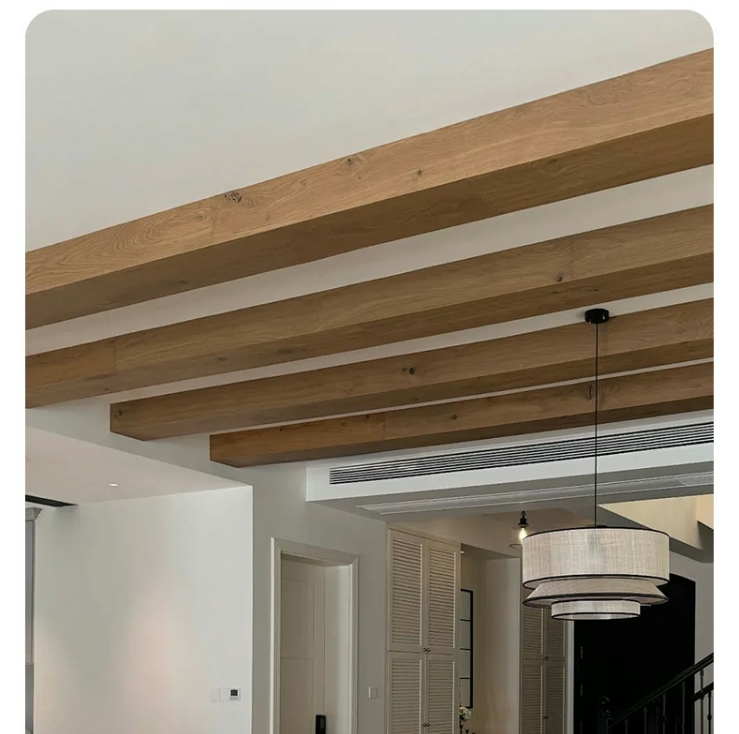
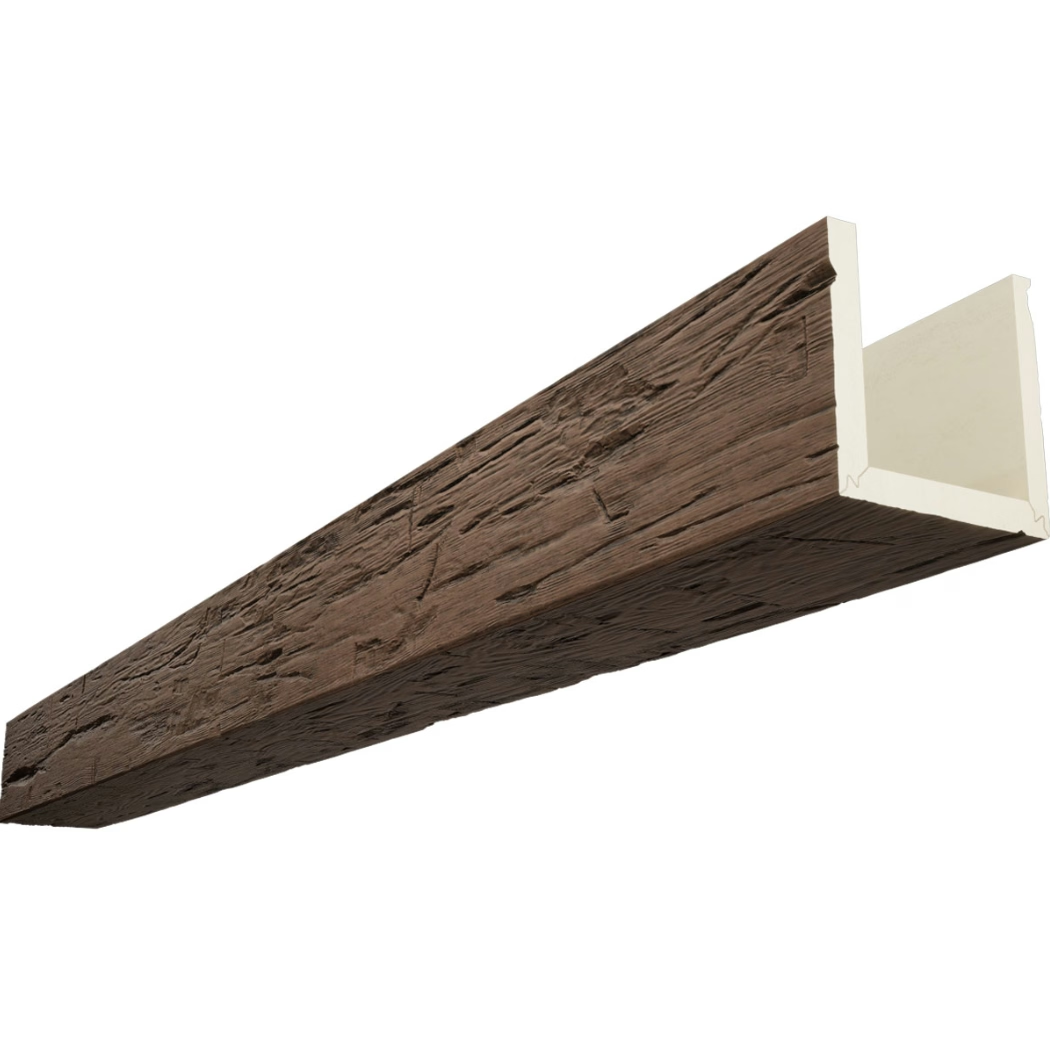
The beams are the headline. The accessories are what make the installation work. A decorative corbel that sits under a beam end, a beam strap that wraps a joint, a ceiling mount that transitions the beam to the structure above — each one of these accessories is a small product in itself, with its own design requirements, its own tooling, and its own quality considerations.
For a complete faux beam project, sourcing accessories from the same OEM factory as the beams offers real advantages: matching finish, consistent lead times, coordinated packaging, and a single point of accountability. This article covers the range of beam accessories that can be OEM-produced, what to specify for each, and how to manage the combined sourcing.
Beam accessory categories
The accessory family for a faux wood beam installation includes several distinct product categories.
Corbels
A corbel is a decorative bracket that supports — or appears to support — a beam end. In real timber construction, corbels transfer the beam's load to the wall or column below. In faux beam installations, corbels are purely decorative, but they need to look like they're doing structural work.
Corbels come in many styles:
- Stepped corbels: A simple stepped profile with one or two levels, common in Craftsman and Mission style interiors
- Curved corbels: A scrolled or curved profile, common in Victorian and traditional interiors
- Plain block corbels: A simple rectangular block, common in contemporary and minimalist interiors
- Carved corbels: An ornamental profile with carved details, common in formal and historic interiors
A corbel for a faux beam project needs to match the beam's profile geometry, finish, and grain texture. Producing both from the same factory ensures the match.
Beam straps
A beam strap is a decorative metal or faux-metal band that wraps around a beam at a structural connection point. In real timber construction, beam straps reinforce bolted connections. In faux beam installations, the straps are applied as decoration to suggest structural reinforcement.
Beam straps are typically produced in PU foam with a faux-metal finish (or in actual metal — steel, iron — with a rust or patina finish). The PU option allows the strap to match the beam finish; the metal option provides a contrasting material.
Ceiling mounts and blocking
The hardware that attaches a beam to the ceiling structure. For most projects, ceiling mounts are functional hardware (steel brackets, blocking strips, threaded rod) rather than faux wood. But some installations use faux-wood covered blocking or decorative ceiling plates that match the beam finish.
Beam ends and terminations
The end caps or end treatments for beams that don't run continuously to a wall. A faux beam that terminates in mid-span (a decorative beam on a flat ceiling, for example) needs a finished end that looks like the beam's natural end grain.
Beam end treatments can be:
- Flat caps: A simple flat end that shows the cross-section profile
- Hammered beam ends: A rough-hewn end with visible tool marks (a rustic look)
- Sculpted ends: An ornamental end treatment, often a carved acanthus or scroll detail
Ceiling mouldings
The transition between a beam and the surrounding ceiling is often handled with a moulding — a decorative strip that runs along the seam where the beam meets the ceiling. The moulding hides the joint and adds a finished look.
Ceiling mouldings for beam installations are typically produced in PU foam with the same finish as the beam. Common profiles include cove moulding, step moulding, and quarter-round moulding.
Wall plates and rosettes
Where a beam meets a wall, a decorative wall plate or rosette can hide the joint and add visual weight to the connection. Wall plates are typically simple rectangular pieces; rosettes are round or oval decorative elements that anchor the beam visually.
OEM production advantages for accessories
Producing all the accessories through the same OEM factory as the beams offers several practical advantages.
Finish consistency
The biggest advantage. When the factory controls the foam formulation, the grain texture, and the finish system for both the beams and the accessories, the match is automatic. A corbel that's produced at a different factory (or with a different process) will always look slightly off compared to the beam, even with careful color matching.
Lead time coordination
The beams and the accessories ship together when produced by the same factory. There's no risk of the beams arriving on site but the corbels being delayed by a separate factory's production schedule. For project managers coordinating a tight installation timeline, this is a major benefit.
Packaging efficiency
Beams and accessories can be packed together in a single crate or container, reducing shipping cost and simplifying receiving on site. Separate factories means separate shipments, separate packaging, and a more complex receiving process.
Single point of accountability
When something goes wrong — the corbel finish doesn't match the beam, the beam strap is the wrong size, the ceiling moulding is missing — there's one factory to call. Splitting the order across multiple factories means splitting the accountability, which makes resolution more complex.
Volume leverage
A larger combined order (beams plus all accessories) gives the importer more negotiating leverage on per-piece pricing. The factory benefits from a larger relationship, and a portion of that benefit can be passed back as better pricing.
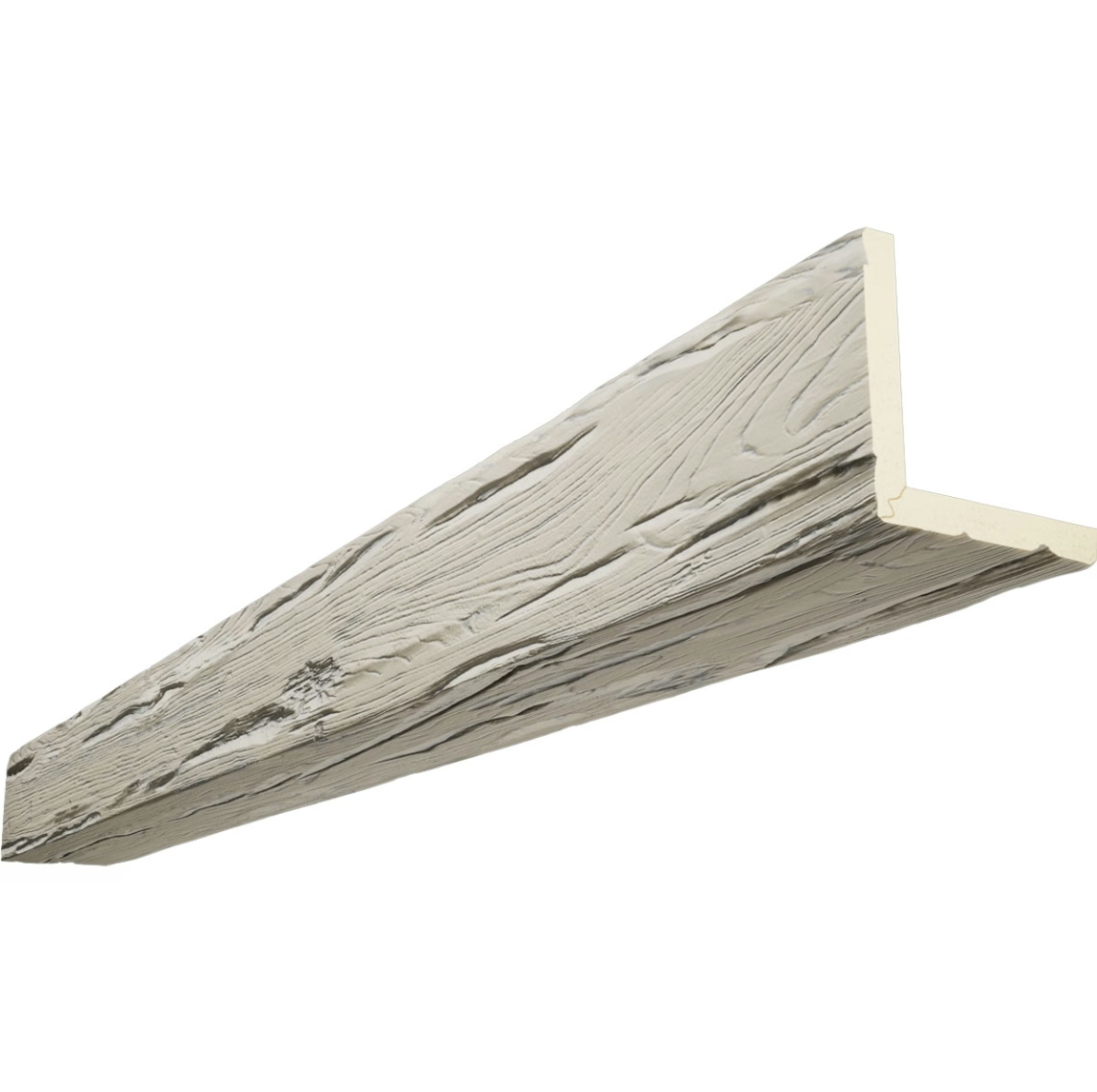
Specifying accessories for OEM production
Each accessory category has its own specification requirements.
Corbel specification
A complete corbel specification includes:
- Profile drawing: A dimensioned drawing showing the corbel's side profile, top profile, and front profile
- Dimensions: Height, depth, and width (or width range if the corbel is designed to span a range of beam depths)
- Mounting details: How the corbel attaches to the beam and to the wall (or appears to)
- Finish specification: Same finish as the beams, including any multi-tone layers
- Grain direction: The direction the wood grain runs on the corbel's visible faces
Beam strap specification
A complete beam strap specification includes:
- Strap dimensions: Length, width, thickness
- Profile: Flat strap, curved strap, or shaped strap (U-shape, T-shape, etc.)
- Bolt detail: Whether the strap includes decorative bolt heads and what they look like
- Material: PU foam with faux-metal finish, or actual metal
- Finish: For PU: matching beam finish. For metal: faux-rust, faux-patina, painted black, or specified metal color
Moulding specification
A complete ceiling molding specification includes:
- Profile drawing: Cross-section of the moulding profile
- Length: Standard molding length (typically 2 to 4 meters for individual pieces)
- Linear meters required: Total length of moulding needed for the project
- Finish: Same as the beam
Tooling considerations for accessory programs
Each accessory category requires its own mold. A complete accessory program — corbels, straps, mouldings, end caps — may require 10 to 20 different molds. The tooling cost adds up quickly.
Strategies to manage tooling costs:
Focus on the core accessories
Start with the accessories that appear most often in projects — corbels and ceiling mouldings. Add other accessories (beam straps, rosettes, custom end caps) as the product line develops.
Use multi-cavity molds
For small accessories like beam straps or rosettes, a single mold can produce multiple pieces per pour. A four-cavity strap mold, for example, produces four straps per pour cycle, reducing per-piece cost.
Reuse existing molds where possible
Many accessory profiles are similar across projects — a standard stepped corbel, for example, works with many different beam profiles. Producing a small library of standard accessory molds that the factory already has reduces custom mold investment.
Tier the accessory offering
Offer a base line of accessories (3 to 5 items) produced from standard molds, with a custom line for projects that need something specific. The base line covers most projects; the custom line handles exceptions.
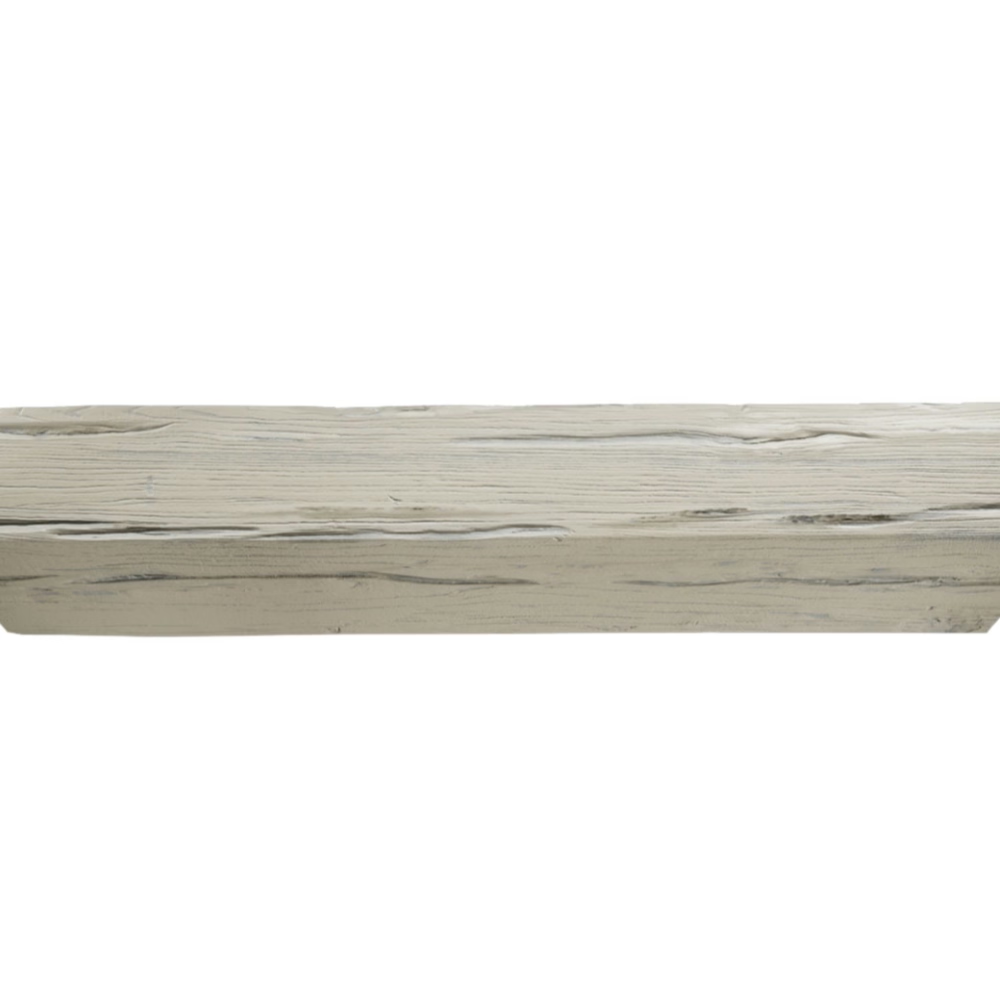
Coordination with beam production
When ordering beams and accessories together, several coordination points need attention.
Sample approval
The factory should produce samples of both the beams and the accessories for approval. The samples should be produced and reviewed together so any finish or color discrepancy is identified and addressed before production.
Production scheduling
The factory should produce the beams and the accessories in parallel, not sequentially. Sequential production can leave the accessories waiting behind the beams for weeks, which may delay shipment.
Quality control
Quality control checks should compare the accessories to the beams, not just to the accessory specification. A corbel that meets its own specification but doesn't match the beam's finish is a quality issue that may not be caught by spec-based inspection.
Packaging coordination
The beams and the accessories should be packaged together in the same crates or containers where possible. Crate labeling should make the contents clear so the installer can find the accessories quickly on site.
OEM production of beam accessories alongside the beams themselves is one of the most practical ways to ensure a complete project arrives on site looking consistent. The factory that makes both is invested in the success of both — which is the kind of partnership that produces consistently good results.
Technical References
ASTM standards cited in every specification
Test Data
Lab results from internal testing program
Updated 2026
Reviewed against current product specs