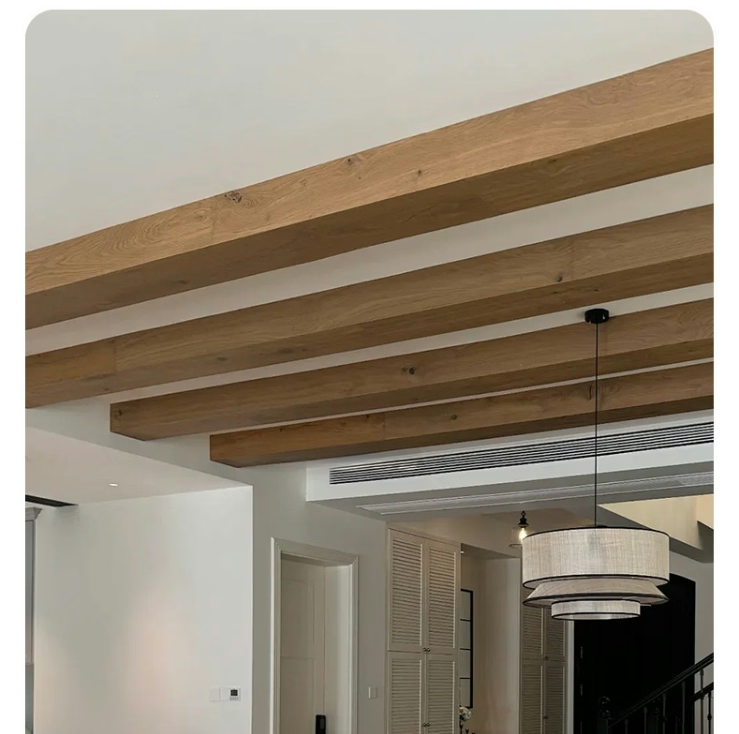
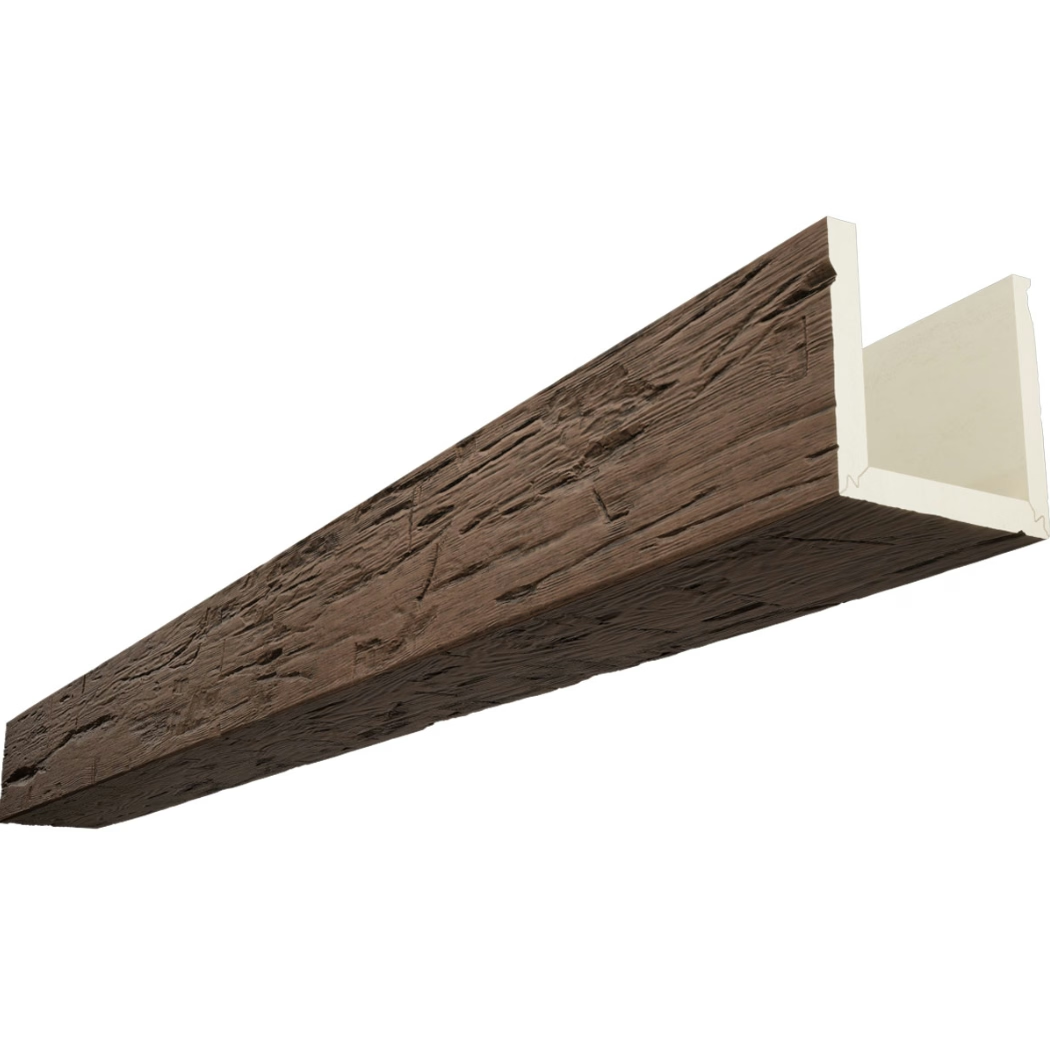
A bespoke faux wood ceiling beam project isn't a catalog order. It involves a specific design, a specific site, a specific installation context, and a specific aesthetic goal. The OEM factory that's producing the beams needs to function less like a manufacturer taking an order and more like a project partner delivering a finished architectural element.
This article describes what that kind of OEM service looks like in practice — the stages of engagement, the deliverables, the communication expectations, and the quality standards — for buyers who need to specify OEM service for a bespoke beam project.
What makes a project bespoke
A bespoke beam project is one where the beams are designed for a specific application, with specific dimensions, profiles, finishes, and quantities that don't exist in any standard catalog. The defining features are:
- A specific architectural context: The beams are designed for a particular room, building, or design intent that the factory hasn't produced for before
- A specific dimensional requirement: Standard catalog dimensions don't fit, requiring either a non-standard size or a custom profile
- A specific finish specification: The finish is custom-developed for the project, not selected from a standard color chart
- A specific quality standard: The beams have to meet a defined performance standard (fire rating, finish quality, dimensional tolerance, etc.) that the factory's standard QC may not address
The OEM service for a bespoke project is the integration of design, engineering, tooling, production, quality control, and logistics into a coordinated delivery of finished beams that meet the project specification.
The stages of a bespoke OEM engagement
Stage 1: Concept and brief alignment
The OEM service starts with the brief. The client brings the concept, the project context, and any preliminary specifications. The factory's project team — typically a sales engineer or a project manager — listens, asks questions, and begins to translate the concept into a producible specification.
The alignment at this stage is critical. Misalignment here is the most common source of project problems. The factory and the client need to agree on what the project is, what it isn't, and what success looks like.
A good OEM service at this stage asks more questions than it answers. It probes for details the client may not have thought through — the installation hardware, the fire performance standard, the maintenance expectations. It doesn't just say "yes, we can do that."
Deliverables from this stage:
- A written understanding of the project scope
- An initial assessment of producibility
- An initial cost estimate range
- An initial timeline estimate
Stage 2: Design development
The OEM factory translates the concept into a detailed design:
- Cross-section drawings for each beam profile
- Length specifications for each beam in the project
- Grain texture selection or development
- Finish specification
- Installation hardware specification
- Quality standard definition
For projects where the client has a complete design already (the case in many architectural specifications), this stage confirms that the design is producible and identifies any modifications needed for production.
For projects where the client has only a concept (the case in many interior design projects), this stage may include significant design contribution from the factory.
Deliverables from this stage:
- Detailed CAD drawings
- A complete written specification
- A firm cost estimate
- A firm timeline estimate
- A list of any items that require further clarification
Stage 3: Sample production
The factory produces pre-production samples — typically 1 to 3 pieces of each beam type — based on the agreed specification. The samples represent the production quality the factory will deliver.
Sample production for a bespoke project is more demanding than sample production for a catalog project. The samples have to demonstrate the custom profile, the custom finish, and any custom features that the project requires.
Deliverables from this stage:
- Finished sample beams, ready for review
- A sample approval document that the client signs to confirm the samples meet the specification
- Any deviations or modifications required for production
Stage 4: Tooling and setup
If the project requires new tooling — a new mold, a new grain texture, a new finish system — the factory undertakes the tooling development described in our previous articles on mold development. This stage can run in parallel with sample production if the design is settled.
Setup also includes production line preparation — adjusting the foam formula, configuring the production equipment, training the operators, establishing the QA procedures.
Stage 5: Production
The factory produces the agreed quantity of beams. The production is monitored by the factory's project team, with regular updates to the client.
For a bespoke project, production monitoring is more active than for a catalog project. The client is more involved in decisions about piece-level quality, finish consistency, and packaging.
Stage 6: Quality control and pre-shipment
The factory's QC team inspects the finished beams against the specification. For a bespoke project, the QC inspection typically includes:
- Dimensional verification against the specification
- Finish verification against the approved sample
- Visual inspection for surface defects, color consistency, and grain texture quality
- Packaging inspection
- Quantity verification
The client is invited to participate in the inspection, either in person or via video. Third-party inspectors may also be engaged.
Stage 7: Shipping and delivery
The beams are packaged, loaded, and shipped. The OEM service typically includes coordination of shipping logistics — booking the freight, preparing the customs documentation, and tracking the shipment.
Stage 8: Installation support
For a bespoke project, the OEM service often extends to installation support:
- Installation drawings specific to the project
- Phone or video consultation during installation
- Site visits by the factory's technical team for major projects
- Post-installation inspections or adjustments
The level of installation support varies by project and by client. A large commercial project typically involves more factory involvement than a small residential project.

The deliverables of a strong OEM service
A bespoke OEM service should deliver:
Design and engineering support
The factory contributes engineering input where needed — mold feasibility analysis, grain texture selection, finish system design, installation hardware specification. The level of contribution varies with the project, but the capability should be available.
Project management
The factory assigns a project manager who is the client's main point of contact throughout the engagement. The project manager coordinates design, tooling, production, QC, and shipping. A single point of contact reduces communication overhead and ensures consistency.
Quality control systems
The factory has documented quality control procedures that apply to the specific project. The procedures cover raw material inspection, in-process checks, finished product inspection, and pre-shipment verification. For projects with specific quality requirements (fire rating, structural certification, etc.), the QC procedures are tailored to address those requirements.
Documentation
The factory delivers the documentation the client needs:
- Product specifications
- Installation instructions
- Test reports (if applicable)
- Care and maintenance instructions
- Warranty terms
- Compliance documentation (fire rating, VOC, etc.)
Logistics coordination
The factory manages the shipping logistics on the client's behalf, including freight booking, customs documentation, and delivery coordination. The client is kept informed throughout.
Communication expectations
Bespoke OEM projects require more communication than catalog orders. The communication expectations should be set at the start of the engagement:
Response times
The factory should commit to specific response times for emails, technical questions, and quality issues. A 24-hour response time for standard questions and a 4-hour response time for urgent issues is a reasonable baseline.
Update frequency
The client should receive regular project updates — typically weekly during design and tooling, and twice-weekly during production. The updates cover progress, issues identified, and upcoming milestones.
Reporting
The client should receive a written report at each major project milestone — design approval, sample approval, tooling completion, production start, QC completion, and shipping. The reports document decisions and confirm progress.
Escalation
There should be a defined escalation path for issues that can't be resolved at the project manager level. The escalation path identifies who to contact at each level of the factory's organization.
What OEM service costs
The OEM service for a bespoke project is more expensive than a catalog order. The additional cost comes from the engineering time, the tooling investment, the project management overhead, and the additional QC procedures.
For a typical bespoke project, the OEM service premium is 15 to 30 percent above the per-piece cost for a comparable catalog order. This premium covers the additional services the client receives.
In return for the premium, the client should expect:
- A dedicated project manager
- Engineering input on the design
- Tailored QC procedures
- Comprehensive documentation
- Installation support
- A defined escalation path for issues
A factory that quotes a bespoke project at the same per-piece price as a catalog order is either misunderstanding the scope or cutting corners on the OEM service. Either way, the project is at risk.
Choosing the right OEM service partner
Not every factory is equipped to provide bespoke OEM service. The right partner has:
- An engineering team with experience in beam design and production
- A project management team that can coordinate multi-month engagements
- A quality control system that can be tailored to specific project requirements
- A documentation system that can produce the required deliverables
- An installation support team that can assist on-site or remotely
These capabilities exist at the larger, more established Chinese beam factories. They do not exist at every factory that produces faux beams.
Ask for project references from previous bespoke OEM engagements. A factory that has successfully delivered bespoke projects for international clients will have the references. A factory that has only done catalog work will not.
Bespoke OEM service is what turns a beam order into a beam project. The factory you choose to provide that service becomes, in many ways, a member of your project team. Choose carefully.
Technical References
ASTM standards cited in every specification
Test Data
Lab results from internal testing program
Updated 2026
Reviewed against current product specs