
Anyone who has ever bought faux timber beams in volume knows the difference between a published price list and a real project quote can be substantial. Our custom quote service for bulk and custom PU faux beam orders is designed to reward buyers who take the time to specify clearly and consolidate volume. This article explains how we tier pricing, what drives MOQ decisions, and how importers and contractors can pull the best number out of us.
What "Custom" Means in a Bulk Context
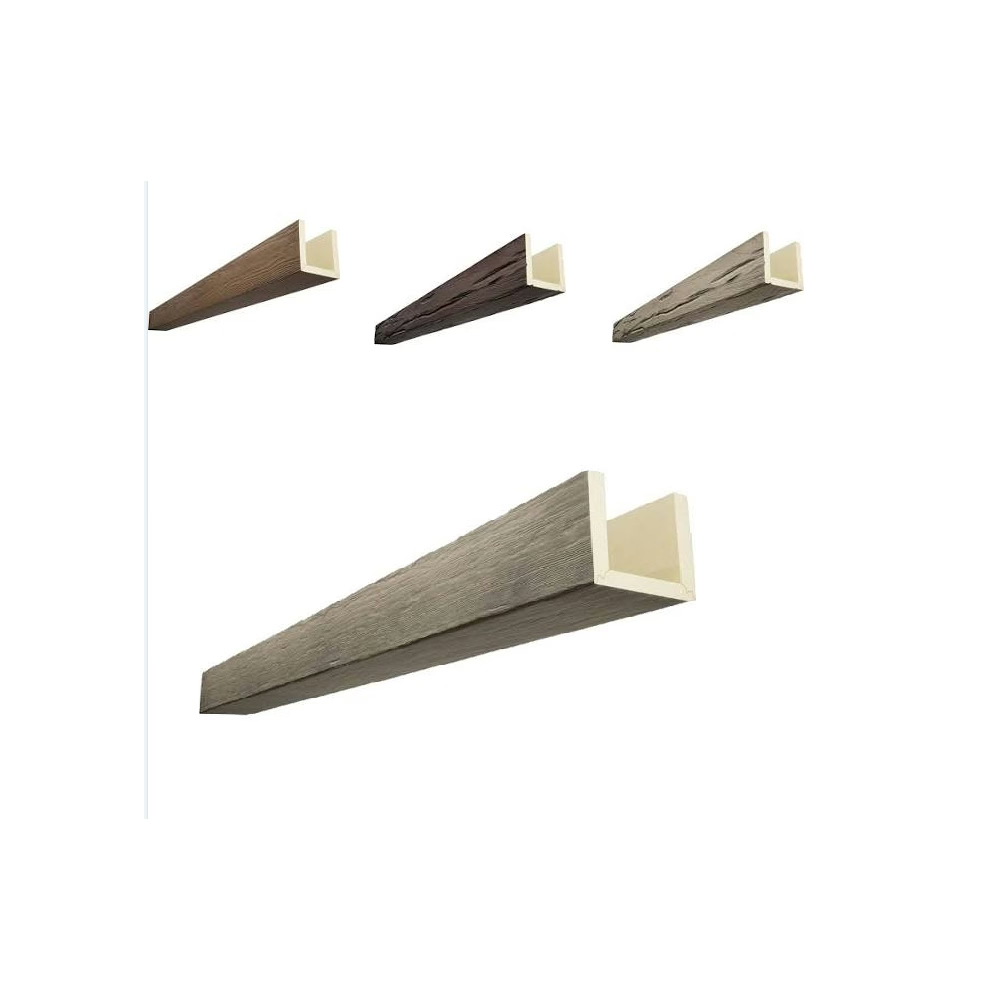
A bulk order does not have to mean commodity stock. Many of our largest shipments mix standard rectangular beams with custom U-shapes, curved radii, and one-off end caps — all on a single purchase order. The "custom" part of your quote covers anything beyond our catalog SKUs: new profiles, custom lengths, special finishes, or branded packaging.
Because we run polyurethane casting in batches, the question is rarely whether we can do it. It is how to combine your custom needs with the next available mold slot so the unit cost stays competitive. That is where the quote process earns its keep.
How We Tier Bulk Pricing
Tiered pricing is not a marketing trick. It reflects the actual cost curve of running a mold, curing polyurethane, finishing, packing, and loading containers. Here is the rough logic.
Tier 1 — Sample Run
Typically 3-10 pieces per profile. The mold is charged a setup fee, finishing is mostly handwork, and shipping is by air or small parcel. Unit price is the highest. This tier exists for design sign-off, showroom displays, and architectural mock-ups.
Tier 2 — Small Production Run
Roughly 50-200 linear meters. Mold setup is amortized across more pieces, finishing labor becomes more efficient, and the order can usually fit into a single 20-foot container with other shipments. Unit price drops meaningfully from Tier 1.
Tier 3 — Full Container Load
A full 20-foot or 40-foot container dedicated to your order. This is where the steepest discount kicks in, because we run a continuous casting cycle, schedule a single finish batch, and load one origin point. Unit price is at its lowest here.
Tier 4 — Multi-Container or Annual Contract
Buyers who commit to multiple containers across a year — typical for property developers and large distributors — unlock negotiated rates that factor in raw material hedging, dedicated mold time, and reserved finishing capacity.
A quote we send you always shows which tier your order currently sits in and what unit price you would reach at the next tier up. That transparency lets your procurement team decide whether pushing an extra 50 meters is worth the incremental spend.
Variables That Move the Quote
When two RFQs look similar on paper but yield different prices, it is almost always one of these variables at work.
- Wall thickness and weight. A heavier beam costs more in raw material and freight. We sometimes suggest a hollow shell with reinforcement where the structural demands allow it.
- Length. Pieces longer than 4 meters require special mold handling and custom crating. Pieces longer than 6 meters often cannot ship in a standard container and need flat-rack or breakbulk consideration.
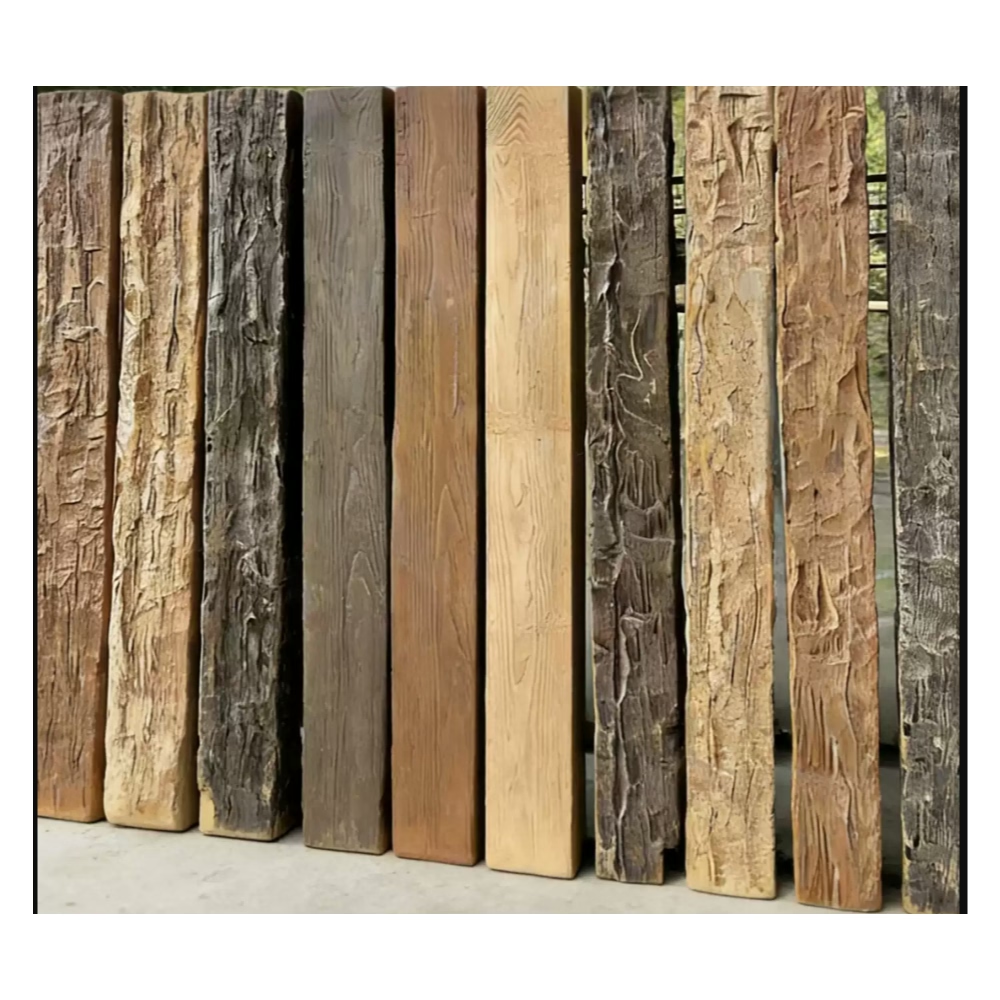
- Texture depth. Smooth or light-grain surfaces are fastest to finish. Deep hand-hewn, distressed, or wire-brushed textures add 30-60% to finishing labor.
- Color matching. Standard wood tones from our swatch book are quick. Custom Pantone or RAL matches require lab time and may need a separate sample approval cycle.
- Fire rating. ASTM E84 Class A or EN 13501-1 B-s1,d0 ratings require specific resin formulations and certified batch testing. The resin cost is higher, but the certification paperwork is what really drives the line item.
- Packaging. Bulk pallet wrap is cheapest. Individual retail cartons with barcodes and multilingual inserts add cost but may be worth it for your distribution model.
How to Structure Your RFQ for the Best Number
After handling thousands of beam RFQs, we have learned that a structured brief returns a better quote than a freeform email. Here is the format that works.
Block 1 — Volume. Total running meters per profile, broken down by length. If you have flexibility on length, say so. A buyer who can accept 2.4 m, 2.7 m, or 3.0 m pieces gives us more options to optimize mold yield.
Block 2 — Profile. Outside dimensions, wall thickness, and a cross-section drawing or photo. If you do not have a CAD file, even a hand sketch with dimensions is enough to start.
Block 3 — Finish. Reference our swatch book number, or send a physical sample. If you need a custom color, attach a Pantone or RAL code and the lighting conditions under which the color must match.
Block 4 — Logistics. Destination port or city, target arrival date, Incoterm preference, and any special documentation (CE marking, FSC chain-of-custody letter, country-of-origin certificate, fire test report).
Block 5 — Commercials. Payment terms preference, whether you need a proforma invoice for an LC, and your typical ordering cadence.
Sending this as a single PDF rather than a string of emails prevents items from getting lost and lets us return a quote that mirrors your structure.
MOQ Logic: Why It Exists and How to Work With It
Minimum order quantity is not arbitrary. It covers the cost of mobilizing a mold, running a batch of polyurethane, completing the finish cycle, and packing out without leftover resin going to waste. For our standard rectangular profiles, MOQ is usually 100-200 linear meters. For a new custom profile, MOQ rises because the mold itself is the fixed cost.
If your project is below MOQ on a custom profile, three paths exist:
- Combine your order with another buyer running the same profile (we maintain a list of in-development molds and can sometimes match you)
- Accept a higher unit price in exchange for a smaller run
- Wait for the next scheduled production slot and add your quantity to it
Buyers who plan 60-90 days ahead almost never hit MOQ problems. Buyers who need beams next week for a site that should have been specified six months ago always do.
Lead Times on Bulk Orders
Lead time scales with complexity, not just quantity. A 40-foot container of a standard profile in a stocked color can be ready in 25-30 days. The same volume of a new profile with custom color and hand-distressed texture can run 50-70 days. Our quote always separates these phases:
- Mold setup and sample production (if applicable)
- Mass production casting
- Finishing and quality control
- Packing and container loading
- Ocean freight (typically 18-30 days from major Chinese ports)
For projects where the schedule cannot absorb that, we recommend partial air freight for the first batch while sea freight follows. The unit cost is higher, but you keep the site moving.
Working with Importers and Distributors
Importers who stock our beams in their own warehouses benefit from a slightly different quoting model. We offer:
- Container-level pricing with no inner cartons
- Mixed-profile pallets so a single container can serve multiple SKUs
- Branded labeling and CE / UKCA documentation pre-applied
- Quarterly business reviews to align forecast with production capacity
If you are an importer considering our line for the first time, ask for our distributor onboarding pack. It includes the swatch book, profile catalog, marketing images, and a sample order form that doubles as your first price list.
When a Quote Becomes a Contract
Once you accept a quote, we issue a proforma invoice that locks the unit prices, lead time, and terms. The proforma is valid for 30-60 days depending on the destination currency and resin price volatility. Production begins either on receipt of the deposit (typically 30%) or on LC confirmation, whichever your terms specify.
Throughout production, we share weekly progress photos and a milestone update so you can plan inbound logistics. The final balance is due against shipment documents — typically a copy of the B/L, packing list, and commercial invoice sent the day containers are sealed.
Closing Thought
A quote is not a price. It is a conversation between your project requirements and our manufacturing capability. The more clearly you can describe what you need, the more useful our number becomes. Bulk buyers who treat the RFQ as a deliverable in its own right — not a casual email — consistently get the best outcomes from us.
Technical References
ASTM standards cited in every specification
Test Data
Lab results from internal testing program
Updated 2026
Reviewed against current product specs


