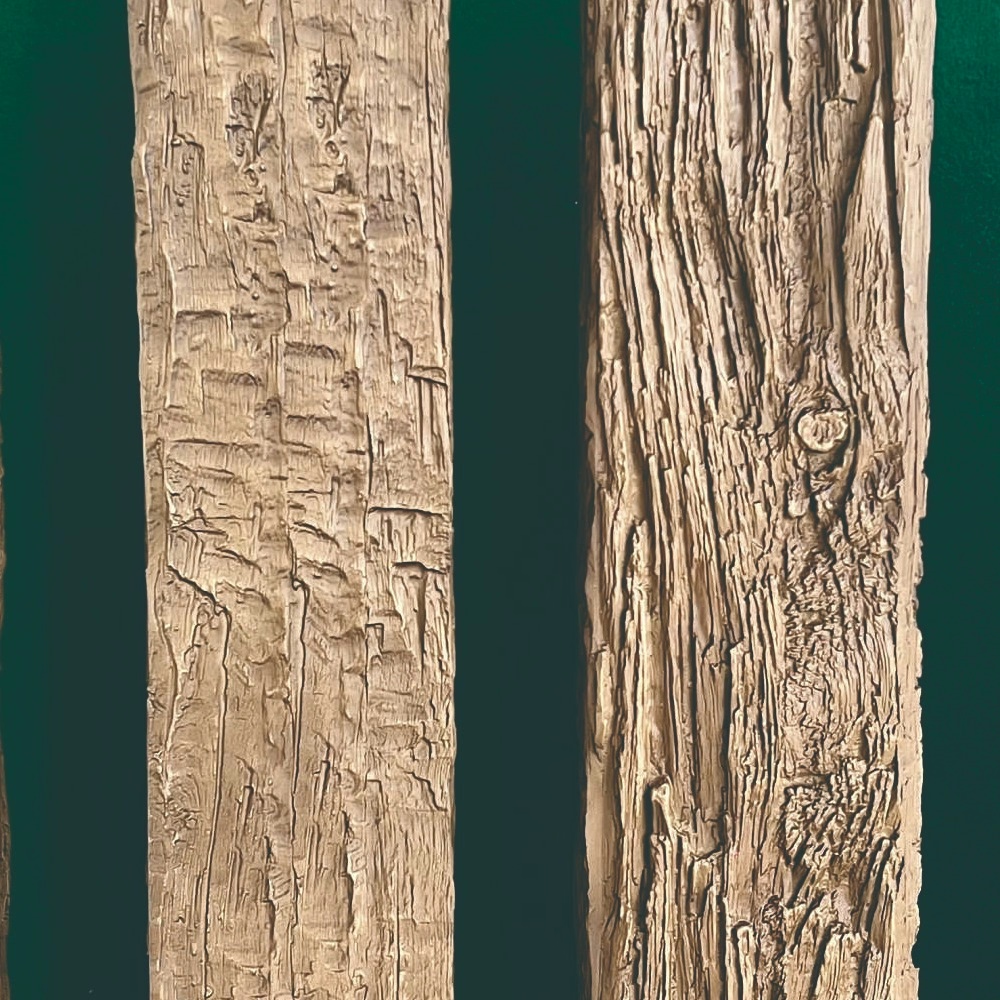
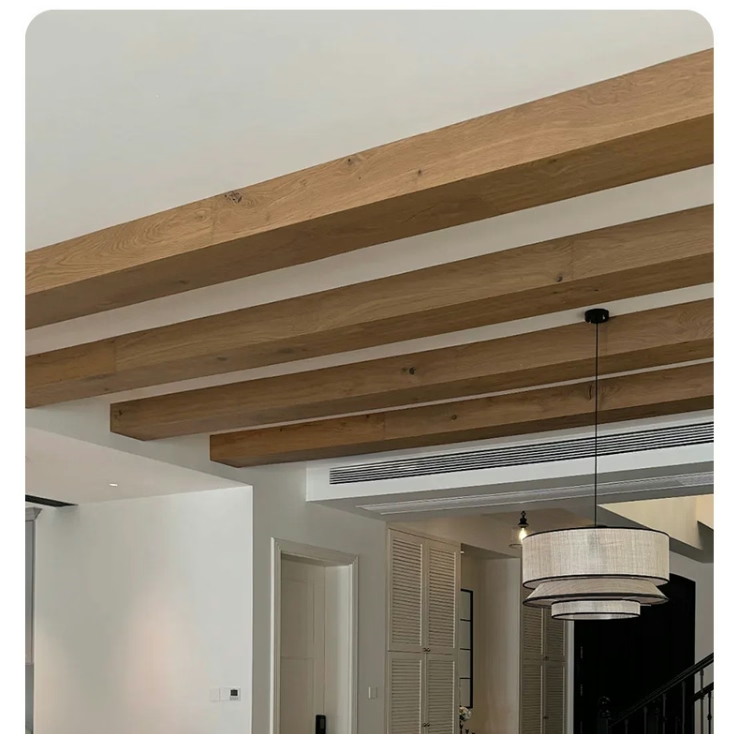
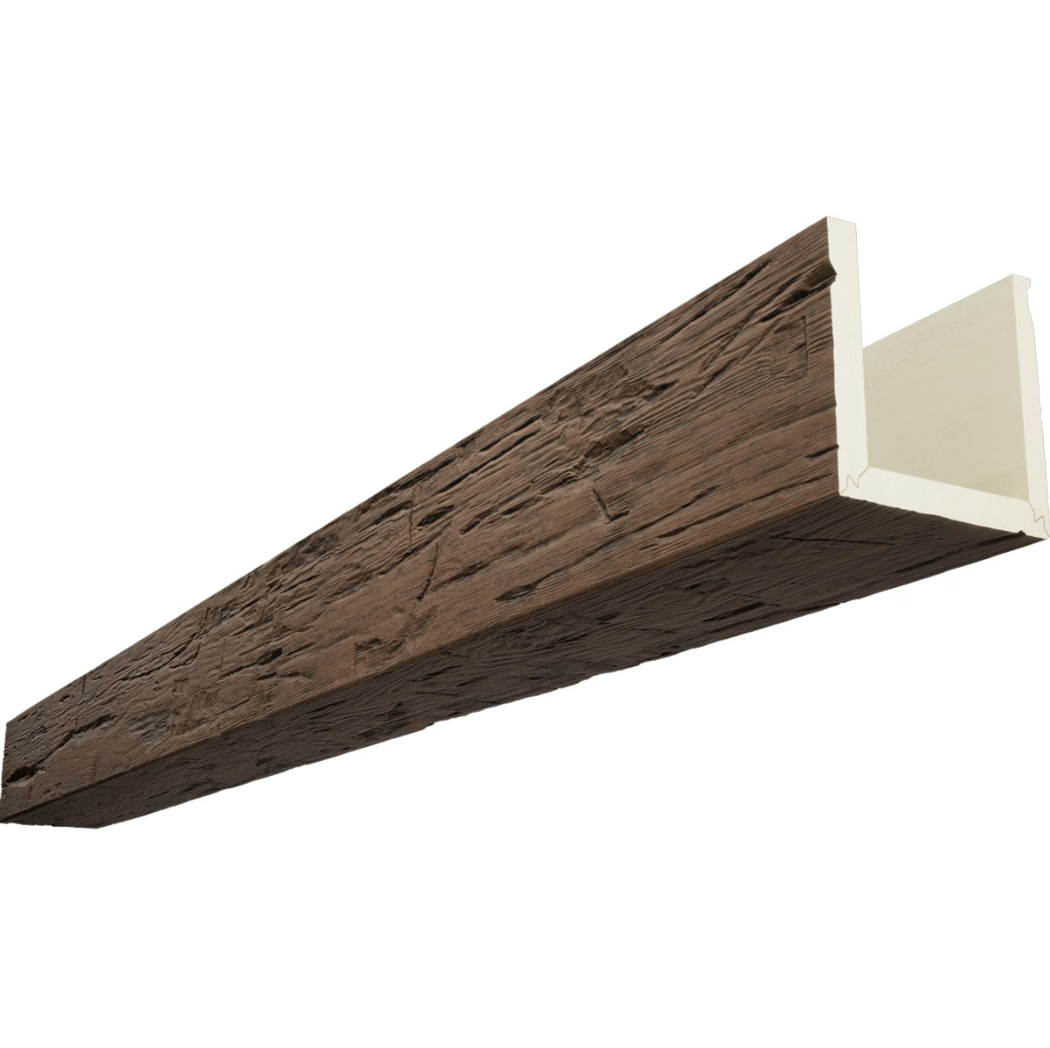
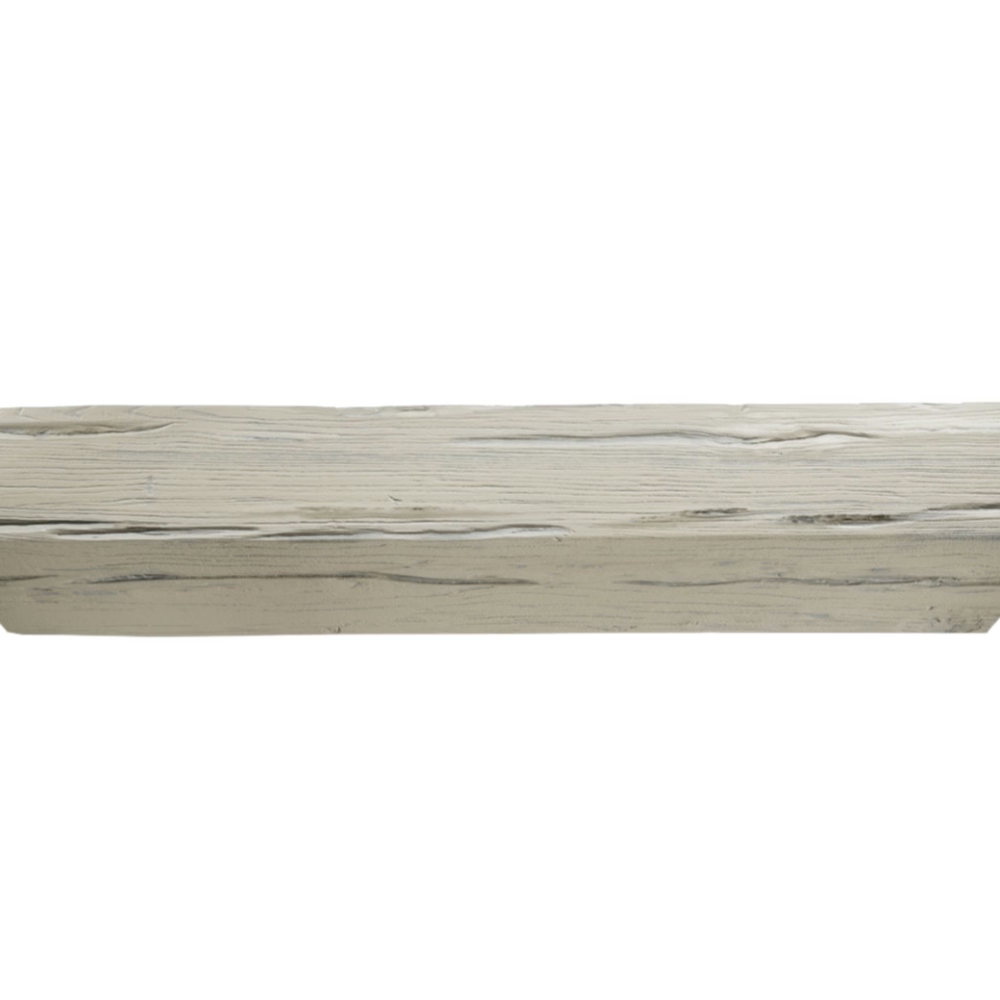
Outdoor faux timber beams face a harsher environment than their interior counterparts. Sun, rain, temperature swings, salt air, and biological growth all challenge the material in ways that interior specifications do not have to consider. Custom size weatherproof exterior polyurethane faux timber beams address these challenges through a combination of formulation engineering, factory finishing, and installation detailing. This article explains how exterior beam specification works and what decisions the project team needs to make.
What Makes a Beam "Weatherproof"
Weatherproofing in polyurethane faux beams is not a single property. It is a combination of material characteristics and finishing choices.
UV stability. Standard polyurethane yellows and chalking under prolonged UV exposure. UV-stable formulations include hindered amine light stabilizers (HALS) and UV absorbers that slow photodegradation. The result is a beam that retains its color and surface integrity for significantly longer than standard formulations.
Water resistance. Polyurethane itself is a closed-cell foam that absorbs less than 3% water by weight even under continuous immersion. The real water risk is not absorption; it is water getting behind the beam and sitting against the substrate. Drainage and ventilation detailing addresses this.
Thermal cycling resistance. Polyurethane expands and contracts with temperature changes. Exterior-grade formulations have lower thermal expansion coefficients and more flexible topcoats to accommodate this movement.
How Resin Formulation Changes for Exterior Use
The polyurethane resin system for exterior beams differs from interior formulations in three ways. UV stabilizer package is basic for interior but full HALS plus UV absorber for exterior. Density is 180-240 kg/m³ for interior but 240-320 kg/m³ for exterior. Topcoat is acrylic/satin for interior but 100% acrylic or urethane-acrylic for exterior.
The density increase for exterior beams is important: a denser foam has fewer and smaller cells, which reduces water absorption and improves impact resistance. For coastal projects within 500 meters of the ocean, we recommend a marine-grade specification using an enhanced UV package, a higher topcoat film thickness, and stainless steel fasteners throughout.
Drainage and Ventilation Details
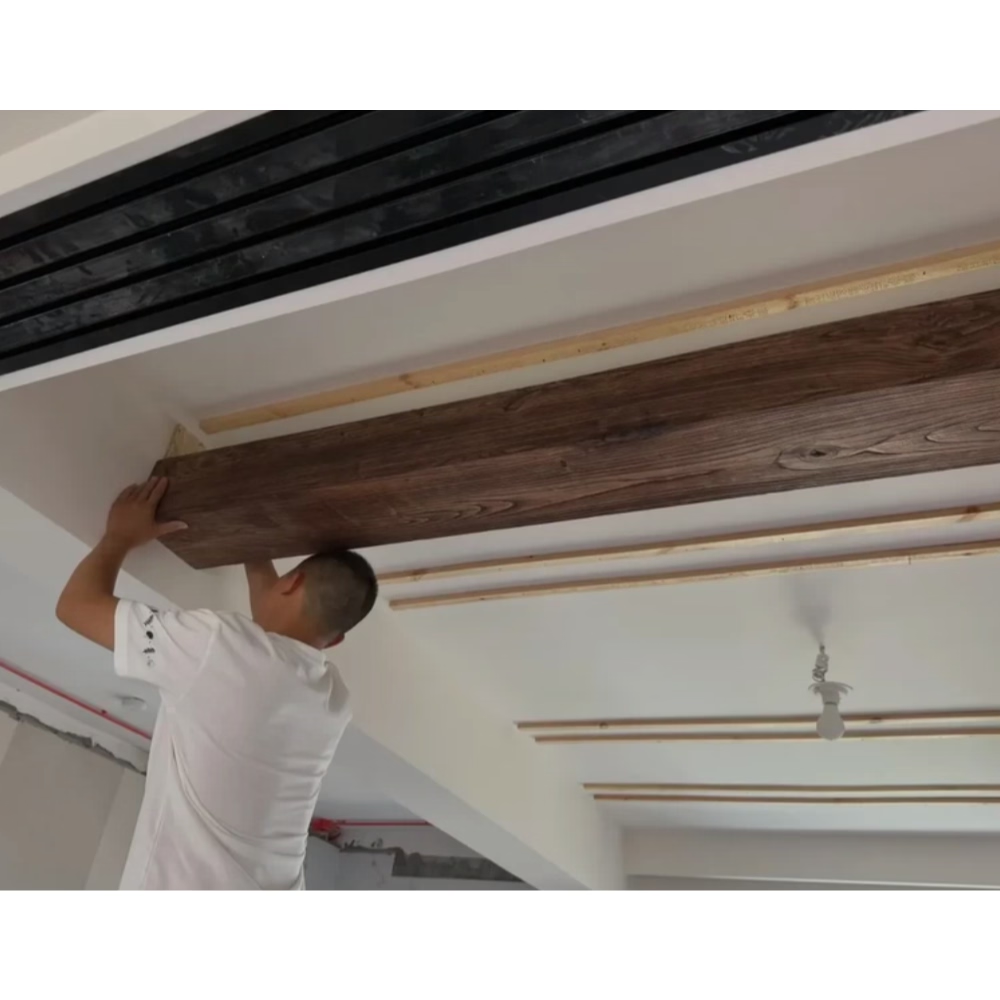
The most common failure mode for exterior faux beams is not UV degradation. It is moisture trapped behind the beam against the substrate. The fixes are architectural, not material. Slope the top: every exterior beam should shed water away from its upper surface. Ventilate the channel: for U-shape beams wrapping a structural member, ensure at least one ventilation gap at the high end of the channel. Cap the ends: end caps on exterior beams must be fully sealed and should include small weep holes at the back face. Separate from the wall: where a beam meets a wall, leave a 6-10 mm gap at the bottom and seal it with a flexible joint sealant rather than a hard caulk.
Fastener Selection for Exterior Beams
Fasteners for exterior beams must resist corrosion. The rule is simple: stainless steel or hot-dip galvanized for anything within 500 meters of the coast; hot-dip galvanized or stainless steel for inland applications.
For coastal environments, use 316 stainless steel screws and straps. For coastal/interior transition, use 304 stainless steel. For inland non-industrial environments, use hot-dip galvanized screws and stainless straps. For industrial/polluted inland environments, use stainless steel throughout.
What Weatherproofing Cannot Do
There are conditions that exceed what any exterior faux beam material can handle. Direct ground contact: no polyurethane beam should be set directly into soil or embedded in concrete. Use a different material family. Standing water: if a beam will sit in standing water for extended periods, polyurethane is not the right material. Consider fiber-cement or HDPE. Fire-prone zones: in wildfire-prone regions, many jurisdictions require non-combustible exterior materials.
For everything else — covered porches, porte-cochères, pergolas, exterior corridors, loggia ceilings, outdoor kitchens, pool house ceilings — a custom size weatherproof exterior polyurethane beam is a durable, attractive solution.
Technical References
ASTM standards cited in every specification
Test Data
Lab results from internal testing program
Updated 2026
Reviewed against current product specs