
Some of the most interesting architectural ceilings in the world feature beams that do not exist in any catalog. A coffered panel with a compound profile. A porte-cochère with a scrolled bracket detail. A theater lobby with a beam that transitions from rectangular at the wall to circular at mid-span. These are the projects where custom special profile PU faux beams come into their own.
This article describes the process of developing a special profile beam from the initial concept to the finished installation.
What Qualifies as a Special Profile
A special profile is any beam cross-section that does not exist in our standard catalog. The definition is deliberately broad because architectural imagination is not constrained by manufacturing convention. The manufacturing question is always the same: can it be drawn, and can it be molded? If both answers are yes, we can usually produce it.
The Concept Phase
A special profile project typically starts with one of three inputs: a sketch or concept drawing, a reference photograph, or a CAD file. Regardless of the input format, the first step is a feasibility review assessing whether the profile can be molded in polyurethane, whether the profile is producible at the proposed size, whether the profile can be finished to the required standard, and a rough estimate of tooling cost and lead time.
Mold Development
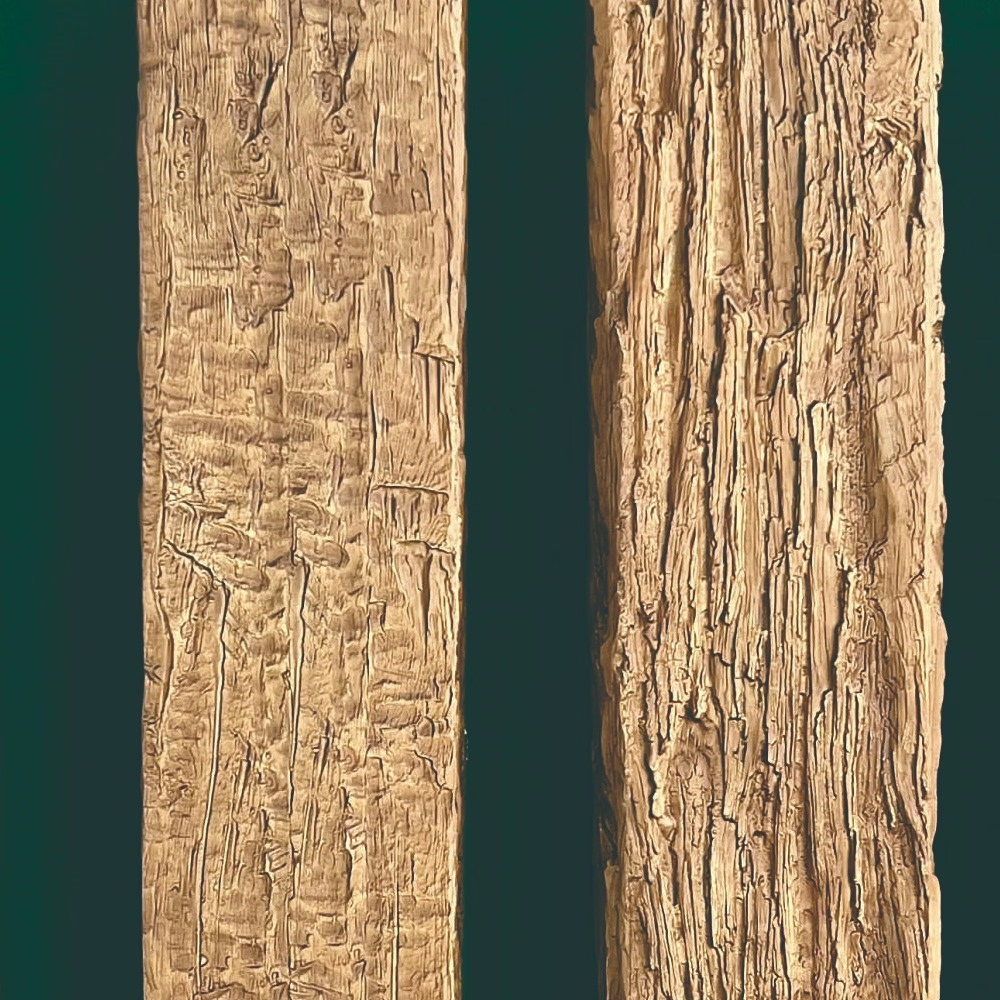
If the profile is feasible, the next step is mold development. CAD modeling creates the cross-section to scale in CAD, checks the draft angles (typically 1-2 degrees for polyurethane molds), and resolves any geometric conflicts. From the CAD model, a master tool (plug) is machined. The plug surface quality determines the beam surface quality. From the plug, we produce the production mold, typically a silicone rubber mold cast from the plug.
Mold development timeline: 15-25 days from CAD approval to first sample.
Cost Considerations for Special Profiles
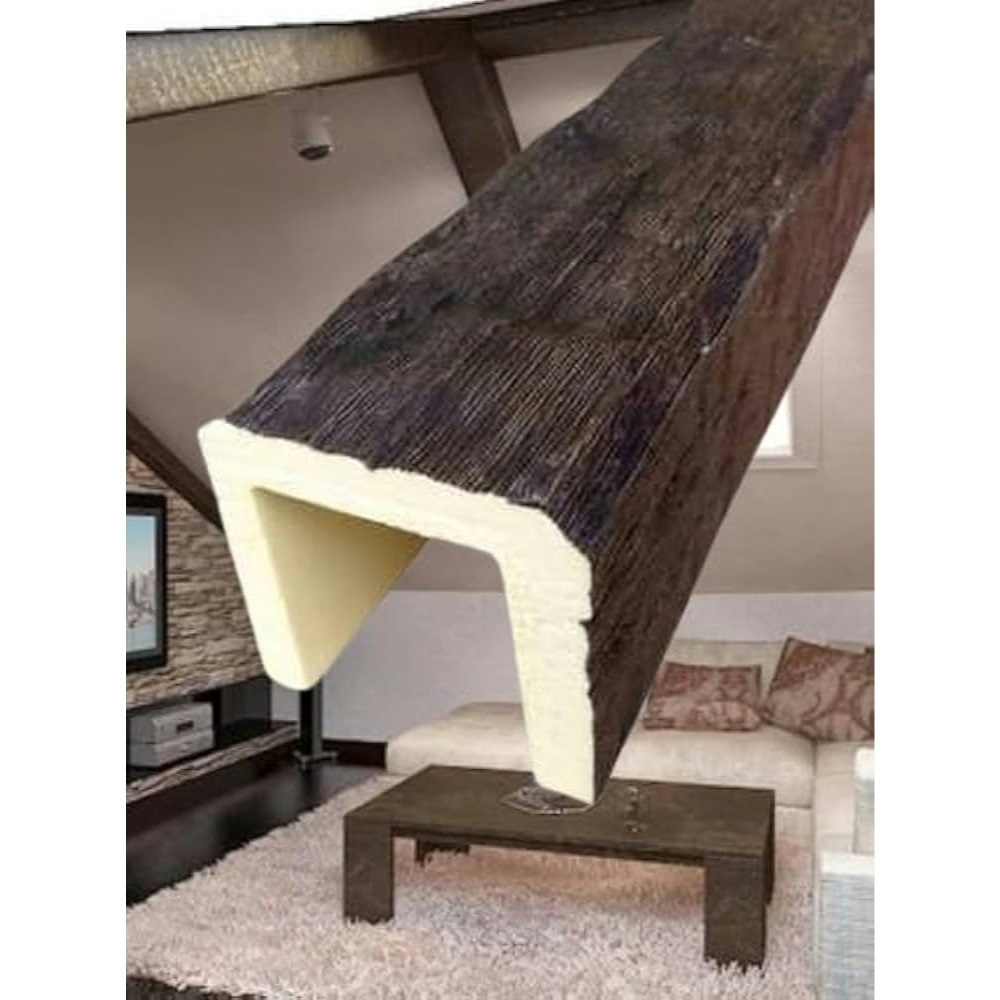
Special profile beams cost more than catalog profiles because of the mold development cost. The cost components are CAD modeling (usually included in the mold development fee), mold tooling (the largest single cost, amortized across the first production run), production (same as catalog beams for the same size and finish tier), and QC (more intensive QC adds a small per-piece premium).
When a Special Profile Is Not the Right Call
Special profiles are justified when the design intent cannot be achieved with a catalog profile and the visual impact justifies the cost. They are not justified when a catalog profile would serve the design equally well, the profile is so complex that the mold cost exceeds a reasonable proportion of the project budget, or the quantity is too small to amortize the mold cost.
Custom special profile beams are among the most challenging and most rewarding products we make. The challenge is in the development process; the reward is in the finished building. When a visitor looks up at a unique beam profile that has never existed before and cannot quite identify what makes it compelling, that is the profile doing its job.
Technical References
ASTM standards cited in every specification
Test Data
Lab results from internal testing program
Updated 2026
Reviewed against current product specs


