
A ceiling beam that is the wrong color can undermine an entire interior. The architecture is right, the proportions are right, the texture is convincing — but the stain tone is slightly too orange, or slightly too dark, or slightly too warm for the adjacent materials. The eye notices even when the mind cannot articulate why. Custom stained finish faux ceiling beams solve this problem by letting designers specify the exact stain tone, tone-match it to the room's material palette, and ensure the ceiling is not just beautiful in isolation but harmonious with everything around it.
How Color Harmony Works in Interior Design
Color harmony is not about matching everything to the same hue. It is about establishing a relationship between colors that the eye finds satisfying. A room with pale oak beams, warm honey floors, and cream walls works because the three materials share a tonal warmth, even though they are different colors.
The stain color on a faux ceiling beam participates in this harmony. It should relate to the dominant colors in the room — not necessarily match them, but connect to them. A beam in a color that appears nowhere else in the room reads as an isolated object rather than a considered element.
Selecting the Right Stain Tone
Stain tones are typically described in terms of wood species or color family.
Natural and Light Tones. Natural/clear (minimal color), white wash (pale, almost translucent), pine (warm yellow-brown), and ash (cool grey-brown).
Medium Tones. Oak (warm golden-brown, the classic beam stain), honey (warm, saturated medium tone), maple (lighter, cooler medium tone), and teak (warm reddish-brown).
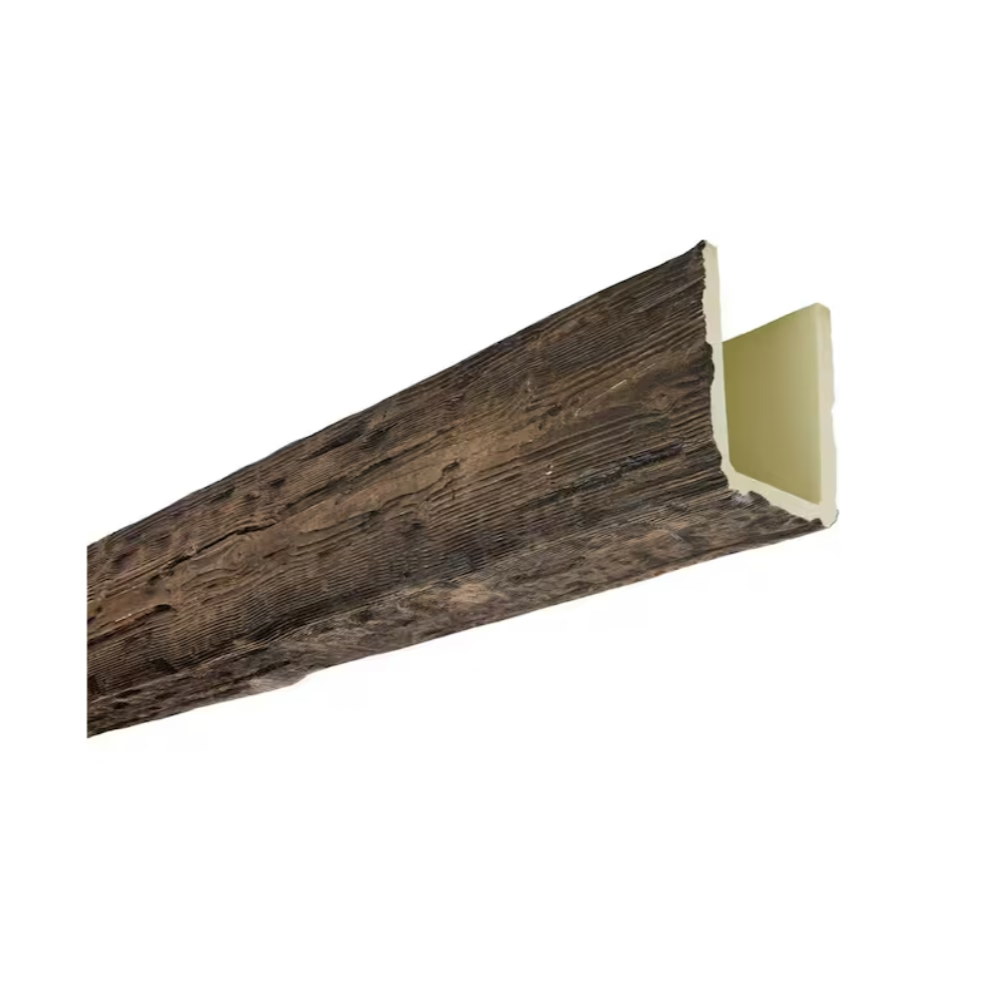
Dark Tones. Walnut (rich dark brown, a premium look), mahogany (reddish-dark brown, formal and traditional), ebony/charcoal (very dark grey-brown, modern and dramatic), and driftwood (grey-toned, weathered look).

Tone Matching to Adjacent Materials
The most reliable way to select a stain tone is to tone-match it to the dominant material in the room.
Matching to wood flooring. If the room has oak hardwood flooring, a matching oak stain on the ceiling beams creates visual continuity.
Matching to stone. A stone-toned beam stain (grey-brown, warm grey) connects the ceiling to the masonry without competing with the stone's visual weight.
Matching to brick. Brick ranges from warm reds to cool browns. A brick-toned beam stain creates coherence between the ceiling and the masonry.
Coordinating With the Lighting
Lighting is the variable that trips up most stain selections. A stain that looks perfect in our factory sample room may look different in your project due to color temperature (daylight vs. warm artificial light), direction and intensity (light across the beam vs. along the beam), and fixture color temperature (cool-white LEDs can make warm-toned stains look muddy).
For rooms with significant natural light, approve the sample in daylight conditions. The correct process is factory sample review, site lighting confirmation, site mock-up, review at multiple times of day, and written approval.
Custom stained finish faux ceiling beams are the detail that ties the ceiling to the room. The right stain tone makes the beam feel like it belongs.
Technical References
ASTM standards cited in every specification
Test Data
Lab results from internal testing program
Updated 2026
Reviewed against current product specs


