
A curved beam presents a different finishing challenge from a straight beam. The curvature changes how light falls across the surface, how the grain pattern flows, and how the eye reads the piece from different angles. Custom surface finish curved PU resin faux wood ceiling beams are finished with these geometry-specific considerations in mind, producing a result that looks natural on the curve rather than like a straight beam that has been forced into an arc.
Why Curvature Changes the Finishing Approach
When a straight beam is finished, the surface is relatively uniform. On a curved beam, the geometry introduces variation.
On the outside of the curve, the surface is stretched slightly. Grain lines that run along the beam length fan out on the curve, becoming wider apart and slightly shallower. On the inside of the curve, the surface is compressed. Grain lines crowd together and the texture reads as denser.
This is not a defect; it is the natural behavior of any material wrapped around a curve. But the finisher must account for it, and the finish specification must allow for it.
Standard Finish Options for Curved Beams
Matte Finish. A flat clear coat with no sheen. The most forgiving for curved beams because it minimizes the light reflection that accentuates the curvature. Recommended for rooms with significant natural light from multiple directions.
Satin Finish. 25-35% sheen. The most common choice for curved beams. Provides enough reflection to give the wood tone depth and richness without creating harsh highlights on the curve.
Semi-Gloss Finish. 50-70% sheen. Creates strong highlights on the curved surface. On a gentle curve, this can be desirable. On a tight curve, the highlight can become harsh. Best reserved for large-radius curves where the highlight is part of the design intent.
Texture Application on Curved Beams
The grain texture on a curved beam is applied to follow the curve, not to run straight across it.
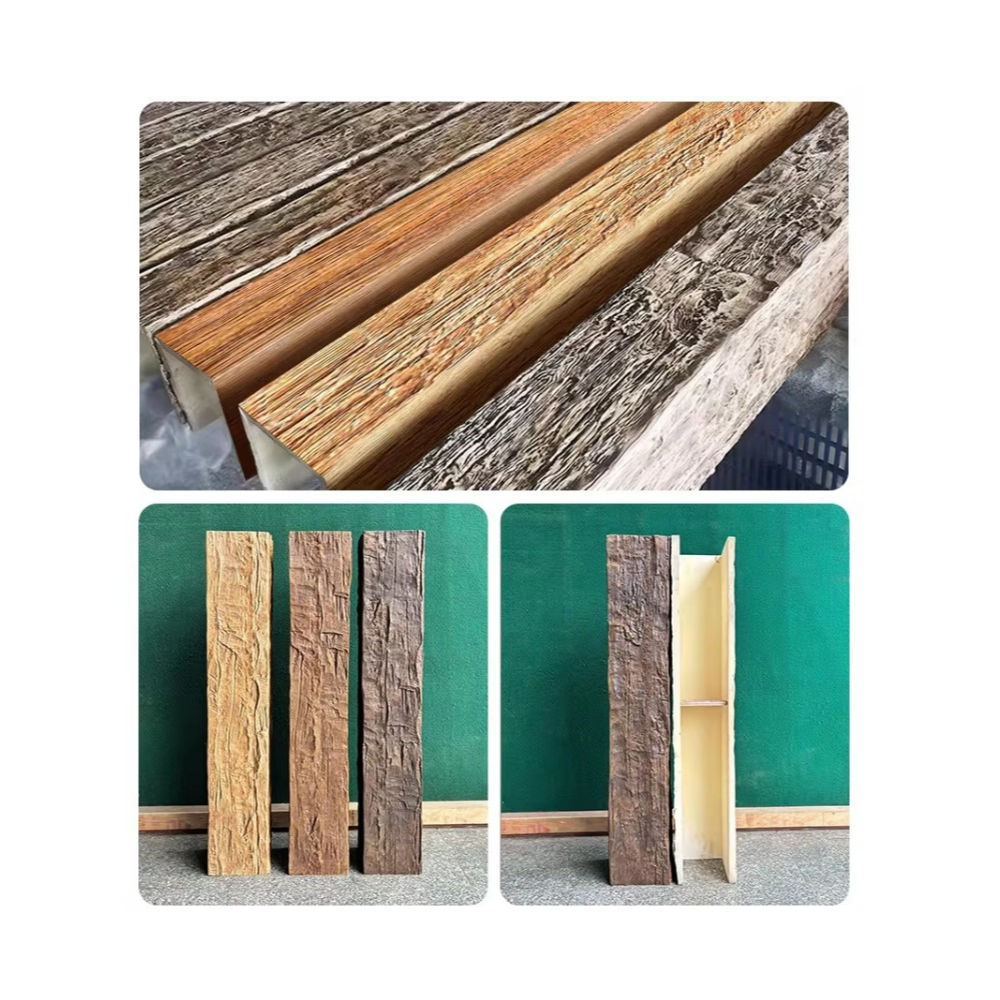
Mold-impressed texture. The texture is pressed into the beam surface during casting, with the grain lines following the curve of the mold. This produces the most consistent texture.
Hand-applied texture. For deep grain or hand-hewn textures on curved beams, the texture is applied by hand after casting. A skilled finisher works the grain lines to follow the curve, adjusting the density on the inside and outside faces.
Specialty Finishes for Curved Beams
Beyond the standard stain and clear coat options, several specialty finishes are available.
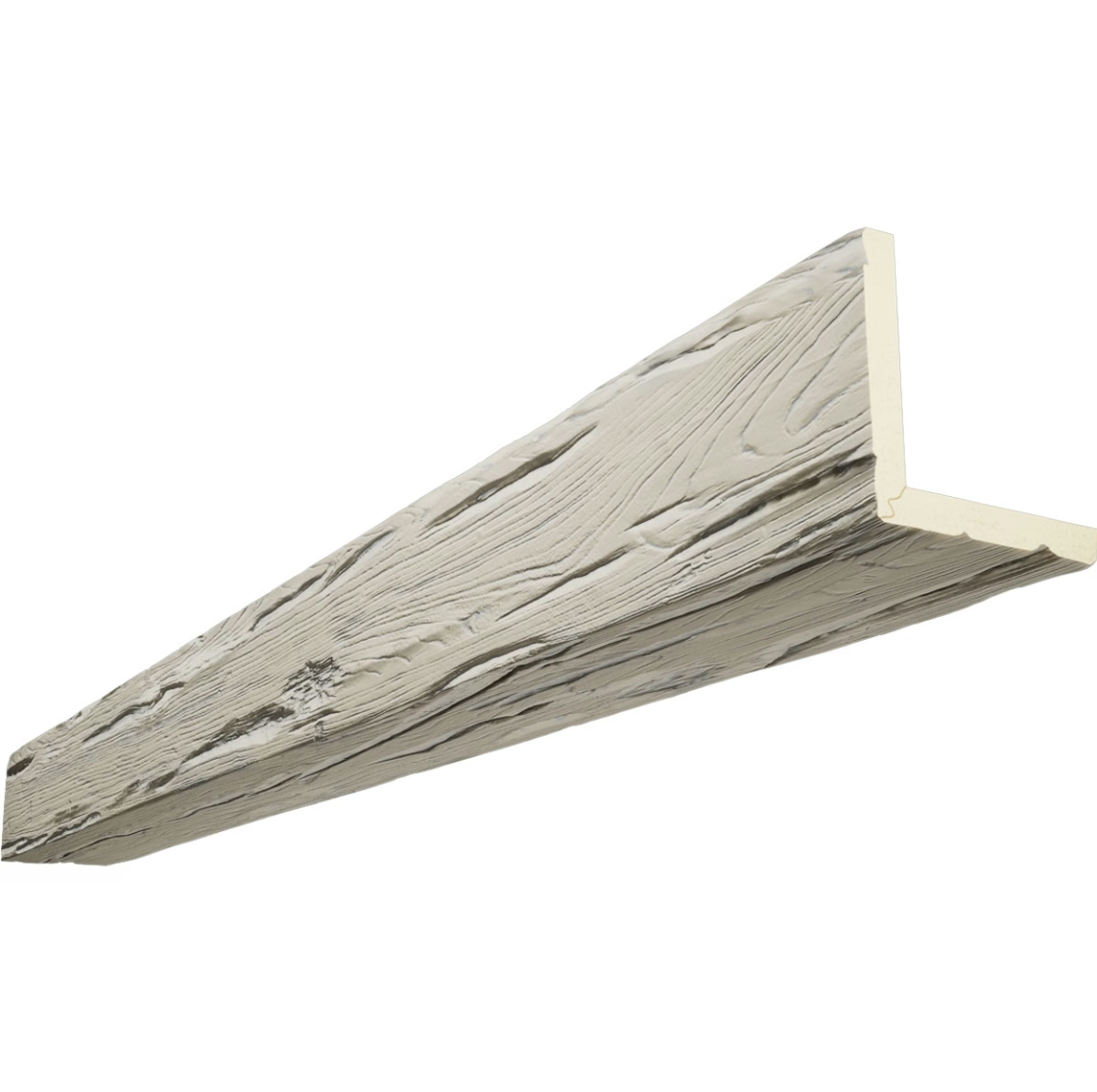
Cerused finish. The grain valleys are filled with a contrasting material (typically a white or pale grey paste). On a curved beam, cerusing emphasizes the grain texture and adds a graphic quality.
Limed finish. A white, chalky finish applied to the grain valleys. Creates a Scandinavian, coastal, or whitewashed look.
Oil-rubbed finish. A penetrating oil finish that soaks into the surface rather than sitting on top. Produces a matte, natural look with a slight sheen that develops with handling.
Quality Control for Curved Beam Finishes
Curved beam finishes undergo additional quality checks: curve consistency (texture and stain checked at multiple points along the arc), joint quality (each segment joint inspected for gap-free fit and color consistency), profile accuracy (finished beam checked against the setting-out drawing), and end cap fit (for beams with end caps or return pieces).
A curved beam that has passed QC is ready to install without further finishing work.
Technical References
ASTM standards cited in every specification
Test Data
Lab results from internal testing program
Updated 2026
Reviewed against current product specs


