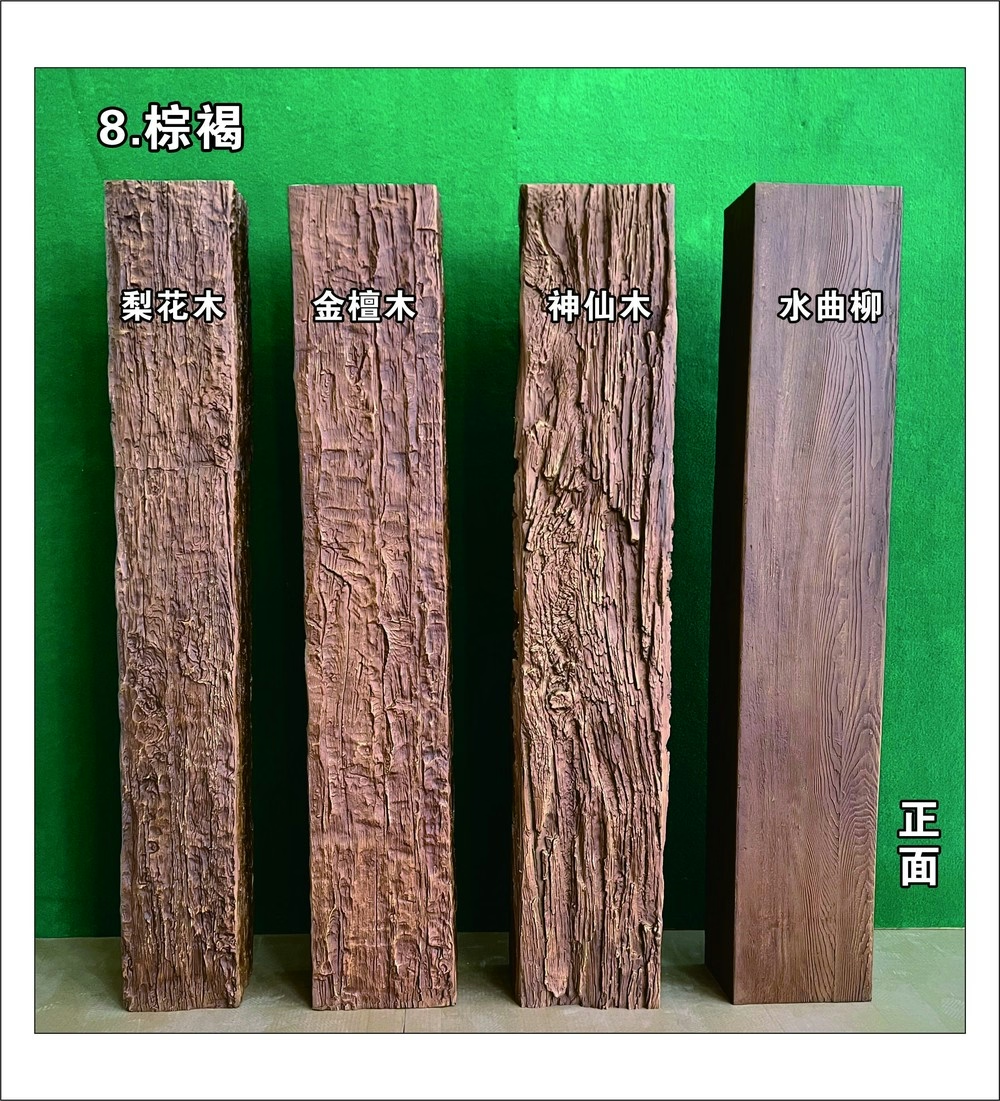
Lighting and beams are natural partners. A beam running across a ceiling is already a horizontal element; adding lighting above it or within it extends the beam's architectural role into the functional realm. Custom track lighting systems integrated with faux wood ceiling beams coordinate these two elements so they work together as a designed system rather than as an afterthought.
The Integration Challenge
Integrating track lighting with faux beams is not simply a matter of installing the track and hoping the fixtures look right. The challenge has three dimensions. Visual integration: the track should read as part of the ceiling composition, not as something added after the beams were installed. Structural coordination: track systems require secure mounting to the structural ceiling. Faux beams are decorative, not structural. The mounting must go through the beam to the structural substrate, and the connection must be hidden. Thermal management: LED track fixtures generate heat. The heat must be managed so it does not affect the beam finish or create a fire risk.
Approaches to Track and Beam Integration
There are four main approaches.
Approach 1: Track Running Parallel to Beams. The simplest integration: the track runs parallel to the beams, mounted to the structural ceiling between them or on the face of the beam. Best for general ambient lighting.
Approach 2: Track Perpendicular to Beams. The track runs perpendicular to the beams, crossing the ceiling plane. The track is mounted to the structural ceiling and the beams are notched or positioned around it.
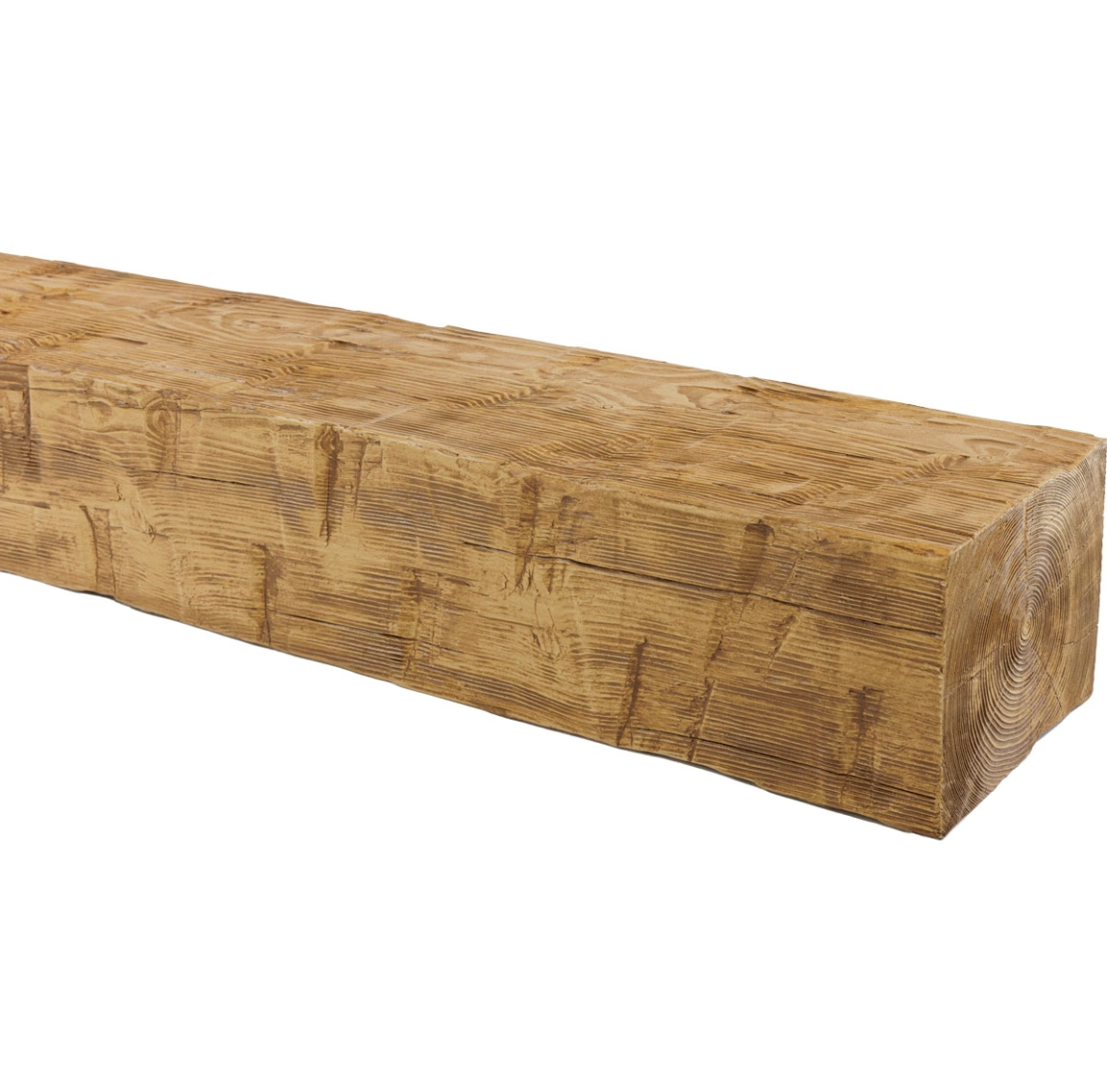
Approach 3: Recessed Channel in Beam. A channel is routed into the back of the beam during production, sized to accept a specific track profile. The track is installed in the channel, and the fixtures sit flush with or slightly below the beam face. Advantages: the track is completely hidden from below; the fixtures appear to emerge from the beam; no visible mounting hardware.
Approach 4: Fixture Mounted Within Beam End Cap. For U-shape beams wrapping a structural member, a light fixture is mounted in the end cap of the U-shape, shining outward along the beam run. Creates a subtle ambient glow along the beam rather than focused task lighting.
Working With the Lighting Designer
Track lighting integration works best when the lighting designer is involved from the beginning. The coordination points include fixture selection (track system, head dimensions), lighting plan (reflected ceiling plan showing track runs and fixture positions), trim and finish (track finishes coordinating with the beam stain tone), and control system (dimming or smart home integration).
Structural Backing Requirements
Track fixtures, even LED heads, have weight. The mounting system must be secure. We recommend continuous backing track (a continuous wood or metal backing strip fixed to the structural ceiling, with faux beams installed over the backing and the track fixed through the beam into the backing), heavy-load backing plates (a plywood or metal plate behind the beam face for concentrated loads), and access panels (for recessed channel installations, access panels at each end allow the track to be serviced without removing the beam).
Custom track lighting integrated with faux wood ceiling beams requires more coordination than either element alone, but the result is a ceiling that functions as a unified design rather than a collection of separate systems.
Technical References
ASTM standards cited in every specification
Test Data
Lab results from internal testing program
Updated 2026
Reviewed against current product specs