
Two-tone finishes on faux timber beams add a layer of visual complexity that single-tone finishes cannot achieve. The interplay between two colors — one in the grain valleys, one on the surface peaks, or one on the face and one on the ends — creates depth, dimension, and a crafted quality that reads as intentional design rather than a material choice. Custom two-tone color PU faux wood beams are produced for projects where the aesthetic calls for more than a wood-look stain: it calls for a design statement.
What Two-Tone Means for Faux Timber Beams
A two-tone finish uses two colors on the same beam. Unlike a two-tone paint finish where a wall is one color and the trim is another, a two-tone faux timber finish uses both colors on the same surface, layered to create a specific visual effect.
The two colors are almost always in the same family (two shades of the same wood tone) or deliberately contrasting (a light face with a dark shadow band or end). The combination determines the effect.
The Main Two-Tone Techniques
Grain Enhancement. The most common two-tone technique. The base coat is a mid-tone stain applied uniformly. A second, darker color is applied selectively to the grain valleys. Works on any textured beam. The contrast between base and grain color can be subtle (a half-step darker) or dramatic (a completely different tonal family).
Shadow Band. The second color is applied as a band across the beam face, typically 30-80 mm from the top or bottom edge. The shadow band simulates the shadow cast by the beam on the ceiling. Particularly effective on smooth or lightly textured beams.
End Contrast. The beam face is one color and the ends or return faces are a second, contrasting color. Used when the beam ends are visible — on exposed rafter tails, in open-plan spaces, or in rooms with high ceilings.
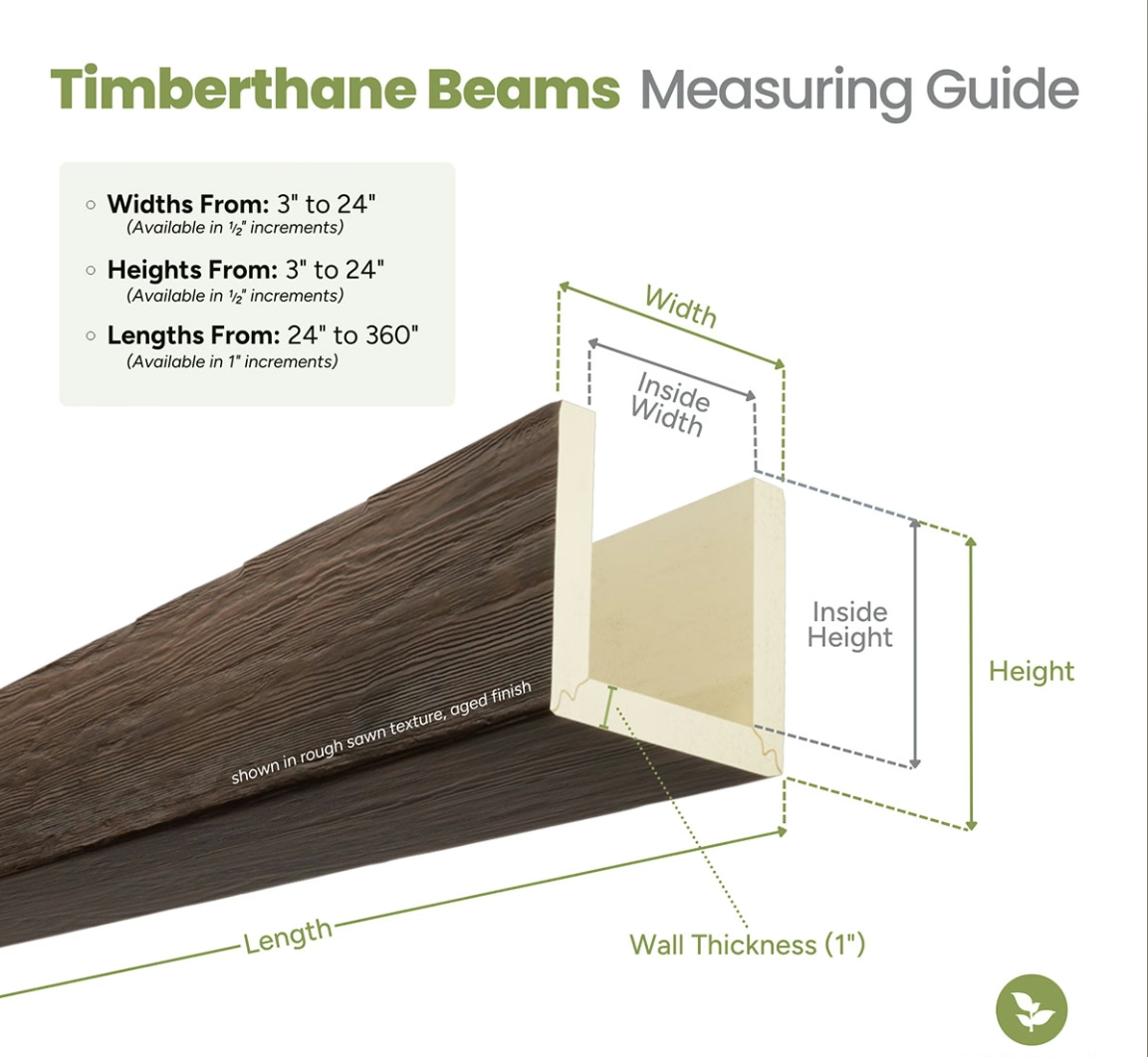
Face and Channel. For U-shape beams, the inner channel is finished in a different color from the outer face. The channel color is typically darker (to simulate shadow in the recessed space) or lighter (to create a highlight effect).
Distressed Two-Tone. A base coat is applied uniformly, then a second color is applied over the entire surface and partially removed with a cloth in a random pattern. The result is a finish with two colors in an organic, non-uniform distribution.

Color Combinations
Classic Wood Combinations. Light oak face + dark walnut grain (warm, sophisticated). Natural pine face + honey grain (cheerful and approachable). Ash face + warm grey grain (contemporary and cool). Honey face + dark amber grain (rich and traditional).
Modern Combinations. White wash face + light grey grain (clean and light). Grey face + charcoal grain (industrial and urban). Natural face + black grain (high contrast, dramatic and contemporary).
Specifying Two-Tone Finishes
To specify a two-tone finish, provide the base color, the second color, the technique (grain enhancement, shadow band, end contrast, etc.), the contrast level (subtle, moderate, dramatic), and the texture type.
We recommend requesting a sample piece showing the two-tone technique on the actual beam profile and texture before committing to mass production. Two-tone finishes are more subjective than single-tone finishes, and a physical sample confirms that the combination works as intended.
Two-tone color PU faux wood beams are for projects where the beam is a design feature, not just a material selection. The extra finish step adds cost and complexity, but the result is a ceiling element that rewards attention and creates a space that feels considered.
Technical References
ASTM standards cited in every specification
Test Data
Lab results from internal testing program
Updated 2026
Reviewed against current product specs

