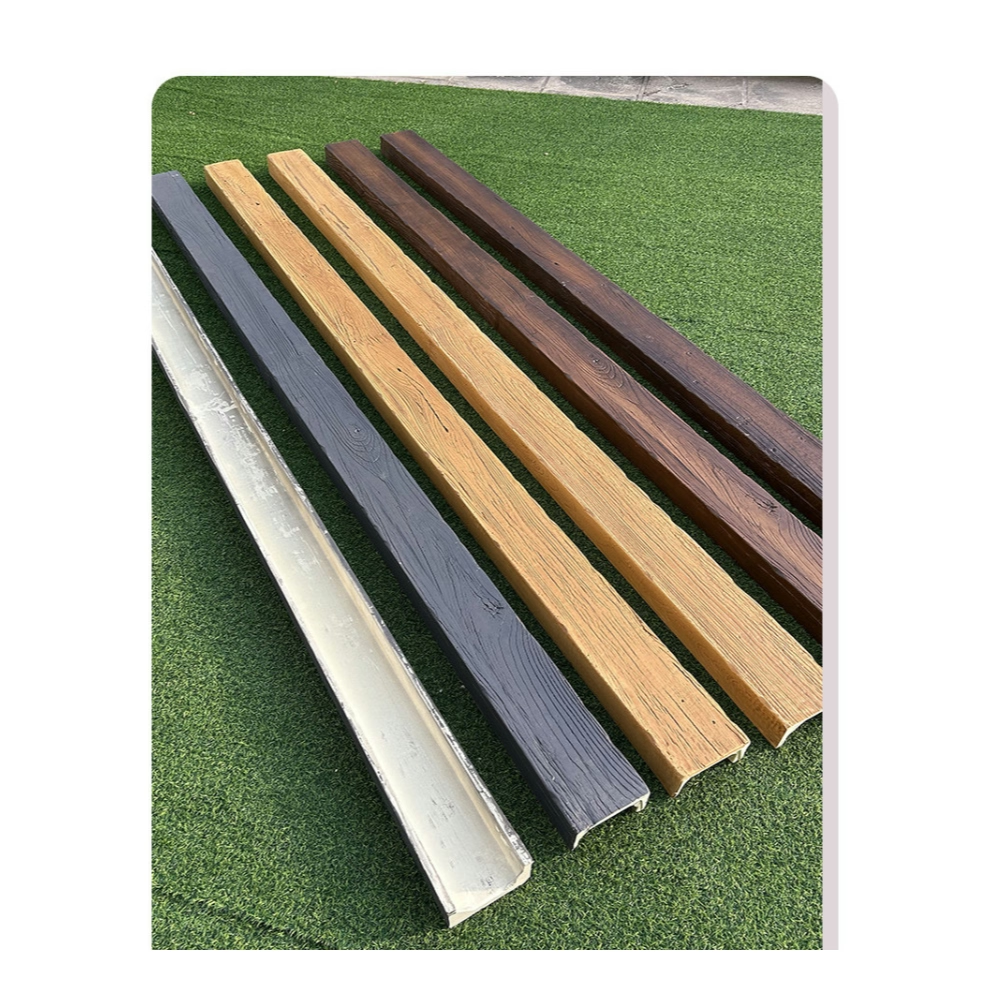
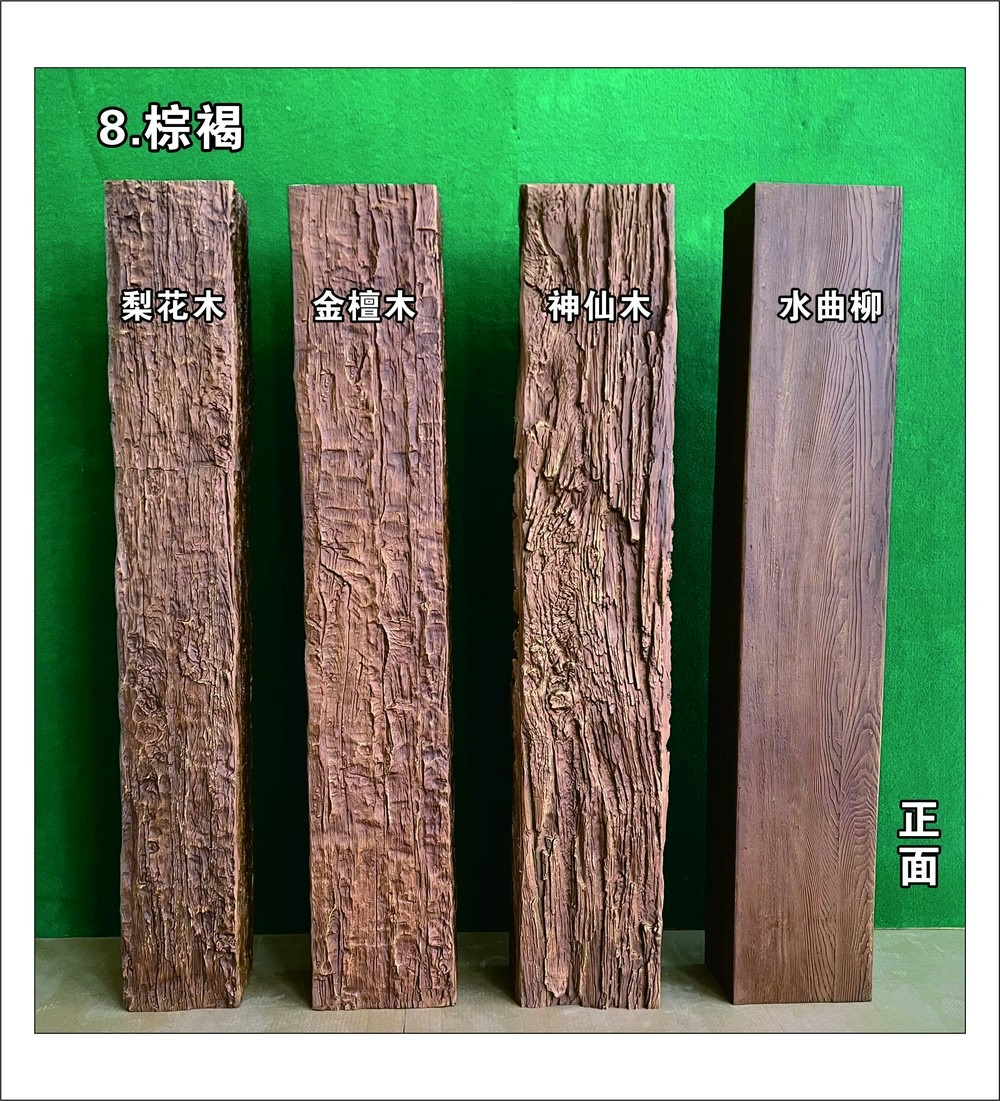
There are two ways to install a faux timber beam: hang it from a ceiling or wrap it around an existing structural member. The second approach — covering an ugly, aging, or out-of-style timber beam with a decorative sleeve — is one of the most cost-effective applications for polyurethane faux timber. Custom U-channel polyurethane sleeves fit over existing beams like a glove, transforming the look without replacing the structure.
When U-Channel Sleeves Are the Right Solution
U-channel sleeves are appropriate when the structural beam is sound and does not need replacement, the beam is accessible from below, the beam dimensions are known or measurable, the beam is rectangular or close to rectangular in cross-section, and the space above the beam is either open or can accommodate the sleeve's additional depth.
If any of these conditions is not met, a different approach — solid faux beams, exposed beam covers, or structural replacement — may be more appropriate.
Sizing the U-Channel Sleeve
The U-channel sleeve must be sized to fit the existing structural beam with a small clearance for installation. The key dimensions are inside width (the clear width of the U-channel opening, slightly larger than the actual width of the structural beam, standard clearance 5-10 mm per side), inside depth (the clear depth of the U-channel, slightly larger than the actual depth of the structural beam, standard clearance 5-10 mm), wall thickness (thickness of the U-channel walls, 20-35 mm for standard profiles), and length (matching the length of the structural beam from end to end).

Measuring the Existing Beam
The most important step in ordering a U-channel sleeve is accurate measurement. Use a steel tape and measure the actual width of the beam (not the nominal size), the actual depth of the beam, the length from end to end, the straightness of the beam, and the condition of the beam ends.
Installation Methods
Method 1: Drop-Over
The simplest method. The sleeve is dropped over the beam from above, sliding down until it rests on the beam's bearing points. Works only when the sleeve's weight is supported by the beam's bearing surfaces and the sleeve is straight enough to slide freely.
Method 2: Face Fixing
The sleeve is positioned on the beam and face-fixed with screws through the front face into the structural beam. The screws are hidden by the finish.
Method 3: Cleat and Strap
Hidden stainless steel straps are installed around the beam at regular intervals. The sleeve is positioned and the straps are fastened through the sleeve's back face. Used for heavy sleeves or when the installer wants the fixings to be completely invisible.
Finish Options for U-Channel Sleeves
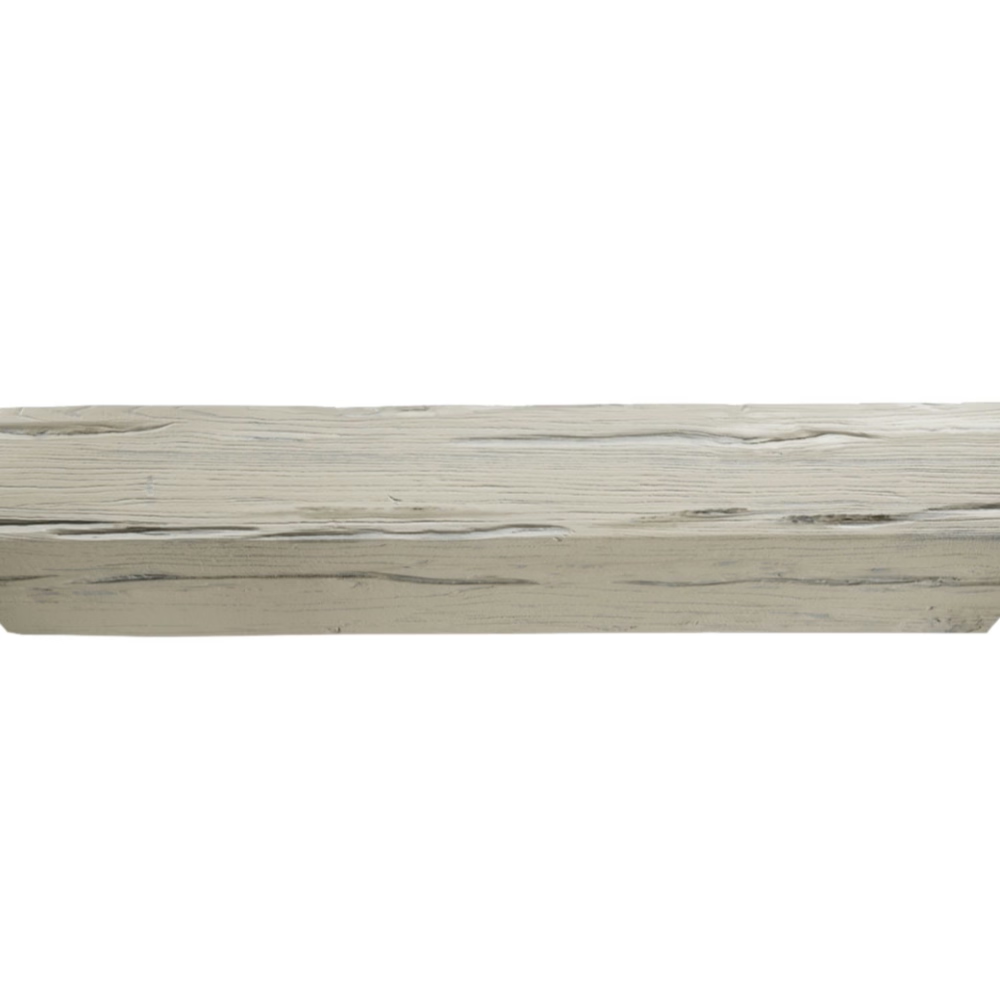
U-channel sleeves are finished with the same options as solid beams: stain in any color, texture at any depth, and clear coat in any sheen. The finishing process is identical because the sleeve is a complete beam in its own right.
The inner channel surface is visible when looking up at the beam from below. It can be finished to match the outer faces (the most common choice), left in a neutral tone, or painted in a lighter color (to create a highlight effect).
Handling Difficult Existing Beams
Non-rectangular beams (round, oval, or irregular) cannot be wrapped with a standard U-channel. Beams with hardware (protruding bolts, brackets) must have the hardware removed or cut flush. Beams with insect or rot damage must be repaired or replaced. Beams with significant bow or twist may require a flexible trim piece or a custom-molded sleeve.
Custom U-channel polyurethane sleeves are one of the most satisfying applications of faux timber. They transform an existing structure into a design feature without the cost and disruption of replacement.
Technical References
ASTM standards cited in every specification
Test Data
Lab results from internal testing program
Updated 2026
Reviewed against current product specs