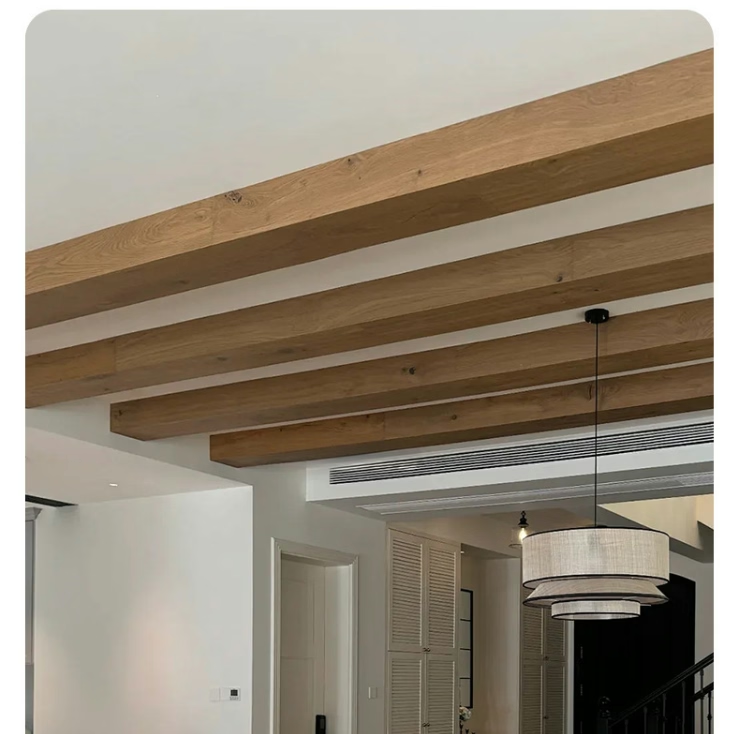
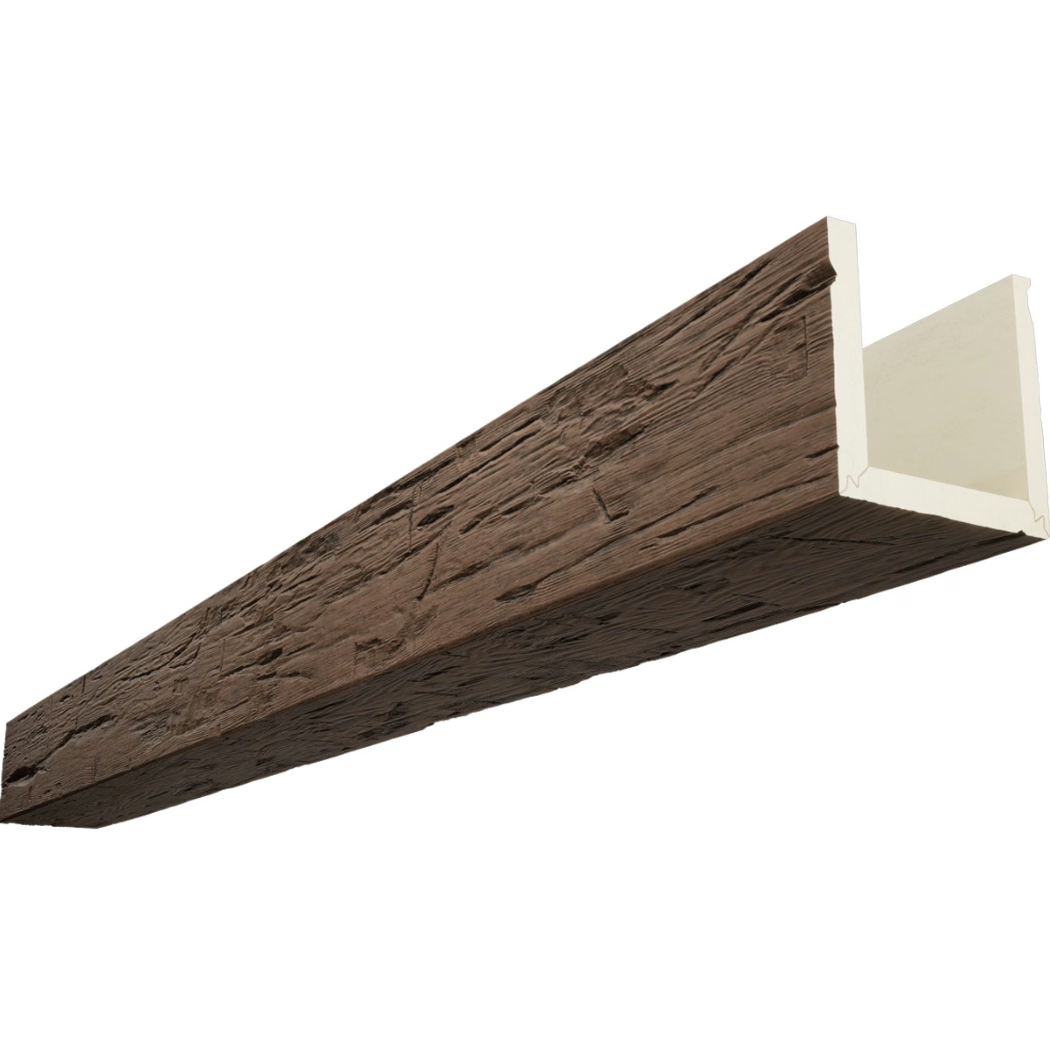
Export documentation is one of those things that looks like it should be straightforward until a shipment gets held up at customs because the description said "decorative wood beams" instead of "hollow polyurethane resin imitation wood ceiling beams." The difference matters — to tariff rates, to import restrictions, to whether the goods even belong in the same product category.
Why the description matters more than people expect
Customs descriptions serve two purposes. First, they identify the goods for tariff assessment. The Harmonized System code that gets assigned based on the description determines the duty rate. Second, they trigger admissibility reviews. Importing countries have lists of restricted and prohibited goods that are matched against product descriptions. A vague or inaccurate description can trigger a full inspection or a rejection.
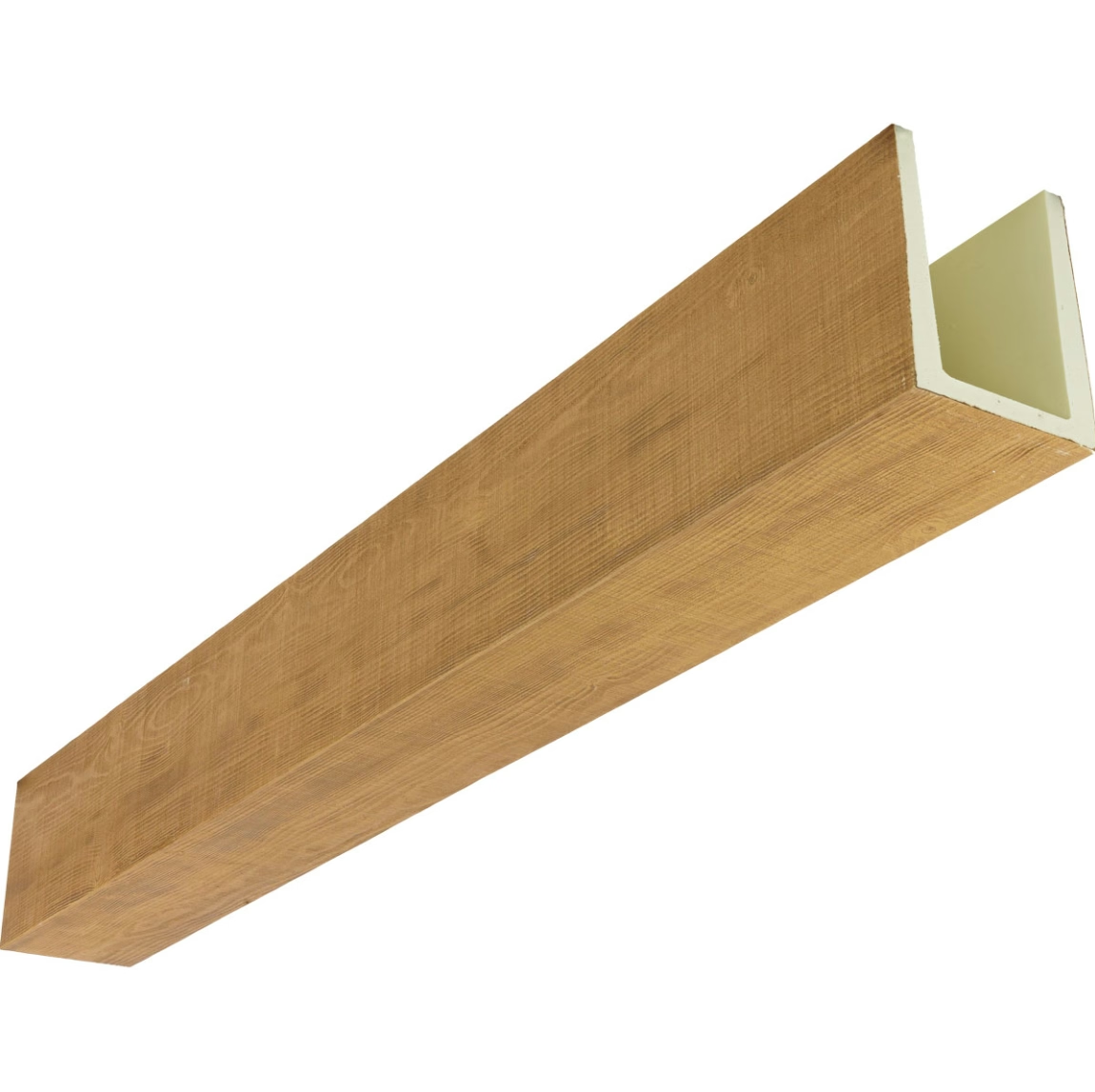
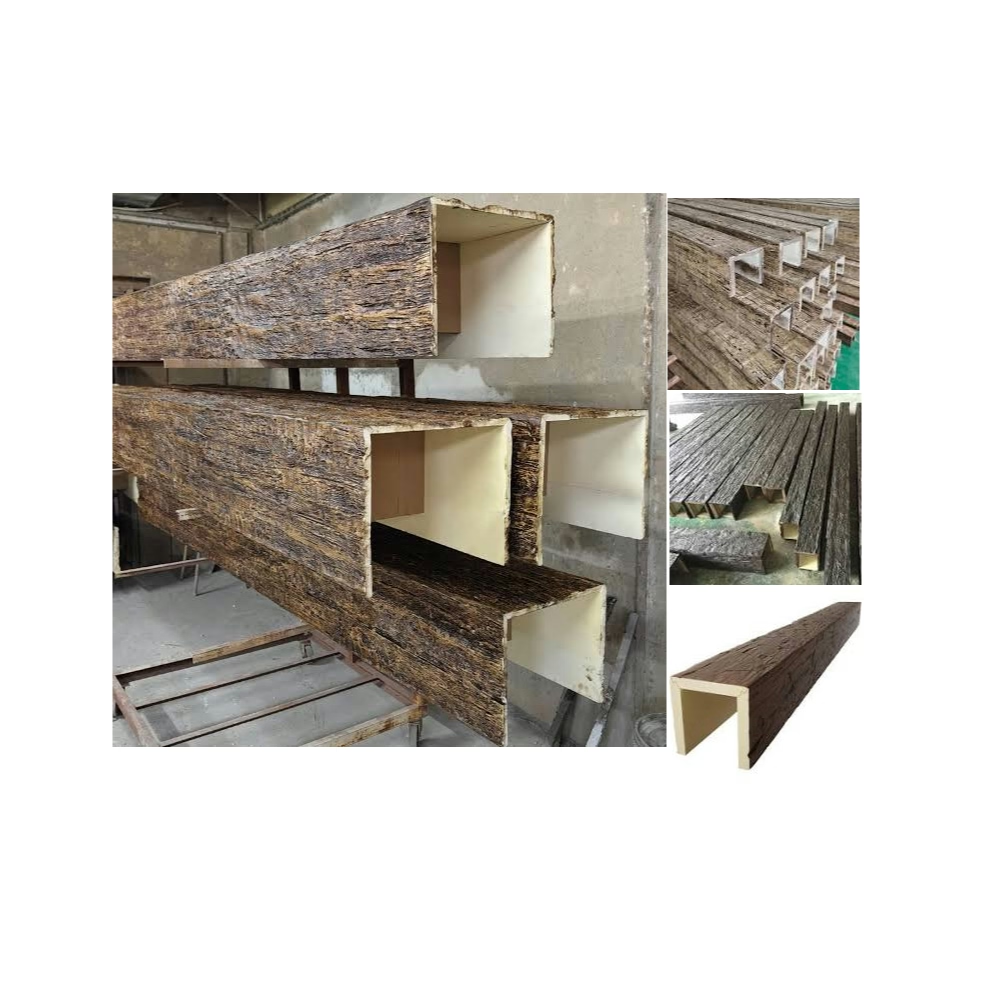
For polyurethane faux wood beams, the critical element in the description is the material. The product is not wood. It is a polymer — specifically, polyurethane — that is manufactured to look like wood. Calling it "wood" in the description can cause problems in countries with import restrictions on certain wood species, even though no actual wood is present.
Recommended HS code and description
The most accurate HS code classification for hollow polyurethane faux wood beams is 3925.90 — builders' ware of plastics, not elsewhere specified. This covers decorative structural elements made from plastics and polymers that aren't covered by more specific headings.
An alternative classification, used by some suppliers, is 3916.10 — monofilament of plastics. This is less accurate for finished beams because it covers raw profile shapes rather than finished architectural elements. We recommend 3925.90 for completed decorative beams.
For beams that incorporate metal mounting hardware as integral components, the classification becomes more complex and may require a customs ruling.
The description itself
A robust export description for hollow PU resin imitation wood ceiling beams reads:
Hollow structural polyurethane resin decorative ceiling beams, faux wood appearance, manufactured by casting/pouring, with wood-grain surface texture, non-load-bearing, for interior architectural installation.
This description is specific enough to identify the product, doesn't overstate the material's properties, and makes clear the intended use. A customs officer reading this description has enough information to classify it correctly.
Alternate descriptions that work depending on the destination country's classification system:
- "Polyurethane decorative faux wood beams, hollow core, surface finished, for ceiling installation"
- "Architectural polyurethane resin imitation wood beams, hollow, non-structural, finished surface"
- "Cast polyurethane decorative ceiling beams with faux wood finish, hollow profile, packed for retail/distributor sale"
Avoid these inaccuracy-prone versions:
- "Reconstructed wood beams" — implies manufactured wood product, wrong category
- "Decorative wood beams" — implies real wood
- "Polymer ceiling beams, faux finish" — vague, could apply to many products
- "Foam beams" — technically accurate but undersells the product and invites questions about fire safety
Country-specific considerations
Different importing countries have different requirements and sensitivities that affect how the description should be written.
United States — The US uses a 10-digit HS code (the international 6-digit code plus 4 US-specific digits). For hollow PU faux wood beams, the US classification is 3925.90.10.00 —Builders' ware of plastics, nesoi. The description on the commercial invoice should match the HS code and use plain English without abbreviations. Country of origin must be stated explicitly.
European Union — The EU uses the 8-digit Combined Nomenclature (CN) code. Our recommended code is 3925 90 60. The EU has specific requirements for chemicals registered under REACH, but polyurethane foam used in construction applications generally falls below threshold quantities for residential furniture items. The description in EU import documentation should be in English, French, or German per standard practice.
United Kingdom — Post-Brexit, the UK uses its own UK Trade Tariff system. The relevant code is similar to the EU code. The description should reference "non-structural decorative elements" to distinguish from construction materials that may be subject to different regulations.
Australia — Australia uses the 8-digit Australian Harmonized Export Classification. Our recommended code is 3925.90.00. Australian customs is relatively straightforward for these products but has specific packaging requirements for articles that could be mistaken for wood by quarantine inspectors.
Canada — The Canadian HS code is similar to the US system. For Canadian import, the description should note that the product contains no actual wood to avoid any phytosanitary inspection triggers.
Middle East (UAE, Saudi Arabia, Qatar) — The GCC countries use the 8-digit HS system. UAE customs is particularly detail-oriented; a vague description will result in a cargo release hold. The description should be specific about the material being "polyurethane resin" not "wood" or "imitation wood" alone. Saudi Arabia's SASO certification requirements also need to be addressed separately from the customs description.
Southeast Asia (Vietnam, Philippines, Indonesia) — These markets are growing rapidly for faux wood beams. The description should note the polyurethane content and clarify that the product is not a wood product. All three countries have import duty structures that distinguish between finished goods and raw materials; a clear description ensures the correct duty assessment.
Documentation package for export
Beyond the commercial invoice description, a complete export package for PU faux wood beams should include:
Packing list — Itemized by beam SKU, quantity, dimensions, and weight. Customs officers use this to verify that what's in the container matches what the invoice claims.
Certificate of origin — Required for most countries and for duty preference programs. The country of origin for our products is stated on the COO.
Material safety data sheet (MSDS) — Not always required for finished decorative goods but useful to have available. Some countries' customs officers ask for it when the product description includes chemical-sounding terms like "polyurethane resin."
Bill of materials for mixed shipments — If the container includes beams plus mounting hardware, end caps, or other accessories, each item type should be separately listed with its own HS code.
Common mistakes in export descriptions
The most frequent errors we see when importers send us their draft documentation:
Using "wood" or "timber" in the description. The product is not wood. An inspector who flags this as a misdescription can delay a shipment for days while the documentation is corrected.
Listing only dimensions without material description. A description of "Ceiling Beams, 6in x 4in x 10ft, 24 pcs" tells the customs officer nothing useful. The material must be stated.
Vague intended use statements. "Decorative use" is fine, but "architectural installation" or "interior ceiling decoration" is more specific and more accurate.
Incorrect HS code for the product type. Using a code for "articles of plastics, nesoi" is broadly correct but misses the opportunity to use a more specific code that might carry a lower duty rate. Using a code for "wood articles" or "wooden structures" is wrong and creates problems.
Working with customs brokers
A good customs broker is worth their fee for any shipment beyond a few thousand dollars in value. Brokers know which descriptions have been successfully used before in their specific ports, which officers are detail-oriented about specific product categories, and how to structure the documentation to minimize questions.
For importers working with a new destination country for the first time, we recommend sending a draft commercial invoice and packing list to the destination country's customs broker before the shipment sails. The broker can flag description issues before they're problems at the port.
We maintain a list of recommended customs brokers for our most common import countries. Contact your sales representative for specific broker recommendations.
The relationship between product description and import duty rate
The import duty rate for polyurethane faux beams varies significantly by the HS code assigned and by the importing country. Getting the description right is not just about compliance — it is about paying the correct duty, not an inflated one.
In the United States, our recommended HS code 3925.90 carries a duty rate of 3.3% for most countries. If the product is misdescribed as a wood article under HS code 4418 (works of joiner's carpentry and joinery), the duty rate could be 0% or up to 9%, depending on the specific sub-code. A misclassification is not just a compliance issue — it is a financial issue.
In the European Union, our recommended CN code 3925 90 60 carries a duty rate of 2.2%. The EU has a complex tariff schedule with many sub-categories, and the correct classification depends on the specific product form and intended use.
In markets where the duty rate is tied to the product description — which is most markets — an inaccurate description can mean overpaying duty. For large orders, this difference can be significant.
Packing list accuracy and its role in customs clearance
The packing list is often treated as an afterthought, but it plays a critical role in customs clearance. Customs officers use the packing list to verify that the commercial invoice description matches the physical goods in the container.
A packing list that describes the goods differently from the invoice — using different terminology, different quantities, or different dimensions — will trigger questions. The more consistent the packing list is with the commercial invoice, the smoother the clearance process.
The packing list should include:
- Item-level SKU or description matching the invoice
- Quantity of each item
- Dimensions in the same units as the invoice
- Weight (gross and net) in kilograms
- Carton count and carton numbers
- Pallet count and pallet numbers
- Container number and seal number
For consolidated shipments — where multiple buyers' goods are shipped in one container — each buyer's packing list should be clearly separated and identified. Customs officers need to be able to match each buyer's goods to their own documentation.
Country-specific documentation requirements
Different countries have documentation requirements beyond the standard commercial invoice and packing list.
Canada requires a Canada customs invoice for shipments over CAD $2,500, in addition to the standard commercial invoice. The format is prescribed by the Canada Border Services Agency and must include specific data elements.
Australia has biosecurity requirements that apply to all shipments, regardless of value. The packing material must comply with ISPM 15 for wood packaging materials, or a phytosanitary certificate may be required if wood packaging is used.
Japan requires a Certificate of Origin for shipments claiming preferential duty rates under any trade agreement. The format must be accepted by Japanese customs.
China has specific requirements for the description field on the commercial invoice. The description must be in Chinese or in English with a Chinese translation. Vague descriptions are frequently queried.
Middle Eastern countries (UAE, Saudi Arabia, Qatar) often require a Certificate of Conformity (CoC) or a Safety Certificate in addition to the standard trade documentation. These certificates confirm that the product meets the destination country's safety and quality standards.
We work with international logistics partners who are familiar with each market's documentation requirements. For complex import markets, we can provide pre-filled documentation templates that have been reviewed by customs experts in the destination country.
Common customs clearance delays and how to prevent them
The most common causes of customs clearance delays for polyurethane beam shipments:
Missing or incomplete commercial invoice — A commercial invoice that is missing the shipper's details, the consignee's details, or the country of origin will be held for clarification. We provide a template commercial invoice for all international shipments that includes all required fields.
HS code discrepancy — If the HS code on the commercial invoice doesn't match the code used by the carrier's manifest, the shipment is flagged for inspection. We cross-reference our HS codes with the carrier's classification to prevent this.
Value declaration issues — If the declared value on the commercial invoice appears inconsistent with the product description or the market price, customs may hold the shipment for a valuation review. We maintain consistent pricing across shipments and can provide supporting documentation (pro forma invoices, market price comparisons) if needed.
Packaging description mismatch — If the packing list describes the packaging differently from the invoice, customs officers may suspect that the goods themselves differ from what is declared. Consistency between all documents prevents this.
Missing power of attorney — If an importer uses a customs broker to clear the shipment, a power of attorney authorizing the broker to act on the importer's behalf is required. This document is sometimes overlooked.
For importers who are new to a market, we recommend engaging a local customs broker before the first shipment. The broker's fee is modest compared to the cost of a clearance delay on a container of beams.
Technical References
ASTM standards cited in every specification
Test Data
Lab results from internal testing program
Updated 2026
Reviewed against current product specs