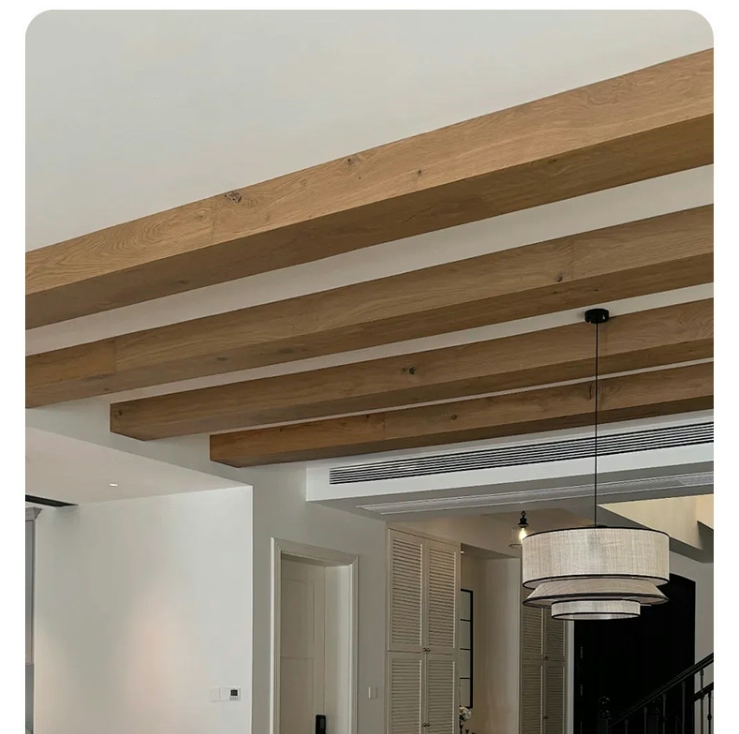
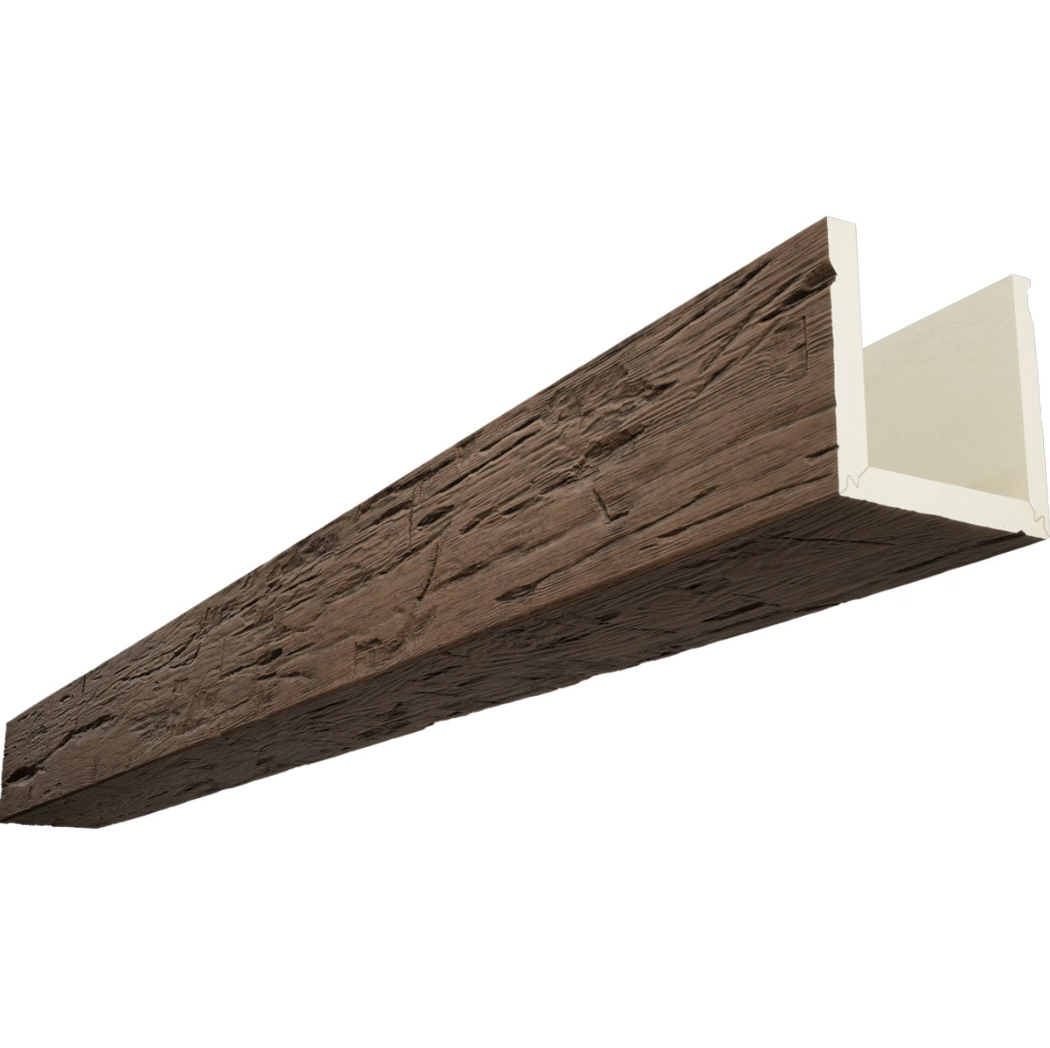
A beam can survive a transcontinental ocean voyage in a container but get crushed in the last 50 feet of its journey — from the delivery truck to the job site. The final leg of a shipping journey is often the roughest, and it's where most transit damage occurs. Our packaging system is designed around the full journey, not just the parts that look dangerous.
How we package beams for domestic and international shipping
The packaging approach depends on the beam dimensions, the order quantity, and the shipping method. For all methods, the goals are the same: prevent surface damage, prevent crushing or deformation, and prevent the beams from shifting during transit.
For domestic LTL (less-than-truckload) freight: Beams are wrapped in a layer of protective foam film, then in cardboard, then strapped to wooden pallets. The pallets are dimensioned to fit standard freight truck beds. Beams longer than 8 feet extend beyond the pallet edges and are flagged with a bright-colored "OVERHANG" marker so forklift operators handle them correctly.
For international container shipping: Individual beam wrapping is heavier — multiple layers of foam and cardboard. The palletized bundles are wrapped in stretch plastic and then in a breathable moisture-barrier wrap. Container humidity can reach high levels during ocean transit; the moisture barrier prevents condensation from reaching the beam surfaces without trapping moisture inside the packaging.
For air freight: Packaging is lighter but still protective. The goal is to minimize weight (which directly affects cost) while maintaining protection. Compressed foam blocks replace bulkier cardboard where weight allows.
For sample shipments: Individual beams ship in a heavy cardboard tube or reinforced box with foam end caps. Sample beams are small enough that a single box is sufficient, so packaging is straightforward.
Crate construction for long or oversized beams
Beams longer than 16 feet cannot be shipped on standard pallets. They require wooden crates built to the order's specific dimensions. The crate construction follows these principles:
The bottom of the crate is a wooden pallet base, treated for moisture resistance. The beams rest on rubberized or foam-coated support blocks that cradle the beam's cross-section. The blocks are spaced every 4 to 6 feet along the beam length to prevent sagging under the crate's own weight.
The sides of the crate are constructed from OSB or plywood panels, screwed or nailed to the base. For international shipments, crates are fumigated according to ISPM 15 standards to prevent insect infestation — this is a customs requirement for wooden packaging in most countries.
The top of the crate is a removable lid secured with screws. This allows the crate to be opened for inspection at customs without destroying the packaging.
A "THIS SIDE UP" and "FRAGILE" label is applied to all visible faces. International shipments add a "DO NOT STACK" label because crates of polyurethane beams should not have additional cargo stacked on top.

Freight class and handling requirements
Polyurethane faux beams ship under Freight Class 70 (manufactured articles, not machinery). This is a relatively low freight class — the beams are light compared to their dimensional weight, which works in the buyer's favor.
The handling requirements for our products are "OS" — "Open Top or Side Loading Permissible." This means the freight carrier can load the crates into a container or truck using an overhead crane or forklift from any side. "NO" (not open top) freight would be inappropriate for our products because the open-top method is the standard loading approach for long cargo.
For domestic freight, we use only carriers with a verifiable track record of handling architectural products. Fragile or oversize cargo handlers are preferred over general commodity carriers. The freight cost difference is minimal, but the damage rate difference is significant.
Transit insurance
All shipments are covered by transit insurance to the invoice value of the goods. The insurance is purchased by us for domestic shipments and is included in the quoted shipping cost. For international shipments, transit insurance is an additional line item because international cargo insurance is priced by route, cargo type, and coverage level.
The standard coverage is "all risk" — covering loss or damage from any cause not explicitly excluded. Exclusions follow standard marine cargo insurance terms: war, civil unrest, inherent vice (pre-existing damage), and improper packaging. Improper packaging is a rarely invoked exclusion in our case because our packaging meets or exceeds carrier standards.
For importers with their own cargo insurance policies, we can provide the documentation required to file claims through the importer's policy instead: commercial invoice, packing list, and clean Bill of Lading.
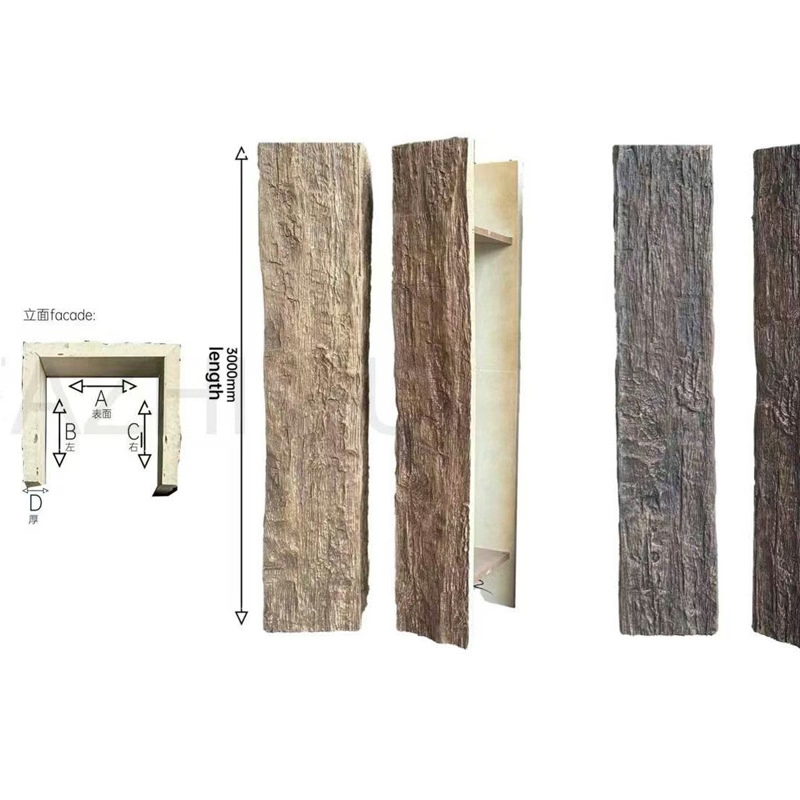
Damage reporting and the claims process
Damage must be noted on the carrier's delivery receipt at the time of delivery. This is a legal requirement — the carrier's liability for transit damage is contingent on the damage being noted before the driver leaves. A delivery receipt signed without exceptions is difficult to claim against, even if the damage is obvious.
The reporting sequence:
- At delivery: Note any visible damage (crushed corners, punctures, torn packaging) on the Bill of Lading or delivery receipt before signing. Write "DAMAGED" next to the affected items and keep a copy of the marked receipt.
- Within 24 hours: Photograph the damage thoroughly — the packaging, the beam, and a wide shot showing the delivery context. Send the photographs to your sales representative along with a copy of the marked delivery receipt.
- Within 48 hours: Our representative will acknowledge the claim, arrange for inspection if necessary (usually by the carrier's adjuster), and initiate the replacement or repair process.
- Replacement timeline: For domestic orders, replacement beams ship within 5 to 7 business days of claim confirmation. For international orders, replacement ships on the next available container unless the buyer prefers to wait for the next planned shipment to that port.
What happens when damage is discovered after the driver leaves
If damage is discovered after the carrier has departed and the delivery receipt was signed clean, the claim is more complex but not impossible. The buyer must provide photographs showing the damage, the delivery receipt (signed clean), and any other supporting documentation.
We advocate on behalf of the buyer with the carrier in these cases. The carrier's liability depends on whether the damage could have occurred in transit or after delivery — photographs of the packing condition at the time of delivery help establish this.
For importers receiving goods at ports, container inspections before customs release are advisable. Any damage found during the port inspection should be noted on the customs inspection report, which creates an independent record of the damage condition at the time of delivery.
Preventing shipping damage: what buyers can do
A few steps buyers can take to reduce shipping damage risk:
Order complete beams rather than cut-to-length. Field-cut beams have exposed foam at the cut ends that is more vulnerable to crushing. Factory-cut ends are sealed and reinforced.
Specify inside delivery or liftgate service if the job site doesn't have a loading dock. The last 50 feet is where most damage occurs, and the driver handling a crate by hand on a residential driveway is the highest-risk moment.
Be present for delivery or designate someone who will be. A delivery receipt signed without inspection is a missed opportunity. If you can't be there, instruct whoever will receive the delivery to note any visible damage before signing.
For large projects with phased deliveries, we can hold inventory at our warehouse and ship on schedule to match the project timeline. This is more expensive than a single shipment but reduces the risk of beams sitting at an unsecured job site before they're installed.
The real goal
Shipping damage is a solvable problem, not an unavoidable cost. Good packaging, appropriate freight class, proper handling, and clear damage reporting procedures mean that our damage rate is well below the industry average. When damage does occur, our claim resolution process is fast enough that it doesn't delay projects.
We take this seriously because our customers' projects don't tolerate surprises. A contractor who scheduled a beam installation for a specific week can't absorb a two-week delay from a damage claim. We work to make sure the beam arrives ready to install, every time.
Container shipping specifics for polyurethane beams
Container shipping is the most common international shipping method for our products. The beams are packed into wooden crates that are loaded into 20-foot or 40-foot shipping containers.
For standard 6x4 beams, a 40-foot HQ container can hold approximately 800 to 1,000 linear feet of beam, depending on the packaging configuration. For 8x6 beams, the capacity is approximately 500 to 650 linear feet per container.
The container loading follows a specific sequence: the heaviest crates are loaded first, with lighter crates on top. The crates are braced to prevent shifting during ocean transit, and wooden dunnage and air bags are used to fill voids and stabilize the load.
The container is sealed at the origin with a numbered security seal. The seal number is recorded on the Bill of Lading and verified at the destination. A broken or missing seal at the destination indicates potential tampering or container opening during transit, which may warrant an inspection.
LCL shipping considerations
For smaller international orders, LCL shipping consolidates the beams with other goods in a shared container. LCL has specific considerations: longer transit times, more handling events, dimensional weight calculations, and consolidation warehouse requirements.
For LCL shipments to destinations where we have established warehouse partners, we can coordinate consolidation that minimizes handling and reduces the risk of damage.
Air freight options and economics
For urgent orders, air freight provides the fastest delivery. The transit time is 3 to 5 business days to most international destinations, but at 5 to 8 times the ocean freight rate.
For shipments over approximately 200 pounds, air freight is unlikely to be economical. For urgent orders within North America, expedited LTL carriers provide 2 to 3 day delivery at a fraction of the air freight cost.
Cold chain and climate-controlled shipping
For shipments through extreme climate zones, we offer climate-controlled container options. The Reefer container can be set to 60 to 70 degrees Fahrenheit, preventing thermal stress during transit.
This adds 30 to 50% to the standard container freight rate. The premium is justified only for shipments where temperature-induced damage would be problematic.
Tracking and shipment visibility
For all shipments, we provide tracking visibility from pickup to delivery. The tracking information is updated at each carrier waypoint and is available through our customer portal.
For high-value or time-sensitive shipments, we offer proactive notification of any delays or anomalies. The logistics team monitors the shipment and contacts the buyer immediately if there is an unexpected event.
Technical References
ASTM standards cited in every specification
Test Data
Lab results from internal testing program
Updated 2026
Reviewed against current product specs