
"Moody" is interior design shorthand for a room that has deliberately surrendered its brightness in favor of depth, warmth, and visual richness. A moody room is not a dark room — it has light, but the light is controlled and warm, and the surfaces absorb as much as they reflect. The effect is immersive rather than stark.
Textured dark beams are the right architectural element for this transformation because they contribute texture and depth in addition to color. A flat black beam would absorb light and add darkness without adding interest. A textured dark beam with grain lines and surface variation catches and scatters light in ways that make the ceiling plane dynamic rather than inert.
The transformation process
A room transformation starts with an honest assessment of what the room has to work with. The light sources — both natural and artificial — determine what's possible. A north-facing room with small windows has different moody potential than a south-facing room with floor-to-ceiling glazing. Neither is better; they're different.
The question is not "how dark can we make this room" but "how can we create depth and visual interest while reducing the overall lightness." The answer involves working simultaneously on the ceiling (where the beams go), the walls, the floor, and the lighting.
Working with the ceiling and beams
The ceiling is the largest unbroken plane in most rooms. In a standard light-filled room, the ceiling's neutrality is an asset — it recedes and lets the walls and furniture claim attention. In a moody room, the ceiling becomes an opportunity.
Dark beams across a dark ceiling do two things. First, they create visual texture that prevents the ceiling from feeling like a void. Second, they introduce a horizontal rhythm that organizes the vertical space below. Without beams, a dark ceiling is a flat dark plane. With beams, it has structure and depth.
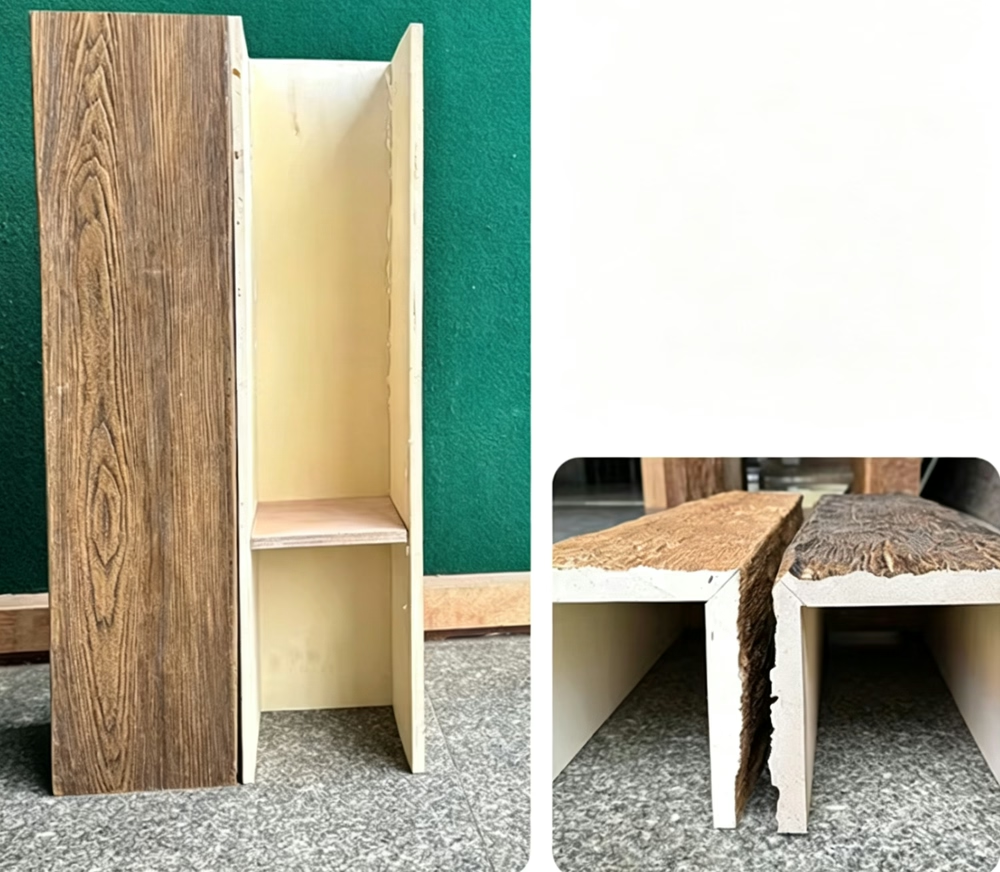
For a moody transformation, we recommend our dark walnut or espresso finish with a hand-distressed surface texture. The distressing adds micro-surface variation that catches light differently from different angles. As someone moves through the room, the beam surfaces change in apparent color and brightness, which makes the room feel alive rather than static.
The beam profile matters for moody rooms. Simpler profiles — rectangular, square, or slightly chamfered — work better than complex architectural profiles. The grain texture and the dark finish do the visual work; a complex profile would compete with them.
Wall and floor considerations
A room with dark beams and light walls is not a moody room — it's a room with dark beams. The moody transformation requires that the walls and floor participate in the dark palette, at least to some degree.
Wall options for moody rooms:
Dark paint — A single dark color on all walls, slightly darker than the beam finish, creates the deepest mood. Farrow & Ball's "Down Pipe," Benjamin Moore's "Wrought Iron," and Sherwin-Williams' "Tricorn Black" are starting points. The wall color should be close to but not exactly matching the beam — a slight difference in tone prevents the room from reading as monochromatic.
Dark wallpaper — Textured wallpapers in dark tones add a pattern element that prevents the wall plane from feeling flat. Grasscloth, linen-look, and embossed paper textures work particularly well.
Board and batten or shiplap — Installing dark-stained or dark-painted horizontal siding on the lower portion of the walls adds a textural element that echoes the beam texture on the ceiling.
Floor considerations for moody rooms:
Dark hardwood — Dark walnut or ebony-stained hardwood floors are the most common floor choice for moody interiors. The floor and the ceiling beams share a tonal family while the material difference (floor is smooth, beams are textured) maintains visual contrast.
Dark stone or concrete — In kitchens and bathrooms, dark slate, dark porcelain tile, or stained concrete work well. The material difference from the beams is appropriate and prevents the room from feeling like it's all the same thing.
Lighting strategy for moody rooms
Moody rooms require layered lighting because the darkness is deliberate and the light sources are visible. The light fixtures themselves become part of the room's design vocabulary.
Ambient layer — Warm-toned recessed can lights or a central fixture at low output. The ambient layer provides enough general illumination to see by without compromising the mood.
Task layer — Focused lighting on work surfaces: a desk lamp, a reading light beside a sofa, under-cabinet lighting in a kitchen. Task lighting should be warm (2700K) and directional, throwing a pool of light on the work surface without illuminating the surrounding darkness.
Accent layer — Lighting directed at the beams themselves. A picture light above a beam, a narrow-beam spotlight grazing the beam surface, or linear LED strips running along the beam's bottom edge. The accent layer reveals the texture and makes the beams the visual focus of the room.
Decorative layer — The light fixtures themselves: a statement pendant, a sculptural floor lamp, candlestick-style sconces. In a moody room, the fixtures should be substantial and intentional. A wimpy light fixture in a dark room looks lost.

Common transformation mistakes
Going dark without going warm — A dark room with cool undertones (gray, blue, silver) reads as cold and institutional rather than moody and intimate. The warmth of the dark palette — browns, ambers, warm grays — is what makes it cozy rather than austere.
Not enough contrast — A room where everything is the same dark tone has no visual interest. The walls, floor, ceiling, and beams should be different values of dark — not black, charcoal, gray, and more gray, but espresso beams, dark warm-gray walls, near-black floor, and somewhere a slightly lighter accent that pulls the eye.
Over-lit — The most common mistake in moody room attempts. The client loves the concept but can't tolerate the darkness. Dimmer switches on every circuit help, but the room also needs enough artificial light sources to feel purposeful rather than gloomy.
No texture — Smooth dark paint on walls, flat dark beams, and a dark floor creates a room that feels like a black box. The texture of the beams, the walls, and the floor is what gives the darkness visual depth.
The psychology of the moody room
The moody room aesthetic taps into a specific aspect of human psychology: the preference for enclosed, cave-like spaces in moments of rest and relaxation. This preference is not universal — some people feel claustrophobic in very dark rooms — but it is widespread enough that moody interiors have become one of the most discussed and sought-after design directions in contemporary residential design.
The appeal of the moody room is partly about contrast. In a world of bright screens, fluorescent offices, and overlit retail spaces, a room that surrenders to darkness and warmth feels like a deliberate counterpoint. It is a room that says: here, you can turn down the stimulation.
Textured beams are essential to this psychology working correctly. A smooth dark ceiling in a room is simply a dark ceiling — it absorbs light and creates shadow, but it doesn't engage the eye. A textured dark beam ceiling is visually active even in shadow. The texture catches what little light exists and distributes it across the surface in patterns that change with the viewer's position. This is what makes a textured beam room feel alive rather than oppressive.
Budget planning for a moody room transformation
A moody room transformation with textured beams is a more significant investment than a simple paint update, but it is also more impactful. The cost breaks down into several components:
Beam cost — Based on linear footage, profile, and finish. A standard 6x4 beam in a multi-tone wood grain finish costs less than a custom distressed finish, but the difference is modest relative to the total project cost.
Installation labor — Professional installation by a finish carpenter or handyman. The complexity depends on the beam layout; a simple parallel run is faster than a complex grid or curved installation.
Preparation and painting — The walls and ceiling need to be painted in the dark palette before the beams go up. This is typically 30 to 40% of the total project cost.
Lighting — The lighting system may need to be updated to accommodate the moody room's layered lighting approach. Adding LED strips, updating switch plates to dimmers, and installing accent fixtures are incremental costs.
The total project cost for a complete moody room transformation — including beams, painting, and lighting — is typically 60 to 80% less than the equivalent transformation using real timber beams and custom plaster work.
Maintaining the moody aesthetic over time
A moody room requires ongoing attention to maintain its character. The darkness that makes the room feel special also makes any imperfection more visible: dust on the beam surfaces, smudges on the walls, worn spots on the floor. A room that is cleaned and maintained regularly looks dramatically better than a room that is neglected.
The maintenance routine for a moody room is not significantly different from a standard room, but it should be more disciplined. The dark surfaces show dust and grime more readily than light surfaces, so the cleaning frequency should be higher.
The beam surfaces should be dusted or wiped weekly in a well-used room, monthly in a less-used room. The wall cleaning should be done with a soft cloth and mild cleaner; abrasive cleaners will scratch the matte wall finish and create shiny spots that stand out against the surrounding darkness.
The lighting system should be checked periodically to ensure that all bulbs are functioning and the dimmers are operating correctly. A room where half the accent lights have burned out loses its atmosphere.
When moody isn't right
There are rooms where the moody aesthetic is not appropriate, and recognizing this early saves wasted investment.
Rooms with very limited natural light — no windows, north-facing with minimal light, or below-grade spaces with no daylight access — can become genuinely gloomy rather than moody. The difference is subtle but important: moody is atmospheric; gloomy is depressing. If a room has no natural light to begin with, darkening it further creates a cave rather than a sanctuary.
Rooms used primarily for work or study need a level of brightness that supports concentration. A dark, moody home office can feel cozy for short periods but becomes fatiguing over a full workday. For home offices, a lighter beam finish — natural oak or white — with warm lighting creates a more productive environment.
Rooms with children or elderly residents should be evaluated carefully. Young children often find very dark rooms frightening. Elderly individuals with reduced vision may have difficulty navigating a very dark space safely. The design should accommodate all occupants, not just the design preferences of the adults.
The moody room as a long-term design commitment
A moody room transformation is not easily reversed. The paint colors are difficult to lighten, the beams are expensive to remove, and the lighting system is specific to the dark environment. Before committing to a moody room, consider whether the aesthetic is a long-term preference or a current trend.
The safest approach is to test the moody concept with paint alone — dark walls and ceiling without beams — before investing in the beam installation. If the dark paint feels right after a few weeks of living with it, the beams are a logical next step. If the dark paint feels oppressive or impractical, you haven't committed to the beam installation yet.
This test-and-learn approach reduces the risk of a design decision that doesn't age well. The moody aesthetic has proven durable — it has been popular for nearly a decade and shows no signs of fading — but personal preferences do change, and a design that feels right at 30 may feel heavy at 50.
Technical References
ASTM standards cited in every specification
Test Data
Lab results from internal testing program
Updated 2026
Reviewed against current product specs


