
Walnut is the benchmark dark hardwood in interior design — rich without being red, sophisticated without being severe, and versatile enough to appear in everything from mid-century modern living rooms to contemporary minimalist studies. Dark walnut grain on a polyurethane beam brings that benchmark into the faux beam market, with the practical advantages of polyurethane over real timber: consistent color, light weight, and moisture resilience.
The color character of dark walnut
Dark walnut sits in the Munsell range of approximately 10YR 2/2 to 2.5YR 2/2 — a dark reddish-brown with warm undertones. The grain lines are darker — close to 10YR 2/1 or black — and the open-grain areas are slightly lighter. The overall effect is of a surface with depth and variation rather than flat, uniform color.
Real walnut darkens with age and exposure to light, developing a richer, more complex tone over years. Our faux dark walnut is calibrated to match the appearance of aged walnut rather than freshly milled walnut, which means it reads as established and authentic rather than new.
The grain pattern in our dark walnut finish is medium to coarse — not the tight, fine grain of maple, but the more open, flowing grain of American black walnut. The grain lines are irregular, with occasional swirls and figure patterns that add visual interest.
Why walnut works in luxe dark interiors
Luxe dark interiors need warmth in the darkness. A room with dark walls, dark floor, and a dark ceiling — all without wood grain — risks feeling synthetic, like a black box. The addition of wood grain introduces organic variation that prevents the room from feeling artificial.
Walnut specifically carries a luxury association that other dark woods don't quite match. Oak is warm but lighter; ebony is dark but cold; mahogany is warm but has historical baggage that can read as heavy or traditional. Walnut hits the sweet spot: dark enough to contribute to a dark palette, warm enough to prevent coldness, and associated with high-end furniture and architectural detail.
In a luxe dark interior, the walnut beam ceiling is often paired with walnut or walnut-toned furniture. The material continuity between ceiling and furniture creates a cohesive design statement that reads as intentional and considered.
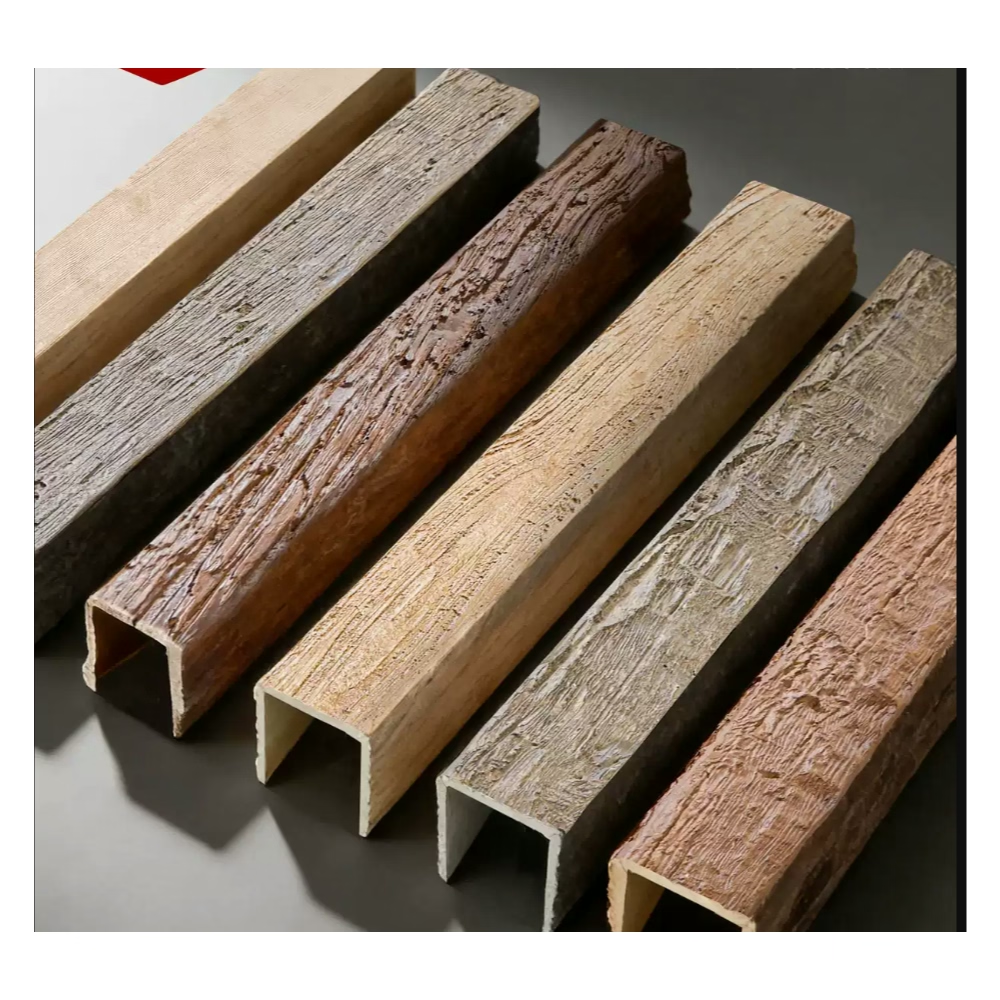
Room applications
Luxury living room — Dark walnut beams across a living room ceiling, paired with cream or ivory upholstered furniture and a warm off-white or light gray wall, create the classic "dark and light" contrast that is the foundation of luxury residential design. The walnut beams add warmth to the contrast.
Formal library or study — A library with dark walnut beams, dark bookshelves, a leather desk, and brass hardware is a design archetype for a reason. The walnut ceiling connects the room's material palette and creates the enclosed, scholarly atmosphere appropriate for a serious work space.
Master suite — Dark walnut beams in a master bedroom, paired with charcoal or navy bedding, warm plaster walls, and linen drapes, create an intimate sleeping environment that feels hotel-luxury rather than merely comfortable.
High-end restaurant or bar — Dark walnut beams are common in upscale hospitality because they communicate quality without being fussy. A restaurant with dark walnut beams, warm lighting, dark leather seating, and warm stone or dark wood floors looks expensive without trying too hard.
Lighting for dark walnut interiors
Dark walnut responds best to warm lighting — 2700K to 3000K. The warm light brings out the brown and reddish tones in the wood and makes the grain patterns glow. Cool light (4000K+) flattens the color and makes walnut look gray.
In residential applications, warm recessed cans, brass pendant fixtures, and table lamps with warm LED bulbs all contribute to the right lighting environment. The goal is to make the wood look like it's lit by candlelight or late afternoon sun — warm, directional, and slightly golden.
In hospitality applications, the lighting design should account for the way the beams will look at different times of day and under different artificial lighting scenarios. A restaurant that looks stunning under evening lighting may look flat under the bright afternoon light that comes through windows before sunset. Dimmers on all circuits help bridge this gap.
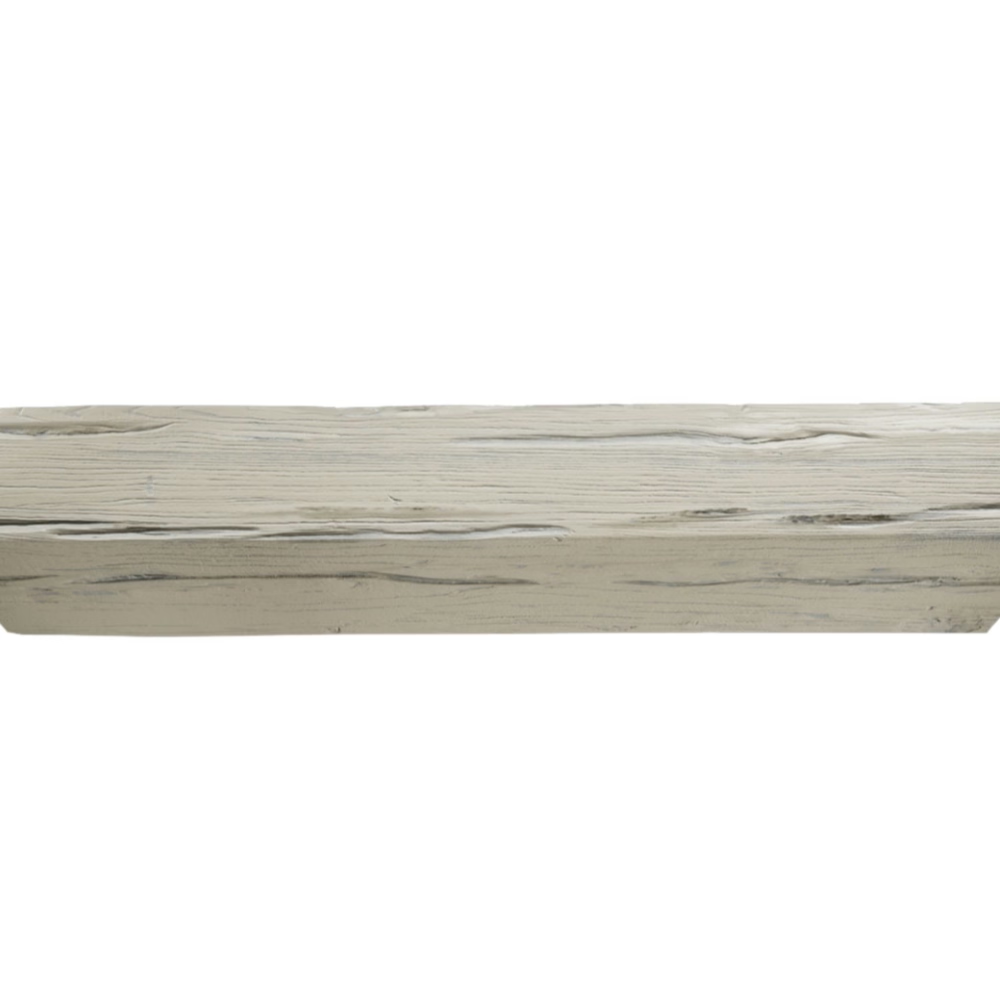
Specification for dark walnut beams
Our standard dark walnut finish is specified as "dark walnut multi-tone wood grain." If the project requires a specific walnut variant — lighter American walnut, deep black walnut, figured walnut with pronounced grain figure — we can produce a custom match to a reference sample.
The recommended profile for dark walnut beams is a simple rectangular cross-section — either standard square (6x6) or slightly elongated (6x4 or 8x6). Complex profiles with chamfers or V-grooves can work but are more common in contemporary applications than in the traditional luxe aesthetic that walnut most naturally serves.
For importers specifying dark walnut beams for international markets, walnut is one of our most requested finishes in Europe, the Middle East, and East Asia. The color is universally recognized as a premium wood tone and performs well across a range of interior styles.
Walnut grain direction and its effect on the room
The direction of the wood grain on a beam has a subtle but real effect on how the beam reads in the room. Grain that runs parallel to the beam's length — the most natural orientation for the pour — creates a vertical rhythm that makes the ceiling feel taller. Grain that runs horizontally, across the beam's face, creates a more horizontal emphasis that can make a room feel wider.
For rooms with low ceilings, vertical grain orientation is preferred. The vertical emphasis counteracts the compression that a low ceiling creates. For rooms that are too wide for their height, horizontal grain orientation can help visually widen the room.
Our finishing process can accommodate grain direction preferences. By controlling the application direction of each glaze layer, we can produce beams with predominantly vertical or predominantly horizontal grain figures.
The aging character of walnut
One of the qualities that makes walnut desirable as a furniture and architectural material is how it ages. Real walnut darkens and deepens in color over years of exposure to light and air, developing a richness that freshly milled walnut lacks. Our faux dark walnut finish is calibrated to match the appearance of aged walnut, but it also ages — more slowly and more predictably than real wood.
The aging of a polyurethane beam finish differs from the aging of real wood. Real wood darkens unevenly — the exposed surfaces darken while the unexposed surfaces remain lighter. A real walnut beam that has been in place for 20 years has a different color on its bottom face (exposed to light) than on its sides (less exposed). Our polyurethane beam, with its UV-stabilized topcoat, ages more evenly. The color deepens slightly over 10 to 15 years but maintains its consistency across all surfaces.
For homeowners who want the aesthetic of aged wood without the maintenance, this is an advantage. For those who specifically want the character of unevenly aged wood, real timber is the only option.
Combining walnut beams with other wood elements
A room with dark walnut beams on the ceiling and other walnut elements — a walnut dining table, walnut shelving, walnut cabinetry — creates a material coherence that is one of the most satisfying aesthetic experiences in interior design. The room feels unified and intentional, as if every element was chosen to belong together.
The key to making this work is finish consistency. If the ceiling beam is a premium multi-tone walnut finish and the furniture is a cheaper, flatter walnut veneer, the materials will look different enough to create a mismatch rather than a match. The finish quality must be equivalent across all elements.
When specifying walnut beams for a room that will include other walnut elements, we recommend providing the furniture finish sample to our team so we can calibrate the beam finish to harmonize. The beam finish doesn't need to match the furniture finish exactly — often a slightly different tone creates more visual interest — but the quality of the finish must be equivalent.
Regional preferences and market variations
Dark walnut is our most requested finish in North American and European markets, where it is associated with both traditional luxury and contemporary sophistication. In Middle Eastern markets, walnut is valued for its warmth and richness in climate-controlled interiors. In East Asian markets, walnut's depth and complexity appeal to buyers who appreciate nuanced material quality.
The popularity of walnut in different markets influences how it is presented in product catalogs and showrooms. In markets where walnut is the premium option, it commands a price premium. In markets where lighter woods are preferred, walnut may be positioned as an accent option rather than the default.
Technical References
ASTM standards cited in every specification
Test Data
Lab results from internal testing program
Updated 2026
Reviewed against current product specs


