
Moody interior styling is built on contrast, depth, and warmth — not on the absence of light but on the controlled use of it. A room styled for mood is a room where shadows have presence, where surfaces absorb rather than reflect, and where the warm glow of a well-placed light source feels earned rather than ambient. Dark walnut grain beams are one of the most effective ceiling elements for this kind of room because walnut's natural warmth prevents the darkness from tipping into coldness.
The difference between dark and moody
Dark is a color value. Moody is a design approach. A room can be dark without being moody — a room with dark gray walls, a dark ceiling, and no texture or warmth is dark but not moody. A moody room has dark elements, but it also has warmth, texture, and a sense of intentional atmosphere.
Dark walnut contributes to the moody aesthetic in ways that plain dark paint does not. The grain pattern introduces texture and visual interest in the shadow areas. The warm brown tones add color depth that flat dark paint lacks. The variation across the beam surface — lighter grain, darker grain, mid-tones between — creates apparent depth that a single dark color cannot achieve.
Building a moody palette around walnut beams
A successful moody room starts with the darkest element and works outward. With walnut beams, the beam finish is often the darkest element in the room, which means the wall color, floor color, and furniture colors need to be calibrated to support it without competing.
The foundational palette for a walnut-beam moody room:
Walls: Dark warm gray — Farrow & Ball's "Pavilion Gray," Benjamin Moore's "Kendall Charcoal," or equivalent. The gray should have warm (yellow or red) undertones, not cool (blue) undertones. Test the wall color next to a walnut beam sample in the actual room lighting before committing.
Ceiling: One step lighter than the wall color, in a dark warm neutral. The beam sits against the ceiling, so the ceiling color must provide enough contrast to define the beam's silhouette without being so light that it competes for attention.
Floor: Dark warm wood — the same walnut or a slightly different dark hardwood. Matching the floor to the beam creates a vertical continuity that makes the room feel enclosed and intimate. A lighter floor — oak or blonde wood — risks breaking the vertical cohesion.
Accents: Warm metallics (brass, bronze, aged copper), ivory or cream textiles, warm stone (limestone, travertine). These accents provide relief from the darkness without undermining it.

Lighting for moody walnut interiors
The lighting strategy in a moody room is different from the lighting strategy in a typical room. Instead of providing even, diffused illumination throughout the space, moody lighting creates pools of light and pools of shadow, with the beam surfaces themselves contributing to the light quality.
Grazing light — Position recessed cans or directional fixtures so that the light grazes across the beam surface rather than hitting it perpendicularly. Grazing light reveals the grain texture and creates a sense of depth in the wood surface. A beam lit from the side shows every grain line; a beam lit from above flattens the surface.
Accent spots — Individual spotlights aimed at specific beams or beam intersections create focal points in the ceiling plane. The beam under the spotlight becomes a visual landmark; the beams in shadow provide contrast and depth.
LED strips — Linear LED strips running along the bottom edge of the beam, facing down or angled slightly upward, create a soft wash that illuminates the beam face without casting harsh shadows. This is the most effective ambient lighting approach for moody beam rooms.
Decorative fixtures — Pendant lights, sconces, and table lamps in warm-toned glass (amber, smoked, cream) contribute warm light to the room while functioning as design objects. In a moody room, the light fixture is as important as the light it produces.
Room-by-room application
Living room — The living room is the most forgiving space for moody walnut beams. Large windows can be managed with heavy drapes; the darkness can be calibrated to the client's comfort level. The walnut beam ceiling anchors the room's material palette and provides the visual interest that makes a dark palette feel intentional.
Bedroom — A moody bedroom with dark walnut beams creates the most intimate residential application. The darkness of the ceiling should extend to the walls, with bedding and soft furnishings providing the lighter counterpoint. A bedside lamp with a warm glow is the primary light source; overhead lighting is rarely used in a truly moody bedroom.
Kitchen — Moody kitchens with dark walnut beams are increasingly popular in high-end residential design. The challenge is task lighting — kitchens need bright, functional light over counters and cooking surfaces — but this can be achieved with under-cabinet LED strips and focused task lights while keeping the ceiling area dark and moody.
Bathroom — A moody bathroom with dark walnut beams and warm stone or dark tile creates a spa-like atmosphere. Moisture is not a concern for polyurethane beams with marine-grade topcoat, making the bathroom a viable application. Warm accent lighting (vanity sconces, a rainfall shower head with integrated LED, candlelight) completes the mood.
Specification and sampling
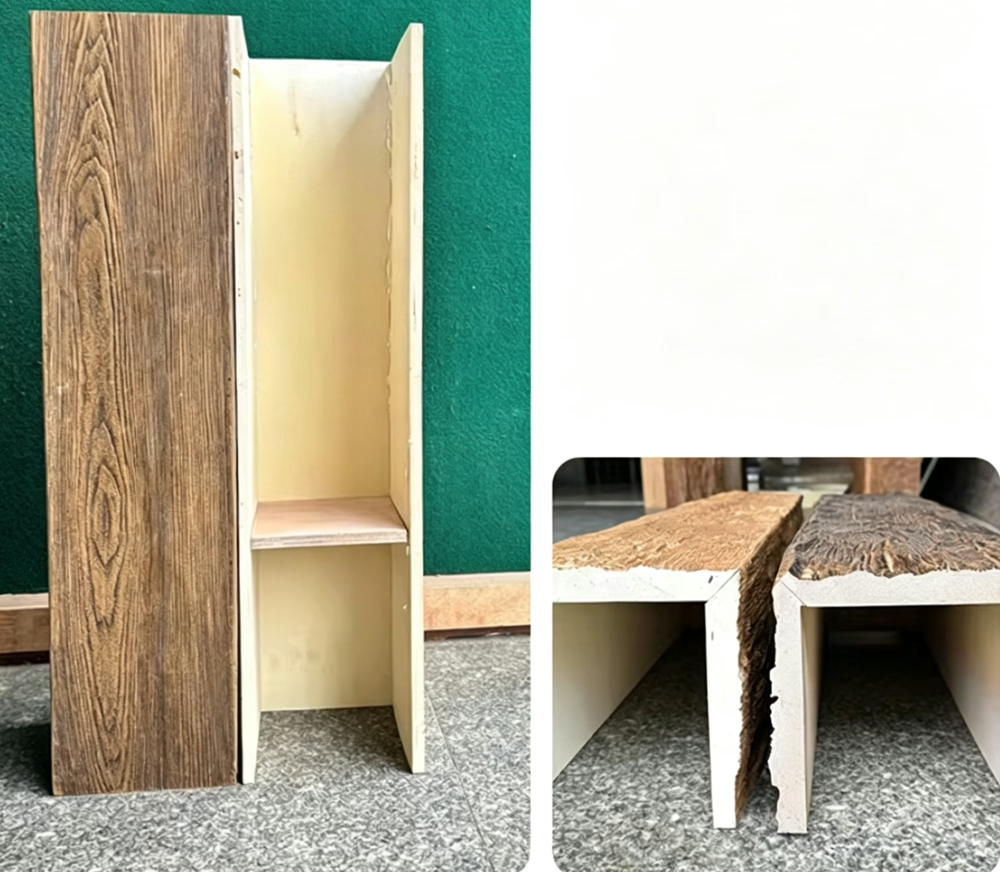
For a moody room project, we strongly recommend ordering a sample beam before placing the full order. The walnut finish should be evaluated in the actual room's lighting — both natural and artificial — because the finish can appear different under different light sources.
When specifying, note the desired grain intensity: a lighter hand-distressed walnut has more highlight and a more rustic character; a darker, more heavily saturated walnut has less visible grain and a more contemporary feel. The choice depends on the overall design direction and the other materials in the room.
For importers serving markets where moody interiors are trending — particularly Europe, Australia, and urban markets in Asia — dark walnut is consistently among our top-requested finishes for premium beam installations.
The relationship between grain direction and mood
In a moody room, the direction of the wood grain on the beams contributes to the overall atmosphere. Vertical grain — grain lines running the length of the beam — creates a sense of height and aspiration. Horizontal grain — grain lines running across the beam face — creates a sense of groundedness and enclosure.
For moody bedrooms and libraries, vertical grain is usually preferred because it reinforces the sense of shelter and enclosure that makes these rooms comfortable. For moody living rooms and dining rooms, the grain direction can follow the room's proportions: vertical grain in tall rooms, horizontal grain in wide rooms.
Our finishing process can control grain direction to some extent. The base coat is applied uniformly, but the glaze layers are applied with a directional wiping motion that emphasizes the desired grain direction. The result is not perfectly uniform — the grain has the organic variation of real wood — but the overall directional emphasis can be calibrated.
The role of patina and aging
A true-to-life walnut finish should have some apparent age. A brand-new beam with a pristine walnut finish looks like a product. A beam with a slightly worn, slightly varied walnut finish looks like furniture that has been in the room for years.
Our distressing process, applied at a subtle level, produces this patina without making the beam look artificially old. The distressing targets the edges and corners of the beam — the areas that would naturally show wear over time — while leaving the flat surfaces relatively smooth.
For contemporary moody interiors where a clean, precise look is preferred, the distressing can be minimized or omitted. For traditional interiors or restorations where the beams should look like original construction, heavier distressing is appropriate. The specification should communicate the desired level of apparent age.
Wall color selection in practice
The wall color in a dark walnut moody room should be selected after the beam sample is approved, not before. The beam is the more expensive and less flexible element — if the wall color doesn't work with the beam, you can repaint the walls. You can't repaint the beams without significant cost.
When evaluating wall colors against the beam sample, view them in the room's actual lighting. Morning light, afternoon light, and evening artificial light will each produce a different relationship between the wall color and the beam finish. A wall color that looks perfect at noon may look too warm or too cool in the evening.
The most reliable approach is to paint a large sample swatch of the proposed wall color directly on one wall — the largest wall in the room — and live with it for a few days. If the relationship between the wall color and the beam feels right at all times of day, the specification is confirmed.
Seasonal variation in moody rooms
A dark walnut moody room looks different in summer than in winter, purely due to the quality of natural light. Summer daylight is cooler and brighter; the room feels lighter and more open. Winter daylight is warmer and softer; the room feels more intimate and enclosed.
This variation is a feature, not a bug. A room that looks slightly different in each season feels alive rather than static. The artificial lighting in the room can be calibrated to compensate: warmer, more abundant lighting in winter to reinforce the moody atmosphere; cooler, more restrained lighting in summer to maintain the balance.
Smart lighting systems — LED systems with adjustable color temperature and brightness — are increasingly common in high-end residential projects and are an excellent match for moody room design. The ability to adjust the room's lighting with the seasons, or even with the time of day, keeps the moody room feeling dynamic rather than fixed.
Technical References
ASTM standards cited in every specification
Test Data
Lab results from internal testing program
Updated 2026
Reviewed against current product specs


