
Mixing wood species in a single room is a high-design move that requires confidence. When it works, the result is rich, layered, and visually complex — a room that reveals more of itself the longer you look at it. When it doesn't work, it's chaotic. The difference lies in understanding what makes wood species compatible and how to deploy them so that they enhance rather than compete.
The material logic of mixing wood tones
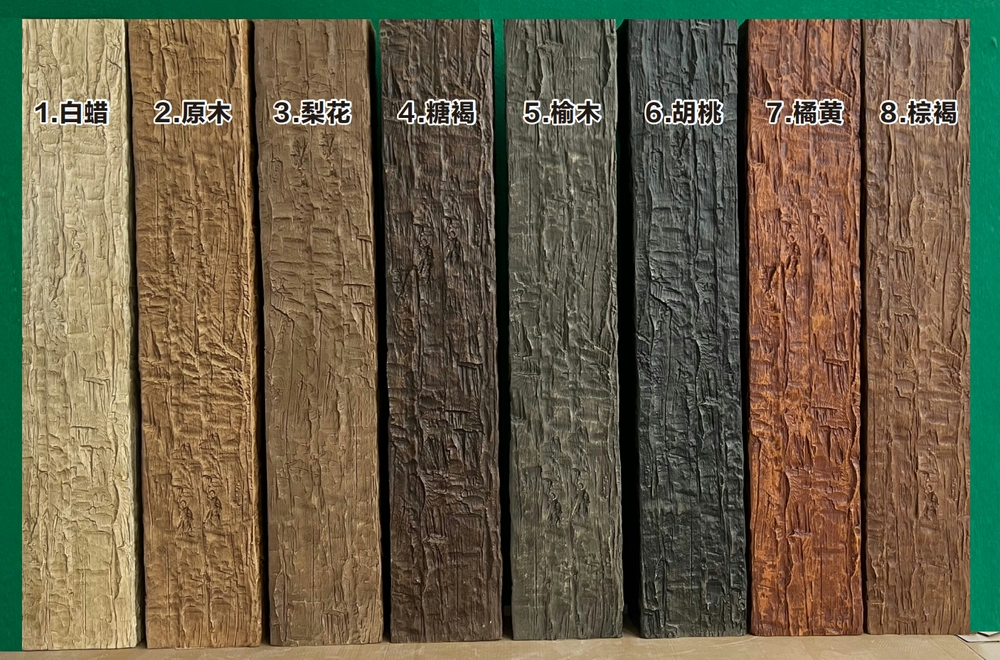
The three darkest-to-lightest wood species in our palette — dark walnut, natural oak, and knotty pine — form a natural tonal progression. Walnut sits at the dark end of the range; oak in the middle; knotty pine at the lighter end. In a room with all three, the eye reads the tonal gradation and understands it as intentional.
The key is that the species are related by family — all are hardwoods with visible grain — but distinct enough to provide visual differentiation. The grain patterns are different: walnut has a flowing, occasionally swirled grain; oak has a bold, straighter grain with pronounced ray fleck; pine has a distinctive knot pattern that interrupts the otherwise straight grain. The textural variety is part of the design interest.
Mixing species that are tonally similar but texturally different — rather than mixing tones of the same species — creates the most successful multi-wood interiors.
How to deploy the species in a great room
The most effective approach for a great room with three wood species is to assign each species a specific architectural role:
Dark walnut beams on the primary ceiling plane — The darkest species, and therefore the most dominant, gets the most visible surface: the ceiling. The walnut beams anchor the room's material palette and establish the warm, rich atmosphere.
Natural oak beams on secondary planes — Structural elements that are visible but secondary: exposed rafters, corbels, mantel beams, or beams on adjacent ceiling planes. Oak's mid-tone bridges the gap between walnut and pine.
Knotty pine beams on accent elements — Smaller-scale elements: decorative brackets, beam caps, exposed rafter tails, or furniture-scale beams above a kitchen island. The pine's knot pattern adds a rustic counterpoint to the formality of walnut and oak.
This hierarchy — dark on the primary plane, mid-tone on secondary planes, light on accents — creates a readable design logic. Without the hierarchy, the three species compete for attention.
Room types that benefit from multi-species mixing
The mixed-species approach is best suited to open-plan great rooms where multiple ceiling heights, multiple functional zones, or multiple adjacent spaces create natural opportunities for species differentiation.
Great room with mezzanine — A two-story great room with a mezzanine balcony provides distinct ceiling planes at different heights. The main ceiling (high) gets walnut beams; the mezzanine ceiling (lower) gets oak beams. The species differentiation acknowledges the architectural separation while maintaining material coherence.
Open-plan kitchen and living room — A kitchen with an exposed-beam ceiling can use oak beams while the adjacent living room uses walnut beams. The species change marks the functional boundary without a wall or door.
Lodge or cabin great room — In a mountain or lakeside villa where the design direction is warm and rustic, all three species on different elements creates the layered material richness that characterizes the best lodge interiors. The wall might be clad in knotty pine; the ceiling beams in walnut; the structural posts in oak.
Finishing considerations for mixed-species installations
The finish on each species must be calibrated to create the tonal progression. If all three species are finished at the same brightness level, the tonal progression disappears and the species become visually competing rather than complementary.
The finish targets for a balanced three-species palette:
Walnut: Deep, saturated dark brown with visible grain. The grain should read as dark against a mid-brown field. The overall value is approximately Munsell 7.5YR 2/2.
Oak: Medium warm brown with bold grain and visible ray fleck. The overall value is approximately Munsell 10YR 4/3 to 5/3. Lighter than walnut but not pale.
Knotty pine: Light warm tan with prominent dark knots. The knots should be dark brown to almost black; the wood between should be a natural honey-oak tone. The overall value is approximately Munsell 10YR 6/4.
The progression from walnut to pine should be smooth — each step down the tonal ladder should be roughly equal in lightness. If the oak is too light relative to the walnut, it will compete with the pine. If the pine is too dark, it will compete with the oak.
Sample evaluation and approval
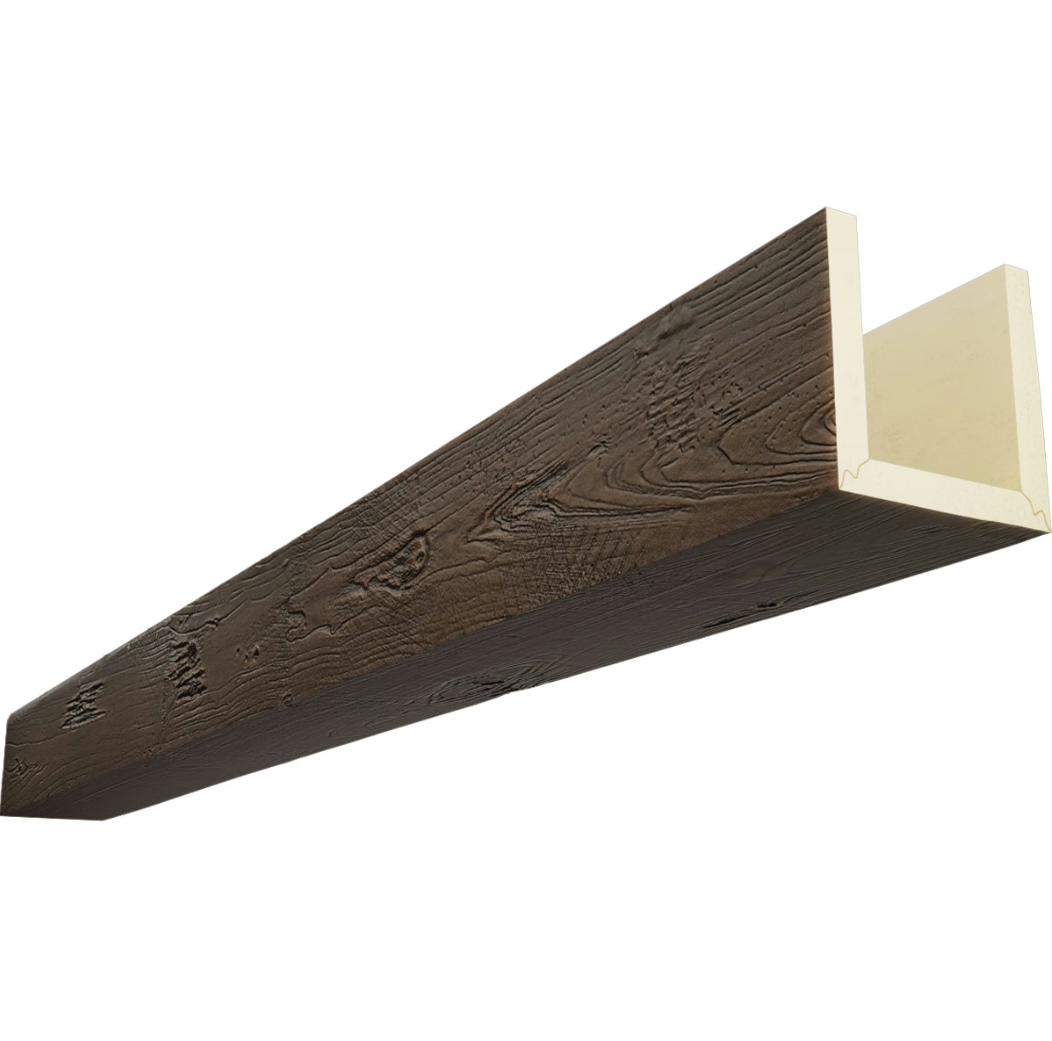
For multi-species projects, we recommend ordering samples of all three finishes and evaluating them together in the actual room before placing the production order. The samples should be arranged in the intended tonal order — walnut, oak, pine — and viewed from the typical viewing distance in the room.
Lighting matters for multi-species evaluation. The finishes should be assessed under the project's planned lighting — warm LED, candlelight, or daylight — because the species will interact differently under different light temperatures.
If the samples read as too similar (the walnut and oak are hard to distinguish), the walnut should be darkened or the oak lightened. If the oak and pine are too close, the same adjustment applies. The goal is a smooth gradation where each species is clearly distinct but visually related.
For importers and architects
Multi-species beam specifications require close collaboration between the design team and the finishing team. We assign a dedicated finish technician to multi-species projects who oversees the production of all three finishes and ensures the tonal balance is maintained across the production run.
The delivery schedule for multi-species projects is longer than single-species projects because all three finishes must be applied in the same session to ensure batch consistency. We coordinate the production and delivery timeline with the project schedule to ensure all beams arrive together.
For importers working on luxury villa projects internationally, the multi-species palette is particularly effective in markets where layered material richness is valued — Middle Eastern hospitality projects, European alpine lodges, and high-end residential in East Asia all respond well to this approach.
The design case for deliberate material contrast
One of the most sophisticated approaches to multi-species beam design is to use contrast deliberately rather than trying to harmonize everything. A room with dark espresso beams on the ceiling and light blonde wood furniture is a deliberate contrast — the dark ceiling anchors the room while the light floor prevents it from feeling heavy.
The three-species approach — walnut, oak, and pine — occupies the middle ground between perfect harmony and deliberate contrast. The species are related by their wood identity, but the tonal differences create visual interest. This approach works because the differences are controlled and proportional.
The key to making this work is restraint in the rest of the room. If the walls, floor, and furniture are also competing for attention, the multi-species ceiling becomes noise rather than design. The room should have one or two other material elements — a stone fireplace, a plastered wall, a concrete floor — that provide a visual resting point.
Finishing consistency across species
When three different wood species are used in one room, the finishing process must be calibrated for each species independently. Polyurethane foam accepts pigment differently from real wood, and each species' grain density and porosity affect how the finish layers develop.
Our finishing team adjusts the pigment concentration and application technique for each species to achieve the target tonal values. The walnut receives more pigment in the base coat to achieve its darkness. The oak receives a medium concentration. The pine receives less, because its lighter natural tone requires less pigmentation to achieve the target honey color.
The sealing and topcoat application is uniform across all three species. The same clear matte topcoat is applied to all three, which provides a consistent sheen and UV protection across the ceiling.
For importers specifying multi-species beams for international projects, we recommend providing the room's wall and floor material samples along with the wood species references. This allows our team to calibrate all finishes — wood and non-wood — in context rather than in isolation.
Projects where multi-species works best
The three-species approach is most effective in large, open-plan rooms where the ceiling is a significant visual element and the design direction calls for material richness rather than minimalism.
Great rooms in mountain and lakeside properties — The natural materials palette of these properties — stone, wood, plaster — responds well to a multi-species beam ceiling that introduces variation within the wood family without introducing foreign materials.
Farmhouse and lodge-style interiors — The rustic design vocabulary of farmhouse and lodge interiors embraces layered materials. A multi-species beam ceiling fits naturally into this aesthetic.
Boutique hospitality spaces — Hotel lobbies, restaurant dining rooms, and bar areas where the design aims to create a sense of crafted, considered luxury benefit from the visual richness of multiple wood species.
High-end residential in Asian markets — In markets where layered material richness is associated with quality and status, the multi-species approach communicates affluence without being ostentatious.
Maintenance of multi-species ceilings
The maintenance requirements for a multi-species ceiling are the same as for a single-species ceiling: periodic dusting, occasional cleaning with mild soap and water, and a clear coat refresh every 8 to 12 years. The different species age at the same rate because the aging is happening to the finish, not to the underlying wood.
The finish on all three species will develop a slightly different patina over time — the walnut darkens slightly, the oak lightens slightly, the pine remains relatively stable. This differential aging is slow enough — over 10 to 15 years — that it is rarely noticeable unless the room is photographed at both time points.
Technical References
ASTM standards cited in every specification
Test Data
Lab results from internal testing program
Updated 2026
Reviewed against current product specs


