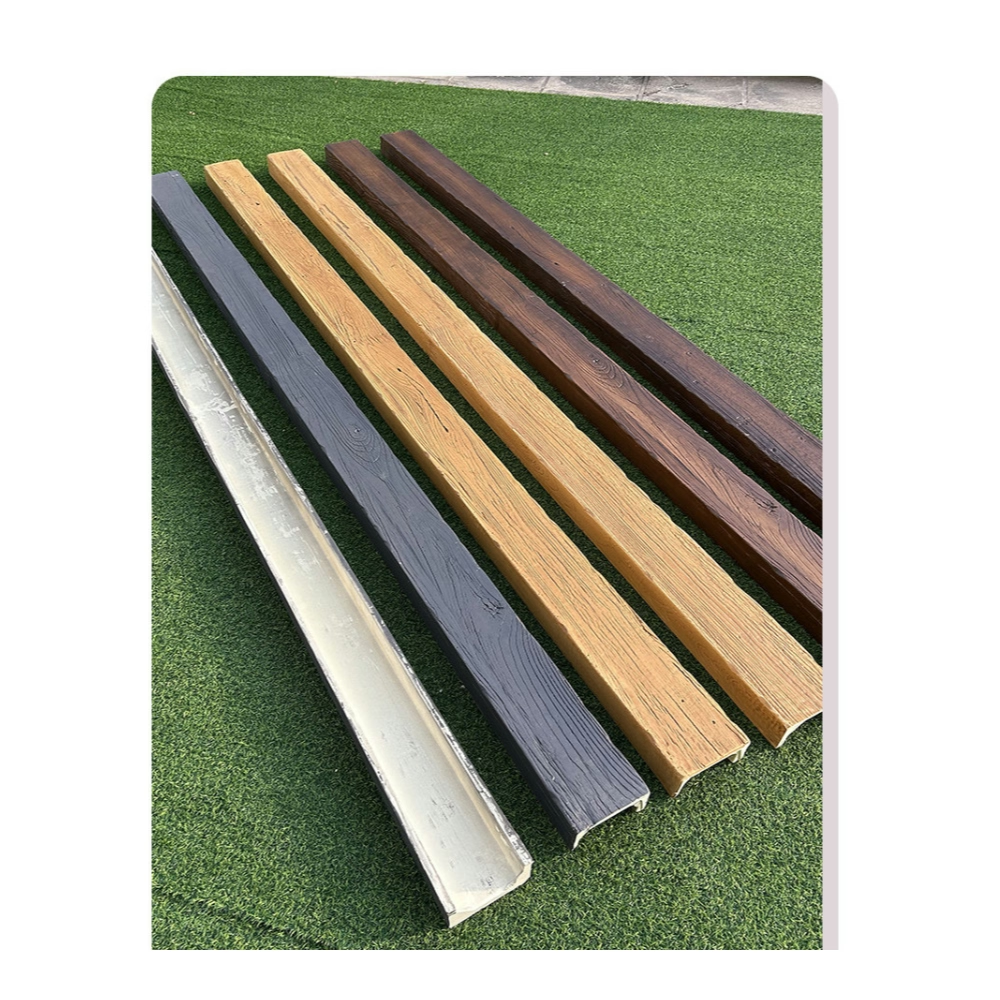
The end of a beam is where the design either comes together or falls apart. A well-finished end — whether it's a factory-machined cap, a field-installed terminal, or a mitered cut — is the detail that tells a visitor "this was designed, not just installed." An unfinished end — raw foam, visible kerf marks, a ragged cut — is the detail that undermines everything else.
Curved polyurethane resin end terminals solve the end-finishing problem by providing a shaped cap that matches the beam's cross-section and transitions the end into a clean, curved termination. They are produced in the same material as the beam, finished in the same batch, and shipped ready to install.
Types of end terminals
Quarter-round terminal — A simple curved cap that transitions the square end of a beam into a quarter-circle profile. The flat end of the beam disappears into the curve, which returns to the wall or ceiling. This is the most common and most versatile terminal type.
Oval terminal — A more refined terminal that creates an oval-shaped end cap, with the long axis of the oval running along the beam's length. This terminal reads as more crafted than the quarter-round and works well in traditional and transitional interiors.
Tapered terminal — The beam transitions from its full cross-section to a pointed or narrow termination. This terminal is most commonly used where the beam runs into a wall at an angle or where the termination should be visually lightweight.
Sculpted terminal — A custom-shaped terminal with a compound curve or decorative profile. This is a premium option used in high-end residential and hospitality projects where the terminal is a visible design element rather than a concealed detail.
Why order terminals with the beam
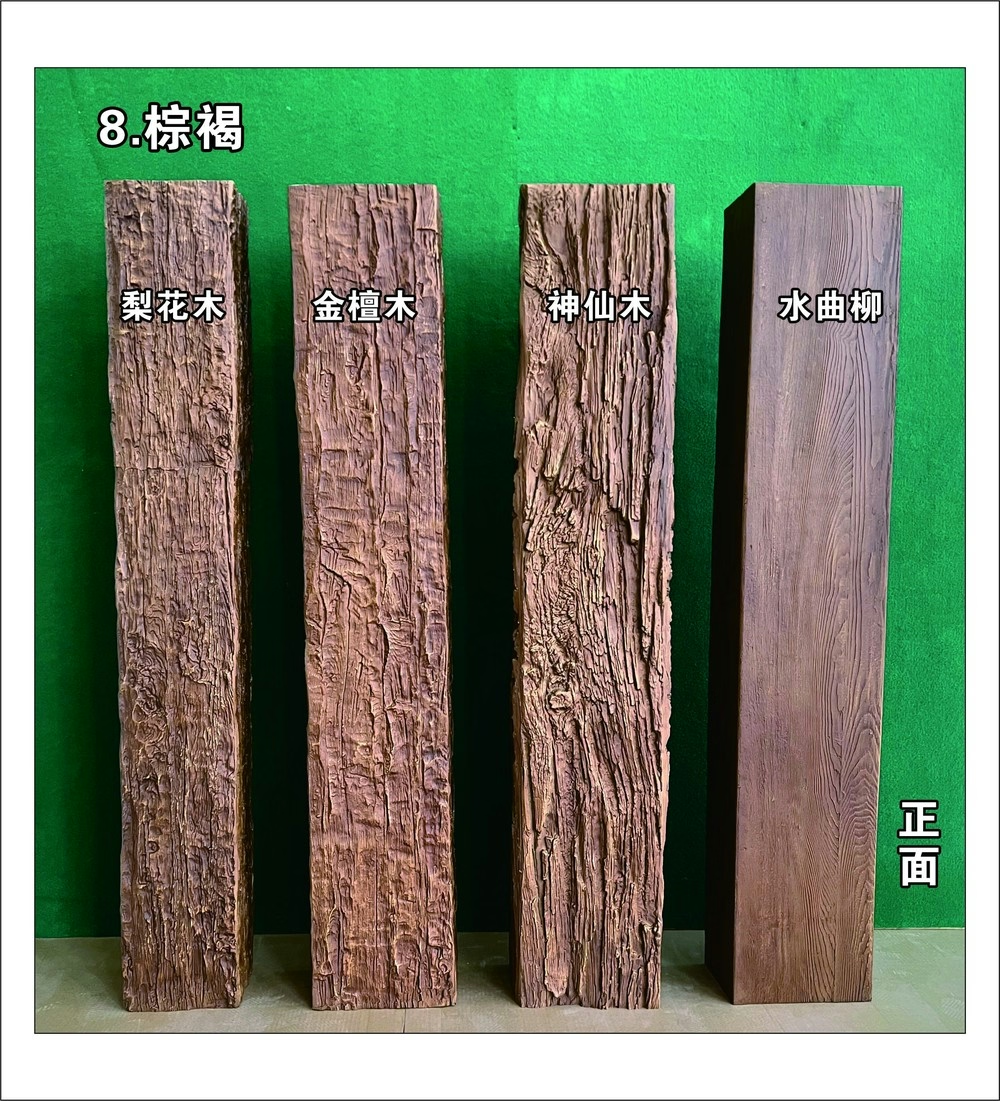
The cleanest end terminals are those produced as part of the same manufacturing batch as the beam. The mold for the terminal is the same mold used for the beam ends, and the finish is applied in the same session. The result is a terminal that is indistinguishable from the beam in material, color, and texture.
Terminals ordered separately — after the beam is produced — are finished in a separate batch. While we match the finish formula carefully, subtle batch-to-batch variation can occur, particularly on multi-tone wood grain finishes. The variation is usually not detectable at normal viewing distance, but it is detectable under close inspection.
For projects where the beam end will be visible from close range — a mantel, a beam that terminates at eye level, a beam in a room with low furniture — ordering the terminals with the beam is strongly recommended.
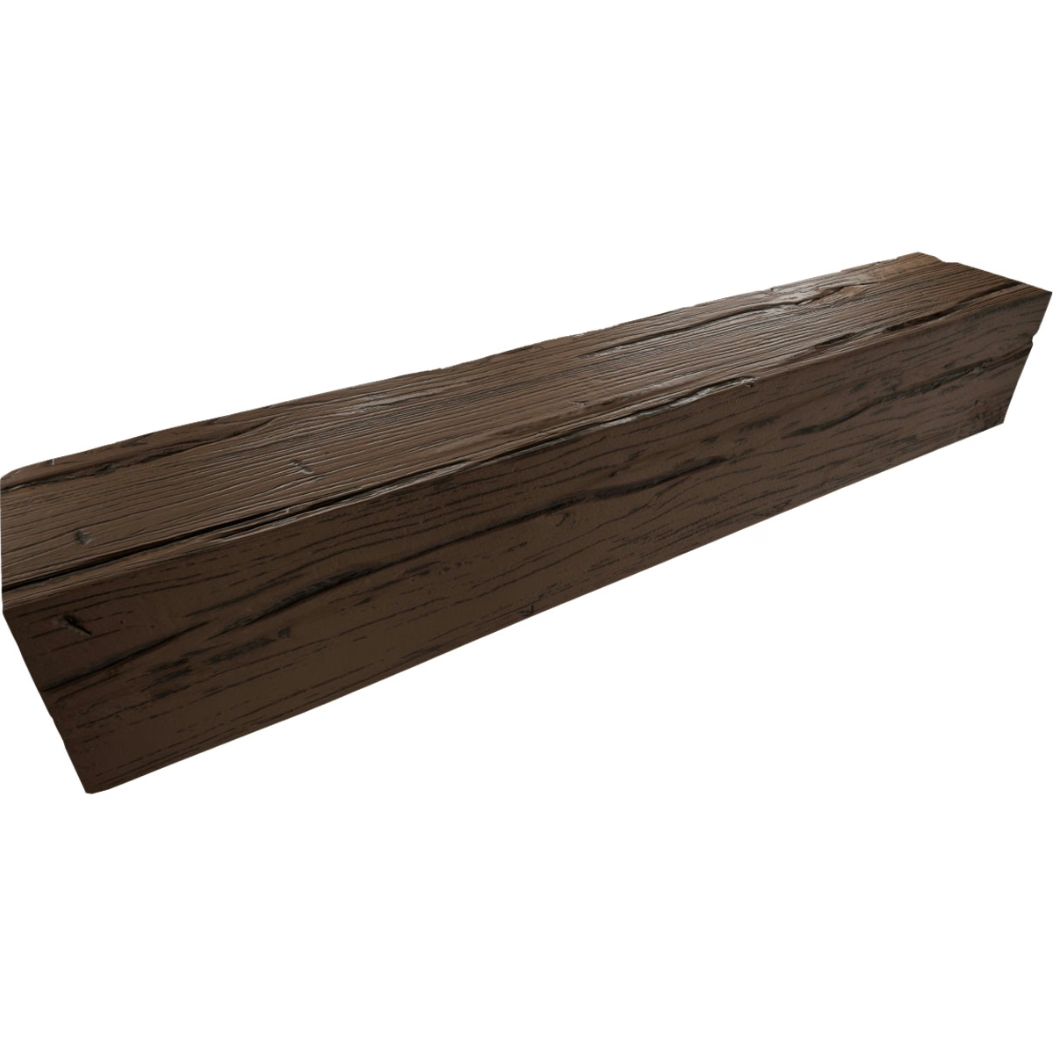
Field installation on cut beams
When a beam has been cut to length in the field and needs an end terminal, the field installation process is straightforward.
First, test-fit the terminal on the cut end of the beam. The terminal should seat fully with no gap between the terminal's interior surface and the beam's exterior. If there is a gap larger than 2mm, the beam may have been trimmed differently than the terminal was sized for.
Second, apply construction adhesive to the interior surface of the terminal — both the flat bonding surface and the inner lip that wraps around the beam's edge. The adhesive should cover the full interior surface without pooling.
Third, press the terminal firmly onto the beam end. The terminal should seat fully within 30 seconds. Hold it in place with gentle pressure for 60 seconds, then allow the adhesive to cure for 24 hours before stressing the joint.
Fourth, seal the seam between the terminal and the beam with paintable caulk. Run a thin bead around the perimeter where the terminal meets the beam, then smooth it with a wet finger or a plastic smoothing tool. The caulk prevents moisture intrusion and hides any minor gap.
Fifth, touch up the finish. The seam between the terminal and the beam will be visible on close inspection. Apply the matching finish touch-up kit to blend the seam. At normal viewing distance, the terminal should appear continuous with the beam.
Maintenance of beam ends
Over time, the seam between a field-installed terminal and the beam may become visible as the caulk ages or as the finish shifts slightly. This is normal and is easily remedied.
Clean the seam with a dry cloth, apply a fresh bead of paintable caulk if needed, and touch up the finish with the touch-up kit. The maintenance cycle for field-installed terminals is typically 3 to 5 years in residential applications, depending on the humidity levels in the space.
Factory-installed terminals — those produced and bonded in the same session as the beam — rarely require maintenance. The bonded joint is stronger than the foam itself, and the finish is continuous across the joint.
Ordering end terminals
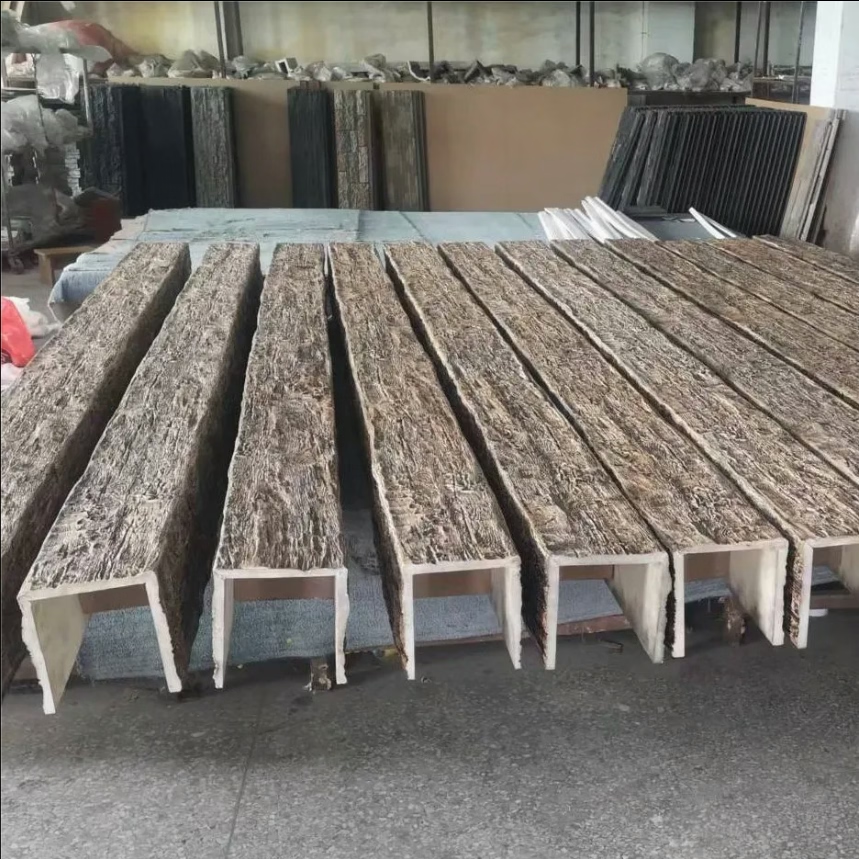
When ordering, specify the beam profile (height and width), the terminal type (quarter-round, oval, tapered, or sculpted), the finish, and the quantity. If the beam has been cut to a non-standard length, note the actual length so we can confirm the terminal size.
For projects with multiple beam sizes, each size requires its own terminal mold or selection from our standard terminal inventory. Custom terminal shapes require a new mold and additional lead time.
Lead time for standard terminals is the same as the beam lead time: 2 to 3 weeks for stock profiles, 4 to 5 weeks for custom profiles or finishes. Custom terminal shapes add 1 to 2 weeks for mold fabrication.
Technical References
ASTM standards cited in every specification
Test Data
Lab results from internal testing program
Updated 2026
Reviewed against current product specs