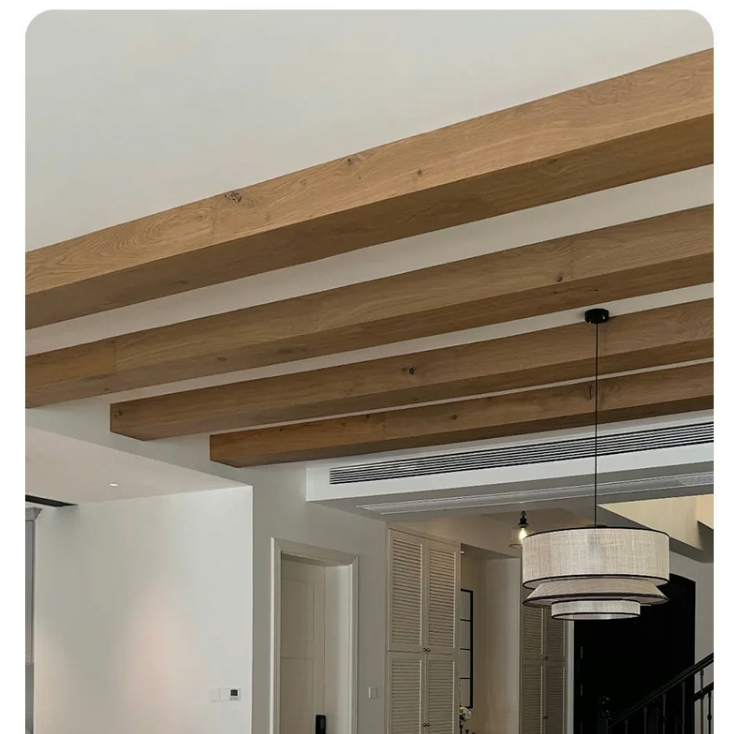
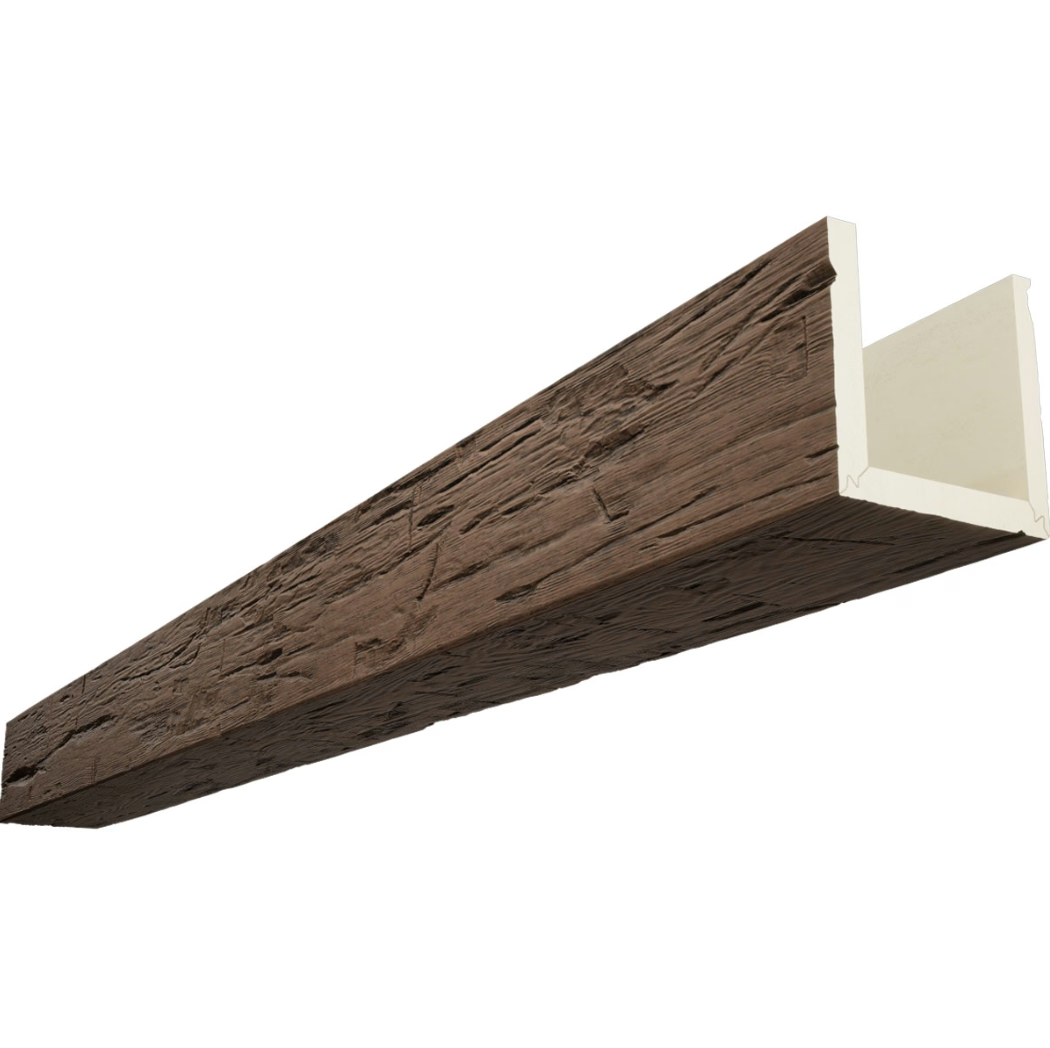
Every square foot of a retail shop interior is designed to sell something, and the ceiling is no exception. When a customer walks into a clothing boutique, a home goods store, or a specialty food market, the ceiling sets the first emotional impression of the space. A warm timber-beam ceiling says something different from an industrial concrete slab, and the choice defines the brand as clearly as the signage out front.
For retail interior designers and shopfitters, faux timber beams have become a go-to solution for ceiling treatments because they achieve the warmth and character of real timber at a price and weight that makes sense for a commercial tenant improvement. Most retail leases run five to ten years, and the ceiling treatment needs to last the full term without requiring ongoing maintenance or refinishing.
Why Retailers Choose Faux Timber Over Real Timber
The most common reason retail clients specify faux timber is cost certainty. A shop fit-out budget rarely has room for the unknown variables that come with real timber, including waste from warped boards, the need for on-site finishing, and the labor cost of handling heavy beams through a finished space.
Faux beams arrive at the job site with a factory-applied finish that matches the specification exactly. The color is consistent from beam to beam, the grain pattern is pre-selected for visual appeal, and the beam is lightweight enough for a single installer to handle without equipment.
For landlords and tenants in multi-tenant retail centers, the lightweight nature of faux beams is also a structural advantage. Many retail buildings have ceiling joists that were not designed to carry the weight of real timber. Faux beams eliminate the need for a structural engineering review and additional reinforcement.
Beam Layout Strategies for Retail Spaces
The beam layout in a retail space should support the way merchandise is displayed, not compete with it. A clothing retailer wants the eye to travel upward to the ceiling and then back down to the clothing displays, with the beams providing visual support rather than distraction.
Cross-beam layouts work well in long narrow shops. Beams running perpendicular to the longest wall draw the eye from the entrance toward the back of the store, which increases the perceived depth of the space. Beams running parallel to the longest wall emphasize width, which can make a narrow shop feel more open.
Grid layouts are popular in larger retail spaces like department stores and outlet centers. A symmetrical grid of beams creates a sense of order and predictability that works well for retailers who need to plan fixture placement across a large floor area.
Single statement beams are effective in small specialty shops where the ceiling is a focal element of the brand identity. A single oversized beam running down the center of the shop, paired with dramatic lighting, creates a signature look that customers remember.
Coordinating Beams with Retail Lighting
Lighting is the most important coordination issue in any retail beam installation. The beams need to work with the lighting layout, not against it.
For recessed track lighting, the beam positions should be planned to allow fixture placement without interference. Beams that run parallel to the track should be spaced far enough apart to allow the track to pass between them without needing to cut around the beam.
For pendant fixtures, the installer needs to confirm that the beam can carry the weight of the fixture. Most faux beams can support a pendant fixture with a threaded rod and a ceiling canopy, but the specifier should verify the load capacity before specifying a particularly heavy fixture.
For cove lighting behind the beams, the light source should be planned before the beams are installed so that the LED strips and power supplies can be wired and tested before the beam conceals them.
Quick-Install Systems for Nighttime Fit-Outs
Many retail fit-outs happen overnight or over a weekend to avoid interrupting trading hours. Faux beams are well-suited to this schedule because they install quickly without the dust and noise associated with drywall finishing or plasterwork.
A two-person crew can install a complete beam ceiling in a small to medium retail space in a single day. The beams mount with screws to pre-installed blocking, and the seams are closed with a small amount of caulk and paintable trim. There is no drying time, no sanding, and no smell from finishing products.
This quick-install capability is particularly valuable for restaurants, bars, and food retailers who cannot afford to close for more than a few hours during a refit.
Durability in Retail Environments
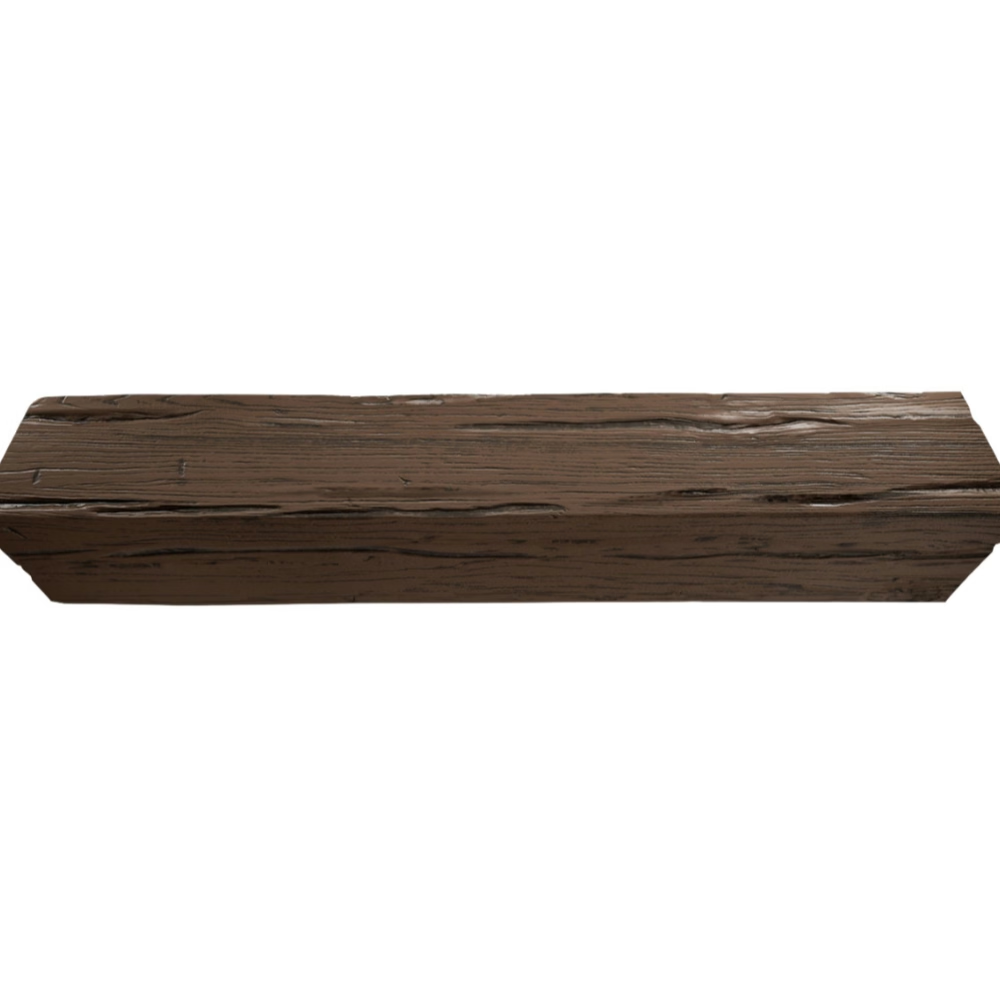
Retail environments are demanding. The ceiling must handle the vibration from HVAC systems, the temperature fluctuations from frequently opening doors, and the occasional impact from tall display fixtures being moved around. Faux timber beams made from high-density polyurethane handle all of these conditions without cracking, splitting, or showing wear.
The factory finish on quality faux beams is more resistant to scuffing and scratching than real wood because the polyurethane surface is harder than natural timber. For high-traffic retail spaces, this durability translates into a ceiling that looks new for the full term of the lease.
Brand-Consistent Finishing
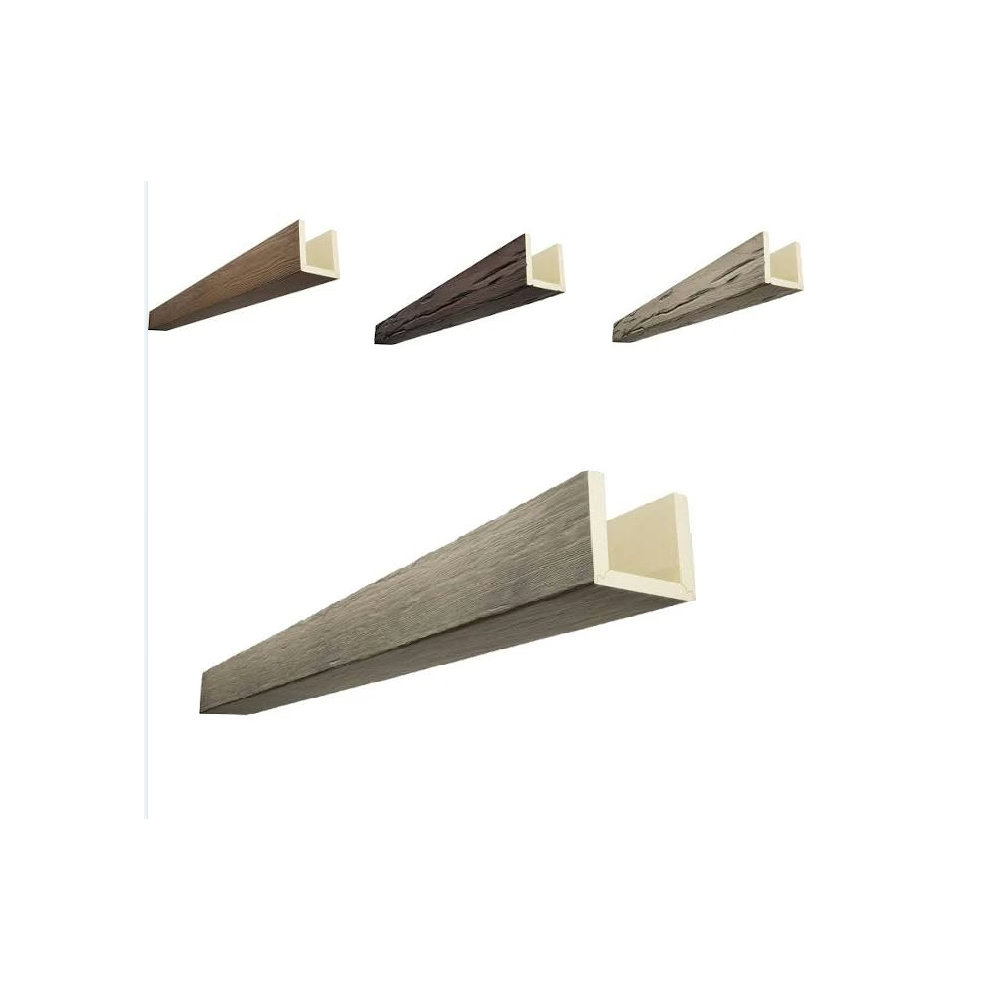
Retail brands that operate across multiple locations need their ceiling treatments to match the brand standard at every site. Faux beams make this easy because every beam in every location comes from the same production run with the same stain formula.
When a brand updates its visual identity, the beams can be refinished to the new color without replacement. A light sanding, a coat of primer, and a new stain or paint color transform the entire ceiling to match the updated brand palette.
For franchise businesses, this consistency is a significant operational advantage. A franchisee in a new market can order the same beams as every other franchisee and know that the ceiling will look identical.
Common Retail Sector Applications
Apparel retailers use faux beams to create a warm, upscale environment that makes the clothing feel more premium. The beams add texture to what would otherwise be a flat white ceiling, which is especially important in stores with exposed HVAC infrastructure where the ceiling cannot be lowered.
Home goods and furniture stores use beams to reinforce a natural, organic brand aesthetic. The timber look pairs well with natural materials like linen, leather, and stone, which are common in home goods merchandising.
Food and beverage retailers, including bakeries, coffee shops, and wine stores, use beams to create a comfortable, inviting atmosphere that encourages customers to linger. The warm wood tones make the space feel established and trustworthy, which is particularly valuable for businesses trying to build a loyal customer base.
Cost Comparison for Project Managers
A typical retail beam installation costs between forty and eighty dollars per square foot of ceiling area, depending on beam profile, finish quality, and installation complexity. This figure compares favorably to real timber beam systems, which can run to two hundred dollars per square foot or more when all material and labor costs are included.
For a one-thousand-square-foot retail space, the total beam budget with faux timber is likely to fall between forty thousand and eighty thousand dollars, compared to one hundred fifty thousand to two hundred thousand dollars or more for real timber. The savings can be redirected to other high-impact areas of the fit-out.
Maintenance for Retail Store Teams
Faux timber beams in retail environments require minimal maintenance. A quarterly dusting with a soft brush or a vacuum with a soft attachment is sufficient for most stores. In areas with higher dust or grease loads, such as restaurants or food markets, a monthly wipe-down with a damp cloth keeps the beams looking clean.
Unlike real timber, faux beams do not need periodic refinishing, oiling, or sealing. The factory finish is designed to last the lifetime of the product without additional treatment.
Long-Term Value for Landlords
Landlords who include faux timber beam ceilings in their tenant improvement packages attract higher-quality tenants who are willing to pay more rent for a space that does not require additional capital investment in the ceiling. The beams increase the perceived value of the space without adding significant cost to the landlord's construction budget.
For landlords managing a portfolio of retail properties, standardized faux beam profiles and finishes simplify maintenance and replacement. If a beam is damaged, the replacement comes from the same production run and matches the existing beams exactly.
Technical References
ASTM standards cited in every specification
Test Data
Lab results from internal testing program
Updated 2026
Reviewed against current product specs