
A luxury cruise ship is a floating hotel, and like any luxury hotel, its interior design must create an atmosphere of refined comfort that guests remember long after the voyage ends. The dining rooms, lounges, and public spaces aboard a cruise ship face environmental challenges that no land-based interior has to contend with: constant exposure to salt air, the rolling motion of the vessel in open water, humidity levels that fluctuate with the climate zones the ship crosses, and some of the strictest fire safety regulations in the hospitality industry.
Decorative faux wood beams have been specified for cruise ship interiors for over two decades because they solve problems that real timber cannot. They do not absorb moisture, do not warp in humid conditions, and can be engineered to meet the fire safety requirements that the maritime authorities mandate for passenger vessels.
Why Real Timber Is Problematic on Ships
Real timber beams in a marine environment face a series of challenges that eventually compromise both their appearance and their structural integrity. Salt air accelerates corrosion in any metal fasteners, the humidity causes the wood to expand and contract with each climate zone, and the inevitable salt spray from open decks finds its way into every space on the vessel.
Beyond the environmental concerns, real timber beams add weight to a vessel that must be carefully managed for stability and fuel efficiency. Every kilogram of decorative material on a cruise ship has a direct cost in fuel and a indirect cost in the structural reinforcement required to carry that weight.
Faux wood beams made from high-density polyurethane solve all of these problems. They are lightweight, dimensionally stable, moisture-resistant, and available with fire-retardant formulations that meet maritime safety standards.
Maritime Fire Safety Regulations
Fire safety on passenger vessels is governed by international conventions and classification society rules that are far more stringent than land-based building codes. The SOLAS convention (International Convention for the Safety of Life at Sea) sets the baseline fire safety requirements for international passenger vessels, and classification societies like Lloyd's Register and DNV add additional requirements.
For interior finish materials, the key requirement is the fire test performance. Materials used in escape routes, muster stations, and public spaces must typically achieve a Class A fire rating, which means they do not contribute to flame spread and do not produce excessive smoke or toxic gases when exposed to heat.
Faux wood beams manufactured with fire-retardant polyurethane can be tested and certified to meet these requirements. The certification documentation should be requested from the supplier during the specification phase and verified against the ship's classification requirements before the order is placed.
Environmental Conditions on Cruise Ships
The interior environment aboard a cruise ship varies significantly depending on the climate zone, the ship's position relative to open decks, and the HVAC system performance. Spaces near the bow or stern experience more vibration and motion than interior spaces amidships, and spaces adjacent to outdoor decks are exposed to salt spray and humidity fluctuations.
For beams in these challenging positions, additional engineering may be required. The mounting system should be designed to handle the vibration loads from ship motion, and the finish should be verified for salt spray resistance in exterior-adjacent spaces.
In interior spaces with stable HVAC control, standard faux beam specifications are usually adequate. The beams should be mounted with mechanical fasteners that are rated for the vibration environment, and the adhesive used at any joints should be a marine-grade product that does not degrade in humid conditions.
Design Considerations for the Marine Aesthetic
Cruise ship interior designers have a distinct vocabulary when it comes to wood-look materials. The aesthetic is typically more refined and polished than the rustic farmhouse look common in land-based residential projects. Passengers on a luxury cruise expect surfaces that feel curated and sophisticated, not rough or handcrafted.
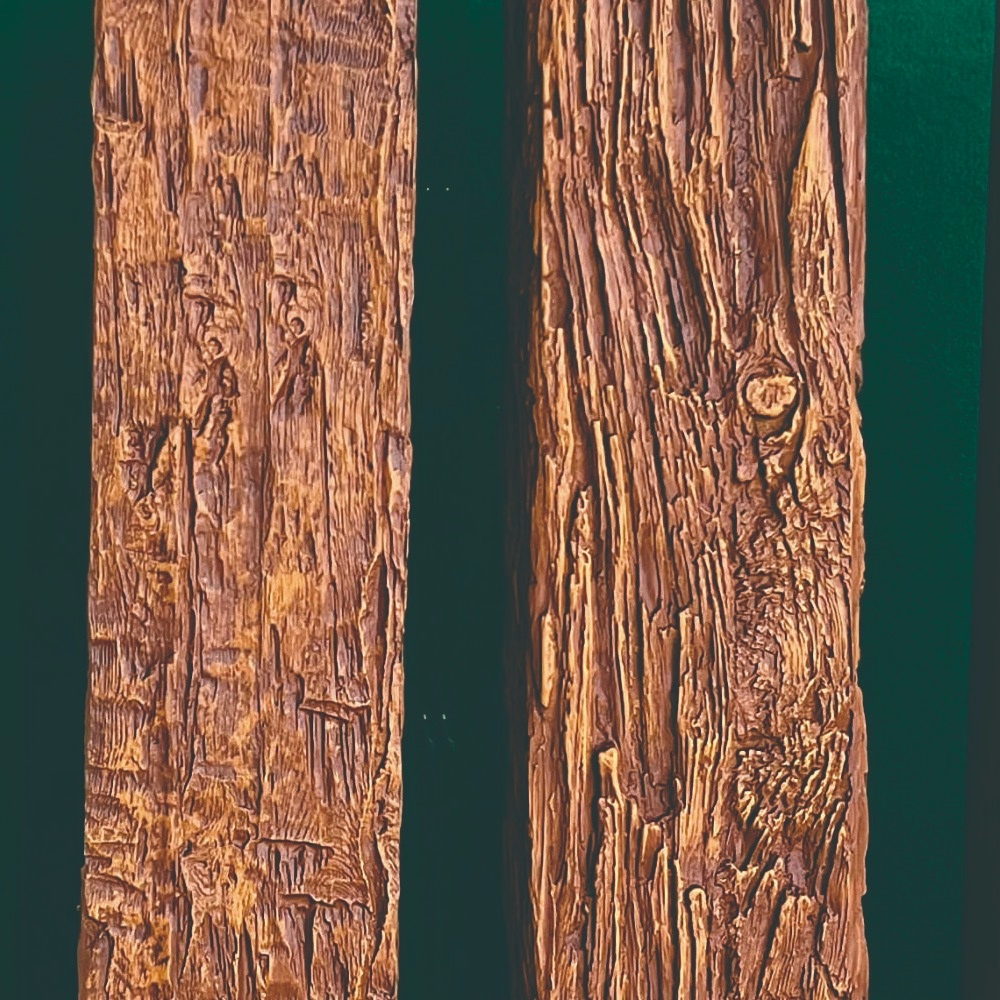
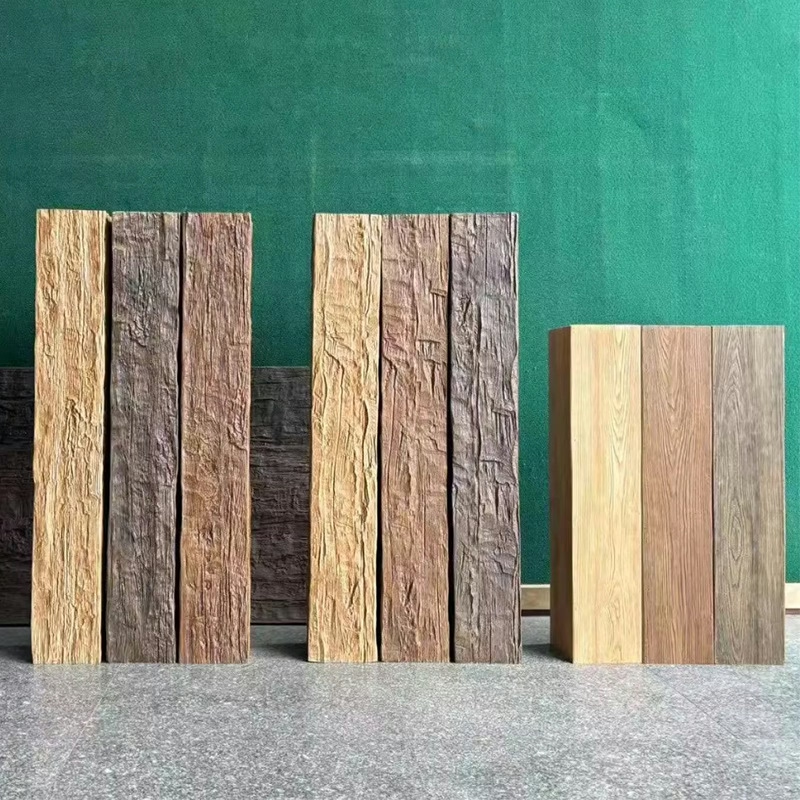
The beam profiles for cruise ship interiors are typically cleaner and more geometric than residential profiles. A simple chamfered rectangular beam with a subtle grain texture reads well at the scale of a cruise ship dining room, where the beams may be viewed from a considerable distance across a large open space.
The stain colors tend toward mid-range warm tones that photograph well under the warm interior lighting common on cruise ships. Dark espresso finishes can read as too heavy in a large public space, while very light natural finishes can look washed out under artificial light. A medium honey or warm oak tone hits the sweet spot for most luxury cruise ship applications.
Weight and Buoyancy Considerations
Every gram of decorative material aboard a cruise ship affects the vessel's buoyancy and stability. While a single beam or a ceiling of beams does not materially affect the overall stability of a large vessel, the cumulative weight of decorative materials throughout the ship is a factor that naval architects and ship operators monitor carefully.
Faux wood beams are typically one-fifth to one-tenth the weight of a comparably sized real timber beam. For a large cruise ship with thousands of square feet of beam ceilings in its public spaces, this weight reduction can translate into meaningful fuel savings over the life of the vessel.
The lightweight nature of faux beams also simplifies the installation process. Beams can be positioned by hand without the mechanical assist equipment required for real timber, which reduces the labor cost and the risk of damage to adjacent finishes during installation.
Vibration and Motion Resistance
A cruise ship in rough seas moves in six degrees of freedom: roll, pitch, yaw, heave, surge, and sway. These motions put stress on every surface in the vessel, and a ceiling beam that is not properly secured can work loose over time.
The mounting system for faux beams on a cruise ship should be designed by a marine engineer or a contractor with experience in marine installations. The fasteners should penetrate the structural framing to a depth that resists the combined effect of gravity and ship motion, and the adhesive used at joints should be a flexible marine-grade product that can absorb slight movement without cracking.
Installation Sequence on a New Build
On a new cruise ship, the beam installation happens during the outfitting phase, after the structural steel and primary bulkheads are in place but before the final furniture and fixtures are installed. This sequence allows the installers to work without worrying about damaging finished surfaces and provides access to the ceiling plenum for running electrical and mechanical systems.
The beam installation on a new build follows a similar sequence to a land-based commercial project, with the addition of coordinate verification against the ship's structural plans. The beams must align with structural members, and any penetrations through structural steel must be reviewed by the naval architect before they are cut.
Refurbishment and Maintenance Aboard Active Vessels
Cruise ships undergo periodic refits where sections of the vessel are taken out of service for renovation. A beam refurbishment during a refit follows the same process as a land-based installation, with the added complexity of working aboard a vessel that may have limited power, limited access, and a compressed timeline.
For active vessels, the maintenance team should be trained on the specific care requirements for faux beam ceilings. While the beams are inherently low-maintenance, regular cleaning with a soft cloth and a mild detergent keeps them looking new, and any damaged beams should be replaced promptly to prevent the damage from spreading.
Sourcing for Shipyard Procurement
Procurement for cruise ship interiors typically happens through the ship's interior outfitting company, which manages the supply chain from the manufacturer to the shipyard. The faux beam supplier needs to understand the shipyard's delivery requirements, which often include specific packaging, labeling, and documentation standards.
Lead times for faux beams on a new build or a major refit should be established early in the procurement process. Custom beam profiles can require mold fabrication time of six to twelve weeks, and the fire testing and certification process adds additional time. A realistic schedule for a large public space beam installation should allow for eight to sixteen weeks from specification approval to delivery at the shipyard.
What Ship Interior Designers Should Know
Interior designers working on cruise ship projects should involve the faux beam supplier early in the design phase. The supplier can advise on available profiles, fire rating options, and finish capabilities, and can provide sample materials for the required testing and approval process.
The designer should request full-scale mock-up panels showing the beam profile, the finish, and the joint detail before production begins. These mock-ups are essential for obtaining approval from the cruise line's design leadership and for verifying the visual outcome under actual shipboard lighting conditions.
Long-Term Value for Cruise Lines
For cruise lines investing in their interior environments, faux beam ceilings offer a combination of visual appeal, durability, and cost efficiency that real timber cannot match in a marine environment. The beams maintain their appearance over years of service, require minimal maintenance, and can be replaced section by section if needed without disrupting the entire ceiling.
This combination of qualities makes faux beams a sound investment for cruise lines that want to maintain a high-end visual standard across their fleet while controlling lifecycle costs.
Technical References
ASTM standards cited in every specification
Test Data
Lab results from internal testing program
Updated 2026
Reviewed against current product specs


