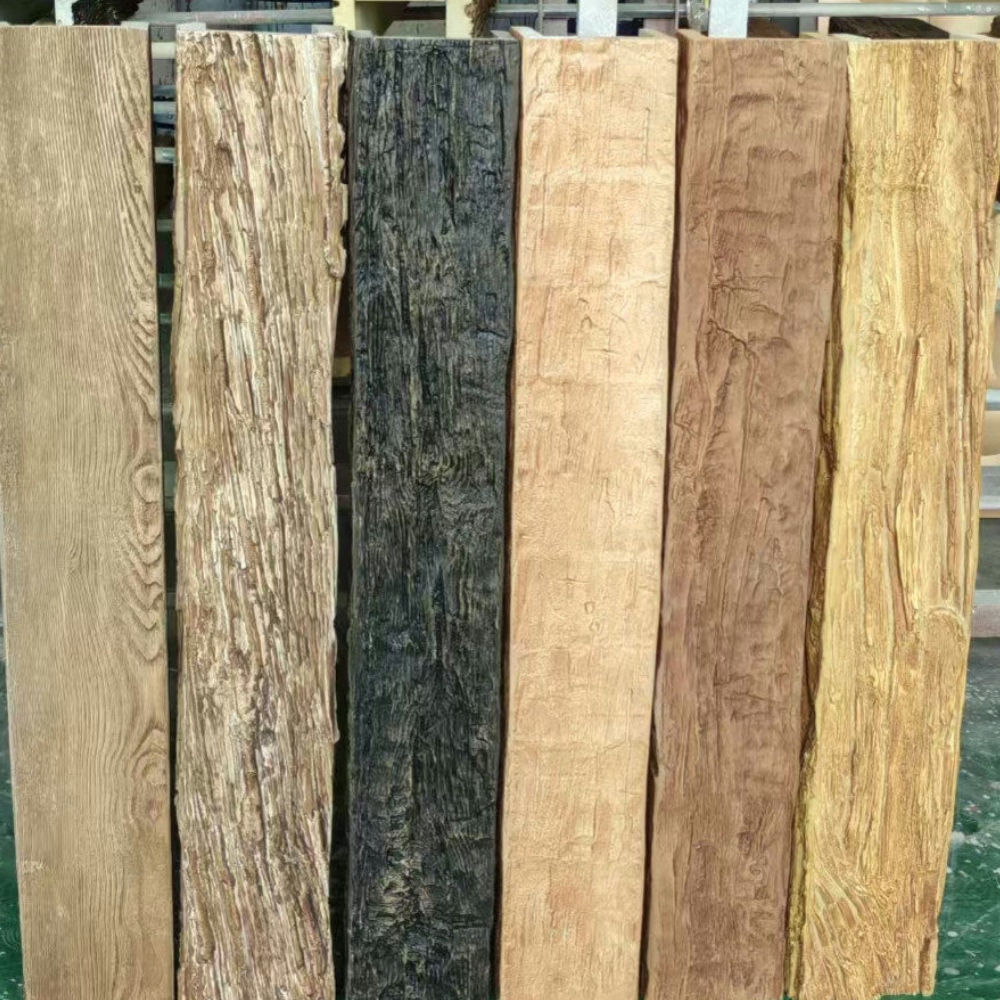
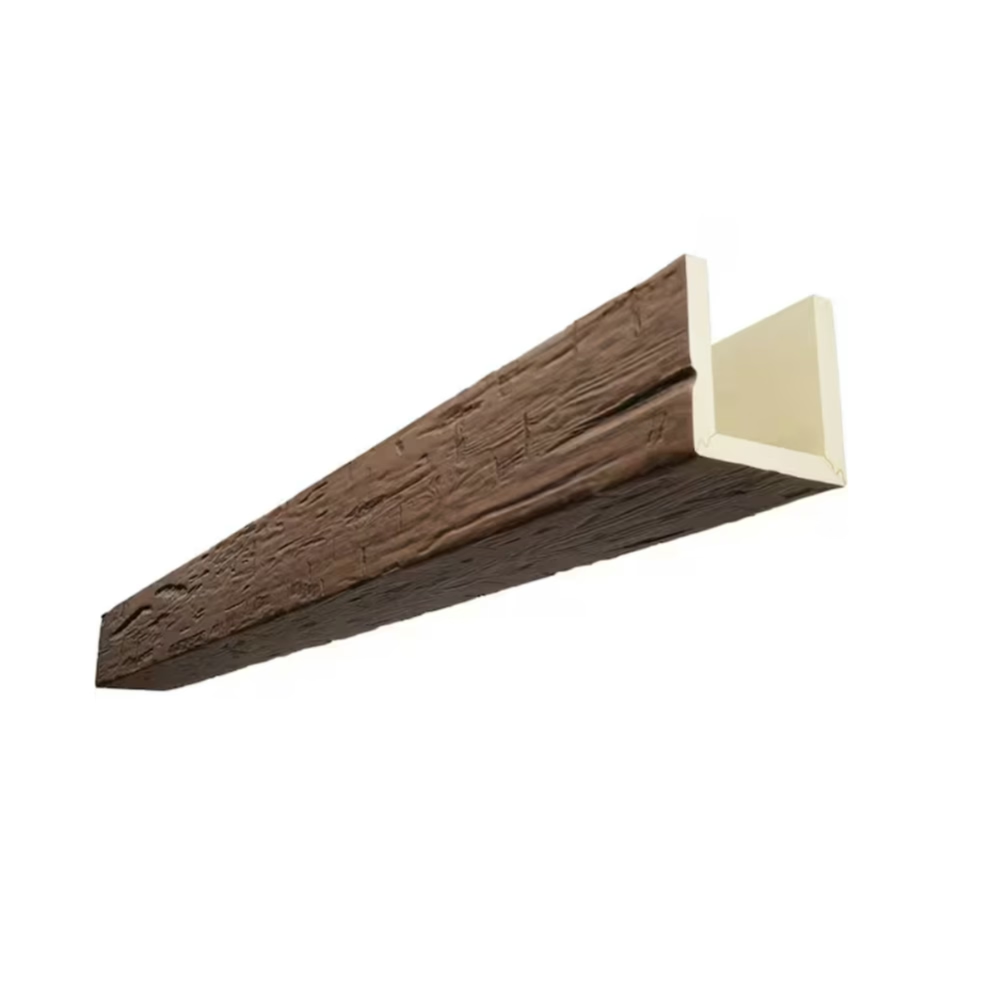
Decorative faux wood components are the supporting cast of the beam world. While beams take center stage as the primary architectural element, the smaller ornament pieces — corbels, medallions, moldings, rosettes, ceiling rings, and dentil trim — provide the detail work that separates a professional installation from an amateur one.
These components are manufactured from the same polyurethane material as faux beams, which means they share the same lightweight, durable, and consistent properties. They can be stained, painted, and finished in the same way as the beams they accompany, and they install with standard tools and hardware.
The Role of Ornament in Interior Design
Ornament in architecture serves a dual purpose. On a functional level, many decorative elements originated as structural components — corbels supported overhangs, dentils distributed load in a cornice, and rosettes covered the connection point between a beam and a ceiling. On an aesthetic level, ornament adds visual interest and detail that makes a space feel crafted and complete.
In contemporary interiors, ornament serves primarily an aesthetic purpose, but the psychological effect is the same. Spaces with rich ornamental detail feel more cared for and more intentional than spaces with plain surfaces, even when the ornament serves no structural function.
Corbels and Brackets
Corbels are the most common ornamental component used with faux beams. They are installed at the beam ends where the beam meets the wall, supporting the beam visually and providing a decorative termination.
Faux corbels are manufactured in a wide range of styles, from simple L-shaped brackets to elaborate acanthus-leaf designs. The style should match the beam profile and the overall design aesthetic of the room.
A simple chamfered beam pairs well with a basic L-corbel or a simple scroll bracket. A more profiled traditional beam pairs well with a detailed acanthus or fruit-and-foliage corbel. A contemporary beam pairs well with a geometric or minimalist bracket that echoes the clean lines of the beam itself.
Corbels are mounted with screws through the back of the bracket into the wall and into the beam end. The screws are concealed by the beam, and the joint between the corbel and the beam is filled with paintable caulk for a clean finished appearance.
Ceiling Medallions
Ceiling medallions are circular ornamental elements that are installed at the point where a pendant fixture or chandelier meets the ceiling. They serve a functional purpose by covering the ceiling penetration and提供一个装饰性的框架 for the light fixture.
Faux ceiling medallions are manufactured in the same material as faux beams and are available in diameters from twelve inches to forty-eight inches or more. The medallion size should be proportional to the beam and the fixture it frames.
A small pendant fixture over a beam junction calls for a twelve to eighteen inch medallion. A large chandelier in a grand room calls for a thirty-six to forty-eight inch medallion that provides a substantial visual frame.
Medallions install with adhesive and finishing nails directly to the drywall or ceiling surface. The center hole is cut to fit the fixture canopy, and any gaps are filled with caulk and touched up with paint.
Moldings and Dentil Trim
Moldings are the continuous ornamental strips that run along the edges of beams, the perimeter of ceilings, or the transition between walls and ceilings. Faux wood moldings are available in standard profiles including crown molding, cove molding, and ogee molding.
Dentil trim is a specific type of molding with a repeating rectangular pattern that was originally used in classical architecture to distribute load along a cornice. In contemporary applications, dentil trim is used purely for visual effect, adding a classical detail to beam installations.
Moldings and dentil trim install with adhesive and finishing nails in the same way as traditional wood moldings. The faux material is easier to work with than real wood because it does not split or warp, and it accepts paint and stain readily.

Rosettes and End Caps
Rosettes are small circular ornamental elements that are installed at the exposed ends of beams, particularly in rooms with exposed beam ends rather than beams that run into walls.
Faux rosettes are available in diameters from four to twelve inches and in styles ranging from simple circles to elaborate acanthus-leaf designs. The rosette should be proportional to the beam width and should match the overall style of the installation.
End caps serve a similar function to rosettes but in a simpler form. They are flat or slightly profiled pieces that are installed on the beam end to provide a finished termination. End caps are appropriate for contemporary installations where the design calls for clean, simple details.
Ceiling Rings and Dome Elements
Ceiling rings are circular bands that are installed around the edges of domed or coffered ceiling elements, providing a visual frame and a transition between the curved and flat surfaces.
Faux ceiling rings are manufactured in segments that are joined on-site to form a complete circle. The segments are glued and screwed together, and the joint is hidden by the profile of the ring itself.
Dome elements are three-dimensional ornamental pieces that are installed at the center of a ceiling or at the apex of a coffered panel. They add vertical interest to a ceiling that would otherwise be flat, and they serve as a visual anchor for the overall ornamental scheme.
Finishing Ornamental Components
The finish on ornamental components should match the finish on the beams they accompany. The easiest way to achieve a consistent finish is to order the components and the beams from the same supplier with the same stain or paint specification.
If components are sourced from different suppliers, a test application on a sample of each component should be performed to verify that the colors match. Even minor color differences between the beams and the ornamental components are visible and detract from the finished appearance.
Installation Tips for Ornamental Components
The installation of ornamental components should happen after the beams are in place but before the final finish is applied to the walls and ceiling. This sequence allows the installer to adjust the beam positions as needed without affecting the ornamental elements.
Ornamental components should be test-fitted before adhesive is applied. The fit between a corbel and a beam end should be tight and clean, with no visible gaps. If the fit is not tight, the component should be shimmed or sanded before adhesive is applied.
Finishing nails should be used sparingly in ornamental components because the material is less forgiving than real wood when nailed near the edge. Pre-drilling pilot holes for the nails reduces the risk of splitting or cracking the polyurethane.
Sourcing Ornamental Components
Most faux beam suppliers also carry a complete range of ornamental components that are designed to work with their beam profiles. Sourcing the components from the same supplier ensures compatibility and a consistent finish.
For custom ornamental elements, a mold can be created from a sketch or a photograph provided by the designer. The lead time for custom molds is typically six to twelve weeks, and the unit cost is higher than standard components, but the result is a truly unique ornamental element.
What Designers Should Know
Designers working with faux wood ornament should understand that the components are available in standard styles that are compatible with the most common beam profiles. A custom ornamental design is possible but requires additional time and budget.
The specification should include the style name or number of each component, the quantity required, and the finish specification. A complete specification sheet makes it easy for the supplier to provide an accurate quote and for the installer to verify the order upon delivery.
Cost Planning for Ornamental Components
Ornamental components are priced per piece rather than per linear foot, which means the budget varies depending on the complexity and size of the components selected. A basic corbel might cost twenty to forty dollars, while a detailed acanthus corbel might cost eighty to one hundred fifty dollars.
A complete ornamental package for a beam installation typically costs between ten and thirty percent of the beam material cost, depending on the complexity of the design. This is a modest additional investment that adds significant visual richness to the finished installation.
Technical References
ASTM standards cited in every specification
Test Data
Lab results from internal testing program
Updated 2026
Reviewed against current product specs