
An interior doorway is more than a hole in the wall. It is a threshold between one world and another, a moment of transition that the eye crosses dozens of times a day without consciously registering. Yet when a doorway is framed with a decorative faux wood header, that transition becomes something to notice and appreciate.
Interior faux wood headers are applied to the wall surface above doorways and pass-throughs, simulating the appearance of a structural timber header without requiring any structural work. They are one of the simplest and most affordable decorative elements available for interior design, and they deliver a disproportionate visual return on a modest investment.
Why Headers Are Worth the Attention
In standard residential construction, the header above a door is a length of dimensional lumber that is hidden behind the drywall. It serves a structural purpose but makes no visual contribution to the room.
Adding a decorative header transforms this utilitarian element into an architectural feature. The header adds visual weight above the door, creates a sense of solidity at the transition between rooms, and provides a natural mounting point for lighting or hardware.
For open-plan homes where doorways are often the only visual separation between spaces, a series of matching headers creates a unifying design element that ties the spaces together while maintaining the open flow.
Header Styles and Their Design Effects
Faux wood headers are available in several styles, each with a different design effect.
A flat plank header is a simple rectangular beam that spans the width of the door opening and extends a few inches beyond the casing on each side. It reads as a modern, minimal accent that adds warmth without adding complexity. This style works well in contemporary and Scandinavian interiors.
A chamfered header has slightly eased bottom edges that catch light and create a subtle shadow line. It is slightly more refined than a flat plank and works well in transitional interiors that balance traditional and contemporary elements.
A corbelled header features a stepped profile that projects slightly at the bottom edge, creating a more substantial visual presence. This style is appropriate for traditional and farmhouse interiors where the design calls for more ornament.
A beam-and-truss header simulates the appearance of a timber frame truss with multiple members joined together. It is the most substantial and decorative option, appropriate for rustic lodge and timber-frame interiors.
Sizing the Header Correctly
The header should be sized to the door opening and the surrounding wall context. A header that is too small for the opening looks like a mistake. A header that is too large for the wall looks out of proportion.
As a general guideline, the header should extend at least three to four inches beyond the door casing on each side, and the header depth should be proportional to the casing width. If the casing is standard width, a header that is two to four inches deep is appropriate. If the casing is wider or the wall is taller, a deeper header maintains the correct proportion.
The header height should be consistent across all doorways in the same room. A series of doorways with inconsistent header heights looks unprofessional and breaks the visual rhythm of the space.
Installation Above Doorways
Installing a faux wood header above a doorway is a straightforward process that most contractors or skilled DIYers can complete in under an hour per opening.
The header is mounted to the wall surface with screws driven into the structural framing above the door opening. If the framing is not accessible from the surface, a French cleat or blocking system allows the header to be mounted to the drywall directly with adhesive and mechanical fasteners.
The header should be level, and the extending portions on each side of the opening should be equal in length. A laser level or a long spirit level is the best tool for confirming the installation is plumb and level.
Headers Above Pass-Throughs and Openings
Pass-through openings between kitchens and dining rooms, or between living areas and outdoor spaces, are ideal candidates for decorative headers. The header spans the width of the opening and provides the same visual weight that a full beam provides in the room.
For wide pass-throughs, a single header beam may not provide enough visual substance. A pair of header beams, one on each face of the wall, creates a more substantial appearance and provides mounting points for pendant fixtures on both sides of the wall.
For openings that extend to the ceiling, a header beam at the top of the opening combined with faux columns or pilasters on the sides creates the appearance of a complete timber frame portal.
Coordinating Headers with Other Beam Elements
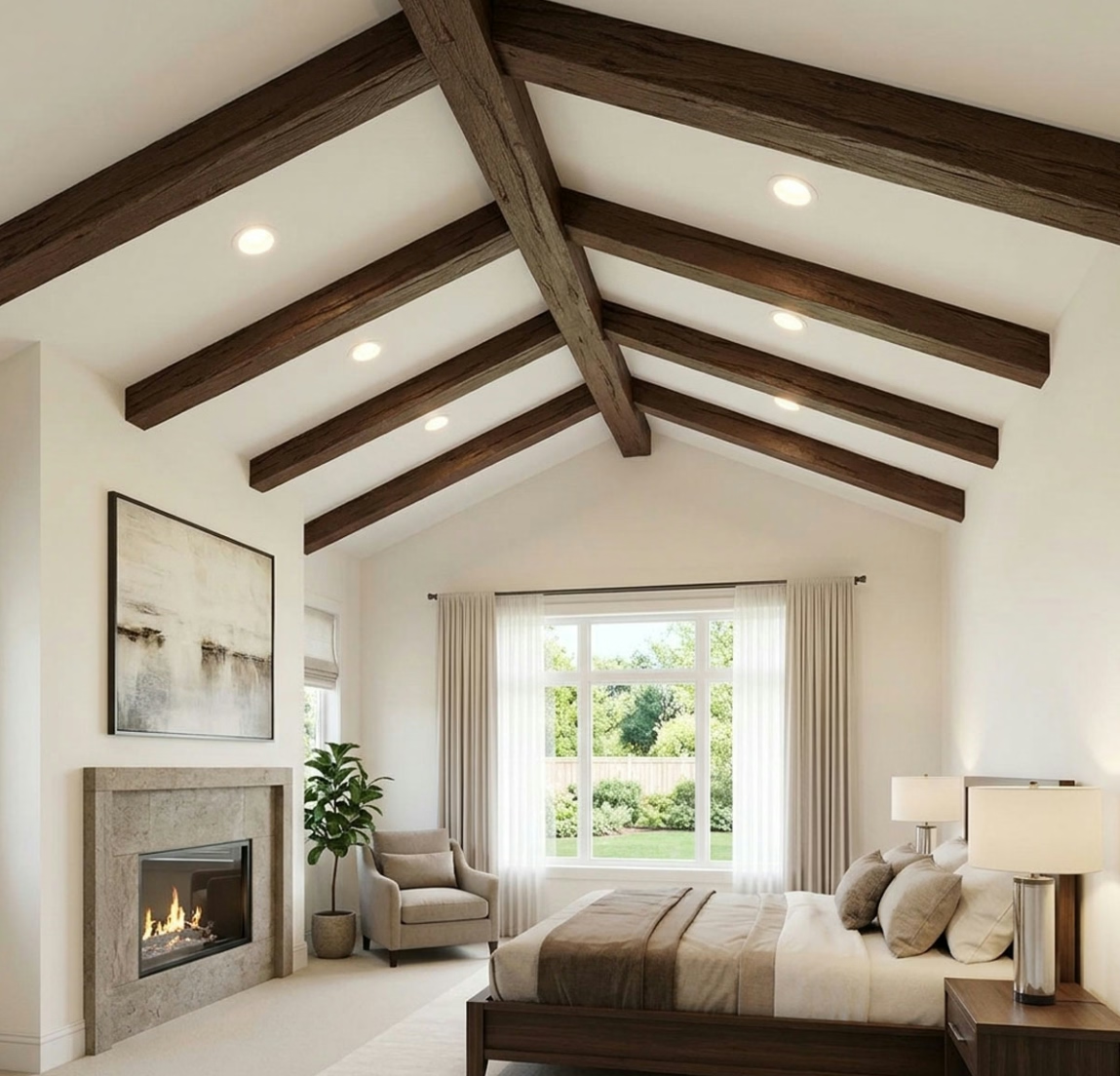
If the room also features ceiling beams, the header should match the ceiling beam profile and finish for a cohesive look. The header is essentially a miniature ceiling beam, and it should be treated as part of the same design system.
A room with ceiling beams and matching headers creates a fully realized timber frame aesthetic that is more convincing than ceiling beams alone. The headers reinforce the ceiling treatment and extend the architectural vocabulary into the transitional spaces between rooms.
For rooms without ceiling beams, the headers stand alone as accent elements. In this case, the header style should be selected to match the overall design direction of the room without reference to other beam elements.
Finish Selection for Headers
The finish on a header should match the door casing, the baseboards, and any other wood trim in the room. In most cases, the header is the most prominent wood element in the room, which means it sets the tone for the rest of the woodwork.
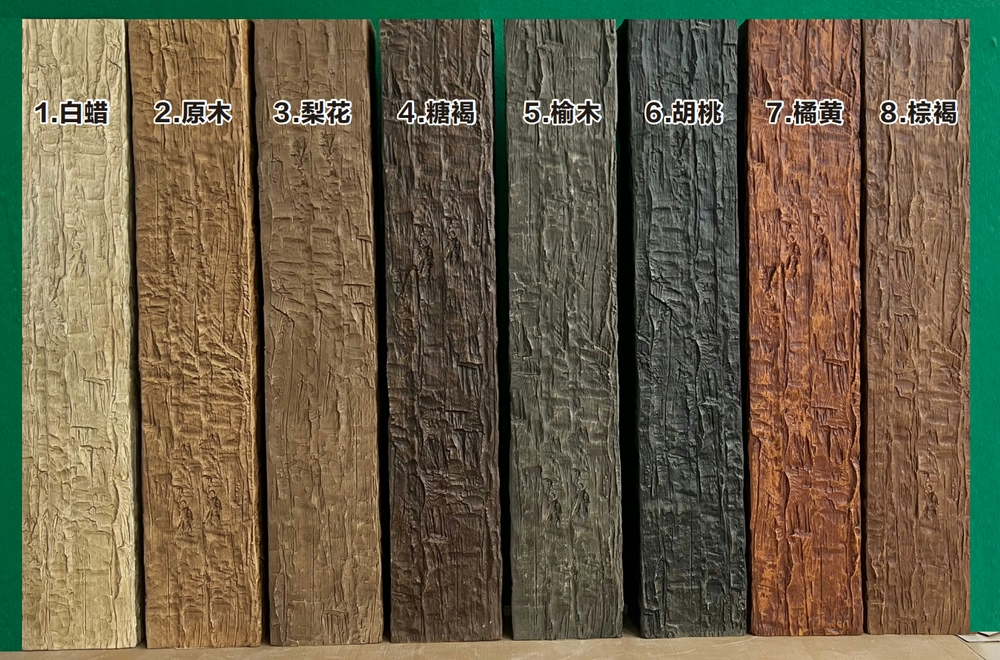
A warm honey finish coordinates with oak and honey-toned hardwood floors. A medium brown finish coordinates with walnut and cherry tones. A light natural finish coordinates with ash and maple tones.
If the room has no other wood trim, the header finish can be selected independently based on the overall color palette. A warm tone adds comfort. A cool tone adds sophistication. The choice should reinforce the mood of the room.
Headers in Commercial Spaces
Interior headers are not limited to residential applications. In commercial spaces, headers above doorways and pass-throughs create the same architectural continuity and visual weight.
In retail stores, headers above the entrance and display openings establish the design language before the customer has fully entered the space. In restaurants, headers above the bar and pass-through to the kitchen create visual zones within the open floor plan.
In office buildings, headers above conference room entrances add warmth to what would otherwise be a corridor of identical doors. The header signals that the space beyond the door is different and important.
Cost and Value
Interior faux wood headers typically cost between fifty and two hundred dollars per opening, depending on the header style, size, and finish. For a home with six to ten doorways, the total header budget falls between three hundred and two thousand dollars.
This is one of the most cost-effective upgrades in interior design. The visual impact of a well-installed header is immediate and substantial, and the installation cost is a small fraction of the visual return.
What Contractors Should Know
Contractors adding faux headers to their service offering should understand that the product requires minimal training to install correctly. The key to a professional result is careful measurement, level installation, and consistent reveals on both sides of the opening.
Stocking a range of standard header sizes allows contractors to fulfill orders quickly without requiring custom fabrication. The most popular sizes are the ones that fit standard interior door openings in the six to eight foot height range.
Technical References
ASTM standards cited in every specification
Test Data
Lab results from internal testing program
Updated 2026
Reviewed against current product specs


