
There is a category of beam that exists for no reason other than beauty. It does not span a gap that needs bridging. It does not support a load from above. It does not hide ductwork or run wiring. It is there because the room looks better with it than without it, and that is the only justification it needs.
Decorative non-load-bearing faux beams are the purest expression of the beam concept. They are purely visual elements, designed to create warmth, add texture, and transform a flat ceiling into something that makes people stop and look up.
The Philosophy of Decorative Beams
The use of decorative elements in architecture has a long history that predates the distinction between structural and non-structural. In classical architecture, ornamental moldings, brackets, and rosettes were applied to surfaces purely for visual effect. The Romans understood that a beautiful room was not just a functional room, and they invested in ornament accordingly.
Decorative beams continue this tradition. They are not pretending to be structural. They are honest about their purpose: to make the room more beautiful. This honesty is part of their appeal. A room with decorative beams does not need to justify the beams on structural grounds; the visual benefit is justification enough.
When Non-Load-Bearing Beams Are the Right Choice
Non-load-bearing beams are appropriate in any situation where the aesthetic benefit of a beam ceiling outweighs the cost and complexity of the installation.
In rooms with flat ceilings that feel empty or unfinished, a single decorative beam or a simple two-beam layout adds warmth and visual interest without overwhelming the space. The beam creates a focal point that draws the eye upward and makes the room feel more designed.
In rooms with sloped ceilings that feel exposed or unfinished, decorative beams add texture and architectural interest to surfaces that would otherwise be bare drywall or roof sheathing. The beams make the slope feel intentional rather than accidental.
In rooms with existing real beams that are functional but plain, decorative beams can be added to enhance the existing structure. A thin decorative beam applied to the face of a structural beam adds visual weight and detail without interfering with the structural function.
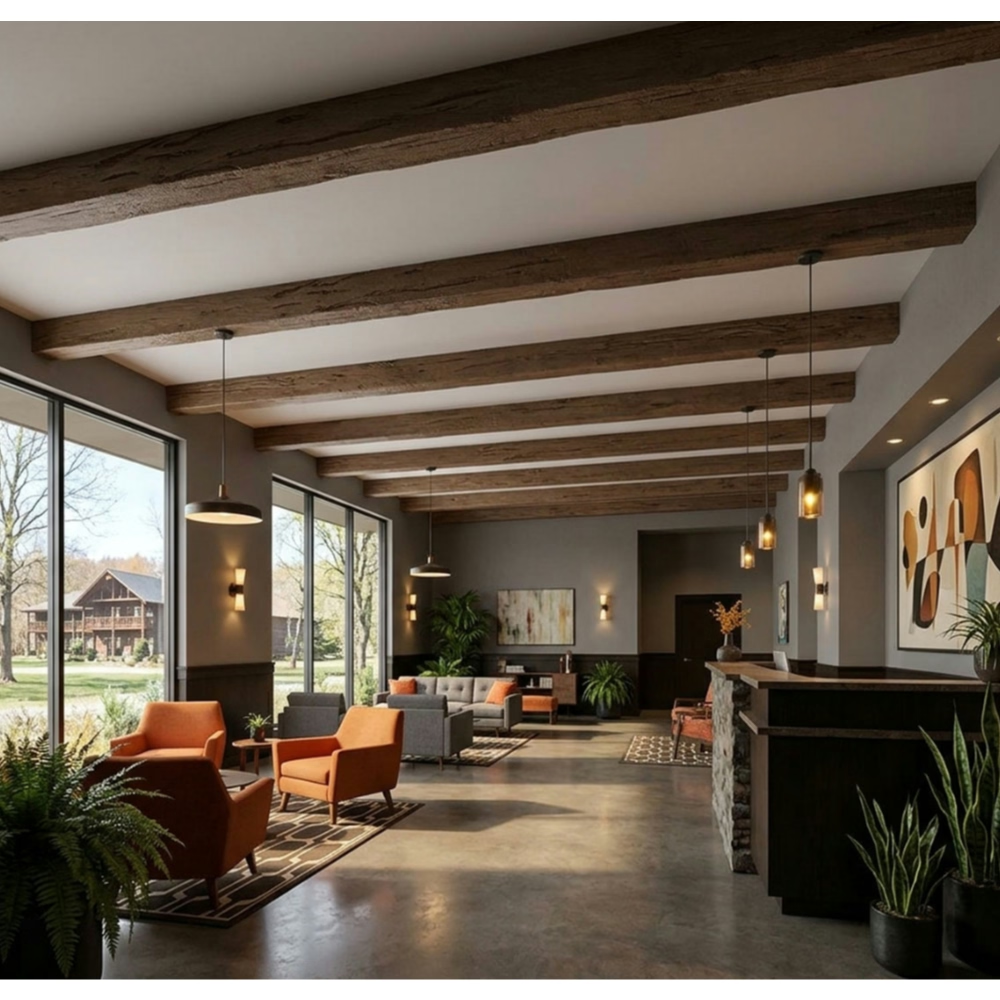
Advantages Over Structural Beams
Non-load-bearing faux beams have several advantages over real structural beams that make them the right choice for purely aesthetic applications.
They are lightweight. A real structural beam must be heavy enough to carry its load. A decorative beam carries nothing, which means it can be as light as the manufacturing process allows. This makes installation faster, cheaper, and easier.
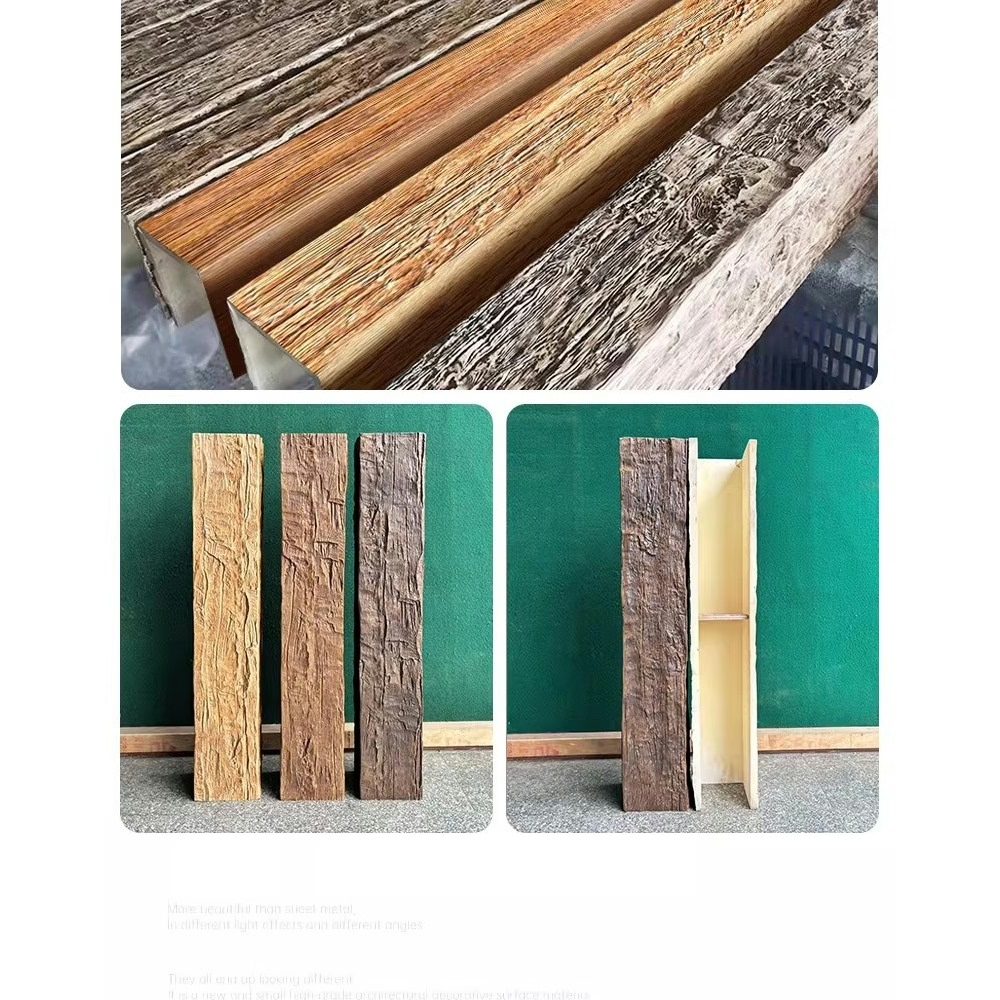
They are consistent. Real structural beams vary in grain, color, and dimension from piece to piece. Decorative beams are manufactured in molds that produce identical pieces every time. The consistency of decorative beams makes the installation look more refined and intentional.
They are flexible. Decorative beams can be manufactured in any profile, any length, and any finish without the constraints that structural requirements impose. This flexibility allows designers to specify exactly what they want rather than what is available from the lumber yard.
Common Applications
Non-load-bearing decorative beams appear in every type of interior, from residential living rooms to commercial restaurants.
In a residential living room, a single decorative beam running lengthwise across the ceiling creates a sense of warmth and structure that makes the room feel more complete. The beam is positioned over the main seating area and paired with a pendant fixture, creating a focal point that unifies the space.
In a commercial restaurant, decorative beams are used to define zones within an open floor plan. A row of beams separates the bar area from the dining room, or a single statement beam over the host stand marks the entrance to the dining space. The beams add architectural interest without requiring the structural work that real beams would demand.
In a hospitality lobby, decorative beams are used to add warmth to spaces that might otherwise feel corporate or institutional. A beam ceiling in a hotel lobby signals quality and attention to detail, which translates into a better guest experience and stronger brand recognition.
Mounting Considerations
Because non-load-bearing beams carry no load, the mounting requirements are simpler than for structural beams. The beams must be secure and level, but they do not need the extensive blocking and engineering review that structural beams require.
Standard blocking or furring strips installed between the ceiling joists provide adequate mounting points for most decorative beam installations. The beams are screwed through the flange into the blocking, and the screws are concealed by the beam profile.
For lighter decorative beams, construction adhesive applied to the back of the beam and finishing nails driven through the flange into the ceiling surface may be sufficient. This method is faster but less secure, and it is not recommended for beams longer than eight feet.
Integration with Lighting
Non-load-bearing beams can serve as mounting points for light fixtures without any structural concerns. The fixture is hung from the beam using a threaded rod or chain, and the canopy of the fixture is mounted to the beam face.
Because the beam is non-structural, there is no need to verify that the fixture weight is within the beam's load capacity. Any fixture that is visually appropriate can be mounted to the beam, regardless of its weight.
This freedom is particularly valuable in commercial applications where the lighting layout may change over time as the venue is rebranded or redesigned. A non-load-bearing beam can accommodate a wide range of fixture types and weights without modification.
Design Freedom
The greatest advantage of non-load-bearing decorative beams is the design freedom they afford. Because the beams do not need to span structural gaps or carry loads, they can be positioned, spaced, and detailed in any way that serves the design.
Beams can be clustered in groups to create a dense, dramatic effect. They can be spread widely to create a subtle, refined effect. They can be combined with other decorative elements including corbels, straps, and moldings without regard for structural compatibility.
This freedom allows designers to treat the beam ceiling as a canvas rather than a constraint, specifying exactly what the room needs to achieve its design intent.
Cost Effectiveness
Non-load-bearing decorative beams are more cost-effective than real structural beams for aesthetic applications because they require less material, less structural engineering, and less specialized installation labor.
For a purely aesthetic beam installation, the total project cost is typically between thirty and eighty dollars per square foot of ceiling area, depending on the beam profile, the finish quality, and the complexity of the layout. This compares favorably to structural beam systems, which can cost one hundred fifty dollars per square foot or more.
The cost effectiveness of decorative beams makes them accessible for a wider range of projects, from high-end residential to budget-conscious commercial.
When to Use Real Beams Instead
There are situations where real beams are still the right choice, even for aesthetic applications.
In a timber frame home where the structural frame is exposed, real beams are part of the structural story and should be used consistently. Mixing real structural beams with decorative faux beams in the same space creates an inconsistency that undermines the authenticity of the timber frame aesthetic.
In a historic restoration, real timber may be required to match the original construction. The building codes in some jurisdictions also require real materials in certain applications, even for decorative purposes.
For most contemporary applications, however, decorative non-load-bearing faux beams deliver the same visual result as real beams at a fraction of the cost and complexity.
What Designers Should Know
Designers should feel free to specify decorative beams without needing to justify them on structural grounds. The visual benefit of a well-designed beam ceiling is justification enough.
When specifying decorative beams, the focus should be on the visual outcome rather than the manufacturing process. The beam profile, the finish, the spacing, and the integration with lighting and other elements are the details that determine the success of the installation.
A design that is driven by visual intent rather than structural constraints produces the most satisfying results.
Technical References
ASTM standards cited in every specification
Test Data
Lab results from internal testing program
Updated 2026
Reviewed against current product specs


