
The ceiling is the fifth wall, and it is the most neglected one. Floors get the rugs and the hardwood. Walls get the paint and the wallpaper and the art. The ceiling gets a coat of the same white paint that has been applied to every ceiling in every home for the past fifty years. This is a missed opportunity.
Interior visual enhancement is the practice of treating every surface in a room as an opportunity for design. When the ceiling receives the same attention as the walls and floors, the room feels more complete and more intentional. Polyurethane accent beams are one of the most effective tools for bringing this attention to the ceiling because they deliver a significant visual impact at a reasonable cost.
What Visual Enhancement Means
Visual enhancement is not the same as structural improvement or functional upgrade. A room that has been visually enhanced looks better. It may feel warmer, more interesting, more complete, or more sophisticated, but the changes are primarily aesthetic rather than functional.
The goal of visual enhancement is to create a space that people enjoy being in. The changes may be subtle — a different color on the walls, a textured surface on a focal wall, a pattern on the floor — or they may be dramatic, like a complete ceiling transformation with beams.
Accent beams are particularly effective for visual enhancement because they address the ceiling, which is the surface that most people look at the least consciously but that contributes the most to the overall feeling of the room. When you lie in bed or sit on a couch and look up, the ceiling is directly in your field of view. A ceiling that looks good makes the room feel better, even if you never consciously notice it.
The Psychology of Beamed Ceilings
Humans have an innate response to timber and wood surfaces that is rooted in our evolutionary history. Wood is warm, it is organic, and it is associated with shelter and safety. A room with wood surfaces, including wood beams, feels more comfortable and more welcoming than a room with only synthetic surfaces.
This psychological effect is measurable. Studies of workplace environments have shown that workers in spaces with wood finishes report higher satisfaction and lower stress levels than workers in spaces with only synthetic surfaces. The effect extends to residential and commercial spaces as well.
For a designer, this means that adding wood beams to a room is not just an aesthetic choice; it is a choice that affects the well-being of the people who use the space. A room with a beamed ceiling is a room that people enjoy more, which is a meaningful outcome.

Scale and Proportion in Visual Enhancement
The visual impact of accent beams depends on their scale relative to the room. A beam that is too thin for the ceiling looks like a strip of trim. A beam that is too thick for the room makes the ceiling feel oppressive.
The key to successful visual enhancement with beams is getting the scale right. A beam that is proportional to the room transforms the ceiling. A beam that is misproportional creates a visual problem that is worse than having no beam at all.
For standard residential ceilings, a beam depth of four to eight inches and a beam width of six to twelve inches is appropriate for most rooms. The specific dimensions should be adjusted based on the ceiling height, the room dimensions, and the overall design aesthetic.
Warmth and Texture
Two of the primary benefits of accent beams are warmth and texture. A plain ceiling is flat and uniform. It reflects light evenly but offers no visual interest. A beamed ceiling has depth, shadow, and texture. It breaks up the light and creates a more complex visual surface.
Warmth comes from the color of the wood and from the way wood interacts with light. A warm-toned beam stain reflects warm light back into the room, which makes the space feel more inviting. A cool-toned beam stain reflects cool light, which creates a more clinical atmosphere.
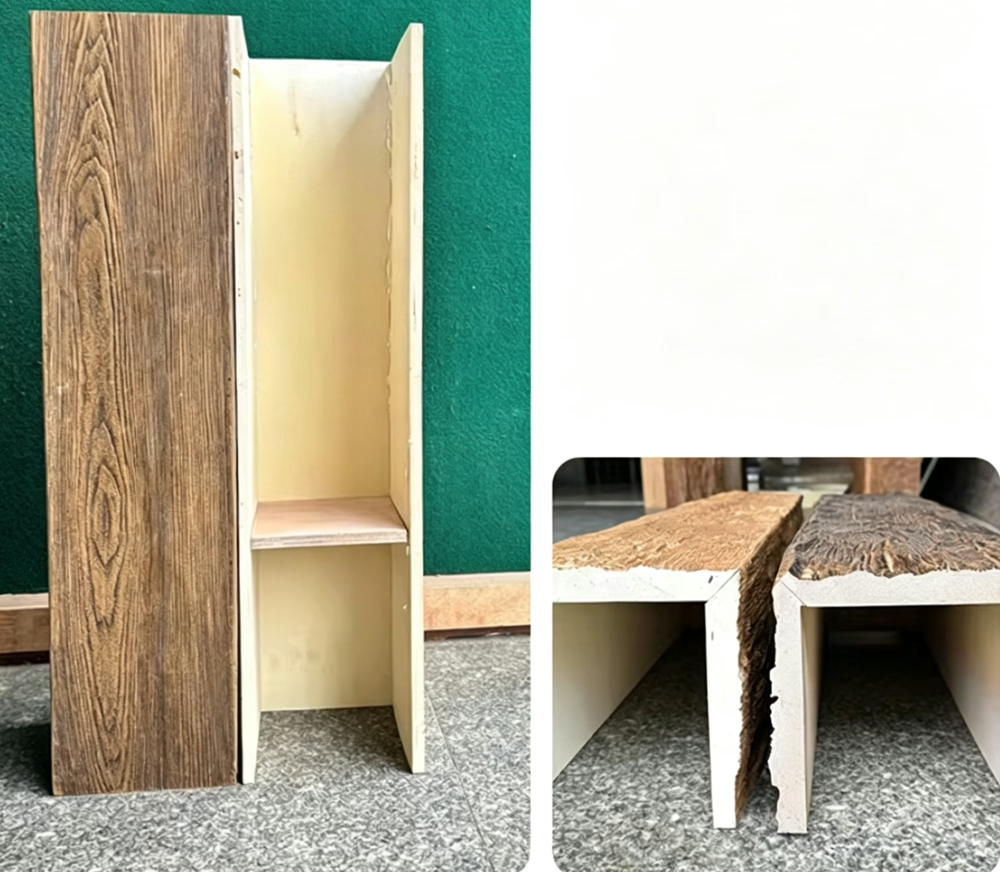
Texture comes from the wood grain and from the physical depth of the beam profile. A beam with a visible grain texture adds more visual interest than a smooth beam, but the texture should be appropriate to the design aesthetic. A contemporary room may call for a smoother beam surface, while a rustic room benefits from a more pronounced grain.
Color as Enhancement
The color of accent beams affects the overall color palette of the room. A warm-toned beam introduces warmth into a cool-toned room, which can balance the palette and make the room feel more comfortable. A cool-toned beam introduces coolness into a warm-toned room, which can refresh and modernize the palette.
The beam color should be selected in the context of the entire room. A sample of the beam finish should be viewed in the actual room, next to the wall color, the floor material, and the furniture fabrics that will be in the space.
For rooms with a neutral palette, the beam color is an opportunity to introduce warmth or contrast. For rooms with a strong color palette, the beam color should complement rather than compete with the existing colors.
Focal Points and Visual Anchoring
Accent beams can create or reinforce a focal point in the room. A beam over a fireplace, a bed, or a dining table draws the eye to that location and establishes it as the center of activity.
The focal point treatment does not require complex additional elements. A simple beam centered over the focal point, paired with a pendant fixture or a decorative medallion, is sufficient to anchor the space.
In rooms without a natural focal point, the beam layout itself can create one. A grid of beams with a decorative medallion at the center creates a visual anchor that unifies the room.
The ROI of Visual Enhancement
Visual enhancement with accent beams has a measurable return on investment. The cost of the installation is modest compared to the value it adds to the space.
For residential applications, a beamed ceiling increases the perceived value of the home. Real estate agents consistently report that architectural details like beamed ceilings generate buyer interest and support higher asking prices.
For commercial applications, a beamed ceiling increases customer satisfaction and dwell time. Restaurants, hotels, and retail stores with attractive environments generate more revenue than comparable spaces with plain ceilings.
The investment in accent beams pays for itself over time through increased value, higher revenue, and greater satisfaction.
Design Freedom with Polyurethane
Polyurethane accent beams offer more design freedom than real timber beams because they are not constrained by the availability of lumber in specific sizes and lengths.
Custom profiles can be produced to match the designer's specification. A beam with a unique profile, a specific proportion, or a particular detail can be manufactured without the waste and cost associated with custom milling real timber.
Custom lengths eliminate the need for splices in most installations. A beam that runs the full length of the room without a splice looks more intentional and more refined than a beam that is made from two shorter pieces joined at a blocking position.
Custom finishes ensure that the beam color matches the designer's specification exactly. The factory finish is applied under controlled conditions, which produces more consistent results than on-site finishing.
What Designers Should Know
Designers who are new to specifying accent beams should start by reviewing samples of the available profiles and finishes. Most suppliers offer a range of standard options that cover the most common design requirements.
A site visit to an installation that uses the planned profile and finish is the best way to verify the visual outcome. The designer should see the beam in the context of an actual room, with actual lighting and actual companion finishes.
The specification should include the profile, the finish, the mounting method, and the layout. A complete specification prevents misunderstandings and ensures that the installation matches the design intent.
Maintenance and Longevity
Polyurethane accent beams require minimal maintenance and will last the lifetime of the building. The factory finish is more durable than on-site finishes and does not require periodic refinishing.
Damaged beams can be replaced individually without disturbing the surrounding installation. A small inventory of spare beams allows for quick repairs if damage occurs.
The long-term value of polyurethane accent beams is exceptional. They deliver a permanent visual enhancement without ongoing maintenance costs.
Technical References
ASTM standards cited in every specification
Test Data
Lab results from internal testing program
Updated 2026
Reviewed against current product specs


