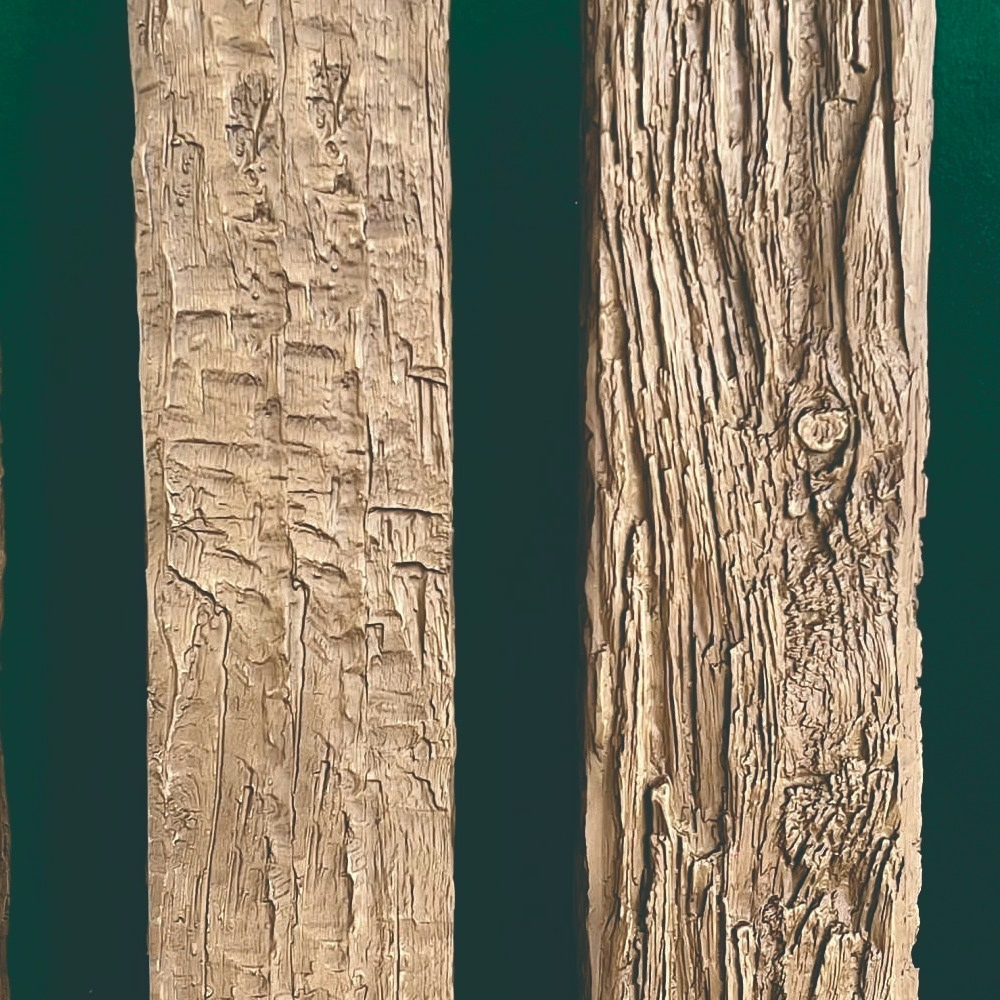
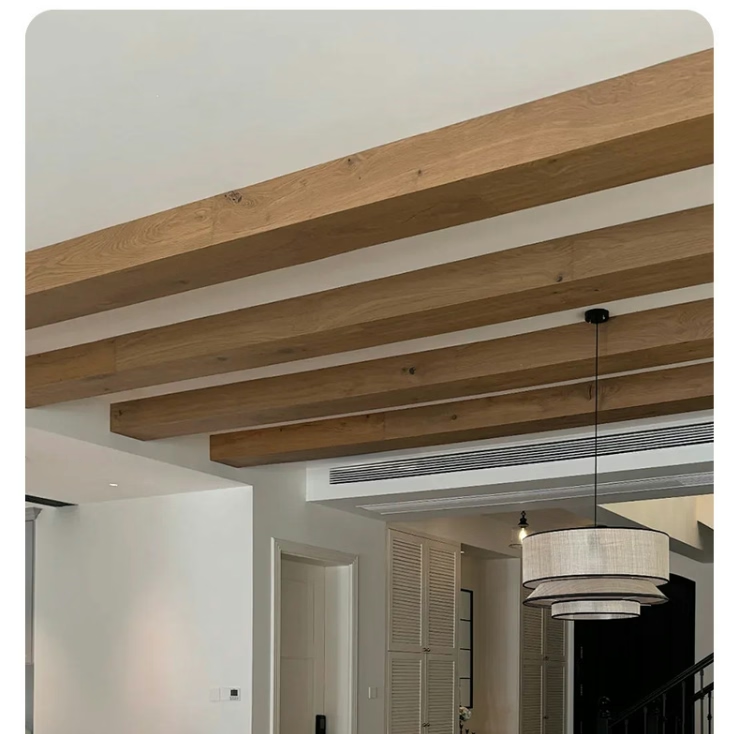
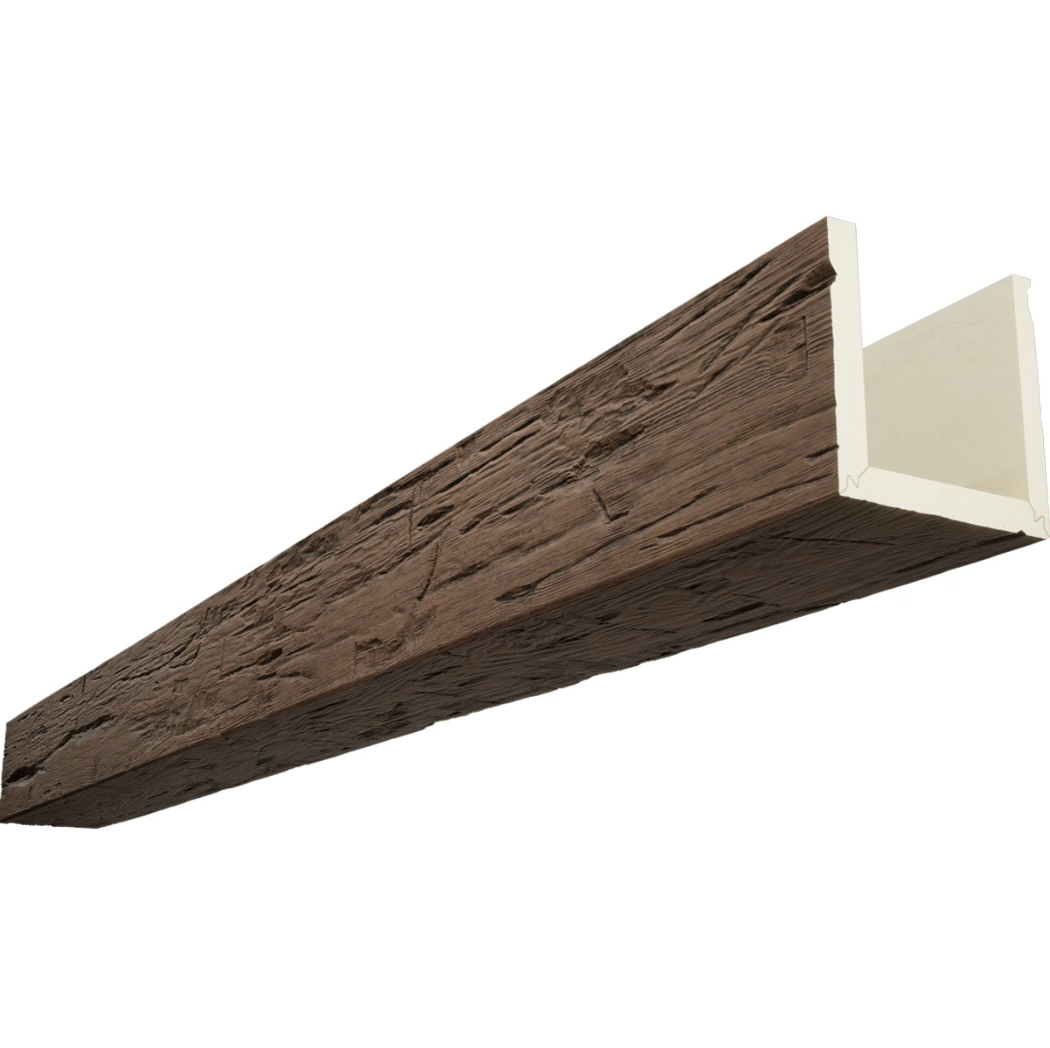
The stage is a world unto itself. It exists for an audience, and every element on it must serve the story that is being told. When a play is set in a rustic lodge, the ceiling must look like a lodge ceiling. When a musical calls for a grand ballroom, the ceiling must look like a grand ballroom ceiling. These environments are created from scratch for each production, and they must look convincing under the most demanding conditions: extreme lighting, close audience scrutiny, and the unforgiving eye of a camera lens.
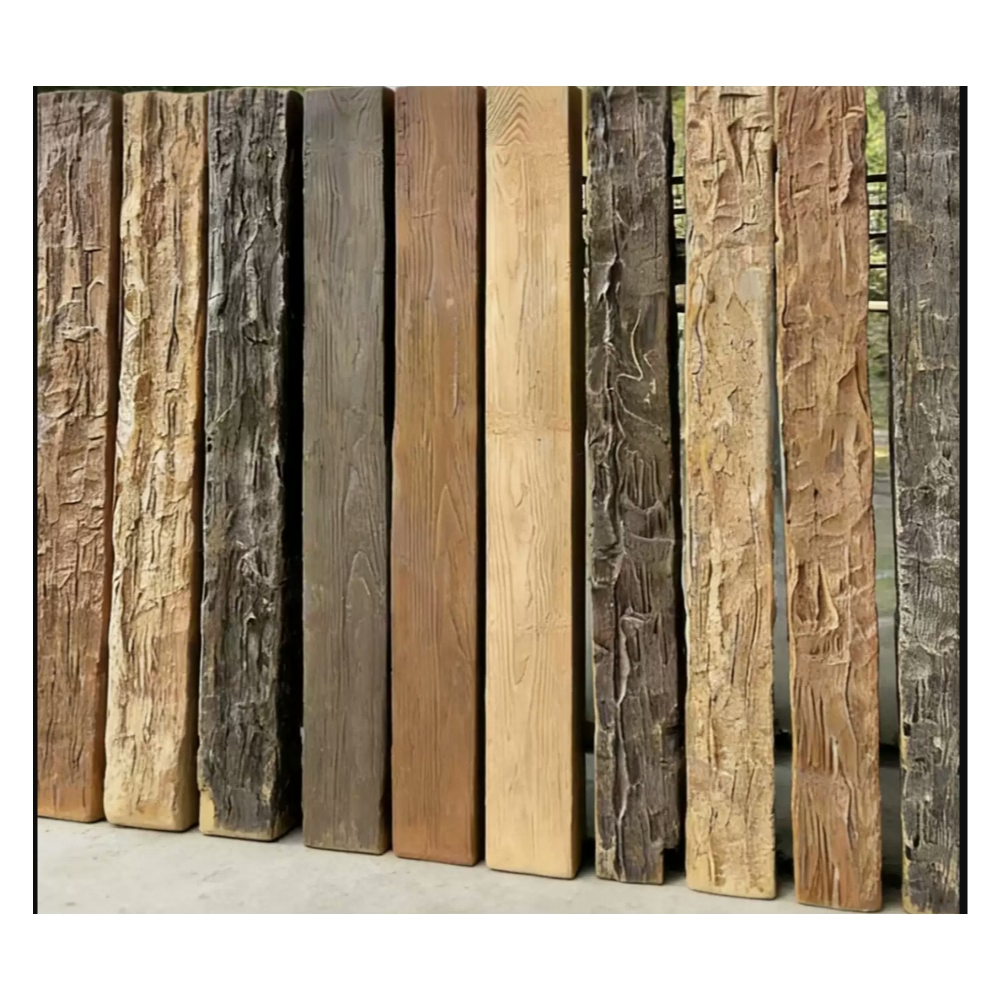
Decorative polyurethane faux timber beams are a staple of professional stage design because they deliver the timber beam aesthetic reliably under these conditions. They are lightweight enough to be flown on a fly system, durable enough to withstand the rigors of load-in and load-out, and consistent enough to match across an entire production without variation.
Why Stage Designers Choose Polyurethane Beams
Stage production has unique requirements that distinguish it from architectural installation.
Weight is the most critical factor. A stage set ceiling may be flown forty feet above the stage on a fly system, or it may be built on a scissor lift that must be moved during the show. Every kilogram of weight in the ceiling translates into structural requirements in the fly system, the lift, and the counterweights. Polyurethane beams weigh one-fifth to one-tenth as much as comparable real timber beams, which means the fly system can support a much larger and more elaborate ceiling for the same weight budget.
Durability is the second critical factor. A stage set is assembled, run, struck, and stored multiple times during its life. Real timber beams crack, split, and warp under this treatment. Polyurethane beams are more resistant to impact damage and do not warp or cup over time, which means they maintain their appearance across multiple productions.
Consistency is the third critical factor. A stage set may require dozens of beam pieces that must look identical from every viewing angle. Real timber beams vary in grain, color, and dimension from piece to piece. Polyurethane beams are molded from the same master pattern, which means every piece is identical.
Applications in Theater Production
Polyurethane beams are used in theater production for several specific applications.
In period dramas set in period buildings, the beams create the authentic atmosphere of the historical setting. A Victorian drawing room, a medieval great hall, a Renaissance palace — each environment requires a ceiling that matches the period and the location, and polyurethane beams can be manufactured to match any historical style.
In contemporary plays set in modern interiors, the beams provide the architectural detail that the script requires. A penthouse apartment, a trendy restaurant, a mountain lodge — each set needs a ceiling that establishes the character of the space, and polyurethane beams deliver the detail efficiently.
In musicals and dance productions, the beams are often used as part of a larger scenic element. They may be combined with lighting positions, projection surfaces, and automated flying elements to create a dynamic environment that changes during the show.
Requirements for Camera and Photography
Many stage productions are recorded or broadcast, which means the set must look good on camera. This is a more demanding requirement than looking good to a live audience.
On camera, the beam surface must be consistent and free of visible seams, mold lines, or color variations. The lighting for broadcast is often more extreme than the lighting for live performance, which means the finish must handle high-contrast illumination without hot spots or reflections.
Polyurethane beams with a matte finish and consistent color perform well on camera. The matte surface diffuses light evenly and avoids the hot spots that can occur on glossy real wood surfaces under stage lighting.
For high-definition broadcast, the grain texture on the beam must be convincing at close range. A beam that looks fine to a live audience in the back of the theater may be revealed as artificial on a camera lens that is inches away. Quality polyurethane beams with hand-tooled texture perform better on camera than budget beams with embossed texture.
Profile Selection for Stage Applications
Stage sets require larger and more dramatic profiles than architectural installations because the audience views them from a greater distance and the set must read clearly under stage lighting.
A profile that is appropriate for a residential living room may be invisible from the back of a large theater. Stage beams must be proportionally larger to maintain visual impact at the typical viewing distance.
Common stage beam profiles include oversized chamfered beams, heavy timber frame systems with multiple members, and decorative trusses that combine structural-looking elements with ornamental details.
Customization for Specific Productions
Stage productions often require custom profiles or finishes that do not exist in the standard catalog. A production set in a specific historical building may require a beam profile that matches the architectural details of that building.
Polyurethane beam manufacturers can produce custom molds for these applications. The lead time for a custom mold is typically six to twelve weeks, and the cost includes the mold fee plus the unit cost of the beams produced from the mold.
For productions with a short lifespan, the custom mold investment may not be justified. In these cases, the manufacturer can often modify an existing profile to achieve the desired effect without the cost of a fully custom mold.
Installation on Stage
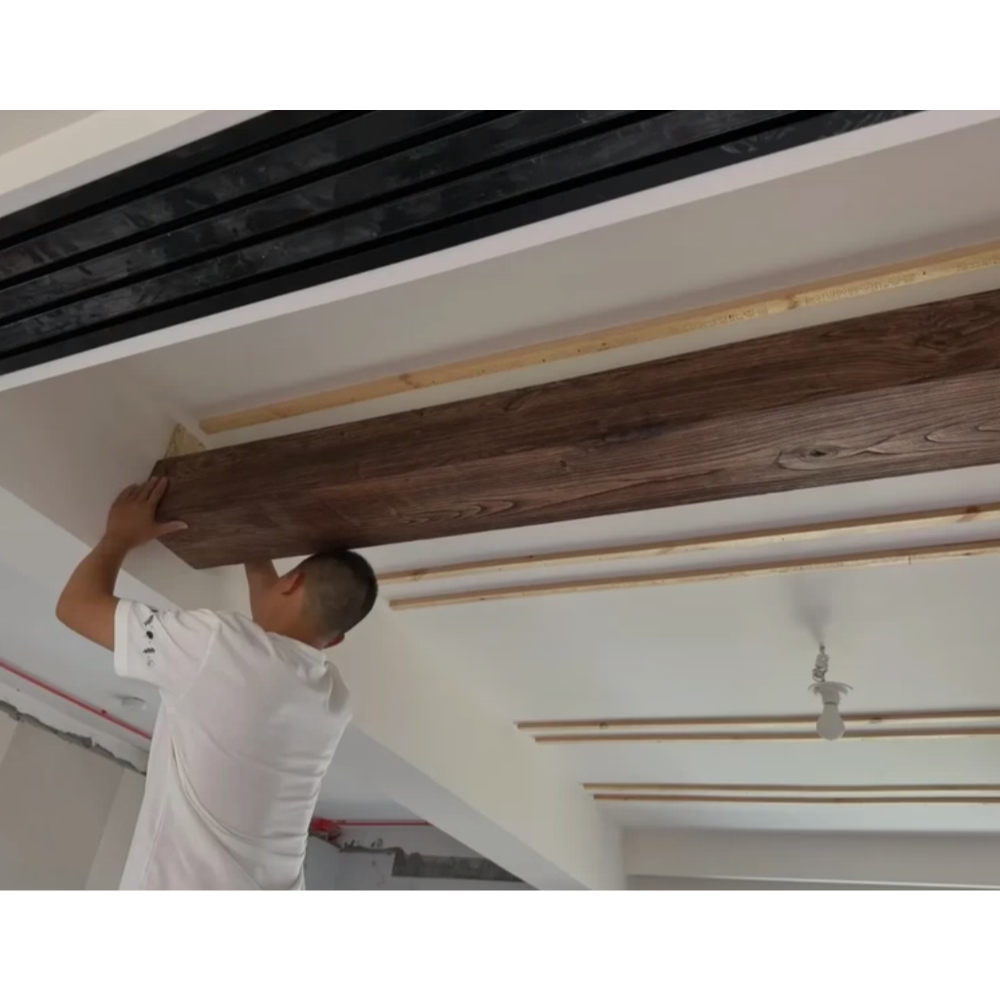
Stage beam installation differs from architectural installation in several important ways.
Fly systems allow beams to be hung from the fly gallery and raised or lowered during the show. The beam mounting hardware must be compatible with the fly line sets and must be rated for the dynamic loads of a flying system.
Floor-supported structures use stage platforms, ladders, andasta to support the beams at the desired height. The support structure must be stable under the weight of the beams and any additional scenic elements.
Scenic studios that build sets for touring productions design their beam systems for easy assembly, disassembly, and packing. The beams are often joined with hardware rather than adhesive so that they can be taken apart and reassembled at different venues.
Budget Considerations for Set Construction
Stage set budgets are typically a percentage of the overall production budget, and they must compete with other scenic elements including set pieces, costumes, and special effects.
Polyurethane beams offer a cost-effective way to achieve a high-end timber beam aesthetic within a set construction budget. The material cost is lower than real timber, and the labor cost is lower because the beams are lighter and easier to handle.
For touring productions, the durability of polyurethane beams translates into lower replacement and repair costs over the life of the production. A set that must be packed, shipped, and reassembled multiple times benefits from materials that can withstand this treatment.
Sourcing for Set Construction
Set construction firms typically source polyurethane beams from specialty scenic supply companies that understand the unique requirements of stage production. These suppliers offer beam profiles, finishes, and mounting hardware designed specifically for theatrical use.
Standard architectural beam suppliers can also serve the stage market, but they may not offer the custom capabilities, the rapid turnaround, or the technical support that stage production requires.
For productions with specific requirements, the scenic designer should involve the beam supplier early in the design phase. The supplier can advise on profile options, finish capabilities, and mounting methods, and can provide samples and mock-ups for design development.
What Scenic Designers Should Know
Scenic designers should approach beam specification for stage use with an understanding of the specific demands of the production.
The beam profile and finish must be appropriate for the historical period and the visual style of the production. Research into the architectural details of the intended setting informs the beam specification.
The beam dimensions must be appropriate for the venue and the viewing distance. A beam that looks right in a studio theater may look too small in a large proscenium house.
The beam finish must be appropriate for the lighting design and for any camera or broadcast requirements. A matte finish with UV-stable color performs best under extreme lighting and on camera.
Long-Term Storage and Reuse
Touring productions and resident theaters that reuse sets across multiple seasons benefit from the durability of polyurethane beams. The beams can be stored in standard production storage facilities without climate control, and they maintain their appearance over many years of use.
Damaged beams can be repaired with automotive body filler and touch-up finish, which allows the scenic shop to maintain the set between productions without replacing the entire beam inventory.
Technical References
ASTM standards cited in every specification
Test Data
Lab results from internal testing program
Updated 2026
Reviewed against current product specs