
Nothing kills a timber ceiling aesthetic faster than exposure to weather. Real wood beams exposed to rain, humidity, and temperature swings develop checks, splits, and grey patinas that builders spend enormous effort trying to prevent or recreate artificially. In exterior covered ceiling applications—patios, porches, breezeways, covered walkways—the maintenance burden of natural timber often exceeds what building owners anticipate during design and budgeting.
UV-stabilized PU resin faux timber beams sidestep this problem entirely. They do not absorb moisture, do not rot, do not check, and do not require the seasonal maintenance that keeps real wood looking its best in exterior conditions. The material accepts UV-inhibiting additives during production that slow surface degradation to a negligible rate under typical covered-exterior conditions.
Why Exterior Applications Require Different Specifications
Interior-grade PU products and exterior-grade PU products share the same base formulation but differ in additive packages that affect long-term performance in ways that are not visible at the point of purchase.
The primary difference involves ultraviolet light stabilization. Standard polyurethane begins to chalk and degrade when exposed to sustained sunlight, with the surface developing a white, powdery appearance within seasons for fully exposed installations. Exterior-grade formulations incorporate UV absorbers and hindered amine light stabilizers (HALS) that intercept the photochemical degradation reactions and extend surface integrity by years or decades.
Moisture resistance is inherent to the PU formulation regardless of grade, but exterior applications benefit from enhanced water-shedding design—beams with slight crown or taper that prevents water pooling, integrated drip edges, and sealed end caps that prevent water infiltration at cut ends.
Thermal cycling resistance matters in regions with significant seasonal temperature variation. Standard PU tolerates temperature swings well, but exterior-grade formulations maintain flexibility and adhesion across wider temperature ranges, which prevents surface checking in freeze-thaw cycles.
When sourcing beams for exterior applications, confirm with the manufacturer that the specific product line carries UV stabilization suitable for the installation's exposure conditions. Not all manufacturers offer exterior-grade options; some produce only interior formulations and will not perform adequately outdoors.
Applications in Exterior Covered Structures
The range of exterior ceiling applications for PU faux timber beams encompasses both residential and commercial contexts, with each application type presenting specific design and installation considerations.
Covered residential porches represent the most common application. These structures—typically extending from the primary residence with roofed but open-sided configurations—benefit from beams that define the porch ceiling, hide structural rafters, and provide mounting points for ceiling fans, lights, or hanging plants. The beams transform a utilitarian shelter into a designed outdoor room.
Outdoor dining and entertainment patios in hospitality settings use PU beams to create visual rhythm across large covered areas. Restaurant patios, hotel courtyards, and resort poolside seating areas gain architectural character through beam installations that would be prohibitively expensive to construct from real timber.
Breezeways and covered walkways in campus, resort, and residential developments use beams to maintain consistent architectural language across exterior transitions between buildings or zones. The beams tie disparate structures together visually while providing practical ceiling definition.
Pool house and outdoor kitchen ceilings present specific material challenges due to chlorine and salt exposure. UV-stabilized PU beams handle these chemical environments better than natural timber, which absorbs chlorinated water and salt spray, though the mounting hardware and fasteners require appropriate corrosion resistance.
Garage and carport ceilings use beams to hide roof structure in configurations where the structure is exposed to controlled weather but not direct precipitation. The beams add architectural interest while maintaining the utilitarian function of the space.

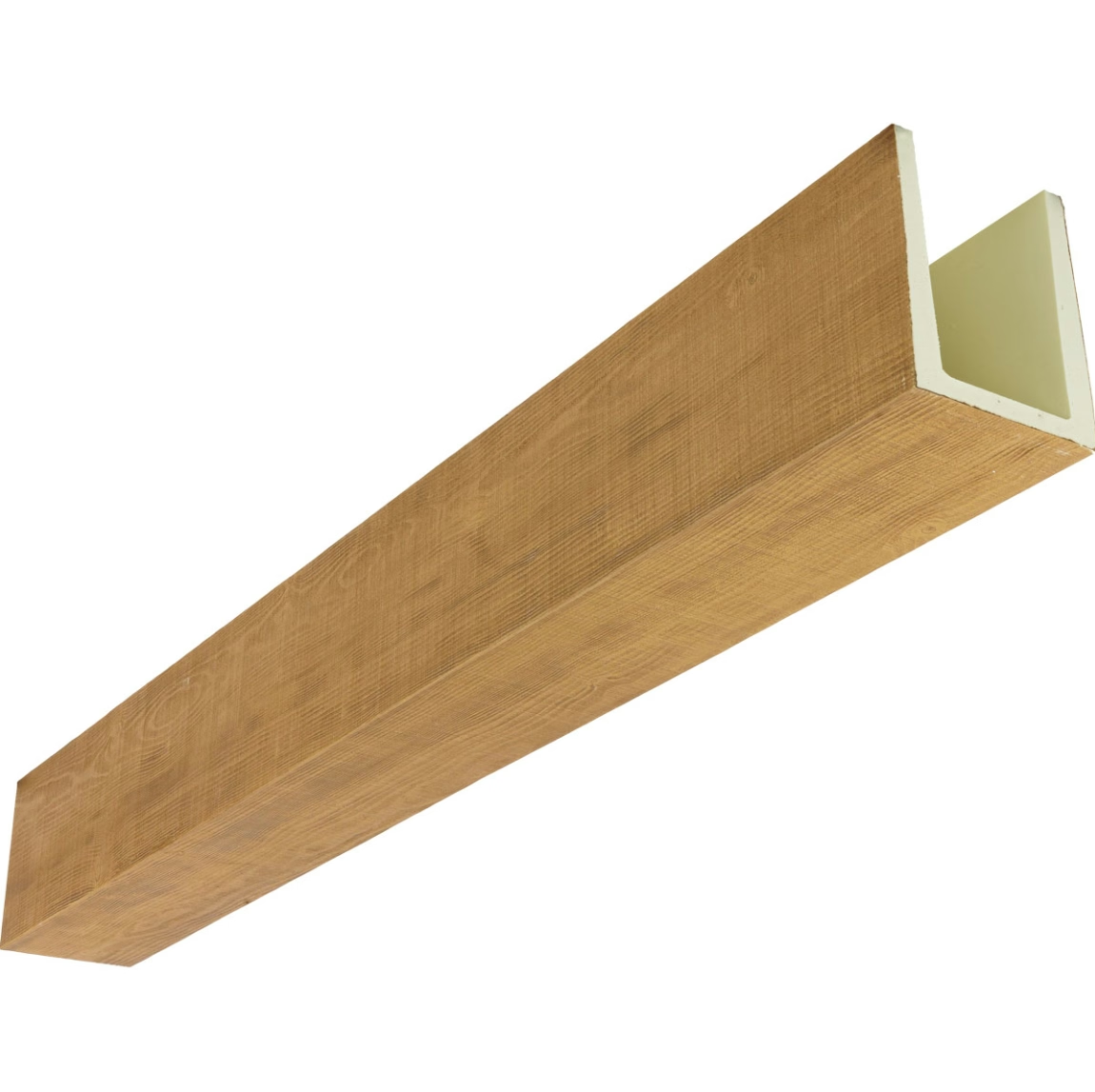
Installation Considerations for Exterior Environments
Exterior installation introduces environmental factors that interior installations do not face. The most significant involve moisture management, thermal movement, and fastener corrosion.
Moisture management at the mounting interface requires attention to how the beam's back surface meets the mounting substrate. Even in covered installations, wind-driven rain can reach the mounting area. Use a continuous bead of butyl rubber or polyurethane sealant along the top edge of any beam that mounts against a wall or fascia to prevent water migration behind the beam.
Thermal movement in exterior applications is greater than in interior conditions due to direct sun exposure and larger temperature swings. Allow a small gap—approximately 1/8 inch—between beam ends and any adjacent surfaces to permit expansion without buckling or joint opening. This gap can be concealed with caulking that matches the beam finish.
Fastener corrosion in exterior conditions is inevitable without appropriate hardware. Hot-dip galvanized fasteners provide adequate corrosion resistance for most covered-exterior applications. In coastal environments or locations with high humidity, stainless steel fasteners offer superior corrosion resistance despite the higher material cost.
Ventilation behind beams helps prevent heat buildup that can affect finish stability. Where possible, maintain a small air gap between the beam's back surface and the mounting substrate. This gap allows air circulation that moderates temperature and prevents moisture accumulation.
Finish Options for Exterior Applications
Finish selection for exterior PU beams requires balancing aesthetic goals with practical durability requirements.
Pre-finished white or light-colored beams reflect sunlight and minimize heat absorption, which benefits finish stability and reduces thermal stress. Light colors require less frequent maintenance than dark colors in exterior applications, where UV exposure accelerates degradation of darker pigments.
Dark stain finishes can work in exterior applications but typically require more frequent maintenance—restoration or re-coating every 2 to 3 years rather than the 5+ years achievable with factory-finished light colors. The visual impact of dark-stained beams in exterior covered structures can be significant enough to justify the maintenance commitment.
Raw or primed beams that receive site-applied finishes offer maximum color flexibility but require careful surface preparation and appropriate exterior-grade finishes. The finish system must be compatible with the PU material and designed for exterior exposure.
The sealant or topcoat applied over any finish—whether factory-applied or site-applied—provides the primary barrier against UV and moisture infiltration. Quality exterior-grade sealants extend the maintenance interval significantly and represent a worthwhile investment even when budget constraints encourage specification of less expensive alternatives.
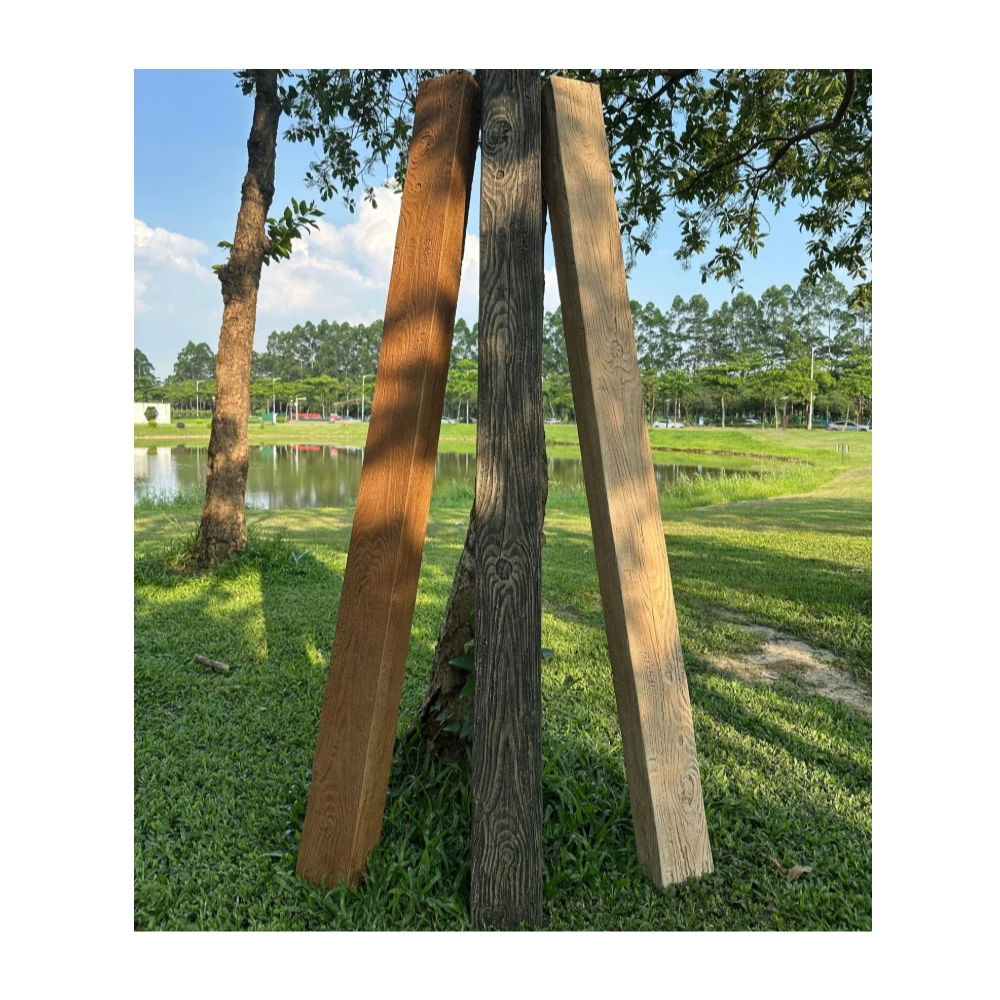
Coordinating with Exterior Architectural Elements
Exterior covered structures typically include multiple trim and finish elements—fascia boards, rake boards, columns, railings—that must coordinate visually with the beam installation.
Material coordination in exterior applications presents different challenges than interior coordination. Real wood trim elements exposed to weather will age differently than PU beams, creating visual divergence over time. Consider whether adjacent trim elements should also be specified in PU or other low-maintenance materials to maintain consistent appearance.
Color coordination with exterior paint colors requires attention to the UV-fade characteristics of the specific paint or stain. Factory-finished beams may fade at different rates than site-applied trim, leading to color mismatch after seasons of exposure. When possible, use the same finish system on beams and adjacent trim elements.
Proportional scaling in exterior applications relates to the scale of the overall structure. Large porches and commercial covered areas can accommodate larger beams than small residential entries. Maintain proportional consistency between beam size and the overall structure dimensions.
Maintenance Requirements for Exterior Installations
Despite their durability advantages over natural timber, exterior PU beam installations are not maintenance-free. The maintenance requirements are simply different and generally less demanding.
Annual inspection should verify fastener integrity, check sealant joints for gaps or deterioration, and clean accumulated debris from beam surfaces and mounting gaps. Early identification of fastener corrosion or joint failure prevents more significant problems.
Cleaning with mild detergent and water removes biological growth (mold, mildew, algae) that can accumulate in shaded, humid exterior environments. Avoid pressure washing, which can damage surface finishes, and avoid harsh chemical cleaners that may affect the PU material or adjacent surfaces.
Refinishing intervals depend on the original finish system and exposure conditions. Factory-finished beams in covered applications may go 5 to 10 years before requiring refinishing. Site-finished beams or fully exposed applications may require attention every 2 to 3 years.
Repair of minor surface damage—dents, scratches, or small cracks—can be accomplished with automotive body filler or PU-compatible patching compounds, followed by refinishing. Significant damage may require beam replacement rather than repair.
Sourcing Considerations for Exterior Projects
Exterior-grade PU beam projects require more careful supplier evaluation than interior projects, where material differences have less performance consequence.
Verify that the manufacturer explicitly warrants the product for exterior applications. Products without exterior warranties or with warranties that explicitly exclude exterior use should not be specified for covered-exterior installations.
Request sample exposure testing or accelerated weathering test results from manufacturers claiming UV stability. Third-party testing from organizations such as ASTM or UL provides more credible performance documentation than manufacturer claims alone.
Plan lead times carefully for exterior projects, as UV-stabilized formulations and exterior-grade finishes may involve longer production schedules than standard interior products. Coordinate sample approval, production, and delivery timing with the overall project schedule to avoid site delays.
Discuss containerization and shipping requirements with the supplier. Long shipping routes—whether by sea container for international orders or overland transport for domestic orders—can expose products to heat and humidity that affect finish quality. Confirm that packaging and loading methods protect the product during transit.
Technical References
ASTM standards cited in every specification
Test Data
Lab results from internal testing program
Updated 2026
Reviewed against current product specs


