
Professional interior design depends on cohesion—the careful coordination of materials, colors, and details that makes spaces feel intentional rather than accidental. When incorporating polyurethane faux beams, thoughtful attention to accompanying trim elements separates impressive installations from merely functional ones. Decorative straps serve as connective tissue, linking beams to surrounding architecture while reinforcing design themes that might otherwise feel fragmented.
The relationship between beams and their trim elements parallels how jewelry complements an outfit. Expensive garments can look disheveled without proper accessorizing; similarly, quality beams require coordinating elements to achieve their full potential. Project managers who've experienced the difference cohesive trim makes rarely specify beams without simultaneously considering how walls, ceilings, and intersections will receive treatment.
Understanding the Design Role of Decorative Straps
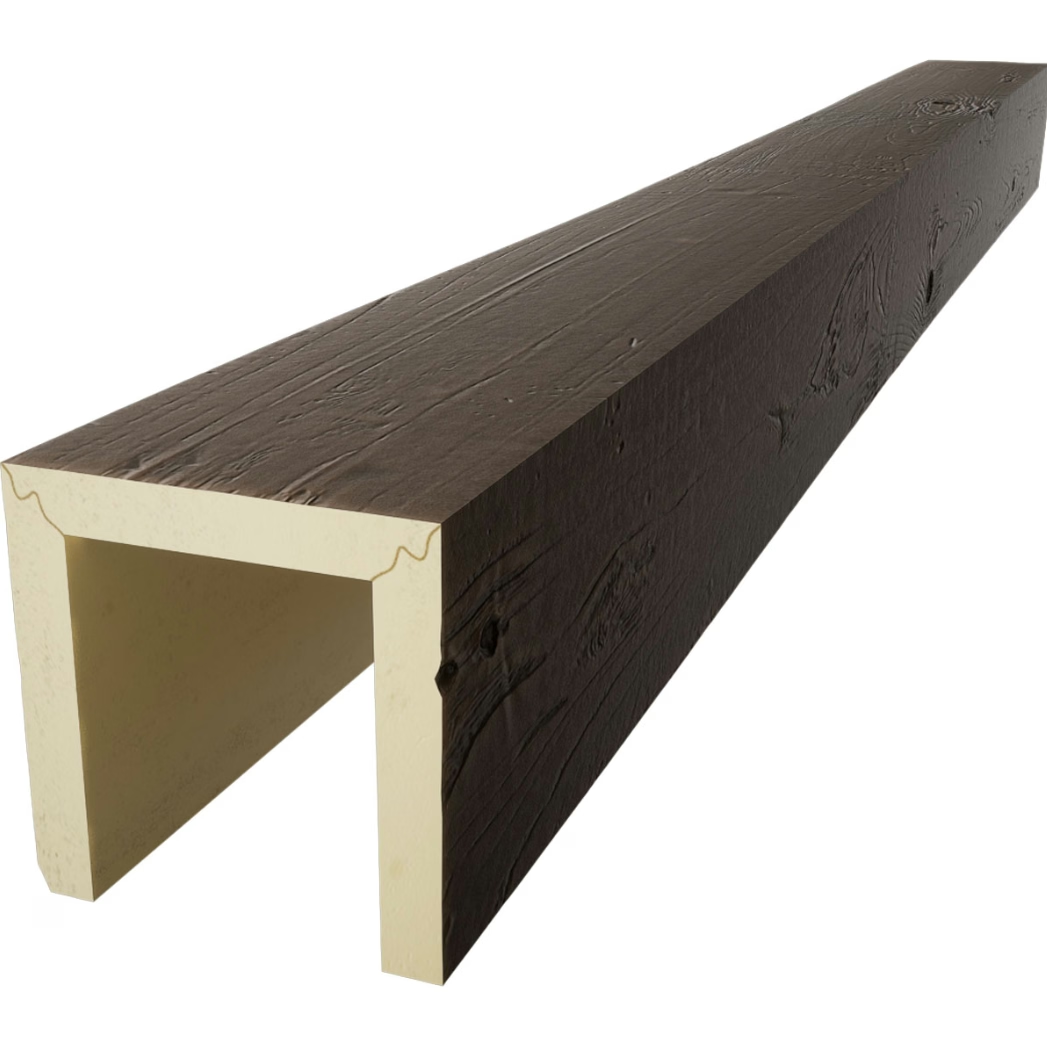
Decorative straps perform multiple functions simultaneously in beam installations. They conceal gaps and transitions where beams meet walls or other architectural elements. They provide visual depth and shadow lines that enhance three-dimensional perception. They reinforce specific design vocabularies—whether Victorian industrial, rustic farmhouse, or contemporary minimalist—that contextualize beams within broader aesthetic frameworks.
Material matching between straps and beams ensures visual unity across the installation. When polyurethane beams pair with wooden straps, color differences become immediately apparent even when both receive identical finish treatment. The materials accept stains and paints differently, creating mismatches that educated observers notice instinctively even without understanding the technical reasons. Matching polyurethane straps eliminates this compatibility issue entirely.
Beyond appearance, coordinated straps and beams simplify installation. Manufacturers design complementary profiles that work together structurally, with straps proportioned appropriately for beam dimensions and mounting systems engineered for reliable attachment. Inventing improvised trim solutions wastes time and risks inferior results.
Profile Matching and Dimensional Coordination
Width relationships between beams and straps require thoughtful proportioning. A massive beam with spindly straps looks comical; delicate beams overwhelmed by bulky straps feel top-heavy. General guidance suggests straps approximately 1/6 to 1/4 of beam width provide balanced proportions, though specific aesthetics may intentionally break this rule for expressive purposes.
Relief depth—the dimension that creates visible shadow lines—similarly needs coordination. Deep beams with substantial dimensional variation accommodate deeper straps that maintain proportional shadow patterns. Shallow beams require correspondingly modest relief in accompanying trim. Mismatched relief depths create visual confusion even when other dimensions align.
Profile shapes should harmonize with beam edges. Chamfered beam corners pair well with beveled or angled strap profiles. Square-edged beams accept either sharp or softened trim profiles depending on overall aesthetic direction. Curved or radius features require flexible trim options that conform without distortion.
Importers stocking strap inventory alongside beams should consider how different beam profiles require different strap options. Maintaining coordinated display samples helps customers visualize successful combinations rather than guessing from specifications alone.

Color Coordination Strategies
Factory-finished beams and straps offer the most reliable color matching since both receive identical treatment under controlled conditions. When ordering from manufacturers offering coordinated product lines, expect close color correspondence across components. This approach simplifies procurement and installation while maximizing finished appearance quality.
Field finishing requires more careful coordination planning. Even when ordering identical products from the same manufacturer, different production batches may exhibit subtle color variations. Additionally, polyurethane and wood accept finishing materials differently—a finish that produces the desired color on one material may yield unexpected results on another. Always test finishing approaches on samples combining both materials before committing to finished surfaces.
For projects requiring precise color matching to existing elements—historic restorations, brand standards, or owner-specified furnishings—expect extended timelines for finish development and verification. Custom color matching involves iterative refinement that catalog products cannot accommodate.
Light and shadow affect apparent color significantly. Straps positioned where direct light hits surfaces read differently than those in shadow. Consider lighting conditions when selecting colors; what looks perfect in natural daylight may appear flat under artificial illumination. Sample evaluation should occur under lighting representative of final installation conditions.
Installation Scenarios and Techniques
Corner intersections present the most challenging strap installation situations. Outside corners typically receive mitered cuts that maintain continuous profile appearance. The precision required depends on strap profile complexity—simple rectangular straps forgive minor miter inaccuracy while decorative profiles with visible edge detail may require exact angles.
Inside corners offer alternatives including cope cuts, mitered returns, or one-piece wrapping techniques depending on profile design. Cope cuts involve profiling the end of one strap to match the contour of another, creating seamless appearance where pieces meet. This technique requires skill but produces superior results for wood-like applications.
Beam-to-beam intersections may require custom fitting beyond standard corner techniques. When decorative straps continue across beam intersections, planning must address how multiple pieces meet at single points. Sometimes splitting intersections with cover plates or decorative medallions provides cleaner solutions than attempting multi-piece joins.
Design Themes and Strap Selection
Rustic and farmhouse aesthetics favor substantial straps with visible texture—perhaps carved or embossed patterns that suggest traditional blacksmith work or hand-hewn timber joinery. Darker finishes with copper or iron hardware interpretations reinforce these themes effectively. The straps themselves become decorative elements rather than merely functional trim.
Industrial and contemporary settings often prefer minimal or absent straps—letting beam profiles stand alone without additional embellishment. When trim is specified, clean-lined flat straps with sharp edges maintain the spare aesthetic. Color selection typically stays neutral, allowing beam textures and wall colors to dominate visual attention.
Traditional and transitional interiors benefit from intermediate approaches. Straps provide visual refinement without overwhelming beam statements. Proportion remains balanced, and finish choices coordinate with surrounding millwork—baseboards, crown molding, door surrounds—to integrate beams into cohesive interior architecture.
Eclectic or curated spaces may intentionally juxtapose contrasting elements. Modern beams with classical strap profiles, or rustic elements with sleek contemporary trim, create intentional tension that reinforces personal style statements. These applications require confident design judgment and careful execution to avoid appearing accidental rather than expressive.
Commercial Applications and Performance Considerations
Hospitality properties face unique demands for coordinated trim systems. Multiple identical installations across room types, floors, or even properties require not just aesthetic coordination but consistent quality across extended production runs. Selecting products from manufacturers with demonstrated capacity for large, consistent orders becomes essential rather than optional.
Durability requirements in commercial environments may exceed residential specifications. Corridors, lobbies, and public spaces experience different wear patterns than private rooms. Evaluate strap products for impact resistance, cleanability, and long-term color stability when specifying for commercial applications.
Maintenance accessibility matters for commercial properties where ongoing upkeep happens without disturbing guests or disrupting operations. Polyurethane straps that clean easily and resist damage reduce operational burden compared to wood alternatives requiring periodic refinishing or specialized repair.
Brand consistency across properties has become increasingly important for hospitality operators managing multiple locations. Standardized specifications with clear documentation ensure that beam and strap installations match brand standards wherever they appear.

Customization Opportunities
Project-specific customization extends beyond standard catalog offerings when design requirements demand unique specifications. Manufacturers vary in their willingness and capacity for custom production—some accept orders for non-standard widths, depths, or lengths while others maintain rigid catalog focus.
Custom color matching beyond standard options may require minimum order quantities or extended lead times. Achieving brand-perfect coordination across materials sometimes justifies these requirements. Discuss expectations clearly with suppliers early in project planning to determine feasibility and cost implications.
Profile customization represents more significant manufacturing commitment. Custom tooling or machining for unique strap profiles involves substantial setup costs that make sense only for large projects or ongoing volume requirements. Evaluate whether available catalog profiles can achieve design intent before pursuing fully custom solutions.
Procurement and Inventory Management
Project managers ordering straps alongside beams should consider ordering complete systems from single sources when possible. Mixed-source installations introduce compatibility risks that coordinated manufacturer systems eliminate. When sourcing separately is necessary, request samples from each supplier and test-finish them together before committing to full orders.
Lead time planning affects installation scheduling significantly. While catalog products often ship quickly, custom specifications may require extended production timelines. Factor these considerations into project schedules, particularly for new construction where beam installation happens late in construction sequences.
Quantity calculation for strap requirements involves more variables than simple linear measurement. Corner pieces, beam intersections, and waste allowance during cutting all affect total material requirements. Experienced estimators add 15 to 20 percent overage beyond measured quantities to accommodate cutting losses and mistakes.
Working with Manufacturers and Suppliers
Communicating specifications clearly helps suppliers provide appropriate products. Include beam dimensions, profile references, and finish information when requesting quotes or placing orders. Ambiguous specifications lead to delivered products that fail to meet expectations, creating delays and requiring returns or remakes.
Technical support availability varies by supplier. Manufacturers with strong technical support help customers resolve installation challenges, recommend appropriate products for specific applications, and provide guidance on finishing and maintenance. This support adds value beyond raw product pricing.
Sample policies enable confident purchasing decisions. Reputable suppliers provide samples representing actual production quality at reasonable costs or complimentary for qualified projects. Evaluate sample quality thoroughly before placing full orders—production pieces should match or exceed sample characteristics.
The investment in coordinating decorative straps with polyurethane faux beams pays returns in finished project quality that clients notice and appreciate. Cohesive installations communicate professionalism and attention to detail that distinguishes quality work from merely adequate execution. Whether serving residential clients seeking refined home environments or commercial operators requiring consistent brand presentation, the coordination effort yields measurable benefits in client satisfaction and reduced callback requests.
Troubleshooting Common Issues
Color mismatches between beams and straps create immediate visual dissatisfaction. Address this by confirming material composition matches, verifying finish compatibility through testing, and ensuring all components receive consistent application technique. When mismatches appear in finished work, assess whether repainting can resolve the issue or whether replacement is necessary.
Gap visibility at intersections often indicates insufficient planning during measurement or cutting. Precise measurement, careful cutting, and test-fitting before final installation prevent most gap issues. Small gaps remaining after installation can receive color-matched caulk or wood filler appropriate to the finish system.
Strap attachment failures typically trace to inadequate fastening or improper surface preparation. Ensure mounting surfaces are clean, dry, and properly primed when using adhesive. Mechanical fasteners should penetrate solid substrate—hollow wall anchors or adhesive alone may not provide adequate holding power for longer spans or heavier profiles.
Industry Standards and Quality Benchmarks
Professional-grade decorative straps meet quality standards that distinguish them from economy alternatives. Surface finish consistency, dimensional accuracy, and material density specifications indicate manufacturing quality. Request technical data sheets that document these characteristics rather than relying solely on appearance evaluation.
Testing standards for decorative millwork products vary by region and application. Fire ratings for commercial applications, load ratings for suspended installations, and environmental stability for challenging conditions all may apply depending on project specifications. Verify that specified products meet applicable requirements before installation.
Warranty coverage reflects manufacturer confidence in product performance. Standard warranties cover manufacturing defects affecting normal use; extended coverage may be available for commercial applications or premium product lines. Understand warranty scope and limitations when comparing options.
Seasonal and Environmental Factors
Temperature and humidity affect both installation and long-term performance of decorative straps. Standard interior conditions typically present no challenges, but unheated spaces, exterior applications, or climate zones with extreme seasonal variation may require special consideration.
Storage conditions before installation matter for product quality maintenance. Excessive heat, direct sunlight, or moisture exposure can affect finished surfaces and material properties. Store materials in climate-controlled conditions until installation.
Finishing performance varies with environmental conditions during application. Temperature and humidity affect drying times and final adhesion for paints, stains, and sealers. Follow manufacturer recommendations for application conditions and drying intervals.
Future Trends in Decorative Strap Design
Emerging finishes extend aesthetic possibilities for decorative straps. Textured coatings that simulate stone, metal, or distressed wood broaden design options without requiring different substrates. These finishes may carry different maintenance requirements than standard paint or stain systems.
Sustainable manufacturing approaches gain attention as environmental awareness increases. Bio-based polyurethane formulations, recycled content incorporation, and improved manufacturing efficiency all contribute to reduced environmental impact. Products with documented sustainability characteristics may command premium positioning in some market segments.
Digital design tools increasingly incorporate decorative millwork specifications, enabling designers to visualize complete installations before procurement. These tools improve communication between designers, contractors, and suppliers while reducing costly misunderstandings about finished appearance.
Technical References
ASTM standards cited in every specification
Test Data
Lab results from internal testing program
Updated 2026
Reviewed against current product specs


