
Boutique retail spaces face a unique challenge: creating an atmosphere that feels intimate and curated while accommodating the practical realities of commercial leasing, fluctuating inventory needs, and the constant drive to refresh visual merchandising. Ceilings often remain underutilized as a design element, yet they represent prime real estate for establishing mood and character. Decorative faux wood beams solve this problem elegantly, offering the warmth of natural timber without the weight, cost, or installation complexity that genuine wood demands in retail environments.
The distinction between decorative and structural ceiling elements matters significantly for boutique applications. Structural beams must bear load, which limits material choices and increases installation requirements. Decorative beams, by contrast, exist purely to enhance aesthetics. This liberation from load-bearing responsibility opens possibilities that structural engineering cannot accommodate. Retail designers can specify beams of any profile, any size, and any finish, knowing that the only requirement is visual impact. PU faux wood beams excel in this role because they capture wood's authentic appearance while weighing a fraction of real timber.
Designing Visual Hierarchy with Ceiling Beams
Successful boutique interiors depend on deliberate visual hierarchy. The eye naturally travels upward upon entering a space, making the ceiling the first opportunity to communicate brand identity. Faux wood beams placed strategically across ceiling planes create immediate visual anchors that guide customer movement and attention. A boutique focused on artisanal goods might benefit from beams that suggest hand-hewn craftsmanship, their irregular profiles and varied grain patterns evoking traditional woodworking techniques. Alternatively, a contemporary fashion retailer might select beams with clean, consistent lines that read as modern interpretations of classic forms.
Scale relationships between beams and the overall space determine whether the result feels cozy or expansive. Beams spaced closely together create visual compression that makes rooms feel smaller but also more intimate—ideal for luxury boutiques where customers should feel enveloped by the environment. Wider spacing permits the ceiling to recede visually, allowing merchandise displays to command attention without competing visual elements. Most boutique ceilings fall between 10 and 14 feet, a range where beams sized between 6 and 10 inches in depth create appropriate proportional relationships.
The direction of beam installation influences perceived room proportions. Beams running perpendicular to a long wall draw the eye across the space, making narrow rooms feel wider. Parallel installation along the length of a room emphasizes that dimension, creating grander proportions in spaces that might otherwise read as utilitarian. Some designers break from purely geometric arrangements, using beams to frame specific ceiling areas or to create visual boundaries between different retail zones—apparel here, accessories there—without resorting to physical partitions that interrupt traffic flow.

Material Advantages for Retail Environments
Polyurethane faux wood beams offer several material advantages particularly relevant to boutique retail applications. The lightweight composition—typically under 2 pounds per linear foot for standard profiles—means that installation requires no structural reinforcement, no specialized mounting hardware, and no construction crew. A single installer with basic tools can transform a boutique ceiling in an afternoon, minimizing labor costs and store downtime. This ease of installation becomes especially valuable for retailers who lease their spaces, as decorative elements can be removed without damaging the underlying structure when lease terms end.
Moisture resistance represents another critical consideration for retail environments. Boutiques in humid climates, near water features, or featuring live plants or water-based displays need ceiling materials that tolerate moisture without warping, cracking, or developing mold. PU beams absorb zero moisture, making them suitable for installation near ventilation systems, humidors, or any retail context where environmental humidity fluctuates. This stability translates to maintained appearance over years of use, without the seasonal movements that plague real wood in variable conditions.
Retail traffic brings elevated exposure to accidental impacts. Unlike real wood, which dents and mars readily, PU beams resist the minor collisions that occur when ladders, rolling racks, or elevated displays brush ceiling elements. The material's slight flexibility absorbs impact energy rather than transmitting it as visible damage. For boutiques with high ceilings requiring regular access for lighting maintenance or seasonal decor changes, this durability proves invaluable. The beams maintain their appearance through years of contact with equipment and the inevitable bumping that commercial retail involves.
Color and Finish Selection Strategies
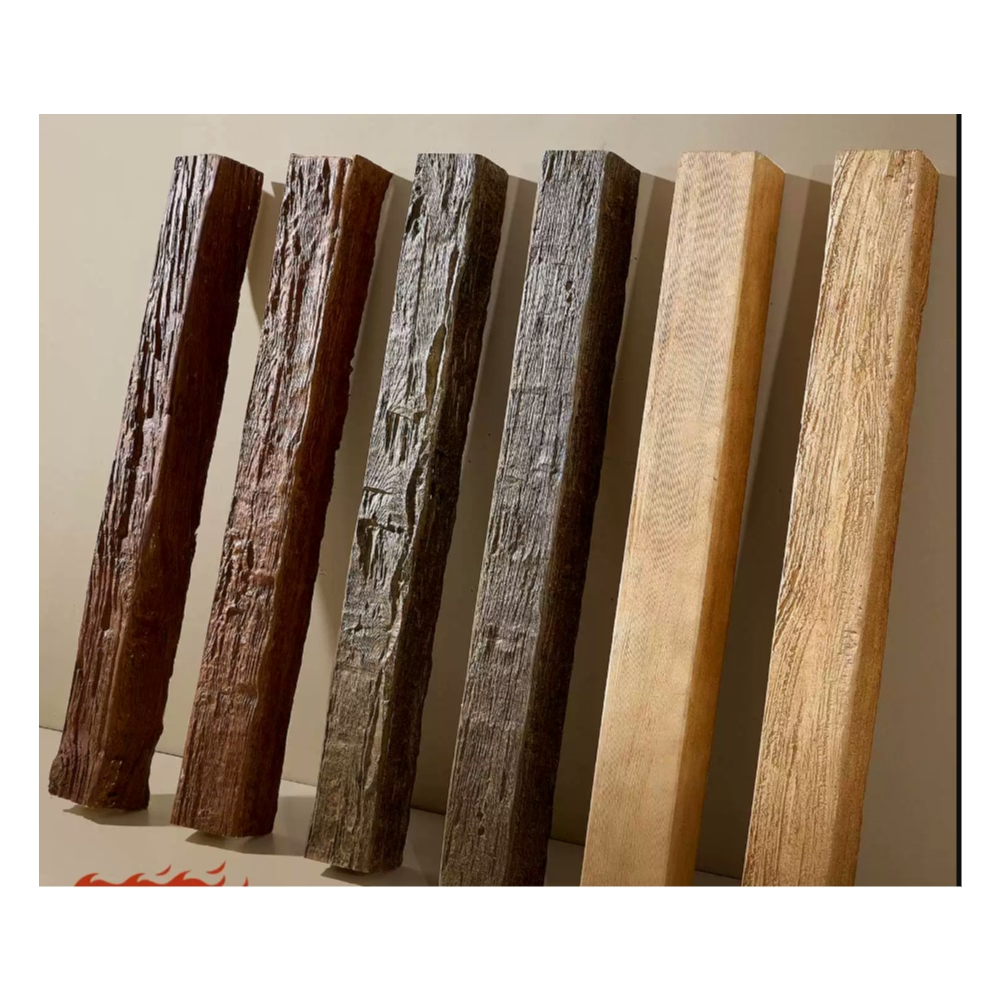
The finish applied to faux wood beams determines how convincingly they read as authentic timber. Manufacturers offer beams in several finish categories, each suited to different design approaches. Stained finishes penetrate the surface layer, mimicking how real wood absorbs colorants. This approach works best for beams intended to complement existing wood elements in the boutique—flooring, fixtures, or display furniture. The key to successful stained finishes lies in selecting hues that relate to nearby wood without matching too precisely, which would create a look that seems "off" rather than intentionally coordinated.
Painted finishes create deliberate contrast between beams and other wood elements. White or off-white beams on a ceiling establish visual separation from darker wood flooring and fixtures, preventing the space from reading as monochromatic. This approach particularly suits boutiques with eclectic merchandise mixes, where visual complexity could become overwhelming without some unifying ceiling element. Painted beams also photograph exceptionally well for social media and e-commerce imagery, creating the kind of aspirational content that drives foot traffic to retail locations.
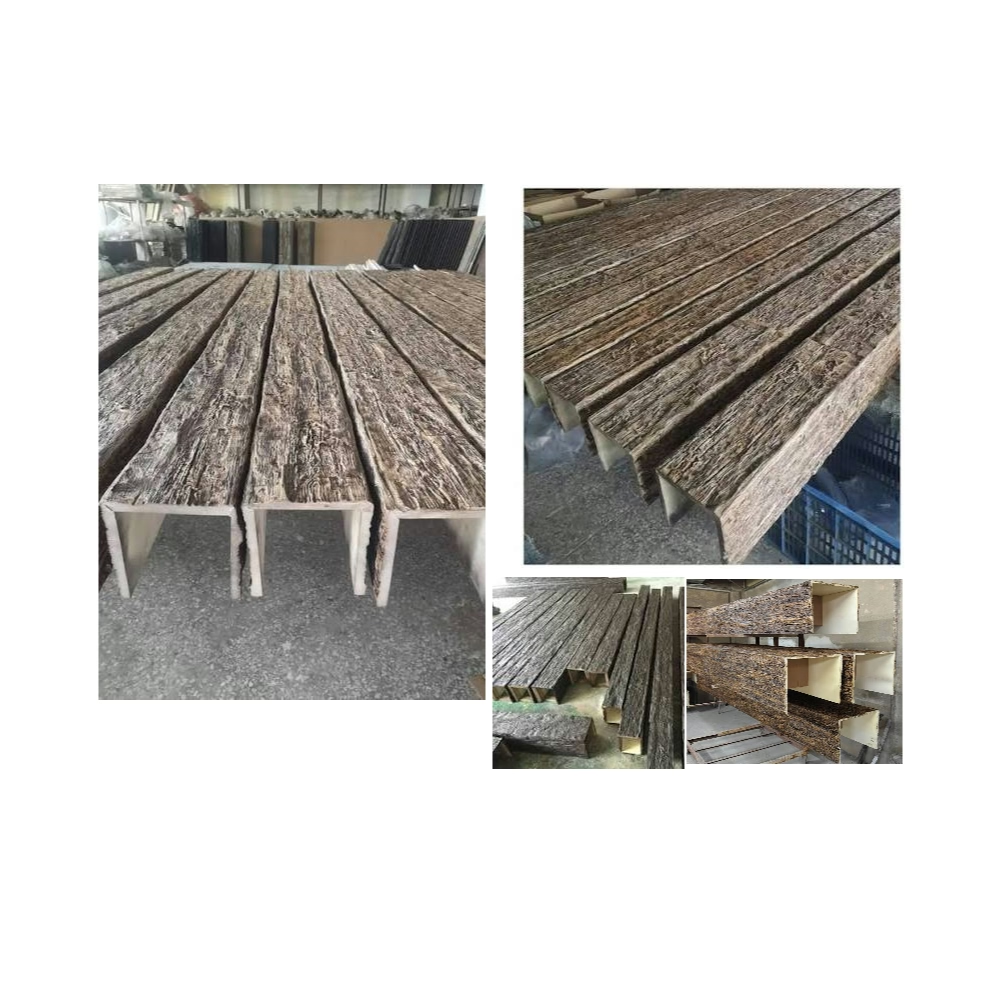
Textured finishes add tactile dimension that catches light in ways smooth surfaces cannot replicate. Deep embossing on beam surfaces creates shadow play that emphasizes wood grain patterns, making beams appear more authentically aged and weathered. This texture becomes most visible under directional lighting—spotlights, track lighting, or natural light from skylights. Boutiques investing in lighting design should specify textured beams to maximize the interplay between illumination and surface, creating visual dynamism that evolves throughout the day as natural light angles shift.
Installation Approaches for Boutique Ceilings
Mounting faux wood beams to boutique ceilings requires matching the installation method to the ceiling construction. Drywall ceilings, common in retail buildouts, accept various attachment approaches depending on beam weight and desired appearance. Exposed mounting brackets create industrial aesthetics where visible hardware becomes part of the design vocabulary. Concealed mounting systems, using clips or adhesive, produce seamless appearances where beams seem to float or rest directly against the ceiling plane.
For drop ceilings common in older retail buildings, beams can span between hanging wires or rest on exposed ceiling grid systems. This approach transforms utilitarian infrastructure into intentional design elements, using the ceiling structure itself as part of the overall aesthetic. Beams positioned perpendicular to drop ceiling panels create strong directional lines that organize the space visually, while parallel installation can make wide retail floors feel more contained and shoppable.
Sloped ceilings present opportunity rather than obstacle for faux wood beam installation. Beams following roof pitches draw attention to architectural features that might otherwise go unnoticed. Retailers in converted warehouses, lofts, or historic buildings with visible roof structures can extend beams along these slopes, reinforcing the building's character while adding warmth through wood texture. The slight difficulty of working on sloped surfaces disappears entirely when beams weigh only pounds rather than the hundreds of pounds real timber would require for identical installations.
Budget Considerations for Retail Projects
Decorative faux wood beams provide significant cost advantages over real timber alternatives, but budget planning should account for more than material unit prices. The total installed cost includes mounting hardware, finishing materials if site painting is required, labor hours for installation, and any ceiling preparation needed to accept mounting systems. When all factors combine, faux wood installations typically run 40 to 60 percent below comparable real wood projects, with the differential increasing for more complex beam configurations.
For boutique owners managing tight renovation budgets, phasing beam installation offers flexibility. A complete ceiling treatment might exceed initial budgets, but adding beams over the main sales floor while leaving back-of-house areas unfinished allows for staged improvement. The visual impact of beams in the customer-facing space often generates enough sales improvement to fund completion of the remaining areas within 12 to 18 months. This approach also allows testing whether beam styling chosen for initial installation suits the space before committing to broader application.
Maintenance budgets benefit from faux wood's durability characteristics. Real wood requires periodic refinishing, typically every three to five years in commercial settings, with associated costs for labor, materials, and business disruption. PU beams maintain their appearance indefinitely without refinishing, requiring only occasional dusting or cleaning with mild detergents. For franchise operations or retail groups managing multiple locations, this maintenance simplicity translates directly to reduced facility management overhead.
Technical References
ASTM standards cited in every specification
Test Data
Lab results from internal testing program
Updated 2026
Reviewed against current product specs


