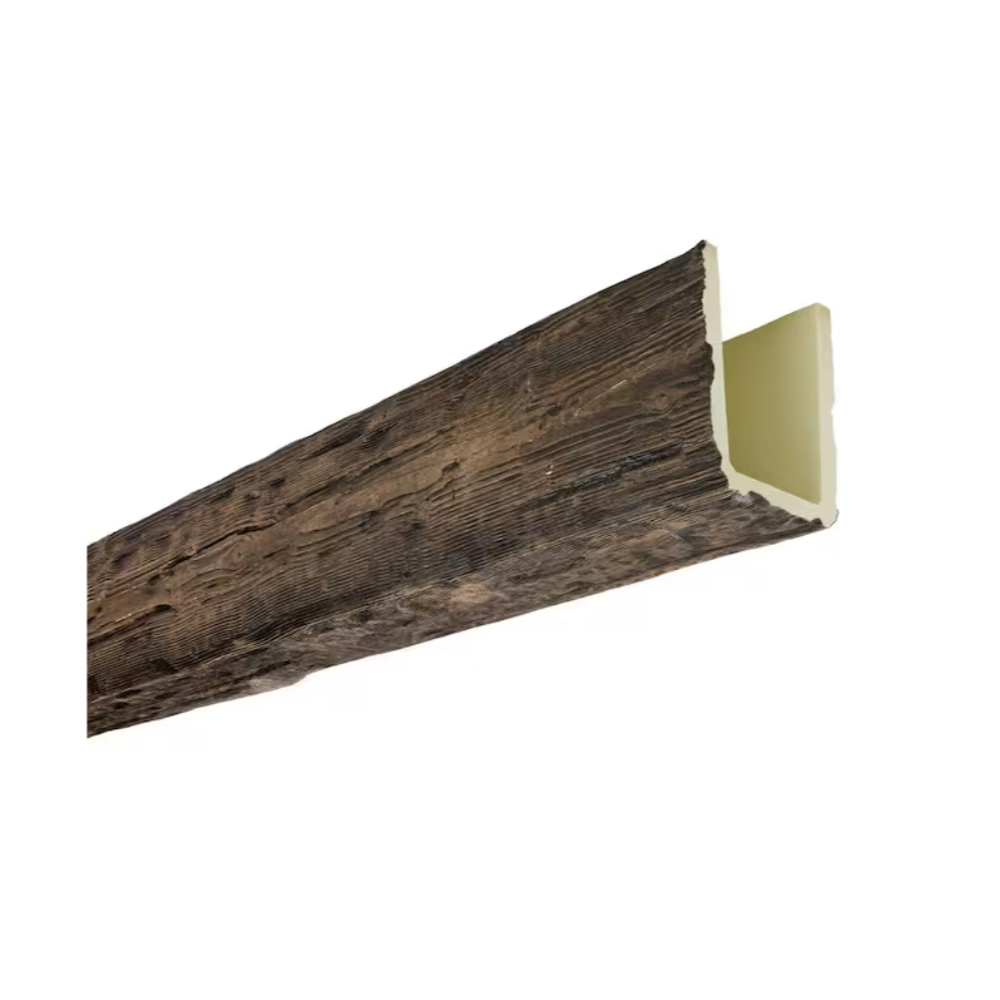
There's something undeniably compelling about a space that tells a story. When designers reach for ceiling beams to anchor a room's aesthetic, they often find themselves weighing authenticity against practicality. Solid timber brings genuine history but introduces structural considerations and ongoing maintenance demands. Deep stained dark fir PU ceiling beams offer a compelling alternative—capturing that weathered, timeworn character while eliminating the complications that come with genuine aged wood.
The Appeal of Dark Fir in Vintage Design
Dark fir has long been treasured in traditional architecture, particularly across Scandinavian and Alpine building traditions. Its tight grain structure accepts stain beautifully, allowing craftspeople to achieve rich, layered colorations that deepen over centuries of use. When we source authentic aged dark fir beams today, we're often looking at reclaimed material from barns, mills, and heritage structures—pieces carrying their own documented histories but also their own complications. Warping, insect damage, moisture issues, and inconsistent dimensions create substantial hurdles for modern installation.
The deep stained finish on quality PU faux beams draws from this heritage aesthetic while providing consistent, predictable product dimensions. Each beam emerges from the manufacturing process with carefully formulated color layers that mimic the natural oxidation and staining that occurs as fir ages. The result captures that sophisticated, museum-quality patina that would otherwise require decades of natural weathering or extensive artificial aging techniques.
Interior designers working on vintage-styled restaurants, boutique hotels, and residential remodels consistently report that dark fir ceiling beams serve as powerful anchoring elements. A single exposed beam running across a vaulted ceiling can completely transform the perceived scale of a room, adding architectural interest where flat drywall would otherwise dominate. The deep coloration creates visual weight without the actual mass of solid timber, making these beams suitable for upper-floor installations and retrofit projects where structural loading becomes a concern.
Crafting Authentic Wood Grain Texture
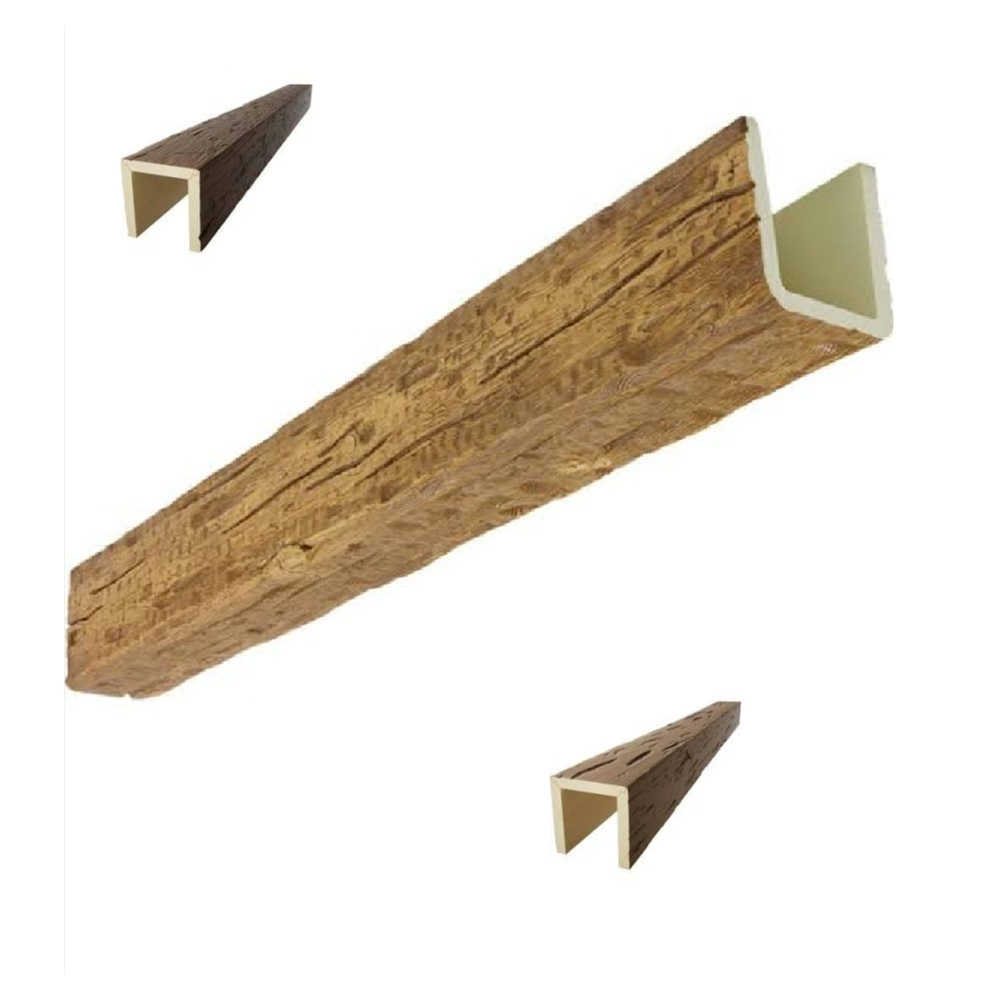
The manufacturing process for high-quality PU faux beams involves sophisticated molding techniques that capture the subtle variations found in natural wood. Surface texture proves essential for believability—smooth, plastic-looking surfaces immediately betray their synthetic origin, while authentically textured beams require closer inspection to distinguish from the real thing.
Texture development begins with careful selection of authentic timber samples to use as master patterns. Craftspeople examine hundreds of feet of aged fir, identifying representative sections that display the full range of natural characteristics: tight cathedral patterns alongside dramatic cathedrals, subtle ray flecks, and occasional mineral streaks that add visual complexity. These patterns get captured in durable molding materials capable of reproducing fine detail consistently across production runs.
Once the texture foundation exists, color application proceeds through multiple stages. Initial base coats establish the fundamental fir tones—warm honey undertones that gradually darken as the wood ages. Subsequent stain layers build depth, concentrating in recessed grain areas while allowing raised portions to maintain lighter exposure. The deep staining process for dark fir specifically targets that rich, almost chocolate-brown coloration that develops in barn-aged timber, where decades of dust accumulation and natural oxidation combine to create unmatched color complexity.
Installation Considerations for Ceiling Applications
Contractors appreciate the lightweight nature of PU faux beams—typically 80-90% lighter than equivalent solid timber pieces. This weight differential translates directly into installation efficiency. A single installer can position and secure beams that would otherwise require two or three workers and mechanical lifting equipment. The reduced structural demand also means simpler mounting hardware, often utilizing standard construction adhesive supplemented with concealed bracket systems.
When installing deep stained dark fir beams, careful attention to end matching creates the most convincing appearance. Butt joints should occur at structural points where genuine beams would naturally terminate—at wall intersections, above support posts, or at deliberately designed breaks in the run. Random-length installations that avoid obvious pattern repetition appear most authentic. Slight variations in beam positioning, rather than rigid grid alignments, reinforce the organic quality that distinguishes genuine timber construction.
Lighting integration deserves early planning attention. Upward-facing LED strips concealed within beam profiles create dramatic highlighting effects that emphasize texture and color depth. The shadows cast by beam undersides add dimensionality that flat paint cannot achieve, making the faux material appear to have genuine mass and presence. Warm color temperatures (2700-3000K) complement the dark fir tones, while cooler temperatures can create striking modern contrasts in contemporary vintage applications.
Coordinating with Overall Interior Schemes
Dark fir ceiling beams function as statement elements, which means their relationship with surrounding materials requires thoughtful coordination. Exposed brick, whether original or manufactured, pairs exceptionally well—the warm red-orange tones create natural harmony with fir's golden undertones. The combination has become nearly synonymous with authentic farmhouse and industrial loft aesthetics.
Plaster and limewash wall treatments offer another complementary direction. The matte, textured surfaces of aged plaster provide visual rest between the bold ceiling treatment and lower wall elements. Designers often specify similar dark fir detailing—window trim, door frames, or shelving—to create cohesive environmental unity. This material continuity reinforces the vintage narrative, making the space feel intentionally designed rather than randomly assembled.
Textile choices influence perceived warmth significantly. Heavy linen draperies, wool-upholstered seating, and natural fiber rugs absorb excess visual energy that bright spaces might need. In contrast, polished concrete floors and stainless steel appliances introduce modern tension that some projects deliberately seek. The key lies in understanding the specific vintage narrative being pursued—cozy farmhouse, rugged cabin, refined heritage estate—and selecting complementary materials accordingly.
Maintenance Advantages for Commercial Environments
Restaurant and hospitality operators face daily challenges that residential clients never consider. Ceiling beams in commercial kitchens accumulate grease-laden moisture; in dining areas, they endure constant handling from staff navigating tight spaces. These demands would quickly degrade genuine timber, requiring regular refinishing and ongoing protection treatments.
PU faux beams with deep stain finishes withstand commercial cleaning protocols without special consideration. The non-porous surface resists moisture penetration, meaning spilled liquids bead and wipe clean rather than soaking in to cause staining or warping. Periodic dusting with extension poles keeps beams looking fresh, with occasional deeper cleaning using standard commercial cleaning solutions. No annual sealing or refinishing schedules required—the color depth is integrated throughout the material rather than sitting as a surface layer vulnerable to wear.
The dimensional stability of PU also proves valuable in environments with fluctuating humidity. Authentic timber expands and contracts with moisture changes, sometimes creating gaps at joints or visible warping over time. Faux beams maintain their as-installed dimensions regardless of environmental conditions, preserving that freshly-installed appearance indefinitely. For operators unwilling to accept ongoing maintenance headaches, this reliability represents significant practical value alongside the aesthetic benefits.
Sourcing Quality Deep Stained Beams
Importers and project managers evaluating faux beam suppliers should request samples that demonstrate color consistency across multiple pieces. Batch variations can occur when staining occurs in small lots rather than controlled production runs, leading to visible mismatches when adjacent beams display noticeably different tones. Reputable manufacturers maintain color standards and quality control processes that minimize these variations.
Texture depth matters as much as color for convincing appearance. Running fingertips across the beam surface reveals whether grain details possess genuine dimensionality or merely suggest texture through printed patterns. High-quality products feature relief measurable in fractions of an inch, creating genuine shadow-catching capability that flat surfaces cannot achieve. This physical texture also provides slip resistance for beams installed at accessible heights where accidental contact might occur.
Lead time considerations differ significantly between custom colors and standard catalog options. While off-the-shelf dark fir finishes typically ship within standard timeframes, custom-matched colors or sizes may extend delivery by several weeks. Projects with compressed schedules benefit from early sample requests and specification of available products, reserving customization for projects with adequate timeline flexibility. Foreign trade partners should discuss container loading optimization to maximize cost efficiency when ordering multiple beam configurations simultaneously.
The combination of authentic appearance, practical durability, and straightforward installation makes deep stained dark fir PU ceiling beams a versatile choice for projects spanning residential basements to commercial hospitality spaces. By understanding the characteristics that distinguish quality products and planning installation around those properties, designers and contractors can deliver vintage-inspired environments that exceed client expectations while avoiding the complications inherent in genuine aged timber.
Technical References
ASTM standards cited in every specification
Test Data
Lab results from internal testing program
Updated 2026
Reviewed against current product specs


