When a designer says they recommend a product, what they usually mean is they've already burned their fingers on the cheaper alternative and won't recommend that again. Faux wood beams earn that trust differently across studios and project types, but the qualification process that produces a confident recommendation looks similar almost everywhere. This article walks through that process for the trade — for designers forming an opinion about a new manufacturer, for contractors building a submittal package, and for importers evaluating which products to bring into a new market.

The recommendation isn't a vibe
A designer recommending a beam product doesn't mean they love the Instagram photography. It means they've put it through a six-step filter that looks roughly like this:
- Visual match against the reference panel under the lighting condition the project will actually have
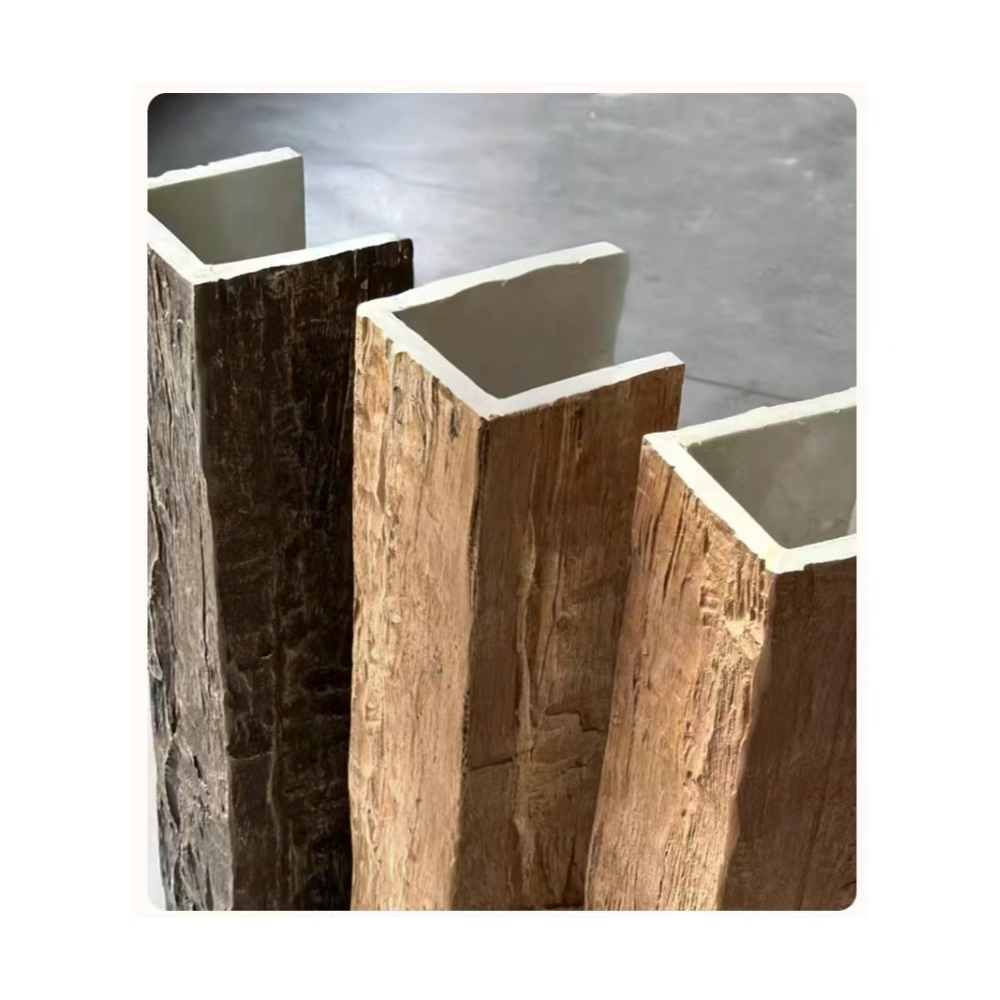
- Cross-section inspection of the high-density PU beam to verify internal consistency, foam density, and skin thickness
- Documentation review: ASTM E84 fire rating with a test date inside the last 18 months, engineering letter for the project's largest span, and material safety data sheet
- Sample aging test: 200 hours of QUV exposure for exterior-rated beams, accelerated weathering read against the manufacturer's published warranty
- Mockup installation in the actual project space when possible — usually a single beam dry-fitted on site before bulk production
- Lead time and replacement-part agreement tested against a real inquiry
If a beam passes all six steps, it goes into the designer's working library. If it fails any one of them, it doesn't get specified regardless of how nice the sample looks.
Visual evaluation beyond the swatch
The most common mistake in beam qualification is evaluating the sample on a conference room table under office fluorescents. Real ceiling beams live under three different lighting regimes: warm residential lighting (2700K), accent LED (3000K–3500K), and natural daylight shifting from direct sun to overcast. The same beam surface reads differently in each.
Designers qualifying a new beam product evaluate it under a controlled lighting setup that includes:
- 3000K LED strip lighting at a 30° raking angle
- 4000K daylight simulation at 75° from vertical
- A diffuse fluorescent reference that approximates a flat office ceiling
The beam passes the visual test only if the surface reads consistently across all three. Raking light under warm LEDs is the most revealing condition; that's where texture defects, repeat patterns, and finish inconsistencies show up first.
Internal structure tells the truth
Cutting a sample cross-section in front of a designer is a high-stakes move. It tells the trade everything about whether the factory is running honest production. A high-density PU beam specification reveals:
| Component | What to check |
|---|---|
| Outer skin | Consistent thickness (typically 3–5 mm), no voids, no orange-peel |
| Foam core | Uniform density, no air pockets, bonded tightly to the outer skin |
| Reinforcement (where designed) | Steel channel or composite stiffener properly anchored, not floating in foam |
| End caps or joinery | Closed-cell structure where the hollow form was sealed, no leaks at the cut ends |
Designers who recommend beams consistently either do the cross-section inspection themselves on a prototype order, or they trust a partner who has done it on their behalf. Factories that refuse cross-section review are factories that don't make the recommendation list.
Documentation has to be dated
A test certificate issued five years ago belongs in a retired file. Fire ratings, structural ratings, and material data are not properties that hold steady across factory formulations. A reputable beam product offers:
- ASTM E84 reports dated within 18 months, with the specific production run tied to the test lab's report number
- Engineering letters bearing the seal of a structural engineer licensed in the project jurisdiction
- Material safety data sheets aligned with current GHS classification
- ISO 9001 or equivalent quality management certificate for the factory, renewed annually
Trade buyers evaluating a beam product should verify documentation currency before quoting on a job. Documents older than two years warrant a follow-up with the factory for an updated test cycle. The asking is unusual in some markets and standard practice in others — designers running international work should expect to make it standard.
The mockup install
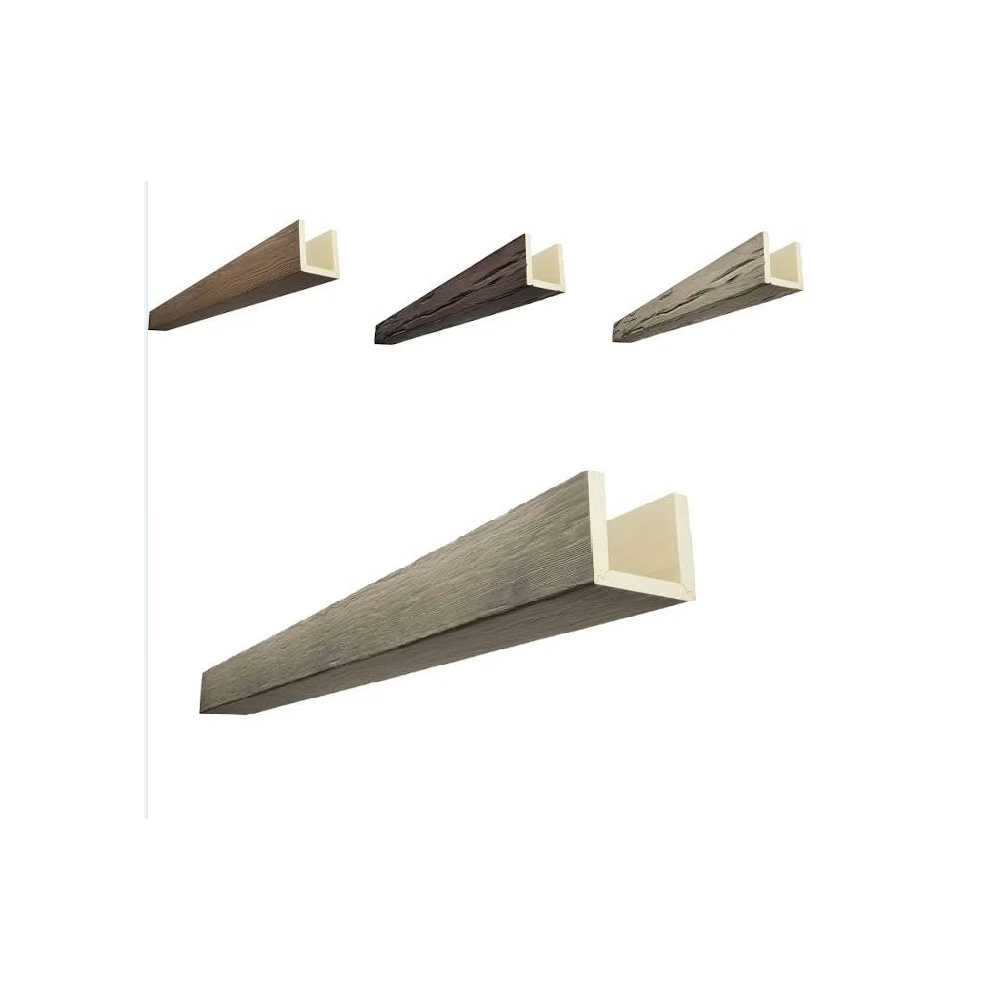
Every serious designer has a story about a beam product that looked perfect in the conference room and failed in the actual space. The mockup is the cheapest insurance against that story repeating. The mockup process:
- One full-size beam, finished to production standard, shipped to the project site
- Dry-fitted in the actual intended location for a minimum of 48 hours
- Evaluated under project lighting, viewed from the actual sight lines (entry, primary seating, secondary circulation)
- Optional: coated on one section to test field-application compatibility
The mockup isn't cheap. Shipping a full-size beam internationally for mockup can run $1,500–$4,000 depending on profile and destination. For projects above $1M in scope, designers treat it as a standard line item. For smaller projects, the mockup often happens at the designer's studio rather than the project site, or relies on a beam the designer already holds from a previous project.
Lead time discipline
A beam product can be beautiful, well-documented, structurally sound, and still get dropped from the recommendation list because of poor lead time discipline. The patterns that signal a factory will struggle to honor a delivery date:
- Lead time quotes that vary by more than 20% between the first and second inquiry
- Production-line photos or capacity disclosures that don't reconcile with stated monthly output
- Hesitation or refusal to commit to a replacement-beam delivery window in the warranty terms
- Trade references that complain about schedule slips but praise product quality
The honest reality of international sourcing is that a 25–35 day production window plus 25–40 day shipping means a 50–75 day total logistics timeline from PO to jobsite. A factory that quotes 30-day total lead time is either producing from existing inventory (worth confirming) or has weaker discipline than its marketing claims. Designers ask.
Replacement-part agreements
A 10-year replacement-part agreement sounds like boilerplate until a beam is damaged on site two years into a project, and the manufacturer is no longer making that exact profile. Designer-recommended products typically hold mold tooling for the production life of the beam, with a contractual commitment to produce a single replacement beam within a specified window.
The standard terms in a good agreement:
- Mold retention period (typical: 10 years post-final-shipment)
- Replacement beam production window (typical: 14–21 days from request)
- Pricing terms (typical: cost-plus-shipping or fixed-price schedule)
- Finish-match guarantee against retained master sample
A factory that won't commit to these terms is a factory the designer won't recommend. The cost of a single re-fabrication on a damaged beam dwarfs the entire saving from choosing the cheaper supplier.
Trade entry paths for importers and project managers
Importers building a beam product line have a different optimization problem than designers choosing a single project. The recommendation framework still applies, just rescaled:
- Sample at five to seven factories minimum, with the same reference panel sent to each
- Audit two factories on site before signing an exclusivity agreement
- Build a standing relationship with one primary supplier and a backup supplier
- Lock the supply agreement with mold-retention, color-locked master samples, and replacement terms
- Stock the most popular profiles and finishes as inventory, not just-in-time supply
The importer version of the recommendation list is closer to a real partnership: a manufacturer that grows with the importer's business, builds inventory against shared forecasts, and respects the importer's brand reputation downstream.
How recommendations travel
A designer's recommendation rarely stays inside one studio. It travels through general contractors, building owners, hospitality brands, and other design firms. Once a beam product earns a confident recommendation, it tends to multiply in commercial work — boutique hotel chains, restaurant groups, and luxury residential developers all carry reputation forward through their preferred designer networks.
Conversely, a bad recommendation can damage a designer's professional reputation. One failed ceiling beam in a flagship hotel lobby is the kind of failure that follows a principal around for years. The recommendation bar is set high because the downside risk is real.
Closing notes for the trade
Designer-recommended faux wood beams aren't a brand status. They're a working answer to a procurement problem. They earn their place through rigorous qualification, repeated field verification, and responsible warranty commitments from the manufacturers behind them. The trade benefits when that process is transparent, when expectations are calibrated to real-world timelines, and when documentation is current.
The next time a designer quietly specifies a particular beam manufacturer on a high-end project, it isn't a coincidence. It's the output of a recommendation engine that runs every product through roughly the same six-step filter, and remembers the wins and losses for years.
Technical References
ASTM standards cited in every specification
Test Data
Lab results from internal testing program
Updated 2026
Reviewed against current product specs


