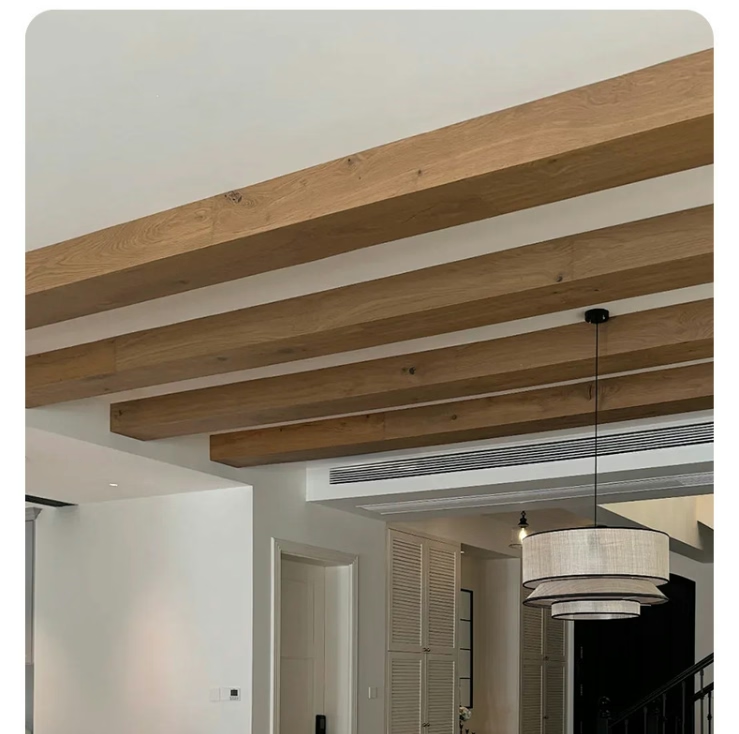
A contractor in Dubai calls about a 400-beam order for a hotel lobby renovation. They have seen "high-quality faux wood beams" in three competing catalogs and cannot tell the difference from the photos. The catalogs all look the same, and the price spread is wide enough to make anyone nervous about which end of the range represents real value.
Quality in this industry is not a marketing word. It is a measurable combination of formulation density, finish depth, dimensional tolerance, packaging discipline, and certification. A wholesale buyer who understands how those elements show up on the production floor — and how they translate into something visible after installation — makes better decisions than a buyer who relies on brochure language.
This article is a practical look at what high quality means in factory-direct wholesale supply of faux wood beams, and how serious buyers evaluate it.
What separates a high-quality faux wood beam from a budget one
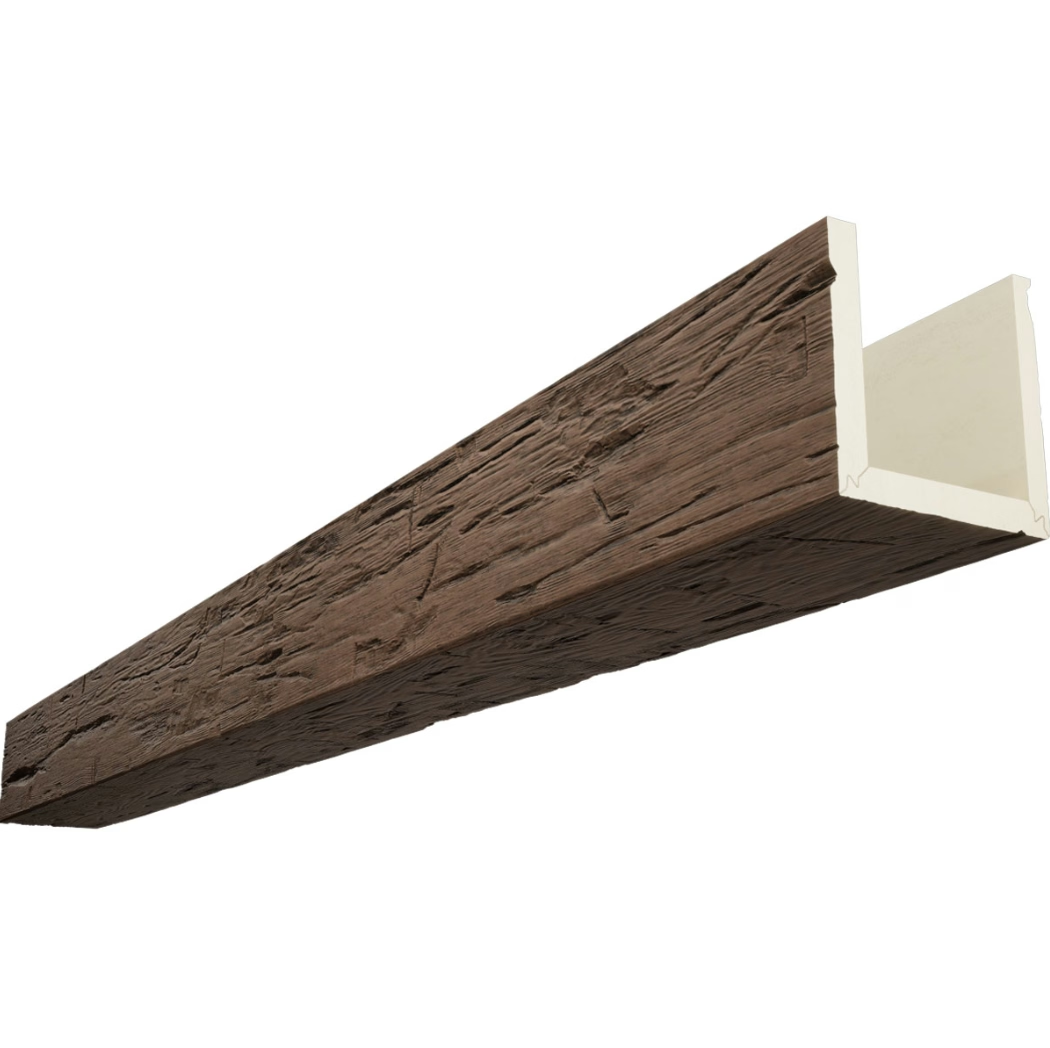
The visible surface of a faux wood beam is finished material over a polyurethane casting. Beneath that surface, several production variables determine whether the beam will look convincing on day one and still look convincing in year ten.
Formulation density
Polyurethane formulations can be engineered within a wide density range. A high-density formulation feels closer to hardwood when knocked, resists denting during installation, and holds its shape under temperature swings better than a low-density casting. It also weighs more per meter, which affects shipping cost, so the density choice is a deliberate trade.
A premium factory's standard density typically runs heavier than a budget supplier's, but the buyer rarely sees the formulation spec. They see a beam that survives handling, installs cleanly, and stays flat on the ceiling. That is the practical signature of a denser formulation.
Mold detail and grain repetition
The mold is the master form that gives a faux beam its surface texture. A high-quality mold captures fine grain detail from the original timber reference, and the factory manages mold rotation to avoid the same grain pattern repeating too obviously across a run.
Lower-quality operations cut corners here. They use older molds with worn detail, or they run longer from each mold before retouching, which produces visible repetition in the surface. On a large ceiling installation, repetition reads as fake from across the room.
Finish layering
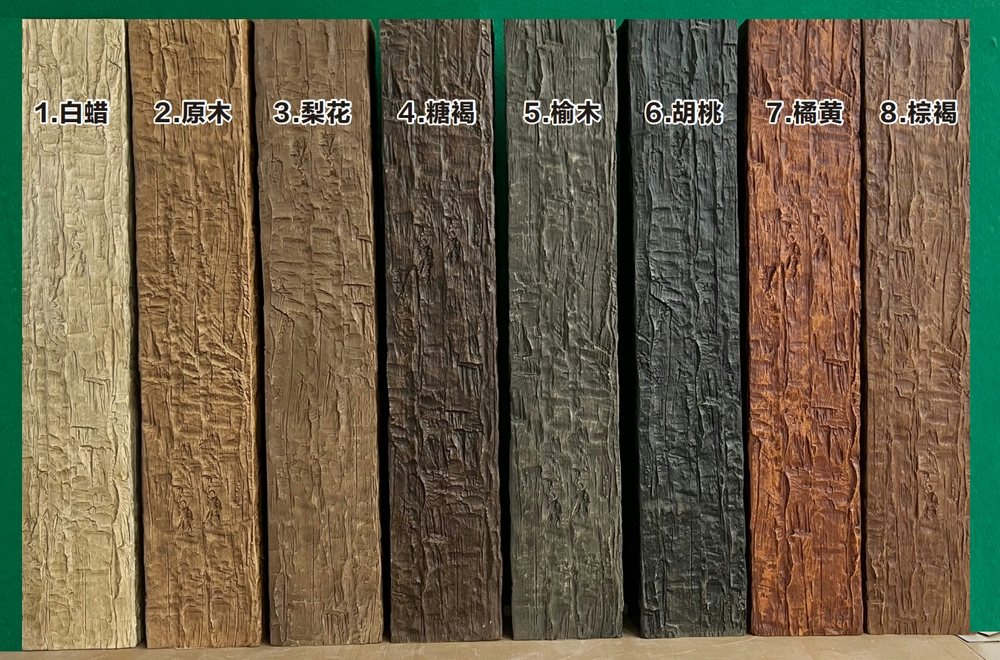
A single color wash applied to a textured casting will not look like real timber, regardless of how good the casting is. Aged timber has multiple layers of color that show and recede depending on the angle of light. A quality finish involves at least three steps: a base coat, a wash or glaze, and a top highlight or lowlight to bring out the grain.
The labor difference between a single-step and a multi-step finish is real. It shows up in the unit price. It also shows up in the finished ceiling.
Dimensional accuracy
Beams that vary in length or squareness slow installation. Workers compensate with shims and filler, and the finished ceiling looks handmade in ways the designer did not intend. Tolerance control on the factory side is a quiet quality variable that has loud consequences on the project site.
A premium factory publishes tolerance ranges for length, width, and squareness and inspects against them. A budget operation measures a sample and calls the rest good.
Certifications and tests that matter on commercial projects
Commercial projects carry documentation requirements that go beyond the beam itself. Three categories of certification come up most often.
Fire ratings
Polyurethane is a polymer, and like all polymers, it burns. The fire performance of the finished beam depends on the formulation, any fire-retardant additives, and the surface treatment. Markets vary in what they require, but most commercial work needs at least a Class B or Class C rating under ASTM E84 or an equivalent local standard.
A wholesale buyer supplying commercial projects should request test certificates for the specific profile and finish they are ordering, not generic certificates from the formulation supplier. The certificate should be recent, issued by an accredited lab, and list the tested configuration clearly.
Material safety
Some markets regulate the chemical content of building products, particularly for VOC emissions and restricted substances. California (CDPH), France (VOC emission classes), and Germany (AgBB) all have relevant schemes. A factory exporting to these markets should be able to produce test reports for the finished beam, not just the raw material.
Origin and trade documentation
A certificate of origin is standard for any export shipment. Some markets — those with free trade agreements — offer preferential duty rates against documented origin, and a credible certificate is the difference between paying full duty and paying reduced or zero duty. A factory with export depth handles this routinely.
For projects with sustainability reporting requirements (LEED, BREEAM), documentation on recycled content, regional sourcing of materials, or manufacturing certifications can also come into play. Not every project asks for it, but having it available simplifies the conversation when asked.
Production discipline on the factory floor
A buyer evaluating a factory for wholesale supply has limited ways to look behind the sample. The most direct is a factory visit. When a visit is not feasible, several practical proxies help.
Capacity and organization
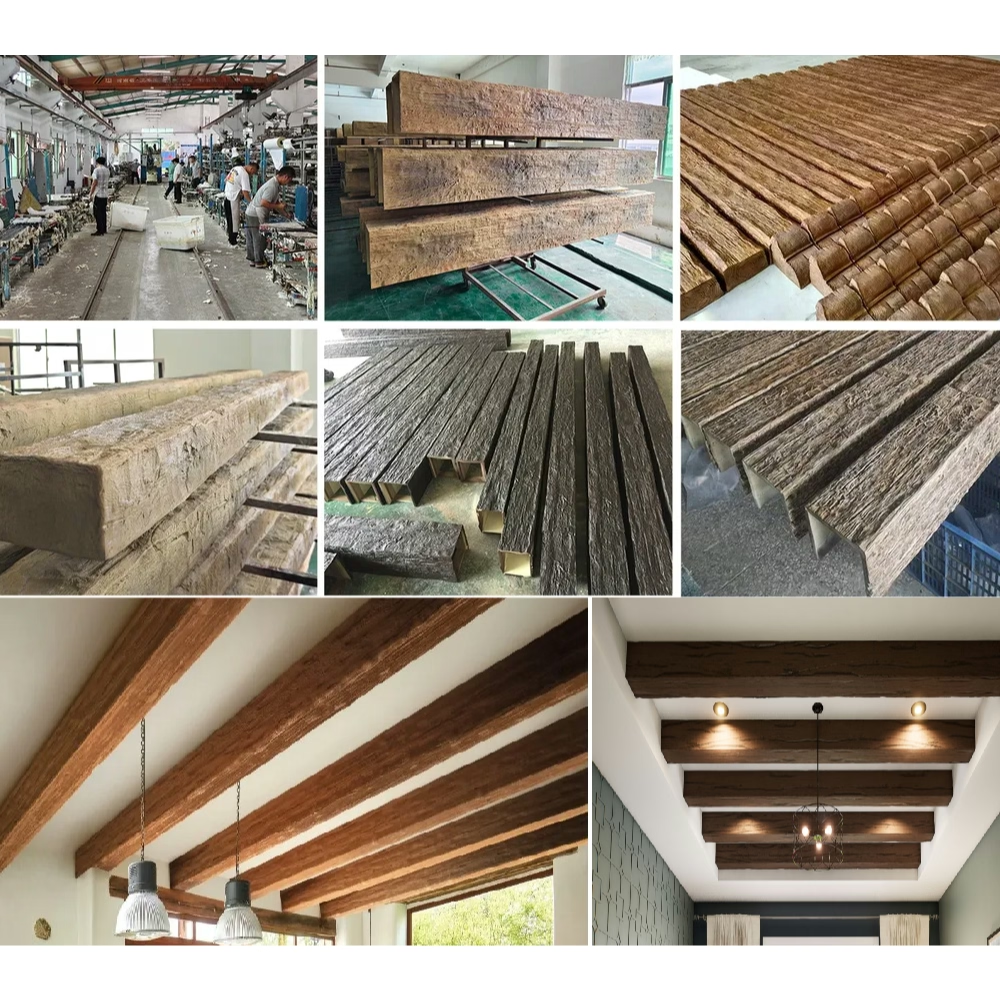
Walk through a photo or video of the production line and the pattern of organization speaks for itself. Aisles clear of clutter, molds stored properly, finished product staged in a way that does not risk damage, and quality check stations visible between production steps. These are not deep technical signals, but they correlate strongly with overall production discipline.
Sampling discipline
A factory that pulls samples from the actual production run rather than from a curated showcase is signaling quality discipline. This applies to both the initial sales samples and any pre-shipment reference pieces. Ask how the sample is generated, and check that the answer is consistent with what arrives in the container.
Retained reference samples
Every production batch should generate a retained reference sample that the factory stores. The sample is the tie-breaker in any future dispute about color or finish. Factories that keep these — and can produce them on request — run with a different level of care than operations that do not.
Communication responsiveness
Response time on technical questions is a useful early signal. A factory that answers specification questions promptly and accurately during the quoting phase tends to handle production queries with the same discipline. A factory that takes a week to reply to a finish question during sampling will take longer when production is running and the order needs a fast decision.
Pricing the difference between standard and high quality
Most wholesale buyers want to understand why one quote is 20 to 40 percent higher than another. The honest answer almost always involves finish steps, formulation density, and quality control time.
A budget beam is usually produced with a lighter formulation, a single-color finish, less mold maintenance, and faster packaging. The unit price reflects what was not spent in production.
A high-quality beam is produced with denser formulation, a multi-step finish, more attention to grain pattern variation across the run, tighter tolerance control, and export-grade packaging. The unit price reflects what was spent.
The interesting question for a buyer is not whether the more expensive beam is better in some abstract sense, but whether the better beam earns its premium on the specific project. A budget beam in a back-of-house corridor that nobody photographs is a reasonable spend. A budget beam on a lobby ceiling that anchors a hotel brand identity is a false economy.
How wholesale relationships support quality consistency
A wholesale buyer working with a quality factory benefits from continuity. The factory keeps the buyer's retained samples, finish recipes, and packaging preferences on file. New orders become faster to quote and more predictable to fulfill.
This continuity is itself a quality factor. A buyer who changes factory every two orders to chase a slightly lower price rarely gets the consistency that a buyer with a long-term relationship takes for granted. The unit price might be 5 percent lower in any given quote, but the variance between orders tends to be higher, and the rework or complaint cost eats the savings.
The wholesale channel works best when both sides treat the relationship as a multi-year partnership rather than a series of transactions. The factory invests in understanding the buyer's customer base, and the buyer invests in giving the factory predictable orders. Quality consistency is the natural output of that investment.
Evaluating a factory before the first container
For a wholesale buyer about to commit to a new factory, a few due diligence steps pay back quickly.
- Request references. A good factory has wholesale customers who will speak to their experience, often by email or short call
- Order a production sample. The sample cost is modest; the information it provides about real production quality is significant
- Audit a small order first. A 100-meter order that ships successfully tests the full pipeline before a 5,000-meter commitment
- Inspect at receipt. Quality checking the first order sets the standard for what both sides expect going forward
A factory that performs well across those four steps is a credible wholesale partner. A factory that resists any of them is signaling something the buyer should pay attention to.
The wholesale buyer's role as quality gatekeeper
Wholesale is not just logistics. It is the layer that takes factory production and turns it into a project-ready supply. The buyer's job is to filter quality, both at the factory end and at the customer end.
At the factory end, the buyer vets production standards and rejects orders that do not meet them. At the customer end, the buyer matches supply to project requirements — putting the high-quality beam on the visible ceiling and reserving budget beams for utility spaces.
This curation role is where the wholesale margin lives. Buyers who treat themselves as a pass-through logistics layer leave money on the table and tend to be replaced by lower-cost competitors. Buyers who take the quality role seriously become long-term supply partners to the contractors and designers they serve.
High-quality faux wood beams at factory-direct wholesale pricing is not just a pricing opportunity. It is a quality opportunity, and the buyer's job is to make sure the opportunity survives the journey from production line to installed ceiling.
Technical References
ASTM standards cited in every specification
Test Data
Lab results from internal testing program
Updated 2026
Reviewed against current product specs