An interior designer walks into a project meeting with a finish sample she pulled from a magazine tear sheet: a weathered beam with a particular grey-green undertone that does not exist in any catalog she can find. She needs it for a beachfront restaurant renovation, eight beams total, and the project starts in three months. The contractor suggested she "just find something close." She does not want something close.
This is exactly the kind of inquiry that belongs with a manufacturer rather than a reseller. A custom faux wood beam finishes what stock catalogs cannot offer, but the path from "I have a vision" to "I have a beam" is specific enough to walk through.
What counts as a custom faux beam order
The word "custom" gets used freely in the industry. Most factory catalogs list "custom colors available" in small print, which can mean anything from a genuine bespoke finish development to a quick recolor of an existing profile. The distinction matters for both cost and timeline.
A genuine custom order involves at least one of:
- A new profile that requires fresh mold tooling
- A finish developed specifically for the project, with a recipe the factory retains
- A non-standard dimension outside the factory's published range
- A combination of the above
A less custom but still project-specific order might just adjust a color within the factory's existing finish library. That is a faster, cheaper project, but it is not the same level of work as a true bespoke commission.
The honest first question in any custom inquiry is which side of that line the project sits on.
How to structure the initial conversation
Manufacturers see custom inquiries across a wide quality range, from designers with detailed specifications to homeowners with magazine photos and rough sketches. A better-prepared inquiry gets a better and faster response.
What to include in the first email
The first contact should cover five pieces of information, ideally with attachments where relevant.
Project context. A short paragraph describing the project. Hospitality renovation, residential new build, retail fitout, or something else. This helps the manufacturer understand the specification environment and the documentation requirements that may follow.
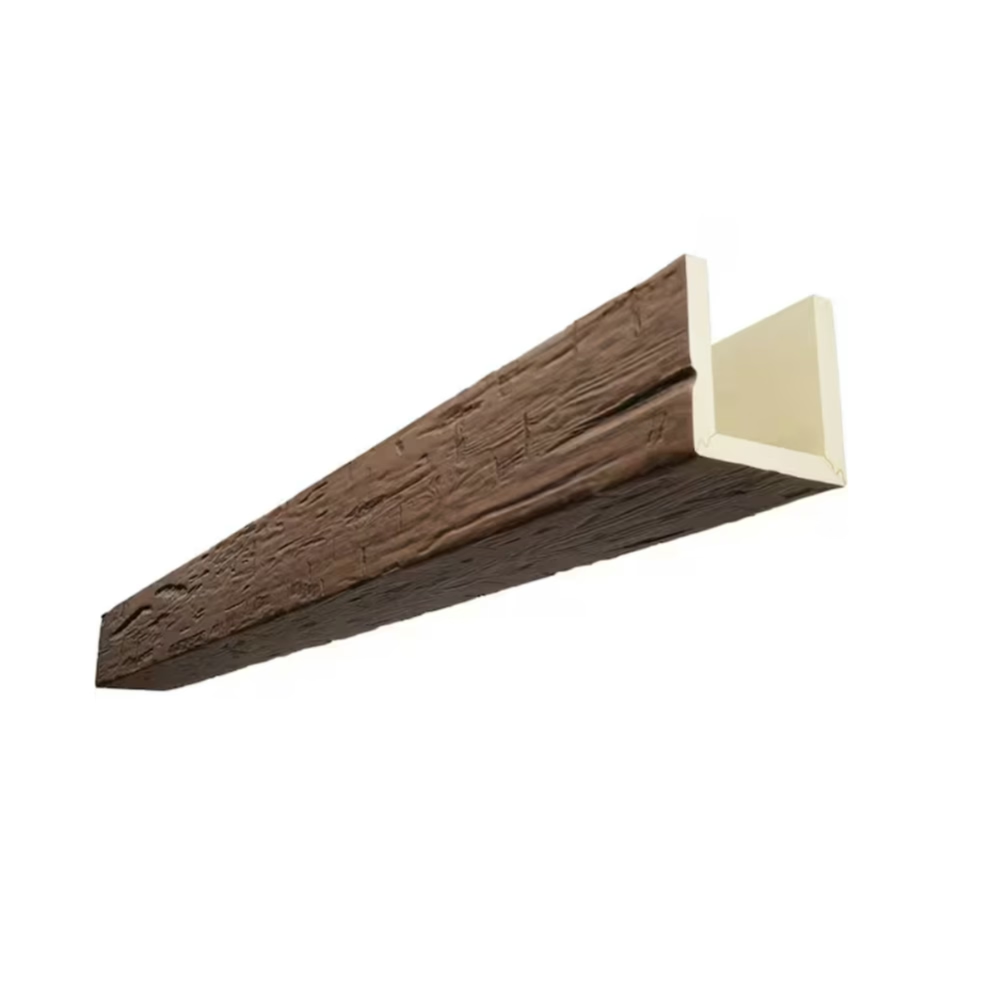
Profile reference. Sketches, photos, drawings, or descriptions of the cross-section. Real timber references are particularly useful because they describe both the overall shape and the surface character.
Dimensions. Length, width, and height. Approximate is fine for an early conversation; precise is better. If the project requires unusual spans or thicknesses, that should be flagged early.
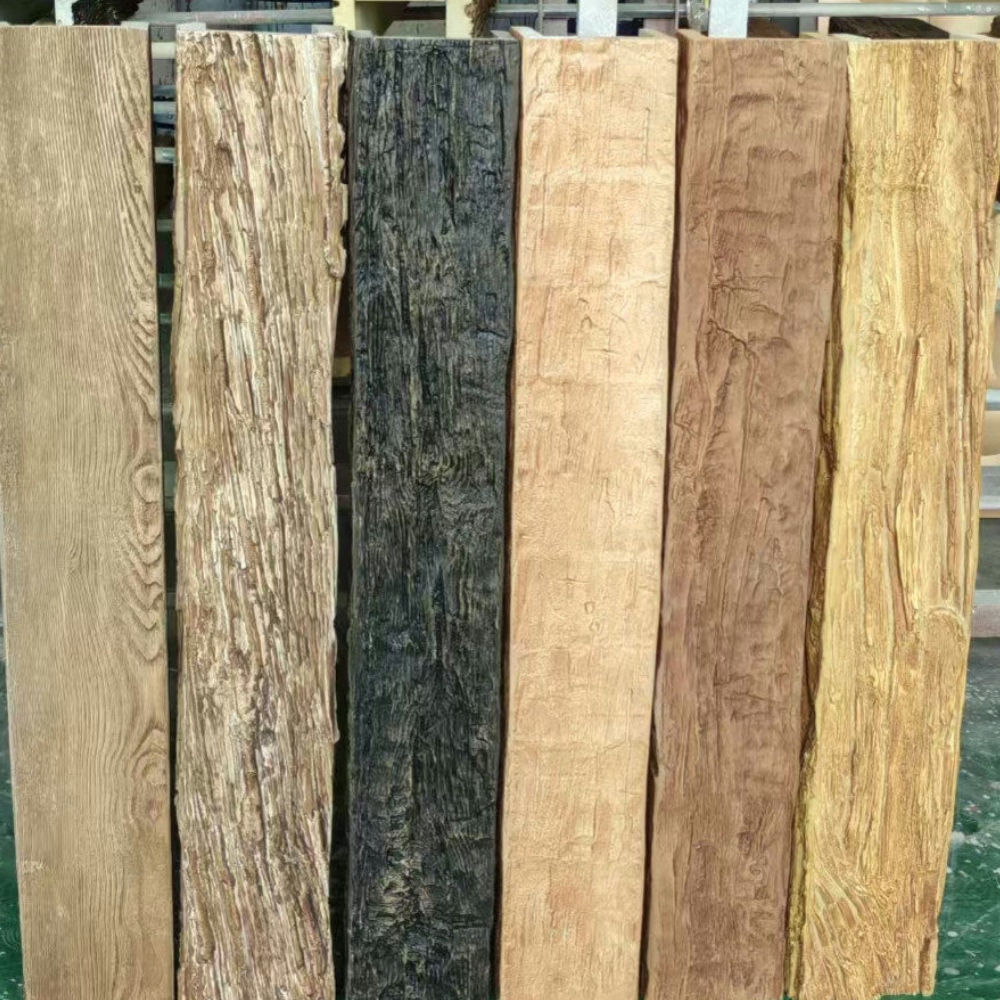
Finish reference. Photos of the desired color and texture, with notes on what the beam should look like when installed. For finish development, the manufacturer usually prefers multiple references rather than a single hero image.
Quantity and timeline. A rough project quantity and the date the beams need to be on site. Timeline drives the production plan and may shape what is feasible.
A manufacturer receiving this level of information on a first contact can respond substantively within a few business days. A vague inquiry gets a vague response, which wastes time on both sides.
What to expect back from the manufacturer
A serious manufacturer responds to a custom inquiry with a few standard items. A sample plan, which describes what they will produce first and at what cost. A feasibility note, which calls out anything in the specification that needs adjustment. And a production outline, even at ballpark level, including tooling decisions for new profiles.
If the manufacturer cannot provide any of these, the inquiry is probably beyond their capability or interest. Better to learn that quickly than after weeks of email.
Sampling as a custom design conversation
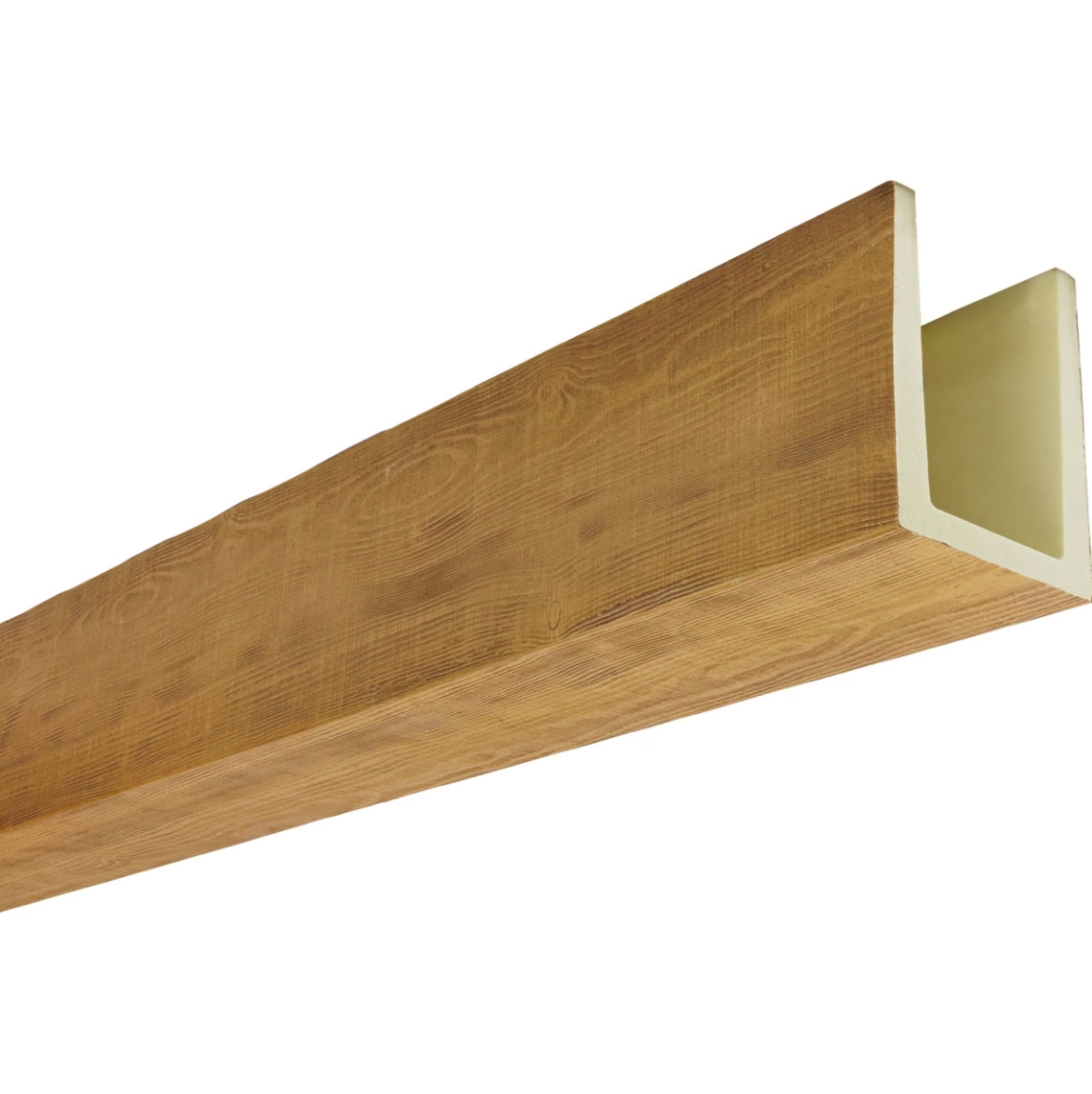
Samples are not just final products to approve. For a custom order, sampling is the design conversation itself. Each sample narrows what is possible and tightens the specification.
A typical custom sampling process runs through three or four rounds.
Round one: exploratory samples. The manufacturer interprets the design references and produces several pieces showing different directions. The designer responds by selecting the closest match and asking for adjustments. This round is wider in variation, and the cost is modest.
Round two: refinement samples. Based on the designer's feedback, the manufacturer adjusts finish color, surface texture, or proportions and produces a focused set of samples. The variation is narrower, and the selection usually closes here.
Round three: production reference. The manufacturer produces a final reference piece from the materials and process that will be used in production. This sample is what the factory bench marks against during bulk production. Both designer and manufacturer retain a copy.
Optional rounds: edge cases. If the project has unusual conditions — outdoor exposure, fire rating requirements, structural loading — additional samples may be needed to test the formulation against those conditions.
A project that closes in three rounds is well-specified from the start. A project that runs to five or six rounds usually signals that the design references shifted mid-process, which is fine, but extends the timeline.
Practical considerations unique to custom orders
Custom projects introduce variables that stock orders do not have. Awareness of them upfront avoids surprises.
Tooling for new profiles
A profile that does not exist in the manufacturer's library requires new tooling. The cost depends on profile complexity and section size. A simple rectangular beam profile is inexpensive; an asymmetrical hand-hewn beam with deep surface texture costs more.
Lead time for new tooling is usually two to four weeks before sampling can even begin. The tooling cost is typically amortized into the unit price or charged separately depending on the manufacturer's preference. For a one-off prototype, separate tooling charges are common.
Finish development
A new finish is a recipe that gets repeated across the production batch. The recipe needs to capture color steps, application methods, drying times, and any surface treatments. A good manufacturer writes this down and retains a physical sample.
Finish development for a custom order typically carries a one-time development fee, again usually modest, that covers the labor of producing the recipe and the initial sample rounds. Some manufacturers waive the fee for large enough orders.
Quantity thresholds
Most manufacturers set a minimum order quantity for custom work. The threshold varies, but a common range is 50 to 200 linear meters for a custom finish. Below that threshold, the unit cost becomes unattractive because the setup time overwhelms the volume.
For smaller projects, the answer is often a close-match from the manufacturer's standard finish library. The designer does not always get exactly the color from the magazine, but they get something very close, on a faster timeline, at a more sensible unit cost.
Documentation for commercial projects
Custom projects in commercial settings usually require documentation that stock projects do not. Fire rating certificates, material safety data, and conformity declarations all need to be in place before delivery. A manufacturer used to commercial custom work will produce these as part of the project rather than as an extra.

Working with the manufacturer's design team
A manufacturer's design or technical team is a resource that custom buyers underuse. The team has handled hundreds of similar inquiries and can suggest adjustments that improve the final beam or reduce cost without changing the aesthetic.
A few productive patterns come up repeatedly.
Adapting the profile for manufacturability. Some profiles that look right in timber are expensive or fragile in polyurethane. The manufacturer's design team can suggest a shape that reads identically on the installed ceiling but produces more reliably and ships more safely.
Adjusting dimensions for efficiency. Standard mold widths and depths are cheaper than custom sizes. The designer may want an 11-inch-wide beam; the manufacturer may have a 10-inch profile that looks identical on the ceiling and saves the cost of new mold work.
Refining finish recipes for durability. Some finish colors look beautiful in the sample phase but show wear or UV sensitivity in service. The manufacturer's finishing team can flag these issues and propose alternatives that read the same color but hold up better.
A designer who treats the manufacturer's technical team as a collaborator usually ends up with a better beam at a better price than a designer who treats the factory as a production line that takes orders. The collaboration model is also faster, because the manufacturer can solve problems in real time rather than waiting for written specifications to resolve them.
When a custom inquiry belongs elsewhere
Not every design dream belongs in a manufacturer's custom shop. A few situations point toward alternatives.
A designer who needs an exact match to a specific existing timber should provide a sample of the existing timber, not a photo. Color matching from photos introduces drift that does not show up in person.
A homeowner with a single-beam project wanting a custom finish usually finds the per-meter cost prohibitive. Stock finishes with minor adjustments are the realistic answer, and a regional supplier can usually handle the project.
A custom profile in a small quantity is almost always priced at a level that surprises buyers. Manufacturers who quote honestly tend to lose these jobs to competitors who quote low and then cannot deliver. A designer who receives a high quote from a credible manufacturer should take it seriously; the lower quote often signals a manufacturer who has not understood the project.
Closing the custom conversation well
A well-run custom inquiry ends with a documented specification that both sides sign off on. The specification lists profile, finish recipe, dimensions, quantities, packaging, timeline, and acceptance criteria. Both parties retain a copy, and the factory uses it as the production reference.
A custom project that closes without this document is exposed to drift. The designer thinks they ordered one thing; the manufacturer thinks they were asked for another. Disputes at delivery stage are common in projects that skip this step.
The best custom projects close with both sides satisfied that the specification captures exactly what was agreed. That mutual confidence is what makes the manufacturer relationship worth cultivating for future phases of the same project or new projects that follow.
Technical References
ASTM standards cited in every specification
Test Data
Lab results from internal testing program
Updated 2026
Reviewed against current product specs