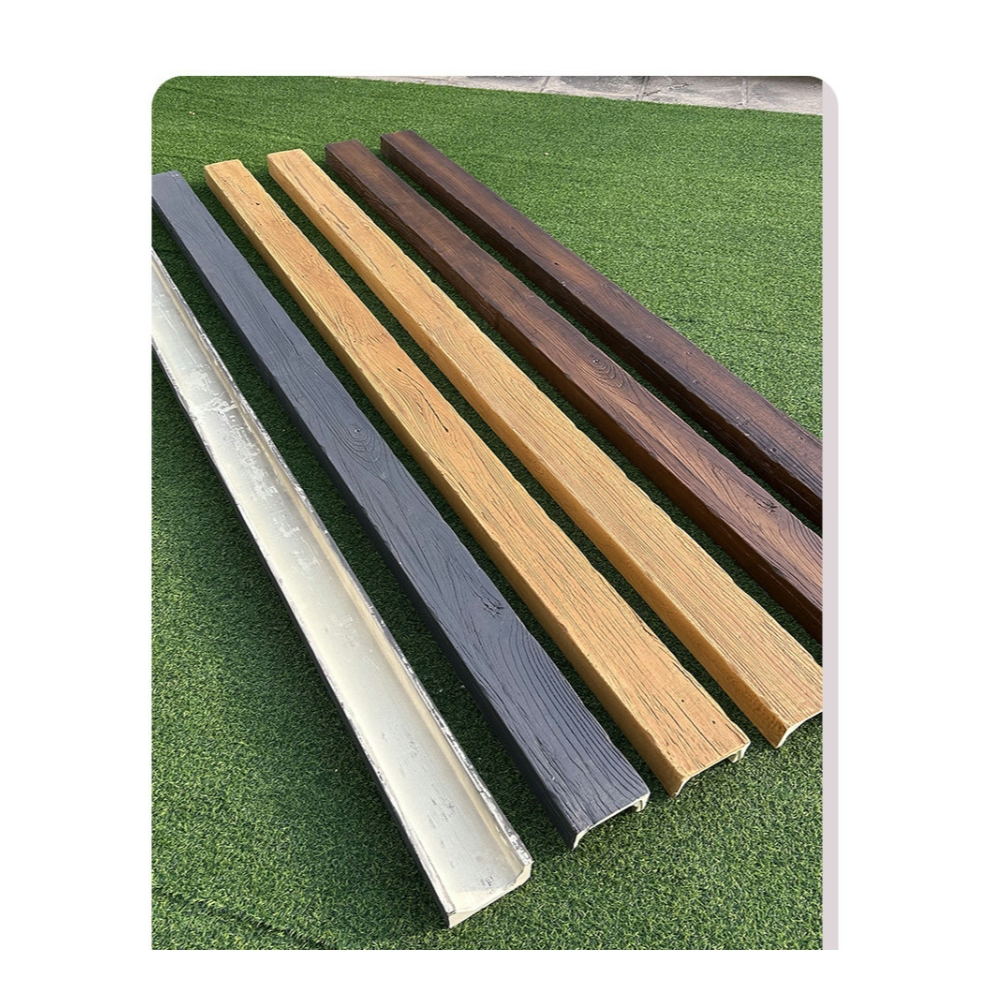
A general contractor in Texas schedules a 400-beam delivery for a multi-phase custom home development. The order includes 6-meter, 5-meter, and 4-meter lengths, all in a dark walnut finish, with custom end caps on the longer box beams. The manufacturer confirms it can deliver to the site in two batches, sequenced to match the framing schedule. The first truck arrives Friday morning, and the framing crew is ready to start hanging beams on Monday.
Direct site shipping is not the most common delivery model for faux beams, but it is the most useful one for contractors running active construction projects. It puts the product on the job site rather than at a regional warehouse, and it shifts a real amount of logistical coordination upstream.
This article covers what that model looks like from the contractor's perspective, and what contractors should expect and prepare for when working with a manufacturer on direct site delivery.
What direct site delivery actually covers
Direct site shipping means the manufacturer or its logistics partner moves the beams from the production line to the contractor's job site. The path includes the same stages as any finished building product — packaging, palletizing, line-haul, last-mile delivery, and unloading — but tailored to the realities of a construction site rather than a finished retail or commercial space.
For a contractor, this looks like:
- A scheduled delivery window that aligns with the project's phase plan
- A truck or set of trucks capable of handling the order size
- A laydown area at the site that can receive the load
- Handling equipment to unload and position the pallets where installation crews can access them
- A clear point of contact at the manufacturer for any issues that arise on arrival
The advantages are real. The beams arrive when the project needs them, ready to handle, without an intermediate warehouse stop and without breaking the contractor's workflow.
Sequencing deliveries to the project schedule
The most common failure in construction logistics is the disconnect between the product arrival date and the project's ability to install it. Materials on site too early become obstacles to other trades and risk damage from other work. Materials on site too late stall the trades that need them.
For faux beams specifically, the schedule dependency is usually tied to the framing or ceiling substrate. Beams need to be installed after the ceiling structure is ready but before the finish trades close up the ceiling. This window is not always wide, and missing it can delay the entire project.
A contractor who uses direct site delivery well works with the manufacturer's logistics desk to align delivery with that specific window. This usually means a conversation well before the production schedule locks in. The manufacturer needs to know the windows, and the contractor needs to know the realistic production and shipping lead time on the manufacturer's side.
Phase deliveries for long projects
For projects running longer than a few weeks, single deliveries tend to be the wrong answer. The site storage burden is too high, and the beams risk damage from other trades working around them. Phase deliveries sequenced to the framing schedule work much better.
A multi-phase custom home development that needs beams over six months will probably want three or four separate deliveries, each corresponding to a phase of construction. The manufacturer needs to keep finishes consistent across phases, which is a normal ask but worth confirming in writing before production starts.

Handling equipment and site conditions
Faux beams look like timber to the eye, but they behave differently during handling. Several practical realities shape what equipment the site needs.
Pallet unloading
The trucks that haul faux beams typically run flatbed or curtain-side configurations. Pallet unloading requires a forklift or a tractor with a pallet fork. Some long-beam pallets exceed standard forklift capacity and need a telehandler or a crane with appropriate rigging.
The contractor and the manufacturer should confirm unloading equipment is available at the scheduled delivery time. A truck that arrives on a Friday afternoon when the forklift has been returned to the rental yard is a common cause of stalled deliveries.
Laydown area
The delivery needs space to stage pallets where the installation crew can reach them. The space should be flat, dry, and reasonably close to the installation point. Long walkups between the laydown area and the ceiling waste labor hours on every beam.
For urban infill projects, the available laydown area is often tight. The contractor and the manufacturer's logistics team should plan the staging location in advance to avoid a delivery that parks on the street and blocks site access.
Site access for long trailers
A delivery of long beams may arrive on a trailer longer than 40 feet, particularly for full-container loads handled at the port before onward delivery. Tight site access, low clearances, narrow turns, and weight-restricted bridges can all affect the route in.
The manufacturer or its trucking partner usually asks for site access details before dispatch. Providing clear information about access constraints up front avoids a truck turning around at the gate and delaying the project by a day.
Coordinating delivery with the installation crew
The handoff from delivery to installation is where the planning pays off. A few habits make the transition cleaner.
Marking pallets by destination
When the delivery includes beams for multiple rooms or phases, labeling pallets by destination room saves significant time at installation. The manufacturer or the logistics partner can apply this labeling if the contractor provides it before shipment.
Without labeling, the installation crew sorts beams on site, which can add hours to a project that could otherwise be hanging product within minutes of delivery.
Inspecting on arrival
Every delivery should be inspected when it lands. The contractor or a designated representative walks the pallets, checks for visible damage, confirms quantities against the packing list, and flags any issues immediately.
A delivery inspection on the day of arrival is the only realistic window to flag transit damage for a claim. Damage discovered during installation, a week later, is much harder to attribute.
Handling components and instructions
Faux beams arrive with mounting hardware or brackets, end caps that may be packed separately, and installation instructions specific to the manufacturer. The contractor should plan to unpack and stage these alongside the beams rather than discovering them later when installation is already underway.
For custom-finish projects, some manufacturers include a touch-up kit for site-applied repairs. This should be in the hands of the installer, not buried in packaging.

Working with multiple trades on site
A construction site has more trades competing for time and space than the project schedule acknowledges. Carpenters, electricians, plumbers, painters, and finish crews all need access to the same spaces at different times. Beams tend to want overhead access, which puts them in conflict with electrical and HVAC rough-in if scheduling is not aligned.
A good construction sequence puts beams in after the rough-in trades have finished their overhead work but before the ceiling finish is applied. This sequencing depends on a delivery arriving within the window, which is exactly what direct site delivery is meant to support.
When the delivery is misaligned, the contractor faces an unattractive set of choices. Accept early delivery and store beams on site through other trades, with the damage risk that involves. Or refuse early delivery and rebook with the manufacturer, with the schedule slip that involves. Neither is great, which is why the upfront alignment matters so much.
Damage and claim handling on site
Despite good packaging, some damage happens during long shipments. The contractor's job on arrival is to document it clearly so that any claim with the carrier or the manufacturer is straightforward.
Photos of damaged items before they are moved, a written note on the delivery receipt, and a separate communication to the manufacturer's logistics contact on the same day are the standard steps. Most manufacturers handle damage claims within a week or two for replacement parts shipped quickly.
The contractor's interest in keeping the relationship strong is worth noting. Manufacturers who feel that their products arrive damaged unfairly tend to disengage from the relationship. A reasonable damage claim, supported by documentation, is much more likely to be processed efficiently.
Site delivery versus warehouse delivery
Not every project benefits equally from direct site delivery. Some good rules of thumb:
- Direct site delivery is right when the project has a defined installation window, the laydown area can accommodate the delivery, and the site is reasonably accessible to the trucking equipment being used
- Warehouse delivery is better when the project does not yet have a clear installation window, when the site cannot stage the volume, or when the contractor wants flexibility to draw product as needed
For contractors running their own consistent work, a regional warehouse stocked against ongoing projects is sometimes a better answer than direct site delivery every time. For contractors working on a single large project or a defined phase, direct site delivery removes the handling step and saves labor.
The decision is rarely all-or-nothing. Many contractors use a hybrid approach, with stock profiles held in a regional warehouse and custom orders delivered direct to site.
Setting expectations with the manufacturer
A clear conversation at the start of the project makes direct site delivery work better.
- Confirm the manufacturer's typical delivery window accuracy on past projects
- Agree on a protocol for unexpected delays, including communication timing
- Identify the on-site contact with authority to receive and inspect the delivery
- Confirm the manufacturer's damage and replacement policy in writing
These details are not exciting, but they are the difference between a delivery that lands cleanly and one that creates problems. Contractors who build this habit into their standard workflow tend to be the ones that manufacturers prioritize, which improves the service level on future projects.
Technical References
ASTM standards cited in every specification
Test Data
Lab results from internal testing program
Updated 2026
Reviewed against current product specs