
Salt air has a way of bleaching timber. Beach cottages, harbor homes, and breezy retreats from Cape Cod to Cornwall rely on that silvery-pale patina to soften interiors and reflect light back across small floor plans. Real driftwood beams deliver the look, but they arrive with weight, splinters, insect concerns, and a price tag that surprises even experienced contractors. Polyurethane faux beams in a distressed whitewashed pine finish now capture that same coastal farmhouse atmosphere in a fraction of the installation time.
Why Whitewashed Pine Reads as Coastal
Whitewashing is older than the farmhouse trend itself. Scandinavian and British coastal builders used diluted lime washes during the 18th and 19th centuries to lighten low-ceilinged rooms while letting the grain telegraph through. The visual effect is a chalky overlay where knots and weathering sit slightly proud of the surrounding surface. The eye reads the contrast as authentic, even when the timber underneath is freshly milled.
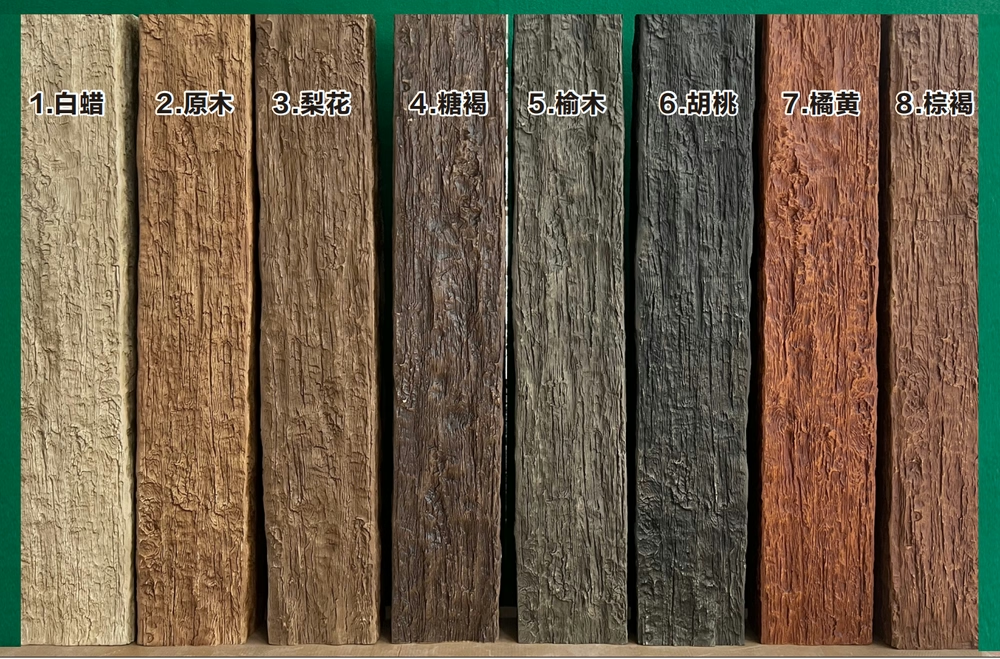
Polyurethane captures this through a multi-step casting process. A real pine board, often reclaimed or distressed by hand, is used as the master mould. The PU casting picks up every grain line, nick, and saw kerf from the original. A base coat of off-white wash is sprayed on, followed by a translucent glaze that pools in the recesses. The result is not a flat painted beam but a piece that reacts to raking light the way a real whitewashed board would at sunset.

Designers lean on this effect because it solves a real coastal problem: bright interiors can feel sterile. A pure white ceiling reads clinical. Adding timber, even a hint of it across a single beam run, introduces warmth and grounds the room. Whitewashed pine does that without darkening the palette the way walnut or oak beams would.
Color Matching with Existing Trim
Most coastal farmhouse palettes use three or four whites on the same project. Window casings, baseboards, and shiplap planking rarely match each other, let alone the ceiling. That mismatch is part of the charm.
When specifying faux beams, the goal is not a perfect color match. The goal is a tonal family. A typical whitewashed pine beam will read as:
| Tone | Approximate Paint Reference | Where It Sits |
|---|---|---|
| Pale driftwood | Benjamin Moore White Dove OC-17 | Base wash |
| Weathered linen | Benjamin Moore Pale Oak OC-20 | Mid-grain |
| Mineral grey | Benjamin Moore Smoke 2122-40 | Knots and recesses |
| Soft putty | Farrow & Ball Shaded White 201 | Underside shadow |
Sample chips should be requested before bulk orders. Most factories will send three or four beam offcuts in different wash strengths, labeled by intensity. Interior designers ordering on behalf of clients appreciate this because it lets the homeowner hold the chip next to the trim before committing to a 200-foot run.
Sizing for Coastal Ceiling Heights
Coastal farmhouse builds tend toward 8 to 10-foot ceilings. Anything higher reads as coastal modern rather than coastal farmhouse. Beams should be sized to that scale.
For an 8-foot ceiling, a 5-inch wide by 7-inch tall beam keeps proportions honest. For a 9 or 10-foot ceiling, 6 by 8 or 6 by 9 works better. Going larger than the ceiling can handle creates the dreaded "barn beam in a dollhouse" effect that flags the project as a pastiche.
Beam length is more flexible than width. Polyurethane faux beams ship in lengths from 4 to 20 feet, depending on factory capability. Longer runs require fewer seams. For open-plan living areas, 16 to 20-foot beams read as continuous structural members. Where the room breaks at a wall, drop the seam into a perpendicular beam rather than mid-span.
Common Sizing Chart for Coastal Projects
| Room | Ceiling Height | Beam Width | Beam Height | Typical Length |
|---|---|---|---|---|
| Bedroom | 8 ft | 5" | 7" | 8-12 ft |
| Living room | 9 ft | 6" | 8" | 12-16 ft |
| Open kitchen/dining | 10 ft | 6" | 9" | 16-20 ft |
| Vaulted great room | 12+ ft | 8" | 10" | 16-20 ft |
Importers sourcing for resale will want to keep a 60/40 split in stock: 60% in the 6x8 size that fits most residential ceilings, 40% in larger profiles for commercial and luxury work.
Installation Considerations in Humid Climates
Coastal homes face relentless humidity. Salt air corrodes fasteners, swells timber, and pushes finishes. Polyurethane is non-porous and will not absorb moisture, which is one of the major reasons builders in Florida, the Carolinas, and the Gulf Coast have moved away from real cedar beams in exterior-style applications.
Faux beams still need to be handled like finished product, not structural lumber. They do not carry roof loads. They are decorative wraps, sometimes U-shaped, sometimes solid for shorter spans. Where real timber would be lagged into a header, faux beams slide over a cleat system or pair with a hidden blocking strip inside the ceiling.
For humidity performance, the manufacturer should be able to provide test data on:
- Dimensional stability between 20% and 95% relative humidity
- UV resistance rating for sun-exposed gable ends
- Freeze-thaw cycle tolerance for unconditioned porches
A factory that has shipped to the Caribbean, Mediterranean, or Southeast Asia will have these numbers ready. A factory selling only into dry inland markets may not.
Working with Designers and Architects
Architects working on coastal projects often specify real timber in the early stages of design, then revisit the spec at the construction documents phase. Three issues drive that change:
- Lead time. Reclaimed pine beams in whitewashed finish can take 8 to 16 weeks from order to delivery. PU faux beams ship in 3 to 5 weeks from the date of deposit.
- Structural engineering. A 6x8 faux beam weighs roughly 2 pounds per linear foot. A real pine beam of the same dimensions weighs 8 to 10 pounds per foot. The structural support, blocking, and fastener schedules are entirely different.
- Site handling. Faux beams arrive on site in cardboard crating. Two installers can carry what would otherwise require a forklift and a lift.
For renovations on existing homes, this is particularly valuable. Older coastal cottages often have plaster ceilings that will not accept the additional point loads of heavy beams. Lightweight faux beams spread their load across a cleat and put negligible stress on the existing structure.
When to Specify Two-Beam or Three-Beam Patterns
Coastal farmhouse styling does not require a forest of beams. Most designers use three patterns depending on room function:
- Single run along the ridge. Best for great rooms with vaulted ceilings where the eye wants one strong horizontal line.
- Parallel pairs across the ceiling. Works for kitchens with islands, where two beams frame the island and align with the range and sink.
- Perpendicular cross. Suitable for dining rooms where a single cross-tie effect references timber-frame construction.
Importers and wholesalers should ask clients which pattern they want. The factory needs to know whether the order is a single long run or a quantity of shorter beams that will be field-cut to pattern.
How Distressing Levels Affect Price
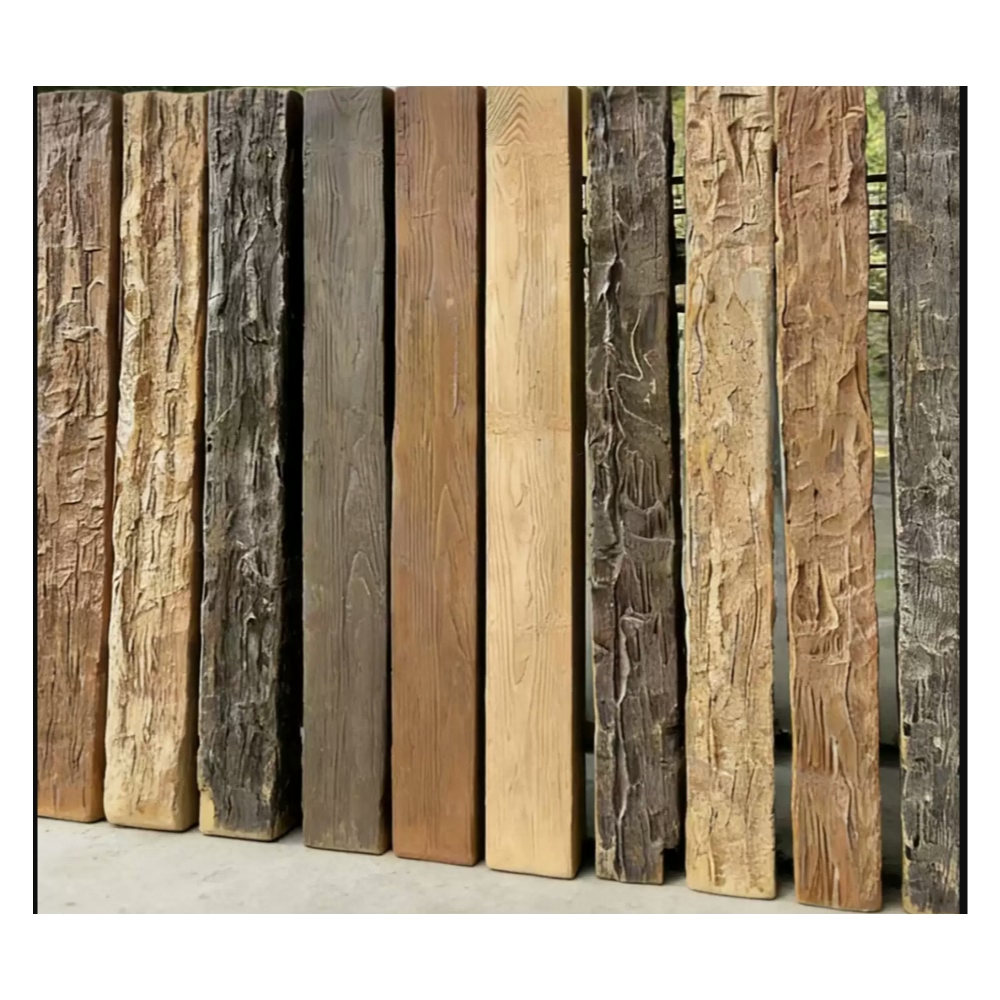
Distressing is graded. Most factories offer three to five levels, each at a price point:
- Level 1: Light. Uniform grain, minimal weathering, one or two knots per 4 feet. Lowest cost.
- Level 3: Medium. Visible wear marks, varied grain density, scattered knots. Mid-range.
- Level 5: Heavy. Deep gouges, multiple knots per 4 feet, edge wear, occasional cracks. Highest cost.
Coastal farmhouse styling usually sits in the Level 2 to Level 3 range. Too little distressing and the beam reads as new construction. Too much and it overwhelms rooms with restrained finishes. A medium-distressed beam lets the whitewash layer do the visual work, with the distressing providing texture rather than the headline.
Care and Long-Term Maintenance
One of the strongest arguments for PU faux beams in coastal settings is how little they ask of the homeowner. A soft microfiber cloth and a mild soap-and-water wipe-down once a year will keep the finish looking fresh. There is no need to oil, sand, or re-stain.
For porches, sunrooms, and other partially exposed locations, the factory finish typically includes a UV inhibitor. After 8 to 10 years, depending on sun exposure, a light refresh coat of the wash glaze can be applied with a rag. Most factories sell touch-up kits in 250ml containers specifically for this purpose.
Builders should warn clients against harsh chemical cleaners, magic erasers, and abrasive pads. The finish is durable but not industrial, and a single bad cleaning can take the chalky wash off and expose the warmer undertone below.
Final Thoughts on Sourcing
Wholesalers and project buyers sourcing whitewashed pine faux beams for coastal projects should request three things from any factory before placing an order:
- A physical sample chip in the exact wash specified, not a printed color card
- A copy of the test data for humidity and UV performance
- Confirmation of the lead time for the order quantity, including the realistic production window plus shipping
A factory that provides all three with confidence is one that has shipped similar projects before. A factory that hand-waves any of them is one to avoid, regardless of price.
Coastal farmhouse styling is forgiving but only if every element plays its part. Whitewashed pine beams set the ceiling tone before any furniture enters the room. Getting them right at the sourcing stage pays back across the entire project.
Technical References
ASTM standards cited in every specification
Test Data
Lab results from internal testing program
Updated 2026
Reviewed against current product specs


