
A dining room in a 1908 farmhouse in the southern Ozarks, a converted hayloft in Provence, a mountain lodge outside Banff. Walk into any of these spaces and the ceiling tells you where you are before you read a single label on a bottle. Vintage rustic interiors are not built, they accumulate. Every scuff, every weathered knot, every slight warp on a beam is a record of the building's life.
Specifiers trying to recreate that in a new build face a dilemma. Genuine reclaimed timber is finite, expensive, and increasingly regulated. Polyurethane faux beams in a distressed wood effect now offer an alternative that looks aged without the supply chain headaches. The question is no longer whether the look can be matched, but how to specify it well.
What "Distressed Wood Effect" Actually Means
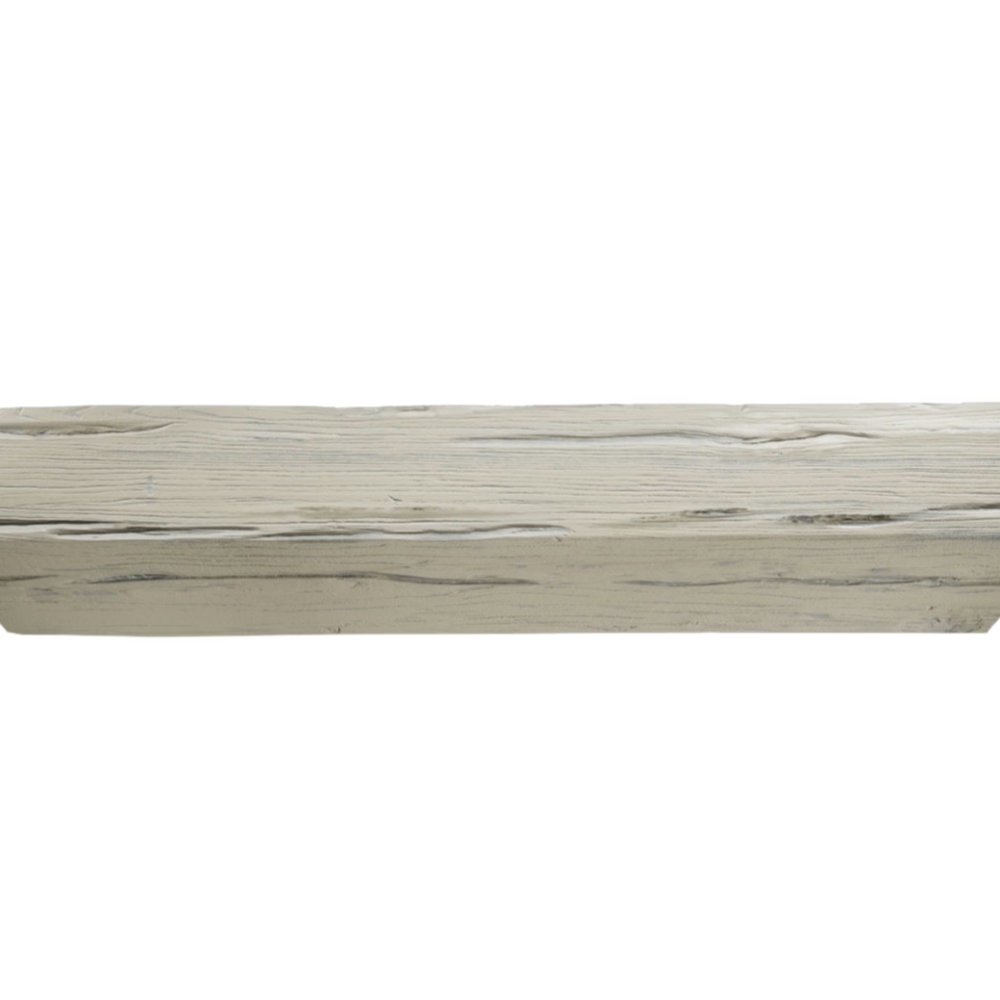
The phrase covers a spectrum. At one end sits a beam with a hand-applied weathered finish over a relatively smooth casting. At the other end sits a heavily gouged, multi-tone casting with knots, splits, and insect tracks reproduced from a real reclaimed master. Both qualify as distressed wood effect, but they do very different things in a room.
A light distress hides imperfections in the casting process and lets the finish do the storytelling. A heavy distress makes the casting itself the story. Vintage rustic projects usually want the middle of that range: enough texture to cast real shadow under raking light, but not so much that the beam overwhelms a room that has other reclaimed elements like a barn door or a stone hearth.
Distressing Levels and Their Visual Weight
| Level | Surface Variation | Knot Density | Edge Profile | Typical Use |
|---|---|---|---|---|
| Light | Subtle grain marks | 1-2 per 4 ft | Straight, clean | Modern rustic, Scandinavian |
| Medium | Visible gouges | 3-4 per 4 ft | Slight unevenness | Vintage farmhouse, lodge |
| Heavy | Deep weathering | 5+ per 4 ft | Chipped, irregular | Industrial rustic, barn conversions |
Wholesale buyers should keep a balanced inventory across all three. Some clients will request a specific level. Others will only know they want "the old barn look" and expect the supplier to guide them.
The Casting Process Behind the Look
Every distressed faux beam starts with a real piece of wood. A factory's master mould is typically a hand-distressed plank with the level of wear the buyer wants replicated. The mould is then used to cast polyurethane with a closed-cell structure. That closed-cell structure is the technical advantage of PU over MDF or vacuum-formed plastics: it does not absorb water, will not rot, and holds its shape across humidity swings.
The finish applied after casting varies by effect:
- Light oak distress. Pale honey base with subtle grey undertones in the grain recesses. Reads as European farmhouse.
- Dark walnut distress. Deep base with black glaze pooling in the grain lines. Reads as American colonial.
- Barnwood grey distress. Ashy grey with white and brown streaks. Reads as weathered outbuilding timber.
- Antique chestnut distress. Reddish brown with darker knots. Reads as 19th-century rural European.
A good factory can blend effects on a single order if a project needs variation across multiple rooms. Builders and designers appreciate this because real vintage interiors are rarely one consistent tone.

Sizing Decisions for Rustic Rooms
Vintage rustic rooms tend toward lower ceilings than modern builds, especially in older properties that have been converted. Ceiling heights of 7.5 to 9 feet are common. Beams need to scale accordingly.
A 5x7 or 6x8 beam fits an 8-foot ceiling without crowding it. Going wider than 7 inches on a low ceiling pushes the room toward compressed and dark, which is rarely what designers want.
For vaulted or A-frame ceilings in lodges, beam sizes can run larger. A 10x12 or even 12x14 profile reads correctly under a 16-foot ridge. The rule of thumb: beam height should be roughly one inch for every foot of ceiling height above 8 feet. A 10-foot ceiling wants a 10-inch tall beam. A 12-foot ceiling wants a 12-inch beam.
Length is dictated by room geometry. Long unbroken runs need factory lengths of 18 to 20 feet. Where seams are unavoidable, factory scarf joints let installers hide the transition inside a beam pocket rather than at a visible mid-span.
Working with Stone, Brick, and Reclaimed Planking
Vintage rustic interiors rarely use faux beams in isolation. The ceiling almost always shares the room with stone walls, brick fireplaces, reclaimed wood flooring, or salvaged doors. The beam has to harmonize with those surfaces, not compete with them.
Three rules help:
- Match the warmth, not the color. A beam that is exactly the same hue as the floor looks wrong because real timber in real rooms ages at different rates. Aim for a tone family, not a tone match.
- Echo the texture. If the floor is heavily distressed, the beam should be distressed. If the floor is clean, the beam should be cleaner. Mismatched textures look assembled rather than aged.
- Resist the urge to over-coordinate. Real vintage rooms have elements that do not perfectly match. A ceiling beam slightly darker than the floor reads as authentic.
Designers often bring material samples to a project's site before finalizing beam specification. The sample chips from the factory, held against the actual floor or stone, reveal tonal clashes that a digital proof never will.
Commercial and Hospitality Applications
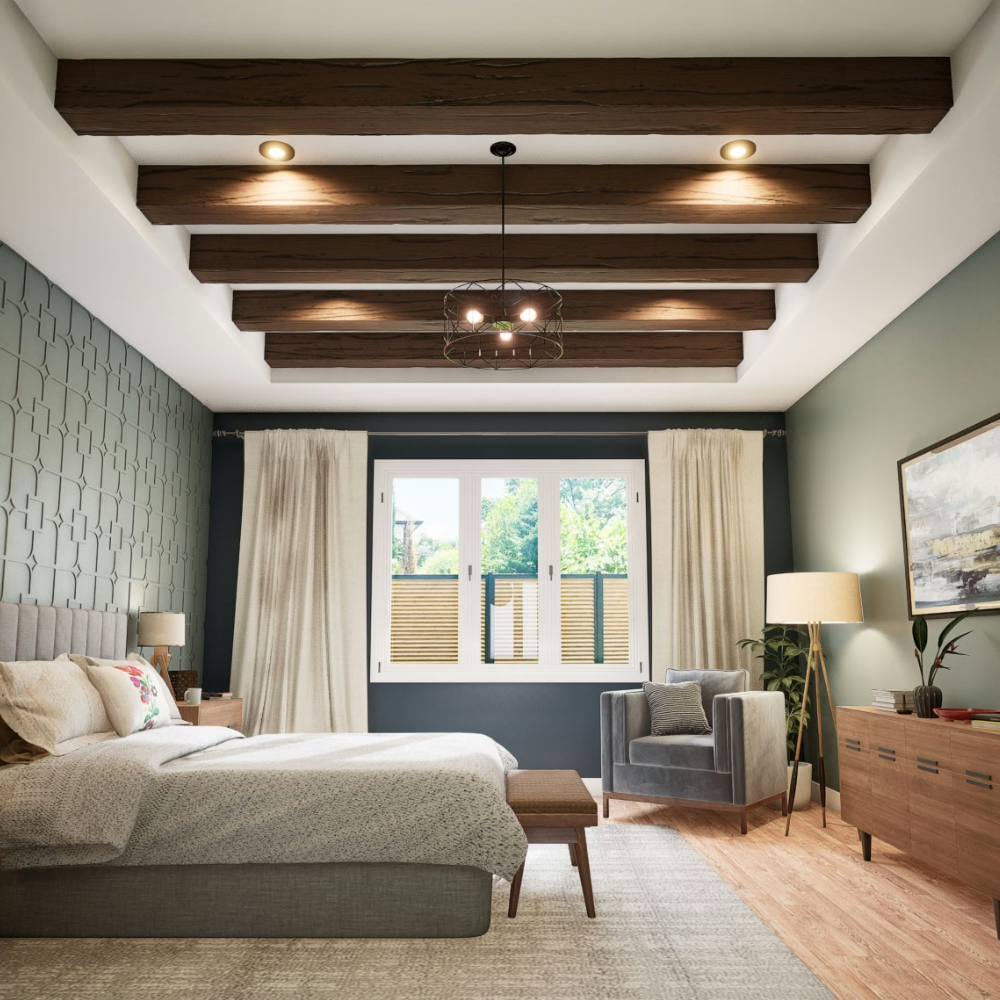
Restaurants, boutique hotels, and event venues lean heavily on distressed wood effect beams because they photograph well and create atmosphere in spaces that are too new to have history. A wine bar in a converted warehouse, a ski lodge lobby in a 1990s building, a tasting room in a strip mall: each one becomes more compelling with a ceiling that signals warmth and time.
For commercial projects, fire rating becomes a non-negotiable spec. Polyurethane faux beams typically carry a Class C or Class B fire rating depending on the resin formulation and any fire-retardant additives. Hotels and restaurants in most jurisdictions require Class B or better. Buyers should request the test certificate, dated within the last 24 months, before committing to a large commercial order.
Acoustic performance matters in some hospitality settings, particularly restaurants. Faux beams themselves do not absorb sound, but they can be specified with a backing panel of acoustic insulation that turns the beam into a hidden absorber. This trick is common in restaurants where the design language demands exposed beams but the operational requirement is a 60 dB ambient ceiling.
Installation Patterns for Vintage Rustic
The classic timber-frame layout uses two patterns:
- King post truss. A single vertical post hanging from a horizontal ridge beam. Common in great rooms and entry halls.
- Hammer beam. A short bracket-style beam projecting from a wall and supporting a horizontal member. Common in libraries, studies, and dining rooms.
Both patterns can be replicated with faux beams because the beams are decorative wraps over structural members the carpenter has already installed. A faux beam system lets the contractor build the structural framing in standard lumber, then dress it in distressed PU over the top. Cost savings on the structural side often pay for the higher material cost of the decorative beams.
For restaurants and event venues, a simpler parallel layout works. Three or five beams running the length of the room, evenly spaced, no posts. This reads as rustic without committing to the structural visual language of an actual truss.
Sourcing from the Factory
Importers ordering distressed wood effect beams should ask for:
- A sample set showing the full distressing level range, not just one option
- Color chips for the four or five base tones offered
- Lead time broken into production time plus shipping time
- A copy of the fire rating certificate, if commercial
- Confirmation that the finish is UV-stable for partially exposed installations
The factory should be able to provide all five without delay. If any answer is vague, the project is at risk.
Project managers buying on behalf of contractors should also confirm whether the factory offers pre-finishing for end caps and corner blocks. Real vintage rooms have beams that meet at corners with hand-cut joinery. Pre-finished corner pieces save considerable site time and avoid the patchy finish that comes from field-finishing cut ends.
Cost Considerations
Distressed faux beams run roughly 20 to 40 percent more than smooth faux beams of the same size, because the multi-step distressing process adds labor. Heavy distress commands more than medium distress. Buyers can keep project budgets in check by using heavy distress on a single feature beam (over a kitchen island, over a fireplace) and lighter distress on the supporting beams.
Shipping costs also matter. Polyurethane is light relative to timber, but bulky. A 20-foot beam is awkward to crate. Factories that have optimized their crating for international container shipping will save buyers a meaningful amount per cubic meter. Worth asking about during the quote stage.
Final Thoughts on Specifying
Vintage rustic interiors survive trends because they sell comfort. They make a new building feel rooted. The beam on the ceiling is the single element that most reliably delivers that feeling, which is why it deserves careful specification rather than a default catalog pick.
Distressed wood effect polyurethane beams let specifiers hit the target without the supply chain, weight, or cost problems of reclaimed timber. The trick is matching the level of distress to the room, sourcing from a factory with a credible casting process, and letting the beam age gracefully rather than fight every other element in the space.
Technical References
ASTM standards cited in every specification
Test Data
Lab results from internal testing program
Updated 2026
Reviewed against current product specs


