
Walk into a home with a well-installed modern PU faux wood beam and the first reaction is rarely "that looks fake." The reaction is usually the opposite: a small pause, then a closer look, then either quiet acceptance or genuine surprise when the homeowner reveals it is not solid timber. That reaction has become more common as the manufacturing has gotten better. The question is no longer whether faux beams can look realistic. The question is where the realism holds up, where it does not, and what determines which side of that line your project lands on.
The honest answer is that a quality modern PU beam, installed in the right setting, reads as wood to almost everyone who walks into the room. A few specific tells still exist, and a few specific settings make the gap more visible. Knowing both lets you decide whether faux is the right call for your space.
How Modern PU Beams Build Their Realism
Realism in a faux beam is not one feature. It is a stack of small decisions, each one closing a different gap with real wood. The manufacturers that do this well stack all of them. The ones that do not, leave visible tells.
Molded Grain Texture
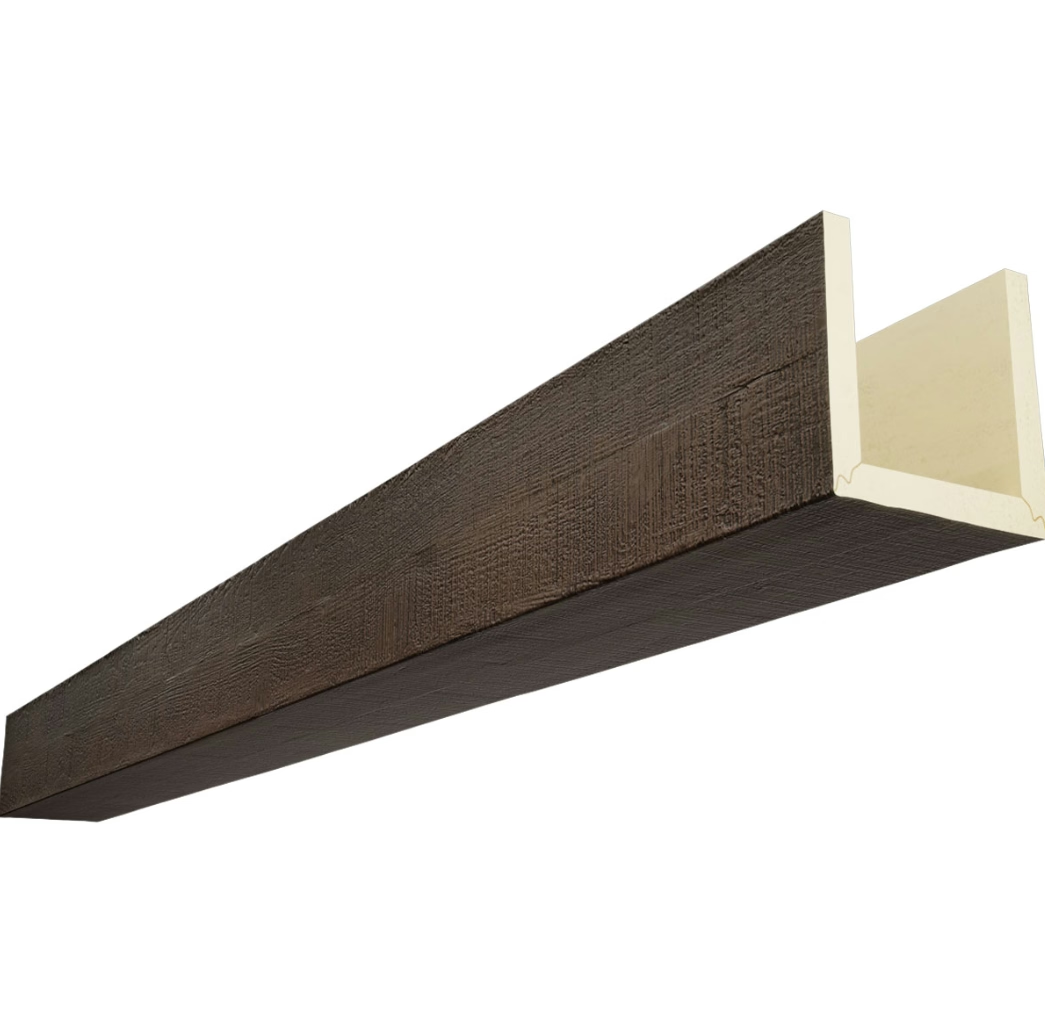
The single biggest factor in faux beam realism is the grain texture you can feel. Early faux beams had a printed or painted grain that the eye could see but the hand could not feel. The grain looked like a picture of grain rather than grain itself. Modern PU beams are cast in molds that carry the texture of real wood, including the soft ridges, the slight depressions, and the open pores of the species being imitated.
When you run a hand across a quality modern beam, the texture matches what you would feel on a sanded and finished piece of the real wood. The grain has variation. The pattern does not repeat too cleanly. The tactile feedback confirms what the eye sees.
Multi-Tone Color
Real wood has variation in color across the surface. Darker streaks along the grain, lighter patches where the figure changes, warm and cool tones that shift depending on how the light hits. A faux beam that is one solid color across the entire face looks painted. A faux beam with multi-tone color, with deliberate variation in pigment, reads as wood.
Manufacturers achieve this through a base coat, a highlight coat, and a lowlight coat applied at the casting stage. The combination produces a beam face where no two square inches look identical, even though the overall tone is consistent.
Knots, Checks, and Natural Imperfections
Real timber rarely has a perfectly clean face. Knots appear where branches grew. Small checks show up along the grain. Slight surface irregularities tell the story of how the tree grew. Faux beams that omit these features feel too clean. Faux beams that include them feel real.
A good mold carries the small natural features of the species. Knots are placed irregularly, not on a grid. Checks run in the direction of the grain. The eye reads these as authentic markers.
Edge and End Treatment
The edges and ends of a beam are where realism often fails first. Real timber has worn edges, slight irregularities at the ends, and visible end grain. Faux beams that ship with sharp, perfect, identical ends look like extruded plastic. Faux beams with shaped ends, visible end grain, and slightly varied edges look like cut timber.
This is one of the easiest places to upgrade a faux beam install. Most manufacturers offer end caps or finishing treatments that add the missing detail. Use them.
Where the Realism Holds Up
Modern PU beams pass the realism test more often than most people expect. There are specific settings where they consistently read as wood.
Above Eye Level
A beam on a high ceiling, especially in a room with raked ceilings or vaulted spaces, gets looked at but rarely touched. The eye does not get the chance to verify the material. Color, grain, and shadow do almost all the work, and modern PU beams handle that work well.
Vaulted great rooms, open-plan living areas, and entryways with tall ceilings are the easiest wins for realism. The beams look like solid timber from every angle that matters.
In Rooms With Real Wood Already Present
A room that already has wood flooring, wood cabinetry, or wood furniture gives the eye a reference point. The faux beam picks up tones from the real wood around it, and the brain integrates it into the same material family. The contrast that would expose a fake beam in a sterile white room disappears in a room with wood context.
In Soft or Diffused Light
Soft light from cove lighting, indirect fixtures, or window light filtered through curtains flatters any material. Hard light from a low-angle sun or a sharp downlight catches every surface irregularity. A modern PU beam holds up in soft light without question. In hard light, the realism depends more on the specific beam and the install.
At a Distance
A beam viewed from across a room is judged on color and proportion more than on close-up grain detail. At that distance, even a budget PU beam reads as wood. The closer the eye gets, the more the manufacturing quality matters.
Where the Eye Still Catches a Tell
There are a few situations where the realism gap is harder to close.
Close-Range Touch
The hand knows the difference between wood and foam. If guests are likely to touch the beam, expect some to do it. A quality PU beam with deep molded grain will pass the touch test better than a budget one with shallow texture, but the weight and warmth of the material will still feel different from real timber.
This is not usually a problem. Most people do not reach up to touch a ceiling beam. But for lower beams, mantel beams, or beams used as architectural details that invite contact, the material is more noticeable.
Close Inspection of the Grain
Within a foot or so, with direct light, the grain pattern on a faux beam can look slightly more uniform than real wood. Real wood has irregular grain that varies based on how the tree grew. Faux wood has grain that varies based on how the mold was made. A close comparison sometimes shows the regularity.
For most installs, this is a non-issue. For a beam at eye level in a tight space with strong direct light, it can be a factor.
Ends and Joints
The end of a beam is where the grain pattern terminates. On real wood, the end grain is visible and the long grain wraps around the edge. On a faux beam, the end is often a flat face with the long grain pattern simply stopping. A flat end grain look is one of the strongest tells of a faux beam.
Most modern PU beam systems include end treatments that solve this. Use them. A beam with a clean end treatment reads as wood. A beam with a flat end reads as foam.
Acoustic Feel
A real wood beam sounds solid when tapped. A PU beam sounds hollow. Again, most guests do not tap ceiling beams. But for low beams or beams within easy reach, the sound difference can be a subtle giveaway.
Repeated Patterns Across Multiple Beams
If your project is multiple beams across a ceiling, the same mold used to cast all of them produces repeating grain patterns. The eye picks up the repetition, especially on parallel beams. Real timber rarely repeats that cleanly.
Manufacturers address this by using multiple mold variations or by rotating the beam orientation during install. If you have a multi-beam project, ask the supplier about mold variation.
What Maximizes Realism in an Install
The realism of a finished beam depends as much on the install as on the product. A few choices in the room and on the ladder push the result from acceptable to excellent.
Lighting Choices Matter
Avoid hard downlighting directly on the beam if you can. Indirect cove lighting, wall-washing fixtures, and natural light from the side all flatter the beam. Direct downlighting catches every mold line and can make a quality beam look cheap.
If your room already has downlights, consider aiming them at the walls rather than the ceiling. The room still gets the light it needs, and the beam stays in softer illumination.
End Treatments and Returns
Use the end caps, return pieces, or finishing details the manufacturer offers. A beam that runs straight into a wall with a return looks architectural. A beam that ends flat at the wall looks added. The end treatment is a small cost relative to the visual improvement.
Pair With Wood in the Room
A faux beam next to real wood flooring reads as part of the same material story. The eye integrates them. A faux beam in a room with no other wood can feel disconnected. Add a small wood element in the room, even something as simple as a wood picture frame or a wood shelf, and the brain starts to accept the beam as one of the family.
Mind the Color Temperature
The pigment in the beam should match the undertone of the wood it sits next to. A beam with a warm honey tone next to a floor with cool gray undertones looks wrong. A beam with a neutral warm walnut tone next to the same floor looks intentional.
If you are ordering a custom color, send a sample of the existing wood to the manufacturer. The match is well worth the wait.
Step Back Before Committing
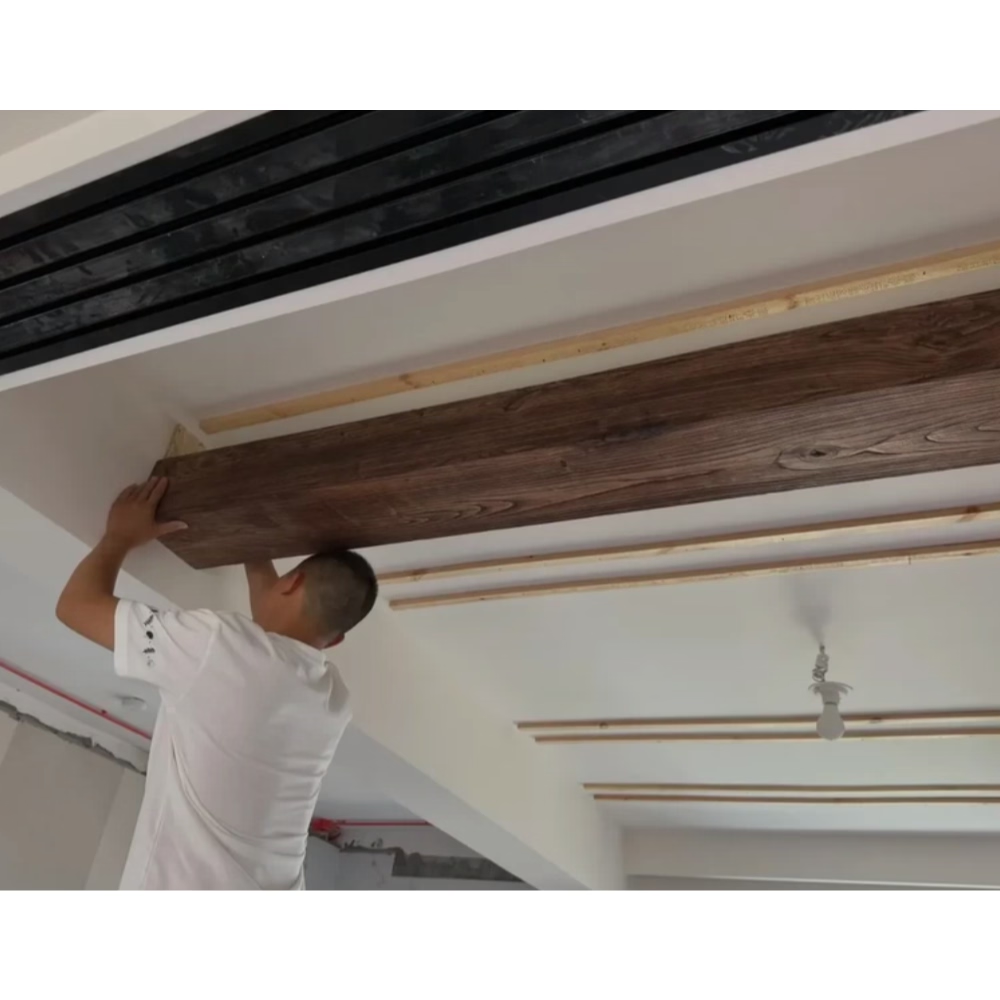
Dry fit the beam with painter's tape on the ceiling. Step back to the doorway. Look at the room from the angle guests will see first. If something feels off at that step, it will feel off after the beam is mounted. Adjust before you commit.
The Verdict From Designers and Homeowners
The designers who specify faux beams and the homeowners who live with them tend to land on the same conclusion: modern PU faux beams look real in the ways that matter. The occasional close-up tell is the price of admission for a material that is lighter, more stable, and easier to install than real timber. Most people do not look that closely.
For commercial projects, the calculus is even more favorable. A restaurant with a faux timber ceiling has a beam that does not need to be refinished in five years. A hotel lobby can install the same beam profile across multiple properties and know it will look the same in each location. A retail store can change its layout without worrying about warping in the existing beams.
For residential projects, the calculus comes down to expectation. If the goal is a beam that looks like wood from across the room, modern PU delivers. If the goal is a beam that fools a person running their hand along it under direct light, real timber is the only answer. Most projects sit comfortably on the first side of that line.
The Honest Comparison
A modern PU faux beam installed in the right setting looks like a real timber beam to the people who use the room. It does not look exactly like a real timber beam under every condition and from every angle. The differences are small, they are mostly visible only on close inspection, and they are the trade-off for a material that is significantly easier to live with over decades.
For homeowners deciding between the two, the question is not whether faux can look real. The question is whether the conditions of your specific room will reveal the differences. Most rooms do not. Most projects end with guests asking which beam is real, because they are not sure.

A quality beam, a thoughtful install, and a room that gives the beam room to look like itself will get you across that line almost every time. The realism is there. The decision is whether the room you are building is the right one to show it off in.
Technical References
ASTM standards cited in every specification
Test Data
Lab results from internal testing program
Updated 2026
Reviewed against current product specs


